
The Young Reporter
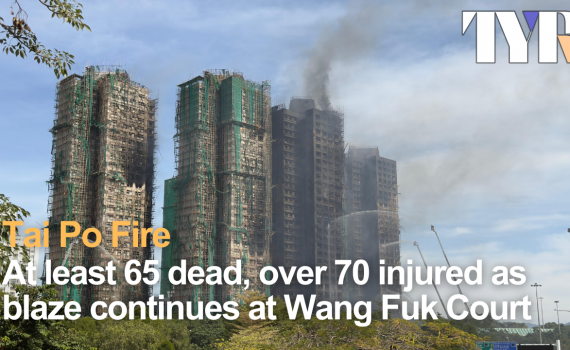
At least 65 dead, over 70 injured as blaze continues at Wang Fuk Court
- 2025-11-28
- Society
- The Young Reporter
- By: CHENG Tsz Sen Sean、LAI Uen LingEdited by: CHEN Yik Nam、AO Wei Ying Vinci
- 2025-11-28
Reported by: Sean Cheng Tsz-sen, Elaine Lai Uen-ling Edited by: Vinci Ao Wei-ying, Nansen Chen Yik-nam Over 60 people were killed in the blazing fire at Wang Fuk Court, Tai Po. 10 firefighters were injured in effort to put out the fire.

Investigation will begin as Tai Po’s blaze killing at least 128 extinguished
- 2025-11-28
- Society
- The Young Reporter
- By: AO Wei Ying Vinci、SIU Tsz HangEdited by: Wing Chi HO
- 2025-11-28
The deadly fire at Tai Po Wang Fuk Court was put out at 10:18 am today, after 43 hours of firefighting, said Tang Ping-keung, Secretary for Security. Tang said at least 128 people were killed and 79 people were injured. 108 victims were found dead at the scene, with four more dying after being taken to the hospital, and 16 severely burned bodies recovered inside the building. “Firefighting and rescue operations have now been completed. However the interior temperature remains at 200°C and teams are cooling the structure for further inspection,” he said. A total of 30 victims have been identified, about half from inside their flats. More than 40 other bodies require forensic confirmation, and 89 sets of remains are still unidentified. Authorities have received 467 missing-person reports, with many duplicated submissions. Of those, 39 were confirmed dead, 30 injured, and 110 were located safe. Tang said the fire is believed to have started in Wang Cheung House, where highly flammable foam panels at height allowed flames to shoot upward and spread rapidly. “Burning fragments carried embers to higher floors, windows shattered in extreme heat and bamboo scaffolding ignited, causing additional floors to burn,” he said. Tang added the interior temperatures reached about 500 degrees Celsius, calling a halt to firefighters from advancing. The Security Secretary said the police have arrested three senior staff members of renovation company Prestige Construction & Engineering Co Limited for alleged manslaughter, seizing 14 computers and documents in the operation. A full investigation will be conducted and is expected to take three to four weeks. A fire alarm test was conducted yesterday. Despite the alarms being on, they were silent, said Andy Yeung Yan-kin, director of the Fire Service Department, adding that a follow-up investigation will be carried. Regarding online claims about firefighting tactics, …

Death toll in Tai Po level five blaze rises to 83
- 2025-11-28
- Society
- The Young Reporter
- By: MA Tsz Chiu Oscar、SIU Tsz HangEdited by: AO Wei Ying Vinci、Wing Chi HO
- 2025-11-28
The death toll in Tai Po’s Wang Fuk Court blaze has risen to 83, including one firefighter, the Fire Services Department said. Lam Cheuk-ho, assistant chief ambulance officer (New Territories West) told reporters at a briefing that 155 casualties were handled and admitted to the hospital. Among the casualties, 79 people were confirmed fatality at the scene and four people admitted to the hospital but died. 76 injured people were taken to the hospital for treatment. 11 fire personnel were injured in the operation and in stable condition, and one personnel died in the line of duty. 177 ambulances were deployed in the operation. The firefighting operation is almost complete, and is expected to be done by midnight, said Derek Armstrong Chan, deputy director (operations) of the Fire Services Department. He said the fire service department is carrying out operations to four individual units at 1am today (Nov. 28). Water spray cooling is being carried out on units in other seven blocks to prevent reignition. Search and rescue operations will then proceed, including addressing 25 requests for assistance and conducting demolition work on all units in the seven affected buildings to ensure no one is trapped. Chan said the operation is expected to be completed by 9am tomorrow. Chan said casualties are mostly found in Wan Cheong House and Wan Tai House. Polymeric foam was found at the fire scene and the Fire Services Department will form a team on its impact on the fire. An investigation into effective operation of fire protection systems will also be conducted. “Difficulties in the operation included the fire spreading exceptionally rapidly to all the seven blocks, while debris and scaffolding falling from upper storeys, escalated the difficulties accessing affected buildings,” Chan said. He added emergency vehicles were also blocked by falling debris and …

NGO booth aids migrant workers hit by Tai Po’s blaze
- 2025-11-28
- Society
- The Young Reporter
- By: MA Tsz Chiu OscarEdited by: SIU Tsz Hang
- 2025-11-28
Mission for Migrant Workers, a non-profit organisation serving to support migrant domestic workers in Hong Kong, set up a booth to assist those affected by the level five fire at Wang Fuk Court in Tai Po. Edwina Antonio, the representative of MFMW, said the NGO can help migrant workers who have lost their passports in the incident to contact their nation’s consulate directly. MFMW provides free shelter with food and necessities to accommodate displaced migrant workers. Antonio said until 10pm today (Nov. 27), only four migrant workers sought help from the NGO. “They do not know we are here, so we need to promote,” she said, adding that the booth will be operating from 10am to 9pm tomorrow (Nov. 28). The Indonesian Consulate General in Hong Kong said at least two Indonesian migrant workers have died in the blaze. Antonio said she was saddened by the incident, especially for the families of the deceased workers, as they have lost their breadwinners. As of 10pm today (Nov. 27), the fire has killed at least 75 people, according to the Fire Services Department.
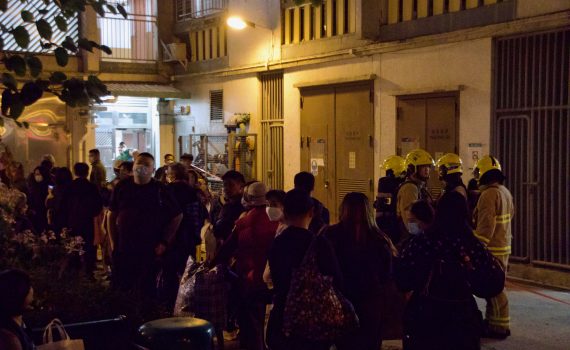
Authority opens flats in Kwong Fuk Estate for picking up belongings
- 2025-11-27
- Society
- The Young Reporter
- By: MA Tsz Chiu OscarEdited by: LI Sin Tung
- 2025-11-27
Residents from Kwong Fuk Estate, which is beside the burning Wang Fuk Court in Tai Po, have been allowed to pick up belongings from their flats since today morning, although they still have to stay out of their homes tonight. Shek, a resident in Kwong Yau House who did not want to reveal his first name, said he only had at most 15 minutes to stay in his flat. “If you did not leave within 15 minutes, you would be called (by the authorities),” he said. He added that he will stay at the nearby Kwong Fuk Commercial Centre tonight, where bed mattresses are provided. Many volunteers set up supply stations and provide resources, including food, drinks and clothes, to the affected residents. After the level five fire broke out at Wang Fuk Court yesterday, the authorities evacuated many residents in Kwong Fuk Estate. Until 8 pm today, the ongoing fire has killed at least 65 people, according to the Fire Services Department.

Tai Po blood donation vehicle reaches capacity after deadly fire
- 2025-11-27
- Society
- The Young Reporter
- By: CHAN Hiu YingEdited by: CHAN Wing Yiu
- 2025-11-27
The blood donation station in Tai Po is no longer accepting donations after reaching capacity, following a fire in Wang Fuk Court that left at least 44 people dead. The mobile blood donation vehicle was parked near Tai Po Art Centre. Our reporter talked to some residents and they said they have been asking how they can donate blood. Hong Kong Red Cross’s staff advised residents to visit the nearest donation centre in Shatin. Since the centre may reach full capacity, they suggested donors to call 27101281 to make an appointment for the coming days or next week.
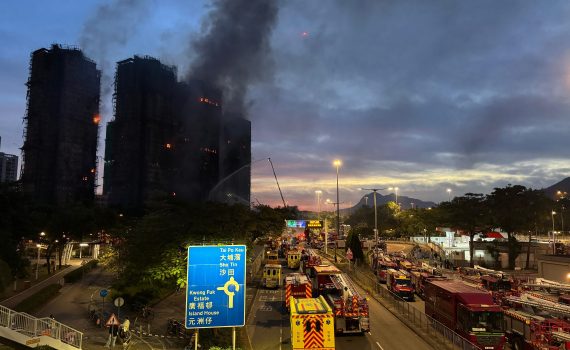
Tai Po fire still burning after more than 15 hours at level five severity
- 2025-11-27
- The Young Reporter
- By: Wing Chi HOEdited by: AO Wei Ying Vinci、LAI Uen Ling
- 2025-11-27
As of 6:24am, there are at least 44 dead, including a firefighter. 279 residents are still missing, the Fire Services Department said in a press conference. Passengers wait for transportation at Tai Po's minibus terminal, where providers have increased service frequency to ease traffic disruptions. Special traffic and transport arrangements are implemented in the affected area and the public is advised to stay updated with the latest traffic information, according to the Transport Department.
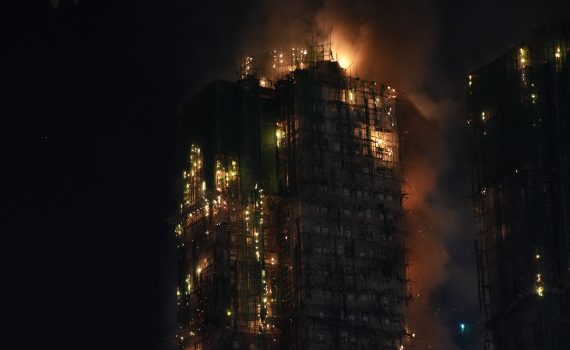
At least 13 dead in Tai Po level-five fire
- 2025-11-26
- Society
- The Young Reporter
- By: Wing Chi HO、CHAN Wing YiuEdited by: SIU Tsz Hang、LAI Uen Ling
- 2025-11-26
A No.5 alarm fire erupted at Wang Fuk Court in Tai Po, leaving at least 13 dead, including one firefighter, officials said. As of 6pm, there are at least five injuries, including three that were critically injured. One person was in serious condition, and one was in stable condition. Nine people felt unwell and were sent to Alice Ho Miu Ling Nethersole Hospital and Prince of Wales Hospital for treatment. Police have set up a hotline 1878999, for the public to inquire about information on the casualties of the fire.

Labubu powers Pop Mart’s revenue, but can it last?
- 2025-11-25
- Business
- The Young Reporter
- By: LAI Uen Ling、SIU Tsz HangEdited by: Robin Ewing
- 2025-11-25
Yoko Chan, 35, a clerk, wearing a Labubu T-shirt and a pink Labubu charm on her handbag, wandered around a Pop Mart shop in Sha Tin. It is her weekly ritual to go to the store to look for new items. Known for its high, pointed ears, mischievous grin, and serrated teeth, the small plush toy monster Labubu is one of the most popular products at Pop Mart, the leading Chinese toymaker with over 500 physical stores in over 30 countries and regions. Since falling in love with Labubu in 2024, Chan has spent several thousand Hong Kong dollars on Labubu products. Labubu charms are her all-time favourite, and she has nearly 100 of them at home. "Labubu has different looks. Sometimes they have clothes, or smaller in size, and even with festive decorations,” Chan said. Chan is one of millions whose enthusiasm for the plushie toy helped push Pop Mart’s revenue up 250% this year, according to company data. But a recent share price drop shows that interest may be declining, and experts say the company needs new strategies to sustain investor confidence. In the Asia-Pacific region, Pop Mart’s revenue rose by between 170% and 175% compared to the same period last year. Despite the strong revenue growth, Pop Mart’s share price had fallen by 18.5% as of Nov. 6, following the release of its revenue figures on Oct. 21. Designed by Hong Kong-based illustrator Kashing Lung, Pop Mart started selling Labubu in 2018 and it went viral in 2024 after K-pop star Lisa, who has 107 millions followers, showcased the bag charm on her social posts. Other pop singers, such as Rihanna and Dua Lipa, were also spotted with these fluffy creatures adorning their bags, which further sparked public curiosity about Labubu. Pop Mart achieved revenue of US$861 …
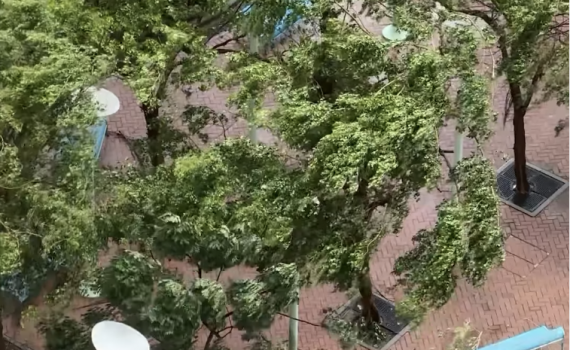
Super Typhoon Ragasa set the second-longest T10 signal in Hong Kong since 1999
- 2025-11-25
- The Young Reporter
- By: Yu Yan Pui、ALISHIBA MATLOOB、LAU Ka Yan、Ye Enyi、Wing Chi HO、MA Tsz Chiu OscarEdited by: WONG Hong Ni、ZHANG Yiping
- 2025-11-25
https://www.instagram.com/reel/DPBA7dpk5kD/?utm_source=ig_web_copy_link&igsh=MzRlODBiNWFlZA== Super typhoon Regasa swept past Hong Kong on Sept 24, resulting in a T10 storm warning that lasted for 10 hours and 40 minutes, the second-longest in history. 90 injuries were reported by the Hospital Authority, and over 600 flights were cancelled in Hong Kong. As typhoon Ragasa moved west, our reporters filmed the typhoon from different locations around the city. #typhoonragasa #hongkongweather Reported by Jennifer Yu Yan-pui, Aloosh Alishiba-Matloob, Luna Lau Ka-yan, Darcy Ye Enyi, Gigi Ho Wing-chi, Oscar Ma Tsz-chiu Edited by Connie Wong Hong-ni, Zoey Zhang Yiping