
The Young Reporter

Policy Address 2026: Government to step up Chinese-language support for ethnic minority students
- 2026-09-16
- Society
- The Young Reporter
- By: Cao Beiyu、Man Cheok Lam LorraineEdited by: FENG Zhenpeng
- 2026-09-16
Chief Executive John Lee Ka-chiu said the government will adopt learning materials tailored for non-Chinese-speaking students and also provide them after-school Chinese language courses from Primary One to Secondary Three. The materials will help them pass two Chinese language standardised tests, which will help them integrate into the community and have more job opportunities. Based on the 2021 Population Census, ethnic minorities make up 8.4% of the population in Hong Kong. Among ethnic minorities under the age of 14, 35% to 38% are unable to read or write Chinese. Bahart Nangia, former director of the Support Service Centre for Ethnic Minorities and an Indian-Hong Konger, said, “language is the biggest barrier amongst ethnic minorities. Cantonese is not easy to learn.” He said for example, MTR staff may not be able to communicate in English if they need help. Chinese classes in schools are not “fully equipped to be teaching minorities with a cultural dynamic difference,” said Jeffery Andrews, one of the founders of the Diversity Hub, a multi-cultural community space in Hong Kong, as well as the first ethnic minority social worker in Hong Kong. Andrews said the government has put many resources into ethnic minority policies for the last 15 to 20 years but the framework for implementing Chinese as a second language in schools is still weak. Alishiba Matloob Aloosh, a Pakistani Hongkonger podcaster and a former TYR reporter who now works for RTHK Radio 3, said the government should put more effort into tackling the real adjustment issues behind why, even after learning the language, some people still find it hard to adapt in daily life. Discrimination, workplace barriers and difficulties with inclusion in schools and the community are all issues that need addressing. In the policy address, Lee said the scheme for ethnic minorities to serve …

Policy Address 2026: Hong Kong to support AI training for employees and SMEs
- 2026-09-16
- Society
- The Young Reporter
- By: YANG Shuyi、Yutong SuEdited by: Lou Zhengzheng、QIN Ziyang
- 2026-09-16
The policy address proposed several AI training programs to support employees in enhancing practical AI skills and optimized the existing AI support program for small and medium-sized enterprises. The government will release more than 200 training courses and activities under the “AI for All” programme before the first quarter of 2028. The government’s Employees Retraining Board will release an 18-month AI upskilling campaign in the first half of 2027, offering free online courses on workplace AI applications, expected to benefit at least 40,000 employees. Calvin Cheng, the Executive President of the Hong Kong Small and Medium Enterprises Association, said that with subsidies from the government and corporate training, employees would be more willing to spend time learning how to use AI. “Many employees hold conservative views against AI, fearing job displacement,” Cheng said. “Companies need to educate their employees that AI is not meant to replace them, but to help improve their work efficiency.” According to Peter Shum, Deputy Chairman of the Federation of Hong Kong Industries, a lack of clear AI strategies from management creates a gap with employees keen to adopt AI but remaining cautious due to data leakage and security risks. Microsoft’s May 2026 Work Trend Index reveals that only 19% of AI users in Hong Kong believe their leadership has set a clear and consistent AI strategy. “The market is flooded with information about AI for SMEs, leaving them confused and unsure of what to do,” said Cheng. “The government can provide some successful showcases as guidance for them.” According to the Census and Statistics Department, as of March 2026, there were approximately 360,000 SMEs, accounting for more than 98% of the enterprises in Hong Kong. “The government needs to prioritize supporting SMEs in the field of AI, because large companies have substantial financial resources to …

Policy address 2026: Expert questions government expectations on expanding new university town
- 2026-09-16
- Society
- The Young Reporter
- By: LI Jinyang Carlos、ZHENG XinyiEdited by: CHEN Ziyu
- 2026-09-16
The Northern Metropolis University Town will expand to about 300 hectares, as announced in the Policy Address 2026 today, more than triple the size in a 2025 press release from the Development Bureau. The University Town is intended to resolve insufficient land resources, providing more space for the development of innovation and technology, higher education and the cultivation for high caliber talents. Chief Executive John Lee Ka-chiu said today this town will become the main development thrust of the Northern Metropolis. The town also encourages institutions from the mainland and overseas to establish campuses in the area, according to the consultation document before the announcement of Hong Kong’s five-year plan. Financial Secretary Paul Chan Mo-po said the government has prepared HK$10 billion in loans to assist the campus development in the Northern Metropolis in his 2026 budget speech. “For now, the return of investing in the university town is uncertain,” said Terence Chong Tai-leung, Executive Director of the Lau Chor Tak Institute of Global Economics and Finance at the Chinese University of Hong Kong. Chong said this depends primarily on its ability to attract major companies, yet those companies will not locate there based simply because of the surrounding infrastructure and that the government should adopt a public-private partnership model. “By providing land use to universities free of charge, while the universities themselves are responsible for constructing campus infrastructure. The government could then share the profits once the project becomes profitable,” he said. According to the Government's e-Tendering System, the estimated tender values for San Tin Technopole's supporting facilities,connected to the University Town, exceed HK$1.2 billion in Q3 and Q4 alone this year. Liu Xiao, owner of Golden Harbour Group Limited, a real estate company, said the long-term outlook for real estate around the university town is positive, though short-term …
Policy Address 2026: Northern Metropolis to build larger subsidised housing amid concerns
- 2026-09-16
- Society
- The Young Reporter
- By: YAM Long Hei JamieEdited by: LEUNG Chi Ngai
- 2026-09-16
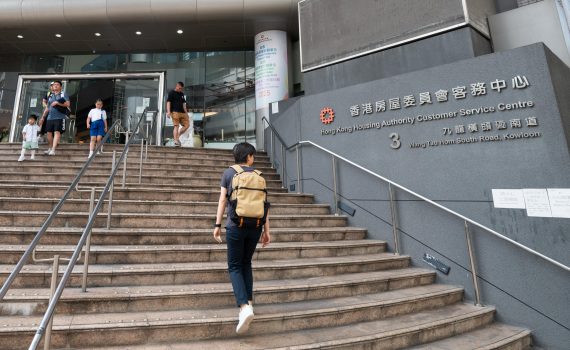
Subsidised housing in the Northern Metropolis will include a higher proportion of larger flats for purchase, Hong Kong Chief Executive John Lee Ka-chiu said at today's annual Policy Address. The share of units measuring around 45 square metres or more will rise from 20% to 25% from 2031, aiming to improve residents' overall quality of life, Lee said. The average public housing unit was 37.2 square metres in 2024, according to the Hong Kong Future Economy Institute. “If the transport can’t keep up, then no matter how good a place is to live, or how new and beautiful the developments are, it’s all meaningless,” Lai Chun-kit, 32, a chef, said. The Northern Metropolis, roughly one-third of Hong Kong’s total land area, is expected to provide over 70,000 public and private housing units within five years, according to the five-year plan announced today. The area’s transport is mainly linked by the Northern Link railway and the Northern Metropolis Highway. Both transport infrastructures are expected to be delivered by 2034 and 2036. Lai, together with his wife Chung and their daughter, will move into a public housing unit in Tuen Mun within a month, after five years of waiting. He said they have no intention of moving to the Northern Metropolis if they are allocated a flat there. The couple said that the quality of education provided by the school network would be the most important factor in their decision to relocate. “It’s not that people don’t want to choose that place, but the supporting infrastructure has to catch up as well,” Lai said. The government is set to advance transport infrastructure, building a new hospital in Ngau Tam Mei and develop cultural facilities. Job opportunities and adequate basic infrastructure are the key drivers in attracting people to settle in the Northern …

Youth summit focuses on opportunities for HK ethnic minority youth
- 2026-09-13
- Society
- The Young Reporter
- By: YANG Shuyi、XIE Xinni CindyEdited by: Lou Zhengzheng
- 2026-09-13
More than 300 ethnically diverse people aged 18 to 30 gathered on Saturday at a youth leadership Summit, which centred on prospective opportunities and challenges for ethnic minority youth in Hong Kong. The Ethnically Diverse Youth Leadership Summit 2026 was the second edition of the summit held by the Zubin Foundation in Ngau Tau Kok. The summit aimed to focus more on job opportunities, although much of the discussion about diverse ethnic communities centers on the negative barriers and challenges, said Shalini Mahtani, Founder and CEO of the foundation. “We're not downplaying them, but we also wanted to focus on something like your aspirations, leadership, and future in Hong Kong,” she said. Delivering his opening remarks as a guest speaker, Chris Sun Yuk-han, Secretary for the Labor and Welfare Bureau, said that as a policymaker, he is keen to listen to the group’s passion and concern. Sun encouraged young minorities to overcome difficulties in their work and said it was a great opportunity for him to hear the participants' thoughts. The summit revolves around the challenges and opportunities of the ethnically diverse community and features a debate titled “Are you optimistic or pessimistic about your future in Hong Kong?” Arvind Singh Dhaliwal, 23, an engineering student at the University of Hong Kong, is of Indian descent and grew up in Hong Kong. He speaks some everyday Cantonese and English, and represented the opposition side in debate. “A lot of engineering companies prefer people who can speak Mandarin, since many firms and departments are moving head to the mainland,” said Dhaliwal. “For Cantonese, I can speak enough to get by, but it is too stressful for me to speak Mandarin.” Subha Abedin, 21, a member of the Foundation for Youth Development—a youth-led non-governmental organisation—who graduated this year, said “Language can be …

AI detection tools spark false plagiarism fears among university students
- 2026-05-31
- Society
- The Young Reporter
- By: MA Tsz Chiu OscarEdited by: CHENG Tsz Sen Sean
- 2026-05-31
In 2025, Chris, a university nursing student in Hong Kong who asked not to be fully identified, failed a course after a plagiarism detector flagged his project as AI-generated. Chris insisted the work was entirely his own and appealed the failing grade but lost. It forced him to retake the same course, and left him with a reputation for academic dishonesty. Since the launch of generative AI in 2022, many universities have adopted AI detection tools to assess whether student work involves AI-generated content. However, both students and teachers say these tools are often unreliable, raising serious concerns about fairness and due process. Chris and his groupmates were among those students affected. Their assignment, written in both Chinese and English, was flagged as 40% AI-generated by Turnitin, the tool used by their school. Turnitin, used by over 20,000 institutions worldwide, assigns an AI percentage score to submitted assignments, indicating the likelihood that the content is AI-generated. Scores between 1% and 19% are typically hidden. However, Turnitin’s AI detection does not support Chinese. When the group separated the languages, the score dropped below 20%. Despite presenting this evidence, Chris said his department rejected the appeal without explanation. According to the university’s handbook, suspected cases of academic dishonesty should be investigated and discussed in a formal meeting. The Young Reporter inquired of 12 higher education institutions in Hong Kong regarding their AI policies. The Chinese University of Hong Kong responded that it acknowledged the possibility of false positives and said students have the right to appeal through fact-checking interviews. Hong Kong Baptist University responded that teachers may request relevant documents from students, such as records of AI usage and early drafts, to review suspected misuse of AI. Other institutions did not respond. Caleb Lai, 21, a psychology student studying in the UK, …

More than just a parade: Cheung Chau Bun Festival 2026
- 2026-05-29
- Society
- The Young Reporter
- By: Ng Wing Sum JodieEdited by: YAM Long Hei Jamie
- 2026-05-29
Reported by Jodie Ng Wing-sum, Ella Huang Wing-tung Edited by Jamie Yam Long-hei Video Description: The Piu Sik parade, a century-old tradition of the annual Cheung Chau Bun Festival, returned to the city on May 24. This year, 17 parade teams wove through Cheung Chau’s alleys to worship and pray for blessings.
Red minibus drivers struggle as ridership plunges and fuel costs rise
- 2026-05-13
- Society
- The Young Reporter
- By: CHEUNG Ka Yi Ann、ZHENG Yuan ElaineEdited by: CHAU Wing Yau
- 2026-05-13
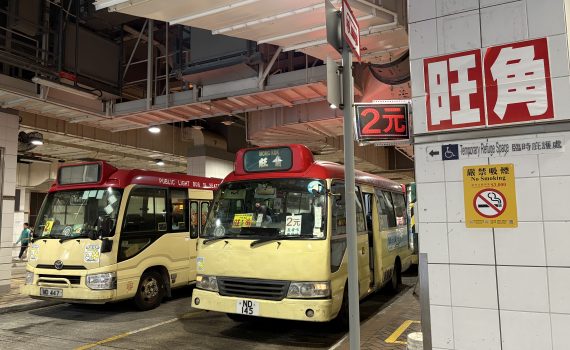
At Kwun Tong Yue Man Square Public Transport Interchange, one of the city’s busiest transport hubs, 55-year-old red minibus driver Saniel Ng would clock off from a 13-hour shift at 9pm on most days with a take-home pay of just about HK$1,000. As Ng looked around the transport interchange, he noted that even though there were some queues of passengers waiting for red minibuses, ridership was not what it used to be. “Bus companies have taken away the business,” said Ng, who has been a red minibus driver for more than 20 years. “Without enough passengers, it’s hard to survive.” For decades, Hong Kong’s red minibus has been better known for its high speed and unruly round-the-clock service. But the trade is at risk of becoming a remnant of old Hong Kong as the city’s mass transport network continues to modernise. There are two types of public light buses, differentiated by their roof colours and service flexibility. Red minibuses operate on flexible routes with fares that drivers can adjust based on demand and the time of day, whereas green minibuses run on fixed routes and schedules set by the government. Red minibuses are disappearing, with passenger numbers falling by more than half, or 50.5%, from 295,000 in 2017 to 146,000 in 2024, according to Transport and Logistics Bureau data compiled in a Legislative Council research report published in March last year. Commercial vehicles in Hong Kong must obtain operational licences from the Transport Department. The price of a minibus operating licence, for both red and green minibuses, also dropped 47% between 2022 and 2024, from HK$1.7 million to HK$900,000, far below its 2014 peak of HK$5.5 million. Despite green minibuses having recorded a recovery in passenger volume since 2022, red minibuses have continued to see a decline in their passenger …
15 schools, one record blow: the struggles of zero primary one classes in Hong Kong
- 2026-05-12
- Society
- The Young Reporter
- By: RONG Miu Tung Shelly、ZHENG WU AnnyEdited by: FENG Zhenpeng
- 2026-05-12
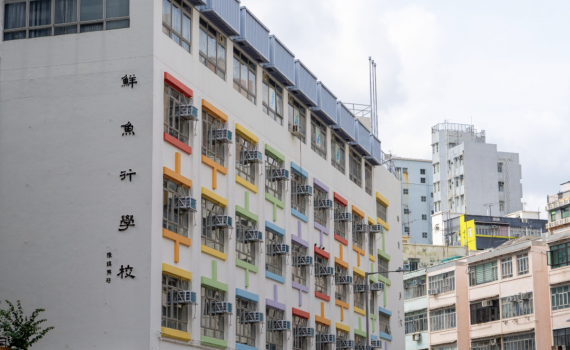
“I can’t bear to leave… It feels empty, as if losing friends,” said Ally Chen, 11, a primary five student at Fresh Fish Traders’ School in Tai Kok Tsui, which was nearly closed due to low enrolment. On March 17, the Hong Kong Education Bureau announced that a record 15 public and subsidised primary schools across 10 districts, including Fresh Fish Traders’ School, would have no primary one classes for the next academic year because they failed to enrol the minimum of 16 students. The potential school closures leave schools, teachers and students worried about heavier workloads and the loss of familiar school communities as they navigate an uncertain future. Fresh Fish Traders’ School previously faced enrolment shortages in 2004 and 2007, but managed to turn things around. This time, however, rather than closing its doors, the school announced in March that it plans to merge with another school in the district, although the partner's name has not yet been disclosed. Hong Kong’s student population has been shrinking rapidly. Primary school enrolment fell from 373,228 students in the 2019/20 school year to 319,447 in the 2024/25 school year, a decrease of 14.4%, according to the Bureau. Education Secretary Christine Choi Yuk-lin said in a media briefing in March that the number of students participating in the primary one allocation for 2026/27 had fallen by around 4,000 compared with the previous year. Experts point to Hong Kong’s falling birth rate. According to the Census and Statistics Department, the number of births in 2025 dropped to a record low of 31,714, a 14% decrease from the previous year. “Emigration of young families has certainly contributed to the decline in school enrolment, but its impact is secondary compared to the persistently low local birth rate,” said Anita Koo Ching-wah, a professor at the …

Hong Kong’s abandonment crisis leaves dog shelters overcrowded and dogs facing uncertain futures
- 2026-05-11
- The Young Reporter
- By: WU Sitan Elaine、PENG Yixin NaomiEdited by: Ye Enyi
- 2026-05-11
Deafening barks and whimpers echo daily behind rows of metal fences, where more than 300 dogs - kept in groups of three to four each - are housed in kennels of about two square meters at Hong Kong Dog Rescue’s Tai Po shelter. Together with another 200-plus medium to large-sized dogs at its Ap Lei Chau home, these shelters are bursting at the seams. This is only too common a picture for many of the city’s 37 registered animal welfare organisations, which are struggling to keep up with Hong Kong’s rising abandonment rate and a declining adoption rate. April Yip, the founder of Home for Homeless Dogs, said their non-profit dog shelter is now full after taking in an extra 100 dogs beyond its original capacity of 230 last year. “Animal shelters across Hong Kong are all struggling with full capacity,” she said. To make what seems a losing battle even worse, many adopted dogs are often returned by their adopters for trivial reasons. Not only do these returned adoptions stretch the resource-thin shelters even further, but they also put dogs at risk of being euthanised unnecessarily. From 2022 to 2024, the number of abandoned animals in Hong Kong rose from 426 to 571, according to a Legco research report. The Agriculture, Fisheries and Conservation Department, the government body managing wildlife, transferred 480 cats and 995 dogs to local animal welfare organisations during the same time period, according to a response report from the controlling office of AFCD. However, the adoption rate dropped from 47.9% to 41% for dogs and 49% to 39.9% for cats. Yannie Wong of Hong Kong Dog Rescue said one of the major reasons for the rising abandonment rate was the end of work-from-home arrangements after the COVID-19 pandemic. Between 2017 and 2023, the number of …