
The Young Reporter

Rising fuel costs sting Hong Kong on everything from cars to laundry
- 2026-05-08
- Society
- The Young Reporter
- By: LI Jinyang Carlos、ZHANG Jiahe RoysEdited by: CHEN Ziyu
- 2026-05-08
Marcus Kan, 29, sits restlessly in his car on the Hong Kong-Zhuhai-Macao Bridge, stuck in heavy traffic as he waits to cross into Zhuhai. Once there, he hopes to fill up at lower fuel prices than Hong Kong, where he lives. “I go to the mainland for fuel once a week. Since the outbreak of the Iran war, the petrol price difference between the mainland and Hong Kong has widened steadily. Even factoring in the fuel cost of commuting back and forth, it’s still more economical to refuel in the mainland,” Kan said. Petrol prices in Hong Kong have risen steadily since the Islamic Revolutionary Guard Corps closed the Strait of Hormuz following US-Israel airstrikes on Feb 28. Prices have surged by 11.3% over the past two months, climbing from HK$29.24 in early March to a record high of HK$32.54 per litre as of May 1. “It’s a popular trend among my social circles. It only takes 50 minutes for a single trip from Hong Kong to Zhuhai, so I quite enjoy the trip,” he added. Kan said nearly all his friends who own vehicles have tried refuelling in mainland China at least once. “The control points are sometimes congested nowadays, which likely means more cars are crossing the border,” said Kan. Global crude oil prices have surged over 53% since the war began, topping US$120.55 per barrel. Fluctuations in crude oil prices directly impact its derivatives, such as petrol, diesel and liquefied petroleum gas. To ease the pressure of rising fuel prices, the Hong Kong government made a 50% tunnel toll reduction for commercial vehicles following a special meeting in April, though it still has not announced any price controls or subsidies for private car owners. “The closure of the Strait of Hormuz transportation route will affect 20% to …

Music and alcohol event Sip&Groove drew thousands to West Kowloon
- 2026-05-05
- Culture & Leisure
- The Young Reporter
- By: Li Yinheng、Cao BeiyuEdited by: Li Yinheng
- 2026-05-05
The music event Sip & Groove took place in West Kowloon Cultural District’s Arts Park from May 1 to 3. It gathered 15 groups of performers and 14 wine brands. This is the second time that this event has been held, attracting thousands of people, even more than last year. Follow the link below to watch the full reel: http:////youtube.com/shorts/uABgbZ8Dhd4?si=ccui8iURcS_5rM5C
Prolonged waiting for treatment worsens mental illness sufferings
- 2026-05-03
- Society
- The Young Reporter
- By: MA Yifan Chloe、SHI Puxuan AmyEdited by: CHEN Xiyun
- 2026-05-03
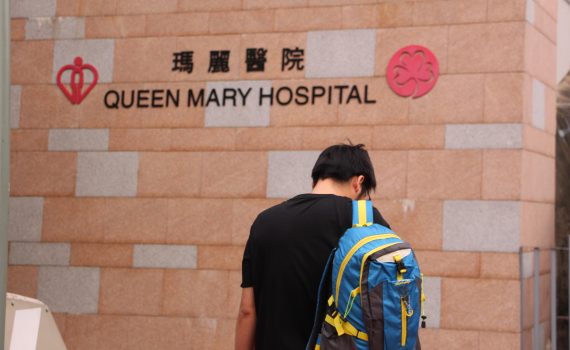
Vivian Chan, a 16-year-old Form Five student in Wong Chuk Hang, had her life trajectory changed three years ago when she was bullied and sexually harassed at just 12 years old. The incident left her isolated, led to suicide attempts, and resulted in a year-long struggle with mental health symptoms before she finally received a diagnosis and started treatment at Queen Mary Hospital. Chan was diagnosed with moderate depression in early 2024, one year after her depression began to arise, which gradually worsened due to extended outpatient waiting times and delayed community intervention, she said. Hong Kong’s public hospital psychiatric clinics have long been plagued by lengthy waiting times and a severely imbalanced doctor-patient ratio, with the longest waiting time for new outpatient cases reaching up to 101 weeks in 2025. While the government seeks to strengthen community mental health interventions in the hope of shortening clinical waiting lists, the effort is hampered by a shortage of resources for social workers’ early identification and prevention services training. The number of new psychiatric outpatient cases at public clinics has continuously increased from 47,879 in 2022 to 53,353 in 2025, according to the Hospital Authority. Around one in five urgent patients faces a median waiting time of one to three weeks for treatment, while the median waiting period for most non-urgent patients ranges from 17 to 76 weeks. After joining Queen Mary Hospital’s waiting list in 2024, Chan eagerly awaited professional medical help, only to endure a 28-week delay. Chan felt intense pain and helplessness during the waiting period. “Without a diagnosis, I kept overthinking if I was truly sick,” she added. She once locked herself in her bedroom for weeks to escape from the painful reality. “I pulled the curtains to block out sunlight, wrapped myself in blankets, and couldn’t hold …
Mona Lisa comes to life through immersive displays at the Heritage Museum’s exhibition
- 2026-05-02
- Culture & Leisure
- The Young Reporter
- By: Ng Wing Sum Jodie、Pann Hnin Nay ChiEdited by: YAM Long Hei Jamie
- 2026-05-02
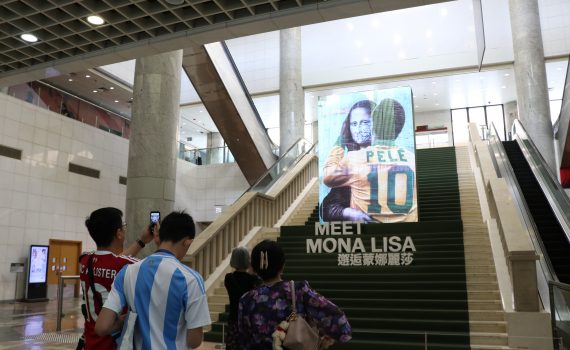
Large crowds filled the Hong Kong Heritage Museum on Friday as the “Meet Mona Lisa & Portraying the Renaissance” exhibition opened to the public on the Labour Day holiday. The exhibition, part of the annual French May Arts Festival, features multimedia immersive installations that introduce the history of the Mona Lisa, and diverse forms of Renaissance artworks, including four Leonardo da Vinci manuscripts. The multimedia section “Meet Mona Lisa” was produced by the Musée du Louvre and the Grand Palais Immersif in Paris. Most borrowed exhibits from France and Italy are making their Hong Kong debut, including The Crucifixion by Noël Bellemare, The Rebellious Slave by Michelangelo Buonarroti, and Luca Penni’s The Virgin and Child with the Infant Saint John the Baptist. Visitors crowded the galleries with long queues forming for interactive activities and the Mona Lisa’s “self-narrated” audiovisual walking tour by midday. Samuel Tang, 30, and Mavie Yu, 25, said they came to the exhibition today specifically for the Mona Lisa. Tang thinks the multimedia immersive experiences of the Mona Lisa's animations are more interesting than “regular stationary exhibitions”. He described the interactive elements as engaging, comparing the experience to watching a movie. “Usually we interpret the artworks on our own, but here the artworks break the fourth wall by talking to us and guiding us through the experience,” Tang said. The first-person narrative in the storytelling helped her understand the Mona Lisa’s backstory thoroughly, Yu said. Pursy Law and Waybe Tsang, both in their forties, brought their son for a family-bonding holiday after learning about the show on social media. “We want to bring our child to experience the cultural influence of the Mona Lisa,” Law said. “Everyone knows about the beauty of the Mona Lisa, but many are unaware of its story of being stolen,” she added. …
Fans flock to Causeway Bay to celebrate Hong Kong star Keung To’s birthday
- 2026-05-01
- Society
- The Young Reporter
- By: CHEUNG Ka Yi Ann、ZHENG WU AnnyEdited by: CHAN Hiu Ying
- 2026-05-01
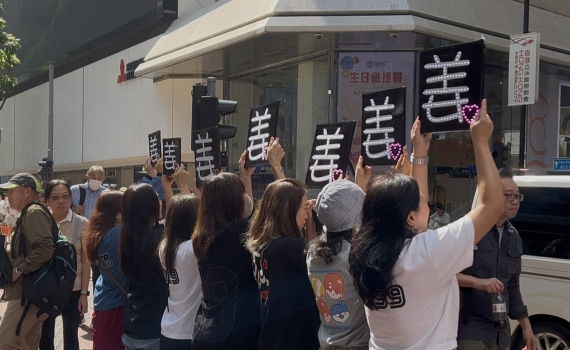
Cantopop star Keung To had his 27th birthday on April 30. Thousands of fans gathered in Causeway Bay to join the annual celebration. The fan club organised various events, including a free tram ride day and a charity birthday celebration. Themed decorations and billboards across the district also drew supporters to celebrate and take photos. Follow the link below to watch the full reel: https://youtube.com/shorts/n_aeHlGeFFE?si=quVbZ6OhahRuSDLm

Primal Race held during the Hong Kong Sevens weekend
- 2026-04-29
- Society
- The Young Reporter
- By: FENG ZhenpengEdited by: Fu Rong
- 2026-04-29
Primal Race debuts in Hong Kong from April 17 to 19, colliding with the Hong Kong Sevens tournament in Kai Tak Sports Park. It offers people in Hong Kong a chance to qualify for the Primal Race World Championship. Follow the link below to watch the full reel: https://www.instagram.com/reel/DXoCoSVE7nb/?igsh=MXVyNGJwdzUxbGkxeQ== Reported by: Stephen Feng Zhenpeng Edited by: Audrey FU Rong

More than a public holiday, Brisbane honours mateship and sacrifice on Anzac Day
- 2026-04-29
- The Young Reporter
- By: CHAU Wing YauEdited by: Yu Yan Pui
- 2026-04-29
Brisbane marked the 110th anniversary of Anzac Day on April 25, 2026. Thousands gathered in the city to commemorate those who served in the Australia Defence Force and those who sacrificed. Anzac Day began as a commemoration of Australians and New Zealanders who served at Gallipoli in the First World War. It has evolved into a national day of remembrance for all who have served and fallen in wars. Before the parade, dawn services across the suburbs and at Anzac Square in the CBD included the laying of wreaths, the sounding of the Last Post and a minute of silence. The Anzac Day Parade started at 9:45 am Adelaide Street, with Australian Defence Force veterans, descendants and school cadets marching in tribute until midday. Reported by Anny Chau Wing-Yau Edited by Jennifer Yu Yan-pui
Abused and abandoned, shared bikes raise questions of accountability
- 2026-04-29
- Society
- The Young Reporter
- By: LEUNG Chi Ngai、CHAN Hiu YingEdited by: ZHANG Yiping
- 2026-04-29
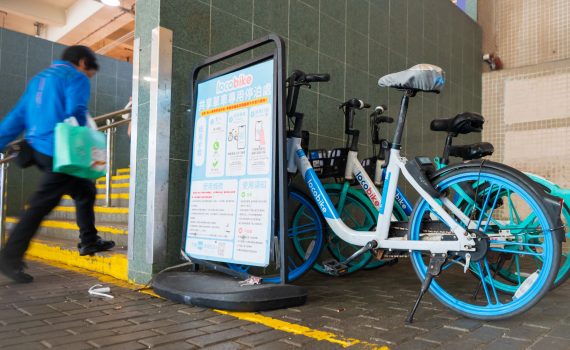
The scene at Tsuen Wan Riviera Park on Feb. 18 was not what morning joggers expected. 13 shared bikes from Locobike, the city’s largest bike-sharing operator, were found soaking in sea water, lodged against the breakwaters. This is not an isolated incident. On Jan. 15, video footage went viral on Threads showing a cyclist deliberately throwing a Locobike into a river. “These are basically rubbish,” said Wong Wai‑tung, a Tai Po district councillor. "The way you leave bikes like this; I no longer see them as something valuable.” Vandalism of shared bikes has been a recurring problem in Hong Kong since 2017, when the first shared-bike service, Gobee.bike, launched in the New Territories – the city’s largest region with the most extensive network of cycling tracks. Within four days of launch, four bikes were found dumped in the Shing Mun River. The operator shut down a year later, citing lack of profit. Shared bikes offer a greener transport mode for residents, but regulating shared bikes remains an uphill battle. Wong helps handle complaints regarding dumped and illegally parked shared bikes in Tai Po. “We sometimes receive reports from residents, especially at weekends, saying they’ve seen shared bikes in the river or left blocking pavements,” Wong said. “There are about two to three such complaints every month.” The problem is more severe in districts with larger cycling networks in the New Territories, such as Tuen Mun, Tseung Kwan O and Shatin, he added. There are now two active shared bike operators in Hong Kong — LocoBike, which has operated since 2017, and HelloRide, launched in 2025. According to Echo Lu, a HelloRide spokesperson, more than 300 HelloRide bikes have been damaged in the past year, about 10% of its fleet. “The challenges in Hong Kong are more complex than in other …
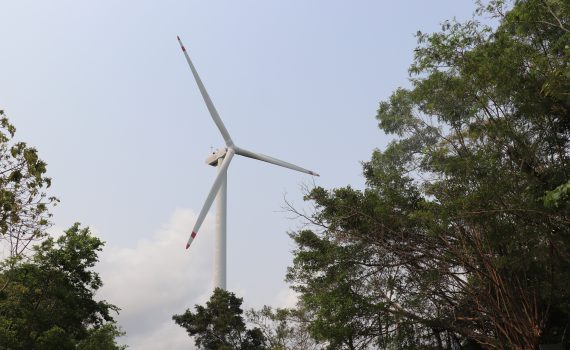
What does Lamma Winds’ closure mean for Hong Kong’s renewables strategy?
- 2026-04-28
- Society
- The Young Reporter
- By: AU YEUNG JimEdited by: SIU Tsz Hang
- 2026-04-28
Joe Chen, 40, and Bibi Chung, 35, climbed up a 15-minute slope to reach the Lamma Winds – Hong Kong’s first wind power station – in Lamma Island, on a quiet Tuesday. They took pictures in front of the turbine, trying different angles to fit the entire 71-metre-tall wind farm into a single frame. This is probably the last time they can do so. In a press release issued in late March, the wind farm’s operator, HK Electric, said the turbine had reached its lifespan of 20 years in February. The company added most key components are no longer in production, paired with market availability and site limitations, meaning a new commercial scale turbine cannot be installed in the same location. It will therefore be decommissioned for public safety later this year, according to its website. “Last time we came here, the wind blades were still moving,” Chen said. “It is no longer moving now.” Lamma Winds was built in 2006, the first of its kind in the history of Hong Kong. It is also the first commercial-scale renewable facility built by a power company in Hong Kong. According to HK Electric, Lamma Winds was designed with a capacity of 800 kW. The construction cost was HK$15 million, and it took five years to complete. The power giant said the wind turbine has generated 16 million kilowatt hours of electricity over its 20 years. Wong Kam-sing, former Secretary for the Environment, said the decommissioning would not change the scale or direction of the city’s renewable energy development. “Based on the government’s 2050 strategy plan, onshore wind farms are actually not part of our future development strategy,” Wong said. “Lamma Winds is mostly a demonstration of the technology we had 20 years ago, therefore it has no special relationship with Hong …

Survivors and advocates call for comprehensive sexual offence law reform
- 2026-04-26
- Society
- The Young Reporter
- By: YAM Long Hei JamieEdited by: SIU Tsz Hang
- 2026-04-26
Advocates and sexual offence survivors on Saturday urged the government to pursue broader legal reforms beyond current proposals at the Sexual Offense Reform Forum. This call came ahead of a government plan to launch at public consultation on the reform of the city’s sexual offense laws later in 2026. The forum examined whether proposed reforms adequately address the realities faced by sexual violence survivors. Jointly organised by the Hong Kong Women’s Coalition on Equal Opportunities and the Equality Rights Project at the HKU Faculty of Law, the event attracted around 200 participants from online and in person. Jessie, a representative of a sexual offence survivors’ advocacy group, called for stronger reforms to Hong Kong’s consent laws, outlining three key changes not included in the Law Reform Commission’s recommendations. Three changes include: silence or lack of resistance must not be interpreted as consent; if consent was never sought, the accused cannot rely on a claim of “honest but mistaken belief” in consent; and the law should provide a clear statutory definition of both consent and the absence of consent. “I went through sexual assault, reported it to the police, and attended court. In the end, the defendant was acquitted because of how the law is written,” Jessie said. She said the defence repeatedly questioned why she did not physically resist, asking why she did not hit, bite or kick the offender, call for help, or leave the scene. “The defence turned the victim’s trauma responses into a weapon,” she said. “This tactic of using trauma against the victim, questioning clothing, lack of resistance, or why the victim did not leave the scene, is very common in court.” Jessie was also asked to recall precise details of the assault, including the number of times penetration occurred, how long it lasted, and how …