
Business
15 schools, one record blow: the struggles of zero primary one classes in Hong Kong
- 2026-05-12
- Society
- The Young Reporter
- By: RONG Miu Tung Shelly、ZHENG WU AnnyEdited by: FENG Zhenpeng
- 2026-05-12
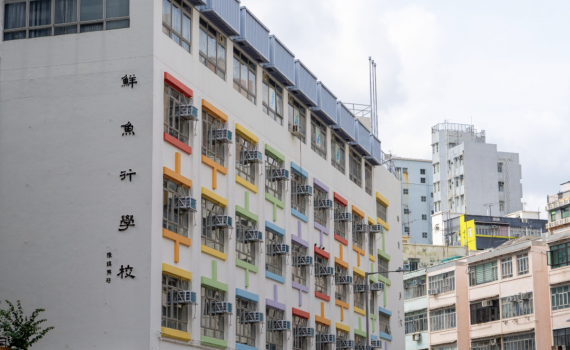
“I can’t bear to leave… It feels empty, as if losing friends,” said Ally Chen, 11, a primary five student at Fresh Fish Traders’ School in Tai Kok Tsui, which was nearly closed due to low enrolment. On March 17, the Hong Kong Education Bureau announced that a record 15 public and subsidised primary schools across 10 districts, including Fresh Fish Traders’ School, would have no primary one classes for the next academic year because they failed to enrol the minimum of 16 students. The potential school closures leave schools, teachers and students worried about heavier workloads and the loss of familiar school communities as they navigate an uncertain future. Fresh Fish Traders’ School previously faced enrolment shortages in 2004 and 2007, but managed to turn things around. This time, however, rather than closing its doors, the school announced in March that it plans to merge with another school in the district, although the partner's name has not yet been disclosed. Hong Kong’s student population has been shrinking rapidly. Primary school enrolment fell from 373,228 students in the 2019/20 school year to 319,447 in the 2024/25 school year, a decrease of 14.4%, according to the Bureau. Education Secretary Christine Choi Yuk-lin said in a media briefing in March that the number of students participating in the primary one allocation for 2026/27 had fallen by around 4,000 compared with the previous year. Experts point to Hong Kong’s falling birth rate. According to the Census and Statistics Department, the number of births in 2025 dropped to a record low of 31,714, a 14% decrease from the previous year. “Emigration of young families has certainly contributed to the decline in school enrolment, but its impact is secondary compared to the persistently low local birth rate,” said Anita Koo Ching-wah, a professor at the …
Rising fuel costs sting Hong Kong on everything from cars to laundry
- 2026-05-08
- Society
- The Young Reporter
- By: LI Jinyang Carlos、ZHANG Jiahe RoysEdited by: CHEN Ziyu
- 2026-05-08
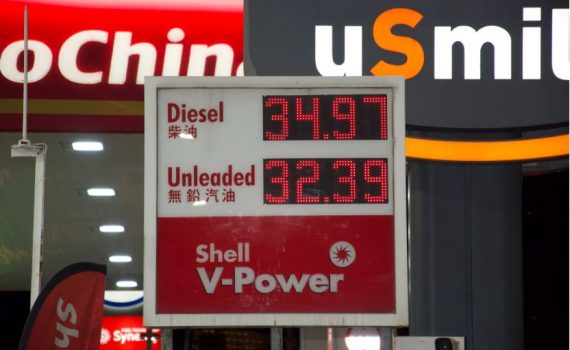
Marcus Kan, 29, sits restlessly in his car on the Hong Kong-Zhuhai-Macao Bridge, stuck in heavy traffic as he waits to cross into Zhuhai. Once there, he hopes to fill up at lower fuel prices than Hong Kong, where he lives. “I go to the mainland for fuel once a week. Since the outbreak of the Iran war, the petrol price difference between the mainland and Hong Kong has widened steadily. Even factoring in the fuel cost of commuting back and forth, it’s still more economical to refuel in the mainland,” Kan said. Petrol prices in Hong Kong have risen steadily since the Islamic Revolutionary Guard Corps closed the Strait of Hormuz following US-Israel airstrikes on Feb 28. Prices have surged by 11.3% over the past two months, climbing from HK$29.24 in early March to a record high of HK$32.54 per litre as of May 1. “It’s a popular trend among my social circles. It only takes 50 minutes for a single trip from Hong Kong to Zhuhai, so I quite enjoy the trip,” he added. Kan said nearly all his friends who own vehicles have tried refuelling in mainland China at least once. “The control points are sometimes congested nowadays, which likely means more cars are crossing the border,” said Kan. Global crude oil prices have surged over 53% since the war began, topping US$120.55 per barrel. Fluctuations in crude oil prices directly impact its derivatives, such as petrol, diesel and liquefied petroleum gas. To ease the pressure of rising fuel prices, the Hong Kong government made a 50% tunnel toll reduction for commercial vehicles following a special meeting in April, though it still has not announced any price controls or subsidies for private car owners. “The closure of the Strait of Hormuz transportation route will affect 20% to …
InnoEX 2026: Hong Kong ramps up AI spending, but industry warns adoption still lags
- 2026-04-16
- Business
- By: TANG Siqi、Zhou XinyingEdited by: ZHONG Xinyun、ZHOU Yun
- 2026-04-16
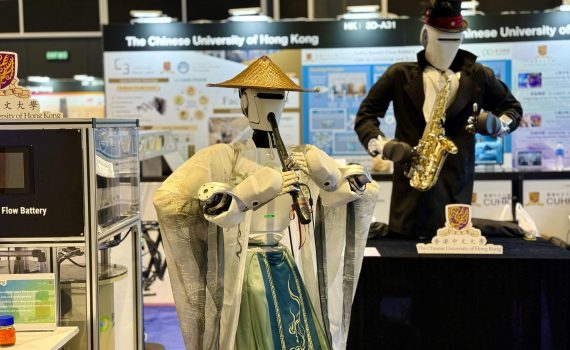
The Hong Kong government is ramping up its artificial intelligence (AI) development through massive new computing capacity and funding, but industry players raised concerns that AI adoption levels in the city remain too low. Lillian Cheong Man-lei, Under Secretary for Innovation, Technology and Industry of the Hong Kong SAR Government, said at a thematic seminar during InnoEX 2026 on Tuesday that AI is a key driving force for industrial transformation. Hong Kong has been taking a multi-pronged approach to building its AI ecosystem, she said, covering research and development (R&D), computing power, data infrastructure, talent and funding. She mentioned that to accelerate the R&D and commercialization of AI workflows and drive industry empowerment in AI, Hong Kong is moving forward with the establishment of a dedicated AI research and development center. On the data infrastructure front, the city plans to build a data center cluster in Sha Ling, which is expected to boost total computing power from the current 5,000 petaflops to 180,000 petaflops by 2032, a 36‑fold increase. Furthermore, an array of key funding programs has been launched to bolster the AI ecosystem, including the HK$3 billion AI Subsidy Scheme, which assists local institutions, R&D centers and enterprises in advancing AI research and applications. Henry Mak, the Assistant Marketing Manager of Ricoh Hong Kong Limited, a provider of workplace technology, said the HK$3 billion government subsidy is a source of sales opportunities for technology providers like his company. He explained that amid economic uncertainty, clients such as businesses and schools rely on government funding to adopt technology solutions. Anthony Ribout, a French startup Founder and CEO of ARSK in Hong Kong, also highlighted the value of government support, noting that Hong Kong’s AI support policies are more efficient than those in France, with clearer funding schemes and stronger financial …

Art Basel Hong Kong logs seven-figure deals and crypto sales amid global market rebound
- 2026-04-06
- Business
- By: ZHOU YunEdited by: Wang Yunqi
- 2026-04-06
Art Basel Hong Kong recorded multiple seven-figure transactions and completed its first Ether-denominated sales through a new digital art sector, as the global art market ended a two-year sales decline. The five-day fair at the Hong Kong Convention and Exhibition Centre drew 91,000 visitors and featured 240 galleries from 41 countries and regions, including Gagosian, David Zwirner, and Tang Contemporary. David Zwirner sold a 2006 Liu Ye painting for $3.8 million and a 2002 Marlene Dumas work for $3.5 million, according to the fair's website. The fair's strong results came amid a broader market rebound. According to the Art Basel and UBS Global Art Market Report 2026, global art market sales rose four percent to $59.6 billion last year, with the U.S., U.K., and China accounting for a combined 76 percent of revenue. https://playful-khapse-3e93c2.netlify.app/ Auction sales climbed six percent to $24.8 billion, driven by high-value works. Transactions above $1 million rose 21 percent year-on-year, while those above $10 million gained 30 percent. Dealer sales rose two percent to $34.8 billion, constrained by rising operating costs. Zero 10, Art Basel's global digital art initiative, made its Asian debut at the fair, featuring 14 institutions presenting works using artificial intelligence, algorithms, and immersive technology. Korean digital artist DeeKay Kwon's work I WANNA RUN sold multiple editions at 6 Ether (ETH), approximately $13,000 each, according to his gallery, AOTM. The gallery said the transactions reflect growing collector demand for digital art. Digital, film, and video art represented three percent of total dealer sales in 2025, up two percentage points from 2024 but still below the five percent peak recorded in 2022, the report said. Reporters: Zhou Yun, Hui Tsun Ka, Li Ka Yu, Gu Chun Kai Editor: Wang Yunqi
Hong Kong office market active on relocations, but recovery fragile
- 2026-04-01
- Business
- By: LIN Xiaoyou、ZHONG XinyunEdited by: Zhou Xinying、ZHOU Yun
- 2026-04-01
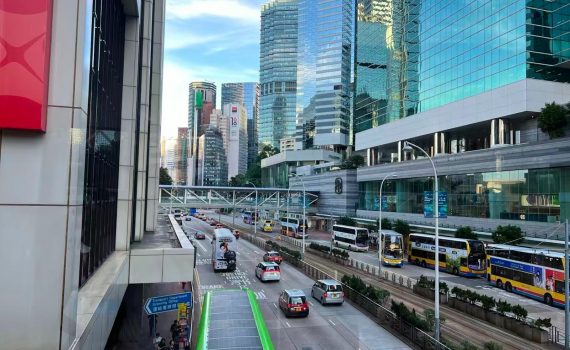
Zhou Haoming, a marketing and editing position in a publishing company at Park Commercial Centre in Tin Hau, observed that an increasing number of companies had moved out of the building over the past six months, leaving the premises noticeably quieter and less populated. After the companies moved away, the number of partner businesses in the office building, with which Zhou’s company could jointly carry out promotional activities, decreased significantly. Corporate relocation activity was active in 2025. AIA Hong Kong announced in 2024 that it would expand into AIRSIDE, an A-grade commercial building in Kai Tak, as a new operations and training base for its financial planners. Activities gradually moved into the new office in 2025. Cory Tsai, a financial planner at AIA, said the new location offers better transport connectivity and amenities, as Kai Tak is now regarded as Hong Kong’s new economic centre. AIA’s relocation to new business areas is not an isolated case. Since the second half of 2025, Hong Kong’s office market has seen a period of heightened activity driven by large-scale leasing transactions and relocations. Among the more notable cases is UBS, which announced on February 3, 2026, that it would relocate and consolidate all of its Hong Kong offices into a single hub at the International Gateway Centre in West Kowloon. Sam Gourlay, JLL Head of Office Leasing Advisory, also noted that more firms are expanding to emerging business centers such as West Kowloon and Tsim Sha Tsui, drawn by their strategic connectivity and access to the high-speed rail link to mainland China. While Hong Kong’s office market has found some stability supported by such high-profile leasing deals, the improvement has come mostly from corporate relocations, Gourlay said. JLL said in its press release that the office market showed a gradual recovery in the …
Singapore’s dining shake-up: How a wave of foreign brands is reshaping the food scene
- 2026-04-01
- Business
- By: CHEN Yongru、Wang YunqiEdited by: TANG Siqi、ZHOU Yun
- 2026-04-01
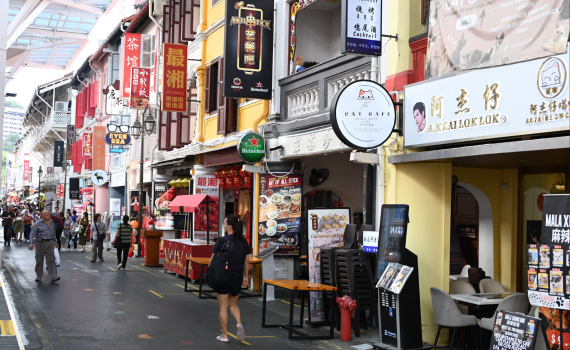
At 11 pm on a weeknight, Reenice Lim was still on her feet. The head of House of Roasted Meats, a homegrown roasted meat brand, was juggling walk-in customers and a stream of online delivery orders. Even with four outlets in Singapore, Lim stressed that running the business still comes with significant challenges. In 2025, Singapore’s dining scene underwent a major shake-up. Between Jan. 1 and Oct. 23, 2,431 food and beverage (F&B) outlets shuttered, while 3,357 new ones opened. Among those bowing out were homegrown brands like Fluff Stack, a six-year-old Japanese-style soufflé pancake chain that closed all five of its outlets in May, citing a challenging F&B environment in Singapore. Accounting and Corporate Regulatory Authority (ACRA) data shows that over 60% of 2025’s shuttered F&B outlets had operated for fewer than five years. Amid the fierce market competition marked by a major reshuffle, Lim said for local operators like herself, “the biggest difficulties are the increasing rental costs and manpower costs”. This struggle is echoed by 33-year-old Xia Ziwen, a veteran Chengdu restaurateur turned Singapore entrepreneur, who noted that a local labor shortage has pushed manpower costs to 30% of total operating costs. Starting in March 2025, Ministry of Manpower (MOM) regulations further mandate a minimum gross monthly wage of S$2,080 (HKD 12,850) for F&B stall assistants, intensifying the financial pressure on small-scale operators. To comply with the manpower quotas set by MOM, businesses must hire a specific number of locals to “unlock” foreign work permits. Xia noted that this regulatory obligation can push the total monthly cost of employing a single Malaysian retail assistant to S$5,000 (HKD 30,900). Businesses heavily reliant on migrant workers, such as Lim’s roasted meat stalls, are especially hard hit by the mounting costs brought by higher government levies and stricter wage requirements. …

Record gold prices push mainland firms to seek overseas markets at Hong Kong International Jewellery Show
- 2026-03-08
- Business
- By: CHEN Yongru、LIN XiaoyouEdited by: Wang Yunqi、ZHOU Yun
- 2026-03-08
Mainland Chinese gold manufacturers are increasingly looking to expand overseas through Hong Kong, as record-high gold prices squeeze domestic consumption, exhibitors said at the five-day 42nd Hong Kong International Jewellery Show, which wrapped up today (Mar 8). The World Gold Council rolled out its Hard Pure Gold Pavilion at the show this year, bringing together 10 leading mainland gold manufacturers to showcase innovative gold technologies and explore global business opportunities via the exhibition platform. Chen Yujie, General Manager of Trade of Shenzhen Guanhua Jewelry Co. Ltd., has observed a growing trend of many mainland gold brands expanding their footprint in overseas markets. As a supplier, Chen said that given falling consumption caused by sustained high gold prices, the company is also expanding overseas, with Hong Kong as a strategic hub to understand international market demand, develop tailored products for overseas markets, and seek new market breakthroughs. The World Gold Council’s Q4 2025 Global Gold Demand Trends report shows that total global gold demand surged to US$550 billion last year, up 45% year-on-year. The average gold price reached US$4,135 per ounce in Q4 2025, up 55% year-on-year. This drove the full-year average to a record US$3,431 per ounce, a 44% increase. Chen added that as elevated gold prices deter consumers, turnover volumes have fallen, eroding the cost advantage that high-volume production once provided. With costs increasingly difficult to control, manufacturers have raised selling prices across the board over the past two years. On Jan. 26, the Financial Services and the Treasury Bureau signed a co-operation agreement with the Shanghai Gold Exchange, with the government’s gold central clearing system scheduled to launch trial operations this year. In the 2026-27 Budget, Financial Secretary Paul Chan Mo-po also unveiled plans to explore tax incentives for gold trading institutions, assist in establishing a trade association, …
Budget 2026: Hong Kong to expand bond issuance for infrastructure projects
- 2026-02-26
- Business
- By: TANG Siqi、CHEN YongruEdited by: ZHOU Yun
- 2026-02-26
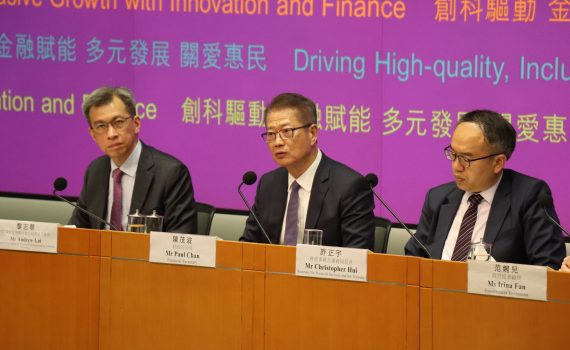
Hong Kong will expand bond issuance to address the funding needs of infrastructure projects, Paul Chan Mo-po, the Financial Secretary, announced in his 2026 Budget Speech on Wednesday. Chan said that about HK$160 billion to HK$220 billion worth of bonds will be issued in each of the next five years, and more longer-term bonds will also be issued to align more closely the cash flow duration with project requirements in future. Zou Xin, Associate Professor in the Department of Accountancy, Economics and Finance at Hong Kong Baptist University, said that sustained infrastructure development is vital to Hong Kong’s progress, as it can help attract capital as well as enhance the city’s overall urban landscape. As of Mar. 31, 2025, the government had issued a total of HK$105.2 billion in infrastructure bonds. According to the government, over the fiscal years spanning 2026-27 to 2030-31, the government’s operating accounts are expected to continue to show a surplus, while non-operating accounts are projected to still show a deficit annually, mainly due to a high level of infrastructure spending. Dong Ding, Professor in the Department of Accountancy, Economics and Finance, at Hong Kong Baptist University believed that now is a suitable time to issue bonds. He said that, against the backdrop of falling global interest rates, both the US and Hong Kong have entered a rate-cutting cycle, keeping borrowing costs at a relatively low level. Meanwhile, Hong Kong’s economic growth remains steady at 3%–4%, creating a favorable environment for bond issuance. “When interest rates are lower than economic growth rates, borrowing is essentially a zero-cost activity, even a ‘free lunch,’” Dong added. Yet, Dong also mentioned some potential risks. He said that market uncertainty may be one of the major risks associated with the bond issuance as a slowdown in economic growth, deflationary pressures …
Budget 2026: Hong Kong unveils new measures to boost REIT market
- 2026-02-26
- Business
- By: Zhou Xinying、LIN XiaoyouEdited by: ZHOU Yun
- 2026-02-26
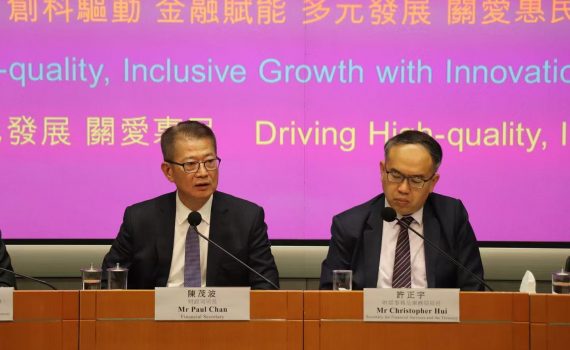
The Hong Kong government and the Securities and Futures Commission (SFC) will continue to drive high-quality development of the Real Estate Investment Trust (REIT) market, with a view to securing the early inclusion of REITs in the Mutual Market Access Scheme, as announced by Financial Secretary Paul Chan Mo-po in the 2026 Budget Speech. To facilitate the privatization or restructuring of REITs, the government plans to introduce an amendment bill this year to further refine the market ecosystem. “Lowering the investment threshold, increasing trading liquidity, and boosting participation are the core objectives of this policy,” said Dong Ding, Professor from the Department of Accountancy, Economics and Finance, at Hong Kong Baptist University. There are currently 11 REITs listed on the Hong Kong Stock Exchange, according to HKEX data. Among them, Link REIT is the largest, with a market capitalization of approximately HK$100 billion as of February. According to the Q4 2025 Hong Kong investment figures published by CBRE, total investment volume in Hong Kong commercial real estate in 2025 reached HK$44.5 billion, while REIT activity was confined to a single fourth-quarter transaction worth HK$206 million by CMC REIT, the first such deal since Q1 2023. “REITs are still relatively small in scale,” Dong said. “Yet it [the property sector] does play a truly important role in Hong Kong’s overall economy.” However, Dong also mentioned potential risks concerning REITs. He said that by packaging real estate assets and introducing leverage and borrowing, the market as a whole becomes more vulnerable to uncertainties over global monetary policy and interest rates, as well as geopolitical risks. In addition, REITs also transfer a larger part of rental return risk from developers to ordinary investors. “If weak consumer demand in Hong Kong leads to a decline in rents, it will cause investors to suffer losses, …
Budget 2026: Hong Kong to increase elderly care vouchers, but long waiting list persists
- 2026-02-25
- Society
- The Young Reporter
- By: MA Yifan Chloe、LIU Rui ReenaEdited by: CHEN Xiyun
- 2026-02-25
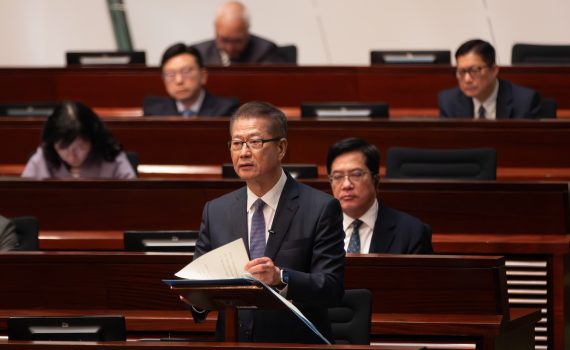
Hong Kong is set to increase funding to boost capacity for elderly community and home care vouchers by up to 33% which could benefit more citizens but shortage of service provision remains. Speaking in his budget speech on Wednesday, Secretary of Finance Paul Chan Mo-po said the increase will allow 4,000 more elderly citizens to receive subsidised community care and another 1,000 people to receive discounted residential care services. Sze Lai-shan, deputy director of the Society for Community Organisation, welcomed the move as previous provisions could hardly meet the demand of Hong Kong elderly people’s needs. “But the problem of inadequate service provision remains,” Sze said, referring to service waiting time continuing to be an issue. “The government has made significant efforts to assist the elderly but caregivers of elderly people also need support,” said Wong Lai-ying, 59, who is for her 98-year-old mother. Wong’s mom lives alone in Kwun Tong with a urinary catheter attached, which requires Wong to take her to the hospital twice a week for kidney check-ups. Each visit could take up four hours as she works in the Hong Kong International Airport. It’s the fifth year that Wong’s mom has failed to gain eligibility for residential care services. Last year, 14,346 applicants were on the waiting list for subsidised community care services, and 17,664 queued to enter the nursing homes that are covered by the current vouchers schemes, according to the Social Welfare Department. According to the 2021 Population Census, 16.6% of persons aged 60 and over living in households require long-term care. “We hope the government can continue to increase funding for more elderly community care vouchers in order to cut down waiting time of elderly homes, ” Sze said.