
Business
Budget 2026: Hong Kong reduces taxes to attract enterprises and investment
- 2026-02-25
- Business
- The Young Reporter
- By: YANG Shuyi、Cao BeiyuEdited by: QIN Ziyang
- 2026-02-25
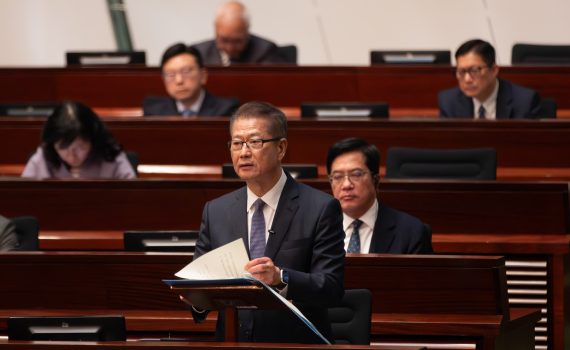
To further attract enterprises to Hong Kong, the government will adjust preferential tax rates to 8.25% or 5%, depending on the company. Financial Secretary Paul Chan Mo-po said that the government will introduce policy tools, which also include land grant arrangements and financial subsidies, for new enterprises. The amendment bill will be introduced this year. The government introduced a framework for preferential policies to promote industry and investment in last year’s policy address. According to the Census and Statistics Department, the number of companies in Hong Kong with parent companies located outside Hong Kong has increased from 9,049 to 11,070 in four years, an increase of 22.3%. Yang Xiaofeng, one of the founders of Chengdu Vifortek Healthcare Technology Co., Ltd, said the company has plans to set up in Hong Kong. “Tax incentives can significantly reduce the operating costs of our research and development center, enabling us to attract more international talent,” said Yang. Yang added that tax incentives have solidified their company's resolve to use Hong Kong as a base to expand globally. “Taxes don't concern me much as a small business owner, since our business is now only marginally profitable,” said Wu Xiaoli, the founder of Tang Le Le Trading Limited, a mainland toy company set up in Hong Kong in August 2024, adding that she’s more concerned with rental and labour costs. Wu said Hong Kong offers more opportunities for growth and this is a core demand for enterprises. According to Ryan Ip, vice president of Our Hong Kong Foundation, a think tank focused on economic development, said the most common difficulties for enterprises that want to establish themselves in Hong Kong are that they are unfamiliar with local procedures for registration, office space and team building. He added that to solve this difficulty, the government should …
Budget 2026: Hong Kong reinforces its roles as international gold trading centre
- 2026-02-25
- Business
- The Young Reporter
- By: ZHANG Jiahe Roys、LI Jinyang CarlosEdited by: CHEN Ziyu
- 2026-02-25
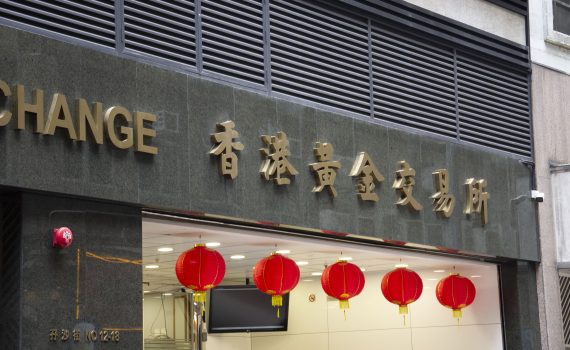
Financial Secretary Paul Chan Mo-po announced that the government will establish Hong Kong as an international gold trading centre, providing relevant services including tax incentives, setting up industry associations and training for eligible gold trading institutions. Hong Kong plans to lift its gold storage capacity to over 2,000 tonnes within three years, according to Chan Ho-lim, the Under Secretary for Financial Services and the Treasury at the Hong Kong Gold Exchange 2026 opening ceremony. At the Asian Financial Forum on Jan.26., Hong Kong Financial Services and the Treasury Bureau signed a co‑operation agreement with the Shanghai Gold Exchange, establishing Hong Kong Precious Metals Central Settlement System Company Limited to create a gold settlement system. More than 10 banks, both local and overseas, will participate in the system to commence within the year. Hui Ching-yu, Secretary for Financial Services and the Treasury Bureau, said at the forum that gold is important under current geopolitical uncertainty and inflationary pressures. Lau Hou, 42, project manager of CNI Securities Group, said the key to increasing gold reserve capacity is whether Hong Kong could be a stronger physical hub in the Asia-pacific zone capable of storage, allocation, delivery and financing. “Hong Kong’s advantages lie in connecting the mainland with the international market, Asia-pacific time zone delivery, offshore RMB products and funding pools,” he said. “Through complementary cooperation with existing major international gold markets, participants can view Hong Kong as a key point in the global chain. This will increase the feasibility and attractivity of RMB-denominated gold productions, making market makers and institutions prefer to offer more products,” Lau added. Chan Wah, 25, local investor and lawyer, said he holds a wait-and-see attitude regarding the gold policy in today’s budget. “ I hope the government can prioritize training on market regulation and risk management, such as …
Hong Kong to issue first stablecoin licenses next month, CE says
- 2026-02-13
- Business
- The Young Reporter
- By: TANG Siqi、Zhou XinyingEdited by: Wang Yunqi、ZHOU Yun
- 2026-02-13
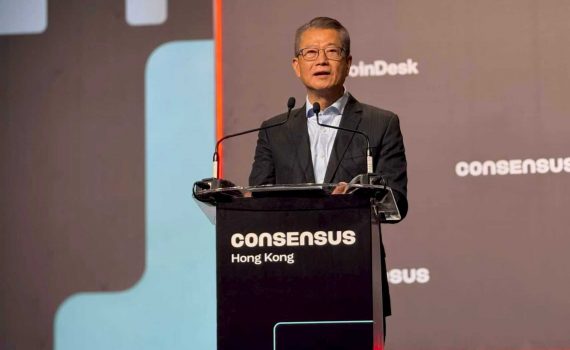
CoinDesk held Consensus 2026 on digital finance and emerging technologies from Tuesday to Thursday, with the acceleration of stablecoin license issuance becoming a highlight. “The Hong Kong Monetary Authority (HKMA) is actively processing licensing applications,” Chief Executive John Lee Ka-chiu said at the conference’s opening ceremony. “We believe the first batch of stablecoin issuer licenses will be issued within the next month.” Financial Secretary Paul Chan Mo-po said at the conference that stablecoins are helpful in easing funding pressure on the real economy, especially in payment and settlement. Hong Kong’s Stablecoins Ordinance, which took effect on August 1, 2025, establishes a licensing regime for issuers of fiat-referenced stablecoins in Hong Kong, placing the issuance and related activities of stablecoins under the formal regulatory oversight of the HKMA. In terms of the licensing criteria, Chan stressed that “we ensure that licensees have real-world use cases, a credible and sustainable business model, as well as strong regulatory compliance capabilities”. Chan also added that a small first batch of licenses will be issued in March, and more will follow subsequently. Sion Xiang, community manager at the decentralized finance protocol Phoenix, said that issuing stablecoin licences could boost the internationalisation of the domestic currency and strengthen its resilience against external shocks. However, Xiang pointed out potential risks that if banks or financial institutions use stablecoins as collateral, it could trigger a chain reaction of reserve imbalances across the financial system. In addition, he also mentioned that stablecoins may face the risk of de-pegging due to insufficient reserve assets. To address this threat, he emphasized the need for sufficient reserve assets, potentially through blockchain-based verification. Looking ahead, Hong Kong’s digital asset regulatory rollout will forge ahead, as Paul Chan stated that the government is also finalizing the details of new licensing regimes for digital asset …
Dry stall rent reaches three-year high in lunar new year fair
- 2026-02-12
- Culture & Leisure
- The Young Reporter
- By: Man Cheok Lam Lorraine、Baguio AnneEdited by: CHENG Tsz Sen Sean
- 2026-02-12
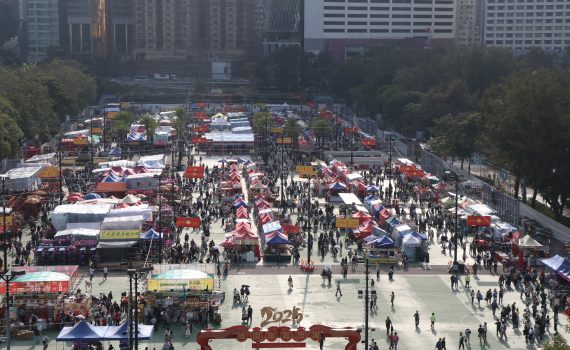
Dry stall holders at the city’s largest Lunar New Year Fair at Victoria Park are facing the highest rent since the return of dry goods stalls in the 2024 fair. The government reintroduced dry goods booths after a four-year suspension after the dry stalls were canceled due to crowd control reasons in 2020. In the following years, they were canceled due to the pandemic. According to the Food and Environmental Hygiene Department, this year’s fair had an average bid of HK$17,847 for a regular-sized dry stall, a 52.5% increase compared to last year. Icy Lo, 22, a Japanese goods seller, has been at the fair since last year. Lo said her rent this year has increased by around HK$4000-$5000. She added her sales on the first day were fine, and more people will be at the fair after normal working hours. Belle Chan, 25, a local nursing student, sells traditional Hong Kong snacks with her family. This is her fourth time holding a stall at Victoria Park. “The rent has gone up. Last year's rent was just around HK$8,000.” Chan said. Chan said more people are going to the fair when compared to the early post-COVID years, leading to higher bidding prices for a store. This year, her stall moved from the corner to the aisle and she worried this would worsen their sales. Despite the increased cost, some still wanted to try running a store. Kenny Cheung, 25, returned to Victoria Park to sell lion dance-themed merchandise after a seven-year absence. He said the rent was similar when he was last here. “I didn’t come to make a lot of money, but to enjoy the atmosphere and promote traditional culture,” Cheung said. Yeung Ying-kei, 18, a local student, visiting the fair for the first time with her friend from …
2025 in finance: The biggest stories through AI and expert eyes
- 2026-02-02
- Business
- By: LIN Xiaoyou、CHEN Yongru、LO Shing KwanEdited by: Haoming Zhou、BO Chuxuan
- 2026-02-02
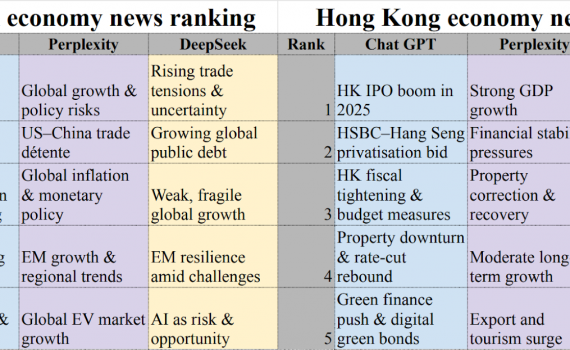
The financial landscape in 2025 has been dynamic, with trade tensions and policy shifts drawing intense market attention. In Hong Kong, the performance of local capital markets and the broader economy have also been in focus. The rapid development of AI has been another major theme. We used three AI models with web-search capabilities, enabling them to access real-time information, to compile a preliminary ranking of the top financial news stories of 2025, both internationally and in Hong Kong. The following prompt was used for all three AI models: "Please select the top 5 economic and financial news stories related to [Hong Kong/International] in 2025. You must use credible news websites and official news reports as information sources. For each selected news story, provide a clear ranking, detailed reasons for the ranking, and the source of the news. Ensure the information is accurate and up-to-date,” The list is presented in the table. Duan Yang, a senior lecturer of the Department of Accountancy, Economics and Finance in HKBU, noted that the results closely reflected key market developments, including the slow recovery of China’s real estate sector, weak consumer spending, the Hong Kong IPO surge, HSBC privatization, and Hong Kong government fiscal policies. In terms of Hong Kong’s financial market, Duan observed that the city’s position as a financial hub had strengthened this year. While (Global Financial Centres Index) rankings had declined in previous years, strong activity in the overall financial market, particularly in the IPO sector, combined with substantial capital inflows, contributed to consolidating Hong Kong’s financial standing. Duan also highlighted a notable trend in the Stock Connect program, with a majority of funds investing in Hong Kong equities now originating from mainland China, compared with a larger share from foreign investors in prior years, indicating a significant shift in market …
Recap 2025: Gold prices soar to historic highs amid surging global investment demand and market activity
- 2026-01-30
- Business
- By: ZHOU Yun、TANG Siqi、ZHONG XinyunEdited by: Yichun Fang、BO Chuxuan
- 2026-01-30
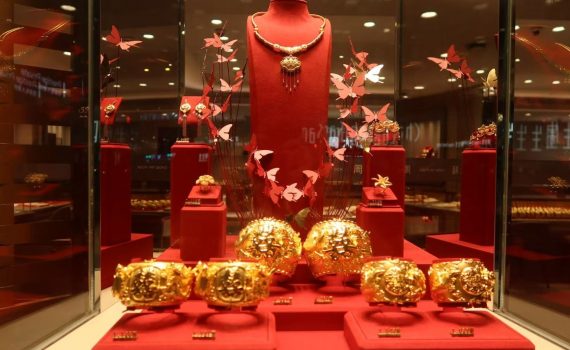
Floria Chen, a gold lover from mainland China, is leaning in to scan the gold jewelry at the counter, carefully inspecting it under the lighting as she contemplates her selections in a bustling Chow Tai Fook store in Mong Kok. “Gold prices have performed exceptionally well this year,” Chen said. Believing in the substantial potential for price appreciation, she planned to increase her gold holdings. The year 2025 has been record-breaking for gold , one of the most popular and best-performing assets globally. As of Oct. 31, the international gold spot price had surged more than 50% to $4,002.92 per ounce since the beginning of the year, and reached a new historic high at $4381.52 on Oct. 20. Alongside the rapid rise, the year also features a single-day drop of 5.3%, the largest since 2013, though analysts viewed this as a healthy correction following the metal's relentless climb. Despite this, analysts say the fundamental drivers behind the strong rise in gold prices remain intact. Looking back to this year’s eye-catching alternative, the volatility always echoes the Federal Reserve's monetary policy shift, escalating geopolitical tensions, and ongoing gold purchases by central banks. As of Oct. 31, the US Federal Reserve has cut the basic interest rates twice by 25 basis points on Sep. 18 and Oct. 29 to sustain economic momentum, as a weakened domestic labor market showed. On Oct. 29, the Federal Reserve announced its plan to end quantitative tightening starting in December. Alongside the evolving policy factors, escalating geopolitical tensions are also playing a significant role. HSBC noted that on Oct. 8, gold prices first surpassed the $4,000 per ounce mark, driven primarily by various uncertainties, including the ongoing U.S. government shutdown, resurgence of tariff concerns, and increasing political ambiguity in France. Market concerns over fiscal challenges are also …

GBA forum: Hong Kong firms urged to tap mainland demand amid sluggish retail recovery
- 2026-01-30
- Business
- By: LIN Xiaoyou、ZHONG XinyunEdited by: CHEN Yongru、ZHOU Yun
- 2026-01-30
The Hong Kong Trading Development Council held a seminar on Thursday on new consumption trends in the Greater Bay Area (GBA), guiding Hong Kong enterprises to seize opportunities in the GBA amid the city’s modest retail recovery. Howie Wong, General Manager of Kampery, a Hong Kong-based retailer and manufacturer, said that mainland China’s consumption momentum is robust, driven by highly convenient e-commerce. Therefore, it is a great opportunity for Hong Kong enterprises to expand their exports now. The latest data from the Census and Statistics Department shows that although Hong Kong’s total retail sales in November 2025 increased by 6.5% compared with the same period in 2024, reaching HK$33.7 billion, it is still much lower than the level before the COVID-19 pandemic. Wong added that some mid-tier, more value-for-money consumers may choose to spend in mainland stores, causing purchasing power to shift northwards. Sherriff Luk, professor of marketing at Emlyon Business School, cited research by Agent Ocean showing that mainland consumers are increasingly focused on product quality, safety, and health benefits. Hong Kong businesses need to understand the changes in the consumer base of the Greater Bay Area. If they stick to the old ways, they may not keep up with the trend. More specifically, Luk said that the pursuit of “quality of life” is a new consumption trend and mainland consumers are shifting from price-driven to experience- and emotion-driven spending. On corporate strategy, Billy Cheung, founder and CEO of Sparkdemy, said that in an environment where social media content is highly saturated, brands need to enhance their exposure and content production capabilities. “As long as you can be found in Search Engine Optimization searches, you win,” he added. Regarding how Hong Kong enterprises can enter and capture the Greater Bay Area market, Cheung said that it is important to …
Fans flock to Kai Tak commercial district as Blackpink concert doubles Hong Kong restaurant revenue
- 2026-01-28
- Culture & Leisure
- The Young Reporter
- By: LIU Rui Reena、Baguio AnneEdited by: Lan Xinbei
- 2026-01-28
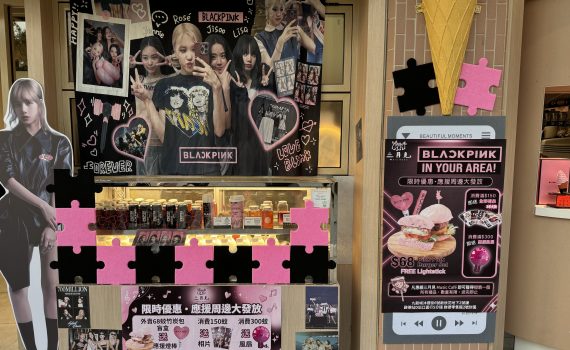
Restaurants near the Kai Tak Stadium in Hong Kong saw a surge in business during K-pop powerhouse Blackpink’s concert weekend, with many reporting a 100% increase in customers compared with usual days. The globally popular Korean girl group Blackpink held the final stop of their "Deadline" world tour at the Kai Tak Stadium from Jan. 24 to 26. The event not only created a vibrant scene inside the venue, but also significantly boosted the surrounding commercial consumption. Since Friday, excitement filled the area around Kai Tak MTR station, where crowds of fans dressed in black-and-pink outfits and carrying Blackpink’s signature hammer light stick gathered. Inside the station concourse, some of the group’s best-known tracks – including “Kill This Love” and “How You Like That” – played to welcome concertgoers. Many fans chose to dine in the surrounding area before entering, boosting the popularity of the commercial district. Hongkongers Jadie Wong and Emily Lee, who attended the show, said they waited nearly an hour in line for a table at a restaurant inside the Airside, a shopping complex near the stadium. “The restaurant is very busy today with a large number of customers,” they added. Several eateries around the stadium launched themed promotions to draw in fans. "Garden of Eatin," located near the sports arena, introduced limited edition items such as a "Pink Burger" and Earl Grey tea served in Blackpink-style cups. Owner Edward Tsang said these special items were designed specifically for Blackpink fans. “This type of limited-time product was very popular during Blackpink concerts, with customer traffic increasing by 80% to 100%,” he added. Tsang expected the momentum to continue with upcoming shows at Kai Tak, including a concert by K-pop boy band Seventeen on Feb. 28. A barbecue restaurant “Gyu-Kaku” located in a shopping mall near the Kai …
Hong Kong rates follow the US lower as the 2025 easing cycle begins
- 2026-01-27
- Business
- By: Wang Yunqi、Zhou Xinying、Yau Ka MingEdited by: ZHAO Runtong、BO Chuxuan
- 2026-01-27
In 2025, the US Federal Reserve cut rates twice in the second half of the year. Under Hong Kong's dollar peg system, local rates followed the downward trajectory. For nearly four decades, Hong Kong has operated under a dollar peg system that ties the city's currency to the US dollar. This mechanism means local interest rates track Federal Reserve decisions, transmitting US monetary policy to the local economy. AI Analogy: The Dollar Peg in Simple TermsImagine asking a fortune teller at Wong Tai Sin Temple about whether property prices will drop next year, only to receive the answer: “Everything depends on the mood of the US Federal Reserve.” In Hong Kong, even the gods of fortune sometimes have to check Powell’s latest speech before blessing your investments. On Oct. 30, 2025, Federal Reserve Chairman Jerome Powell announced a 25 basis point cut to the federal funds rate to 3.75%-4.00%, marking the second rate cut of the year amid a sluggish job market. The same day after the rate cut, the Hong Kong Monetary Authority (HKMA) announced a reduction in its base rate to 4.25%. Under the linked exchange rate system, Hong Kong dollar interbank rates generally converge with US dollar interest rates, said Eddie Yue, Chief Executive at HKMA. As the year 2025 unfolded, US President Donald John Trump challenged Powell’s January message of caution, pushing instead for faster rate cuts. The federal funds rate was cut twice, 25 basis pointsat a time, in September and October to the range of 3.75% to 4.00%. Following HKMA’s adjustment, several major commercial banks such as HSBC, Hang Seng Bank, and Bank of China (Hong Kong) also lowered their prime lending rates accordingly. However, the banks' reductions were smaller than the Federal Reserve's cuts. Most major banks reduced their prime rates by …

Raise “fur kids” rich way: Hong Kong pet expenses continue to rise, with emerging premium consumption
- 2026-01-24
- Business
- By: TANG Siqi、Zhou Xinying、Yau Ka MingEdited by: Haoming Zhou、BO Chuxuan
- 2026-01-24
At MegaBox shopping mall, Giuliana, a border collie known for the breed’s its intelligence and agility, sat quietly in a pet stroller while her owner, Gabriella Ng, bent over to straighten the hem of her dress, ensuring Giuliana could present her best performance during their walk show on Sep. 27. As a fashion designer and content creator, Ng took one month to design her and Giulian’s dress to match each other stylishly for the showcase during the Pet Walk Show 2025. “It cost about HK$10,000 for these two dresses,” said Ng, pointing at her piece. With an average cost of HK$700, Ng shared that Giuliana has around 20 items of clothing. According to Exhibition Group, the organiser of another pet show, 80.1% of about 1,000 respondents reported an increase in expenditure over the past 12 months, with average monthly spending reaching HK$2,086, up 6.3% from HK$1,962 the previous year. The proportion of people spending between HK$1,501 and HK$2,500 per month on pet care rose from 27.5% to 32.4%. Additionally, 79.1% of respondents expect their spending to increase within the next six to 12 months, over half anticipating at least a 10% rise. A trend toward premium, personalised pet care is redefining Hong Kong’s pet consumption economy as owners allocate larger budgets into their “fur kids,” boosting the related products and services market. The global dog clothing market reached US$1.5 billion (HK$11.7 billion) in 2024, according to internal data and industry insights from 6Wresearch released in April. Tomas Yuen, a retired professor from the Department of Economics and Finance at Hong Kong Shue Yan University, noted the spending shift marks a broader change in consumption patterns. Most pet owners prefer high-quality and luxurious services and products for their “fur kids,” which could change the market’s business model. “They care about the …