
Business
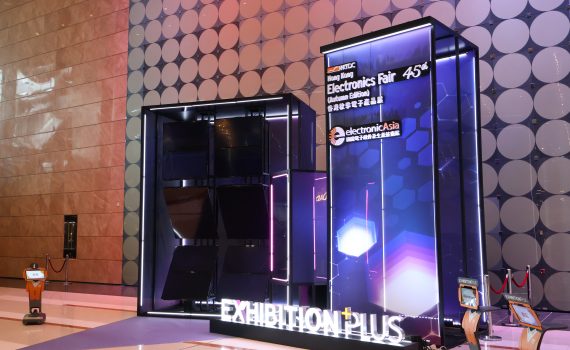
Hong Kong Autumn Electronics Fair kicks off with Gerontechnology amid Silver Economy Boom
- 2025-10-13
- Business
- By: Yau Ka Ming、LO Shing KwanEdited by: Haoming Zhou
- 2025-10-13
Gerontechnology has taken the spotlight this autumn’s electronic fair on Monday, with multiple innovative elder-friendly products emerging amid the growing local silver economy. “The demand and acceptance (of our products) are both gradually increasing, ”said Richard, a staff member from VCOM, a start-up manufacturer and exhibitor of senior technology products. He added that the company provides corresponding products for both indoor and outdoor use. Virginia Ngai, Sales Manager of Max Care Industrial Ltd, a Hong Kong-based manufacturer of senior technology products, said Hong Kong has a significant elderly population with relatively long life expectancy, adding that the market for age technology products in Hong Kong still has room for growth. The percentage of the population aged 65 or above rose from 20.8% in mid-2022 to 23.9% in mid-2025 and is expected to continue growing in the future, presenting significant market potential, according to the Census and Statistics Department. According to the Consumer Council’s Consumer Survey for the Silver Economy in Hong Kong, the average monthly expenditure (in local currency, excluding housing) for the elderly population aged 60-79 in 2024 stands at HK$7,785. Average monthly spending for affluent and general senior consumers reached HK$13,649 and HK$4,284, respectively. Chloe Siu, Associate Director of the Master of Science in Smart Ageing and Gerontology, Hong Kong Lingnan University, said the elderly group shows a keen interest in medical products, such as intelligent health monitoring devices that track physical indicators and ensure safety, which can meet their needs. “There are now many different platforms where seniors can look for what they need,” said Siu. She added that both offline and online markets now offer a wide range of choices, making it easier for older consumers to find suitable products. She also noted that the purchasing power of individual users of gerontechnology mainly lies with “young …
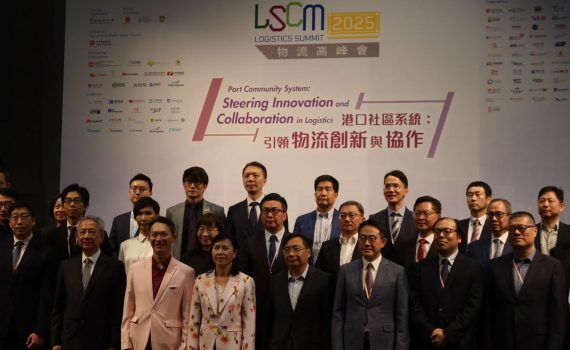
Hong Kong eyes tech-driven online platform for port community to catch port trade opportunities| LSCM Logistics Summit 2025
- 2025-10-11
- Business
- By: TANG Siqi、CHEN YongruEdited by: WANG Ruoshui、BO Chuxuan
- 2025-10-11
The city’s officials and industry leaders emphasised the Port Community System, an electronic platform to optimise port operations and seize opportunities in the evolving port trade market, at this year’s Logistics Summit on Friday. The PCS, which caught the attention in numerous discussions among industry experts, refers to a digital platform that leverages cutting-edge technology to “provide a comprehensive, real-time cargo tracking function, creating a seamless digital thread that connects sea, land, and air networks,” according to an opening remark speech delivered by Mable Chan, Secretary for Transport and Logistics, on Friday morning. According to government data citing Alphaliner's ranking of the world's top 30 container ports, Hong Kong fell to 11th place in 2023 from 8th place in 2019. Alphaliner’s latest ranking shows Hong Kong dropped further to 13th place in 2024. Kazunori GOTO, the deputy head of the Yusen Logistics Global Management (Hong Kong) Limited, mentioned that many logistics companies today only provide basic transportation services, which fail to meet customers' demands for visibility. GOTO stated that the logistics process involves seven participants, including factories, customs, and end-users, and the complexity of communication between these links often leads to disconnections, resulting in inefficiencies, delays, and information gaps. Kenneth Law, the manager of LSCM, stated that compared to traditional ports, the PCS platform integrates all information on a single platform, which significantly improves information accessibility. Law believes that this system will reduce corporate costs in areas such as IT and cargo tracking, effectively lowering transaction costs and thereby driving the overall development of the port economy. Chan believes that the PCS can directly enhance Hong Kong's competitiveness as an international trade, finance and logistics hub. "By its nature, it is government-run, it is official, so in a way it instils and upholds a high level of confidence in …

Zijin Gold price jumps nearly 70% on Hong Kong debut amid heated gold market
- 2025-09-30
- Business
- The Young Reporter
- By: ZHONG Xinyun、LIN XiaoyouEdited by: ZHAO Runtong、BO Chuxuan
- 2025-09-30
The international unit of a Chinese mining giant has raised almost HK$25 billion (US$3.22 billion), taking the crown as the second-largest Initial Public Offering in Hong Kong, and achieved a robust first-day performance on Tuesday amid a rising gold market. Priced at its IPO price of HK$71.59, Zijin Gold International(Zijin Gold), a subsidiary of Zijin Mining Group Co., Limited(Zijin Mining), saw a 68.5% jump to close at HK$120.6, after opening at HK$111.50 and reaching an intraday high of HK$123. Trading under code 02259, Zijin Gold sold 349 million shares globally during its IPO, with 90% of the shares allocated to international investors. The city’s investors received a 10% allocation of the total, resulting in a 240.7 times oversubscription, according to the firm’s allocation result announced on Monday. The Hang Seng Index added 0.87% to 26,855.56 as of market close. < img src="https://public.flourish.studio/visualisation/25390467/thumbnail" width="100%" alt="chart visualization" /> “In the Hong Kong capital market, pure-play-play gold mining mining listed companies are relatively scarce,” wrote Tang Yan, a risk director of Sunflower Investment, a Shanghai-based asset manager, in a written reply to the reporter. She added that what makes the company an attractive choice this scarcity for investors makes the company an attractive choice seeking gold exposure for investors seeking gold exposure. With a total of 29 cornerstone investors committing HK$12.47 billion (approximately US$1.6 billion), the company received solid support from prominent asset managers and investment giants, including GIC Private Limited, BlackRock, Schroders, UBS AM Singapore, Fidelity Hong Kong, and Millennium Management. The funds raised by the gold miner are primarily planned for the acquisition of the Raygorodok Gold Mine in Kazakhstan and the upgrade and construction of existing mines, accounting for aboutabout 33.4% and 50.1% respectively. Kenny Wen, Executive Committee Member of the Hong Kong Society of Financial Analysts, said that the …
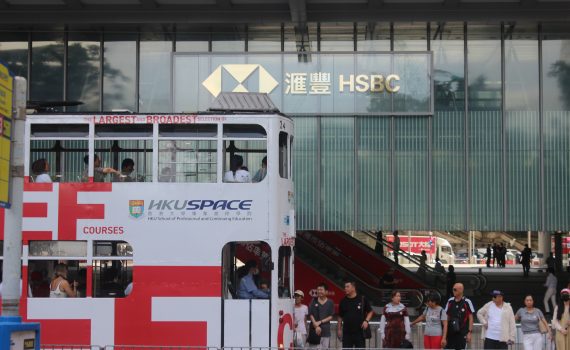
Hong Kong major banks follow Fed rate cut with smaller reduction
- 2025-09-18
- Business
- By: Wang Yunqi、ZHOU Yun、LO Shing KwanEdited by: Yichun Fang、BO Chuxuan
- 2025-09-18
The city’s de facto central bank has cut the benchmark interest rate by 25 basis points for the first time in 9 months, with local stocks ending the day lower. Aligning with the US central bank announcement of a 0.25% interest rate cut to 4% to 4.25% as expected, the Hong Kong Monetary Authority decreased its base rate by the same amount to 4.5% to track US movement, according to its official announcement. HSBC and Hang Seng Bank announced a 12.5 basis point cut to their prime rate, bringing it to 5.125%, effective this Friday. Bank of China (Hong Kong) and Standard Chartered (Hong Kong) followed with the same 12.5 basis point reduction, effective Sep. 22, resulting in new prime rates of 5.125% and 5.375% respectively. Billy Mak, Associate Director of the Centre for Corporate Governance and Financial Policy at Hong Kong Baptist University, said that the market’s expectation of the Federal Reserve cutting interest rates had already been priced into current valuations. “The rise of Hong Kong stocks this week was a direct response of the market to the possible interest rate cut in the United States,” said Mak. Duan Yang, associate director of the Department of Finance, Hong Kong Baptist University, predicted more investment and a boost in the financial market. “In terms of the stock market, lower costs of capital immediately improve stock valuation,” she said. “It will also lead to increased margin trading, increasing trading volume and liquidity in the stock market.” Echoing Duan, Steven Tam, Associate Director of Fulbright Securities Limited, said that the interest rate cut is generally positive for the whole Hong Kong stock market. Among them, utility stocks, property stocks and dividend stocks benefit more. The Hang Seng Index broke through the 27,000-point mark during the morning session and then declined, before …
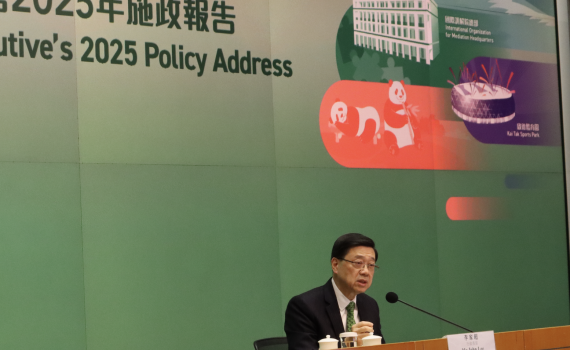
Policy Address 2025: Hong Kong relaxes loan application period alleviating capital pressure for SMEs
- 2025-09-17
- Politics
- By: ZHONG Xinyun、LIN Xiaoyou、Yau Ka MingEdited by: ZHAO Runtong、BO Chuxuan
- 2025-09-17
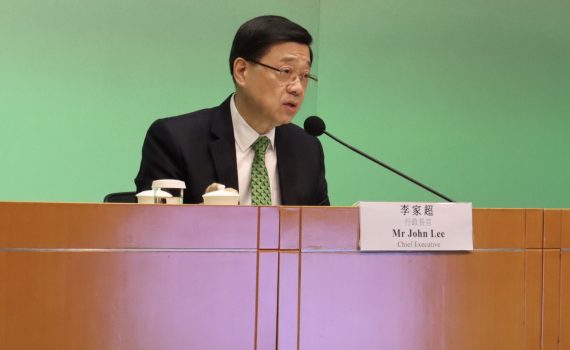
Hong Kong to reduce capital pressure for Small and Medium-sized Enterprises by extending principal payment as well as application for guarantee products, said John Lee Ka-chiu during his fourth Policy Address speech on Wednesday. Application period for principal moratorium arrangement and 80% of Guarantee Products under the SMEs Financing Guarantee Scheme will be extended for one year and two years, respectively, said Lee. “The biggest problem SMEs face is that they have no way to borrow money,” said Cheung Ki-ling, Associate Professor in the Department of Information Systems, Business Statistics & Operations Management at Hong Kong University of Science and Technology. He explained that the decrease in customers and consumption has led to a decrease in income, so they have less to pledge as collateral, making it difficult for banks to lend them money. “(These policies) give companies more opportunities to obtain government-guaranteed loans,” wrote Tam Yiu-chuen Sam, Steering Chairman of the Hong Kong Federation of Commerce for Small and Medium Enterprises, in a written response. He explained that the measures allow SMEs longer timeframes to apply for funding while easing their capital pressure. Previously, the government’s policy had postponed the application for principal moratorium for up to 12 months in November 2024. As of March 2025, the number of small and medium-sized enterprises was 356,128, according to the government website. However, Cheng Chung-pong, chairman of the Hong Kong Small and Medium Enterprises Association, called for more measures to support local SMEs. "The support for our small and medium-sized enterprises is not that great," said Cheng. "On the contrary, I have seen a lot of mention in the policy on how to help mainland businesses." “I think the government and banks still need to review which industries truly need priority support, to prevent the number of bankruptcies from increasing,” said …
Policy Address 2025: Hong Kong develops tourism economy to revitalise retail industry
- 2025-09-17
- Business
- By: Wang Yunqi、LO Shing Kwan、Zhou XinyingEdited by: Yichun Fang、BO Chuxuan
- 2025-09-17
The Hong Kong government plans to unveil the “ Tourism Everywhere” strategy, combining local characteristics with international elements, to develop the tourism economy, said Chief Executive John Lee Ka-chiu during his Policy Address Speech on Wednesday. The tourism economy strategy encompasses a diverse portfolio of targeted initiatives, with yacht economy, horse racing tourism, cruise tourism, and eco-experiences included. These efforts of the government in tourism strategy aim to attract high-spending visitor segments, boost consumption, and drive growth across the retail, F&B, and hospitality sectors, according to Colliers, a global real estate and investment management consultancy, in a comment after the speech was delivered. “As of August this year, the overall visitor arrivals had reached 33.2 million, a significant increase of 12% over the same period last year", said Lee. Sophia Lam, a member of the Southern District Council, which is home to tourist attractions like Ocean Park and Repulse Bay, said the aim of promoting tourism by leveraging local culture is to boost the retail economy and stimulate consumer spending. According to the release from the Census and Statistics Department, the provisional estimate for total retail sales value was HK$214.8 billion for the first seven months of 2025, a decrease of 2.6% compared to the sum of the first 7 months in 2024. The government shows that from January 2023 to July 2025, the number of visitor arrivals in Hong Kong increased significantly, while the retail sales slightly declined during the same period. After the epidemic, Hong Kong's tourism industry gradually recovered, with the number of visitors to Hong Kong in the first seven months of 2025 reaching about 28 million. Chen Sihao, a professor of the Department of Accountancy, Economics and Finance at Hong Kong Baptist University, explained that the depreciation of the RMB has dampened mainland tourists’ enthusiasm …

2025 Japan World Expo: Kawaii culture fuels consumer spending
- 2025-06-07
- Business
- By: XIA Fan、ZHAO Runtong、WANG RuoshuiEdited by: WANG Ruoshui、ZHAO Runtong、XIA Fan
- 2025-06-07
The Osaka Expo 2025 kicked off on April 13 under the theme 'Designing Future Society for Our Lives,' featuring Myaku-Myaku, a multi-eyed, red-and-blue blob as its official mascot along with other global partners’ mascots reflecting their home countries’ culture, highlighting Japan's renowned and thriving ACG (anime, comics, and games) industry. Japan’s unique animation-producing environment catalyses “Kawaii Culture” (かわいい文化), which emphasizes appealing characters. The "performativity of cute," as anthropologist Christine Yano describes it, is deeply embedded in contemporary Japanese culture. In her book Pink Globalization: Hello Kitty’s Trek Across the Pacific, Yano explains that kawaii culture serves multiple roles: it’s a playful, personal mode of self-expression and identity, while also functioning as a potent tool for branding and cultural diplomacy. While Japan has this unique cultural phenomenon, many countries around the globe also have their mascot traditions, leading them to bring their mascots to the party. Outstanding examples ranged from the host country, Japan, to European countries such as Italy and Germany, as well as Asia, including China. Designed by children’s book author Kohei Yamashita through the government’s open call to the Japanese public, Japan’s mascot’s name—an onomatopoeia evoking a pulse — was also chosen from public submissions. Described as "creepy but cute", MYAKU-MYAKU has already sparked significant economic activity through popular merchandise and has greatly enhanced the exhibition's global visibility. At the spot, people lined up for hours to get official plush toys or related items. Visitors poured in to take group photos with the mascot. Elements of Myaku-Myaku can be seen around the exhibition, being part of the whole event. Sato Ryoko rushed to the satellite store of MARUZEN JUNKUDO right after her visit to the Japan Pavilion, spent over one hour waiting in line to get in, and won the first prize of a giant MYAKU-MYAKU plush toy …
South Korea Presidential Election 2025: Korean stocks surge more than 2% after the country’s new president announced
- 2025-06-04
- Business
- The Young Reporter
- By: BO Chuxuan、Wang YunqiEdited by: BO Chuxuan
- 2025-06-04
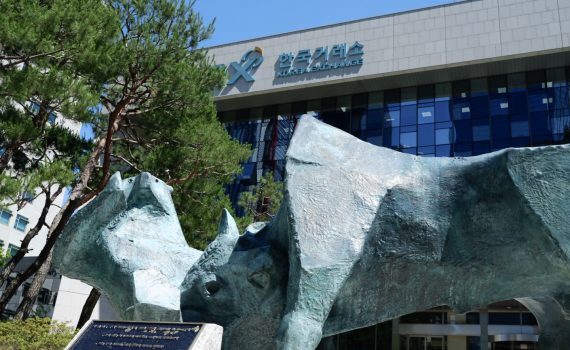
SEOUL –South Korea’s benchmark index surged 2.7% to 2770.84 at close on Wednesday (as of 3:30 p.m. local time) after Lee Jaemyung brought the presidential election to an end with his widely-expected victory at midnight. The Korea Stock Exchange KOSPI Index opened with a rise of 1.4% after a one-day recess due to the election holiday on June 3, reaching a closing high of 2770.84 – the highest level in over 10 months. The index has gained 20.8% since April lows triggered by concerns over Trump’s reciprocal tariff policies. Financial stocks saw significant gains today, with Bookook Securities surging more than 22% while Mirae Asset Securities, SKSquares, and Shinyoung Securities rose about 13%, charging the KOSPI higher. During his campaign, Lee Jae-myung proposed a series of financial policies, such as customised financial services for the underprivileged and debt relief for small business owners. Tech stocks are also leading gains among other component stocks. Chip and appliance maker Samsung Electronics gained 1.8% to 57,800 KRW, with the semiconductor manufacturer SK Hynix surged 4.8%, and aero engine-savvy Hanwha Aerospace gained 1.2%. Lee claimed his presidency and delivered a speech in front of the National Assembly, prioritising the revision of the economy and livelihood to alleviate economic hardship as his second priority in his incoming administration, following the restoration of democracy. “From the moment my victory is confirmed, I will devote every effort to recovering your livelihoods—quickly and decisively,” he said. Lee has also promised to boost the economy by increasing government spending, improving corporate governance, strengthening labour protection, and wrapping up the ongoing tariff talks and exchange rate negotiations with the Donald Trump administration, which may contribute to stabilising market sentiment. The South Korean won strengthened against major currencies on Wednesday, trading at around 1,363 per dollar and 946 per 100 yen as …
South Korea Presidential Election 2025: Students Embrace AI's Future Potential While Questioning Candidates' Preparedness for Tech Leadership
- 2025-06-03
- Politics
- By: Wang YunqiEdited by: BO Chuxuan
- 2025-06-03
Young voters in South Korea expressed different views on increasing funding for AI development, as some presidential candidates have mentioned AI in their speeches, amid the country's rising financial input for technology research and development. “I think it’s kind of a waste of money because we already have technologies like GPT, and China has DeepSeek. Developing AI requires a lot of information and money,” said Kim Jun Young, an English Education student at Korea University. “Still, we don’t really have sufficient resources to compete on the same level,” she added. Park (assume name), 26, majored in computer science, has also expressed doubts about the practicality and feasibility of AI policies proposed by different candidates. “ I’m doubtful whether they can achieve meaningful advancements in this field,” he said, adding that he thinks many candidates do not understand AI much. South Korea recently increased the research and development budget for 2025 by 16.1 percent year-on-year to a record high of KRW 24.8 trillion (HK$ 141.4 billion) with a focus on cutting-edge technologies such as artificial intelligence (AI), biotechnology, and quantum technology. The ambitious investment aims to position South Korea as a global leader in these fields. Lee Jae-myung, the presidential candidate of the Democratic Party, who leads the poll, has identified AI, renewable energy, and the cultural industries as essential tools for addressing South Korea’s economic challenges meanwhile Kim Moon-soo, first runner-up in the poll, from the conservative People Power Party, promote himself by creating a joint fund to boost AI development. Meanwhile, Lee Jun-seok, the youngest candidate among all, representing the Reform New Party, emphasises the importance of data freedom in AI development and highlights the role of Large Language Models (LLMs) in advancing the industry. AI has become a core driving force for national development, with applications spanning industries …
South Korea Presidential Election 2025: Young voters see the economy as one of their major concerns amid economic downturn
- 2025-06-02
- Politics
- By: BO ChuxuanEdited by: BO Chuxuan
- 2025-06-02
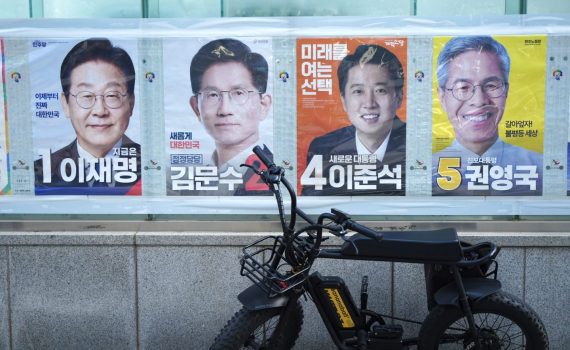
Young voters in Seoul consider the economy one of the major concerns heading into the South Korean 21st presidential election, which takes place on June 3, as South Korea’s central bank cut the basic interest rate by 25 basis points days before to counter the current economic downturn. “The current (economic) situation is really bad, everything is becoming more and more expensive,” said Victoria Kim, a psychology student at Yonsei University, who gave up travelling abroad but visited cities inside South Korea instead because of the depreciation of the South Korean won. South Korea's won weakened sharply after ex-president Yoon Suk Yeol declared emergency martial law, causing a democratic crisis in the country on Dec. 3, 2024, and hit a record low in nearly 16 years after Trump’s declaration of a 25 percent tariff against Korea-manufactured goods in April. While the South Korean benchmark stock index, KOSPI, moved higher and broke a 10-month record high at 2,720.64 on May 29, boosted by tech shares, which strengthened the won against the USD, this was mainly triggered by the US trade court’s blockade of Trump’s global tariffs. For Kim, the economic uncertainty extends beyond travel decisions to her everyday expenses. “I like to be a vegetarian and eat lots of veg and fruit at home, and with the recent price rises it’s a burden to buy and eat,” said Kim, working part-time in Seoul apart form college right now. Being eager to enjoy cultural life, Kim must continue working to save money, which makes her feel frustrated and negatively impacts her mental well-being. Jerry (assumed name), a student in the Korea University department of Humanities, sees social welfare for low-income groups as the key issue in his vote, and is looking for substantial and implementable funding policies to support the research and …