
Business
Japan Stocks edges lower after Moody’s cuts U.S. credit ratings, export sectors shine
- 2025-05-19
- Business
- By: XIA Fan、WANG Ruoshui、ZHAO RuntongEdited by: XIA Fan、WANG Ruoshui、ZHAO Runtong
- 2025-05-19
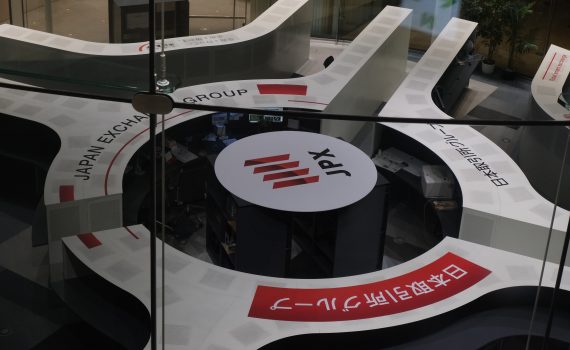
Nikkei 225, Japan’s premier stock market index tracking the performance of 225 large publicly traded companies listed on the Tokyo Stock Exchange, opened at 37572.36 today and dropped 0.68% to 37480.37 as of the market's end. TOPIX, an index overing all domestic common stocks mostly listed on the TSE Prime Market, traded higher at midday at 2744.16, but later reversed course and closed at 2740.45, down 0.075% compared with yesterday. Performances of Japan’s stock market aligned with global cautious sentiment after Moody’s downgraded the US government's top credit ratings. Export-oriented stocks went up amid the falling market. Pharmaceutical company Daiichi Sankyo surged 7.06% to 3,698 yen, which continued the growth trend since last week. Manufacturer Konica Minolta added 6.31% to 469 yen, while Mitsubishi Heavy Industries rose 3.04% to all time highs of 2,916 yen. Beverage company Sapporo Holdings jumped 2.92%to 7613, showing a trending up from the 3-month low on May 14. Analysts believe the weakening Japanese yen fostered a favorable environment for exporters, which would boost investor confidence in companies within this sector. A number of semiconductor-related stocks fell heavily today following the turmoil in U.S. markets. Lasertec Corporation (TSE: 6920), a designer and manufacturer of semiconductor testing equipment, saw its stock price plummet 5.16% today, making it one of the notable underperformers in the Japanese market. Market Commentators attribute this drop to the close correlation between Japanese semiconductor stocks and the U.S. semiconductor market performances. The PHLX Semiconductor Index fell 1.26% as of the report published time amid volatility driven by recent U.S. tariff fluctuations. Ongoing uncertainty in the U.S. market, fueled by frequent pauses and adjustments in tariff policies, has unsettled households and businesses. Sumitomo Mitsui DS Asset Management at the beginning of this year predicted a positive trajectory for the Japanese stock market, emphasizing …
Hong Kong’s Low-Altitude Economy departs amid challenges
- 2025-04-25
- Business
- The Young Reporter
- By: ZHAO Runtong、Yichun Fang、WANG RuoshuiEdited by: XIA Fan、BO Chuxuan
- 2025-04-25
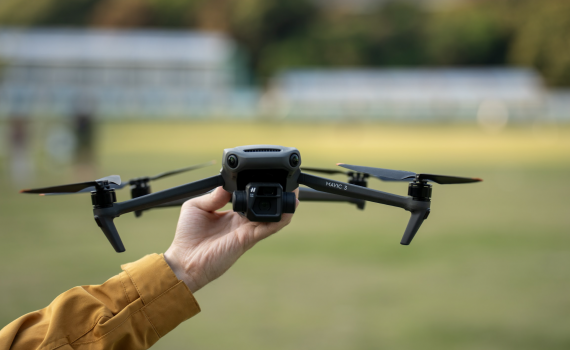
Remark: This news story is part of our experimental project using AI technology to transform the financial journalism practicum. However, all content has been reviewed by humans (our student journalist team) to maintain our high standards of accuracy and fairness before publication. Details about our AI usage can be found in our 'Making of' article. Reflecting on their impressive experiences, Tiffany Wong, project director at Hong Kong-based drone performance company OWOWWW, recalled a major event in late 2023. Their team orchestrated a dazzling display featuring 1,000 units for a luxury brand’s fashion showcase at the Cultural Centre Plaza—a first for the city at that scale and spent only ten days preceding the flying approval. Wong explained that while drone flight approvals were initially challenging due to regulatory uncertainty, the process has become more efficient, reflecting growing recognition of the low-altitude economy. Low-altitude economy(LAE), referring “to economic activities in airspace below 1,000 metres, presents a wide array of application scenarios including rescue, surveys and delivery of goods and passengers,” according to the paper prepared by the Legislative Council Secretariat for discussion last year. In the 2024 Policy Address, in order to “unlock the low-altitude airspace as a new production factor”, the government set up a Low-altitude Economy Development Working Group led by the Deputy Secretary of Finance, and the group soon announced the establishment of the LAE Regulatory Sandbox, a safe zone for trial LAE concepts before full implementation, last November. This year, on Mar. 20th, 2025, the first batch of the Sandbox including 38 pilot projects were announced and launched, covering emergency rescue, logistics, inspection, surveillance and low-altitude infrastructure, which will conduct scenario simulations through implementation to collect data and experience. Having successfully organised nine drone shows last year with a record of nearly 1,000 drones per show, OWOWWW supported …

Hong Kong Kai Tak Terminal crawls to make progress amid Singapore’s busy cruise schedules
- 2025-04-25
- Business
- The Young Reporter
- By: BO Chuxuan、Haoming ZhouEdited by: BO Chuxuan、XIA Fan
- 2025-04-25
Standing on a chilly winter morning, Wang Wei-de, a Taiwanese cruise passenger, is looking for brunch with local flavour with his family at Kai Tak Cruise Terminal. “It feels deserted here. I didn’t expect the restaurants won’t open until 11:30 am,” said Wang, whose Cruise ship arrived at 7:30 am on Jan. 22. Upon arriving in Hong Kong for the first time, Wang was disappointed by the transporting and ancillary facilities at KTCT. “It would take too much time on the way to MTR if we’re going downtown,” said Wang, who decided not to head downtown because of time limitations, “shuttle bus is only free for one way, and other alternatives are expensive.” With HK $950 spent on one meal and local cookies in the terminal, Wang and his family ended up hanging in stores inside the terminal with no consumption. KTCT was often complained about by tourists for the lack of supporting transportation facilities, and many businesses have also closed down due to a lack of business. The government has responded positively to the problem by increasing the number of free shuttle bus routes and distributing $50 liquefied petroleum gas coupons to taxis, which saw an improvement. However, taxi drivers soon complained about the insufficient passengers and attributed the problem to poor government coordination and communication. The Kai Tak Cruise Terminal, completed in 2013 at the cost of about $8.1 billion, carries the Hong Kong government's aspiration to become an Asian cruise hub. On Dec. 30, 2024, an action plan for the development of cruise tourism was released by the Culture, Sports and Tourism Bureau, reflecting the government's commitment to using the terminal as a venue for conventions and exhibitions, as well as cultural, creative, and community leisure activities, to make full use of the facilities after almost three …
Pop Mart shares extend rally as revenue more than doubled in 2024, driven by IP operation and globalisation strategy
- 2025-03-27
- Business
- The Young Reporter
- By: Yichun Fang、CAO JiawenEdited by: WANG Ruoshui、XIA Fan、BO Chuxuan
- 2025-03-27
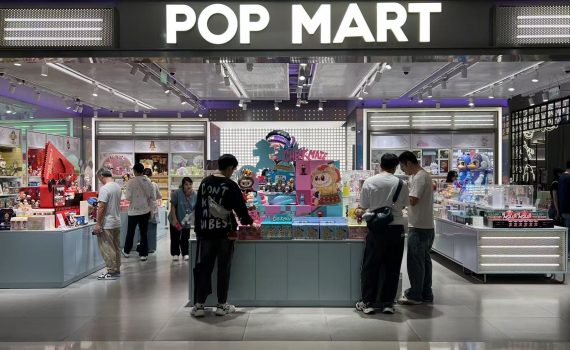
Pop Mart’s annual revenue more than doubled and surpassed 13 billion yuan thanks to its IP development and globalisation strategy, according to its 2024 annual results published on Wednesday. Under code 9992, shares of the Beijing-based company climbed more than 9% to HK$ 153.7 today, following yesterday’s 10% gain. During yesterday’s midday announcement, the company reported a 106.9% increase in revenue and a 203.9% yoy surge in net profit to 3.3 billion yuan for the previous fiscal year. “Market acceptance of Pop Mart’s IPs, such as CRYBABY and THE MONSTERS, which contain a flagship product Labubu, is still very high, and unless something unexpected happens, the growth prospects for Pop Mart this year are very positive,” added Kenney Wen, head of Investment Strategy at KGI Asia. The revenue of THE MONSTERS, one of the heated IPs of Pop Mart, saw a revenue of 3.04 billion yuan, a 726.6% surge compared to last year, contributing 23.3% of the overall revenue. CRYBABY, as one of their “fast-growing emerging IPs”, also reached a revenue of 1.16 billion yuan, with a year-on-year growth rate of 1,537.2%. “Buying dolls of these IPs has become a trend-setter,” Wen said. The group’s sales are expected to grow by more than 50% year-on-year in 2025, according to Wang Ning, chairman of the board of directors of Pop Mart, who spoke at yesterday’s Annual Results Announcement. He expected the total sales to reach more than 20 billion yuan in 2025, with the overseas market accounting for more than 10 billion yuan of this total. In 2024, for the market other than Mainland China, the revenue from Hong Kong, Macao, Taiwan and Overseas increased by 375.2% from 1,066.1 million yuan in 2023 to 5,065.7 million yuan. Wang added that the company expects the North American market alone in 2025 to …

New Gold Zone at 2025 International Jewellery Show boosts Hong Kong’s position as trading hub
- 2025-03-04
- Business
- By: Yichun FangEdited by: WANG Ruoshui、XIA Fan、BO Chuxuan
- 2025-03-04
The 41st Hong Kong International Jewellery Show kicking off on Tuesday, debuts the Gold Jewellery Zone at the Convention and Exhibition Centre, with international gold exhibitors drawn in. The Hong Kong Trade Development Council (HKTDC) describes this new addition as a showcase for novel gold jewellery design, part of efforts to strengthen the city’s position as a global hub for gold jewellery trade. Organised by the HKTDC, the Jewellery Show will run from 4 to 8 March, showcasing new product trends including affordable luxury jewellery, men's and unisex jewellery, sustainable development and jewellery technology. “Hong Kong is actively accessing both the technical support of mainland China and the international market, so I hold a strong belief that the gold market here will become increasingly prosperous,” said Winston Chow, director & deputy general manager of Chow Sang Sang Holdings International Ltd. HKTDC said that Hong Kong is leading in the gold product sector. Currently, manufacturers are conducting high value-added processes in Hong Kong, while shifting manufacturing activities to mainland China. Atticus Zhu, the founder of Shenzhen Shangpin Gold Jewellery company exhibiting in the gold jewellery area, said that the consumers of the Hong Kong gold market accept the premium of labor cost on design to a greater extent than mainland Chinese customers, who are relatively more sensitive to the gold price. “Hong Kong is the global hub for gold jewellery trade, providing a springboard to tap into various international markets,” he added. “For example, through Hong Kong, we reached out to the Malaysia market, a country with a 20% overseas Chinese population and has one of the most receptive markets for gold today. ” The gold price rose more than 25% in 2024, the most significant annual gain in 14 years, as regional wars and political changes continued the uncertainty among …

Golden Horse Best Actress playing deaf girl brings attention to vulnerable group films
- 2025-03-04
- Business
- The Young Reporter
- By: ZHAO Runtong、XIA FanEdited by: XIA Fan
- 2025-03-04
Chung Suet-ying, winner of the Golden Horse Film Best Leading Actress, called for more attention to be allocated to locally independent films while thanking fans supporting the film The Way We Talk at the special screening of Hong Kong Baptist University Communication School, her alma mater. The movie explores the choice of hearing-impaired people between using cochlear implants(electronic devices to improve hearing) or simply using sign language. Sophie Fong, played by Chung Suet-ying, was such a girl getting confused between the two advocacies and later decided to follow inner voices for living her own life. As of March 3, the movie achieved a box office of HK$ 5.35 million, ranking the fourth among all movies that have been released locally within the month. Also, nearly 60% of the audience on the Internet Movie Database (IMDB) gave the movie a score above or at eight out of ten. As for awards winning, besides Chung locking in the "Best Leading Actress" at the Golden Horse Film Awards, the movie also secured the Audience Choice Award and the Hong Kong Film Critics Society Recommended Movies Award. "Some worried a movie about ‘deaf people’ will not be popular, but I have confidence in the Hong Kong audience, which was proved by the award we got," said Adam Wong Sau-ping, the director on his Facebook page after winning the "Audience Choice Award" at the Hong Kong Asian Film Festival. “It is a discussion of identity politics,”said the Hong Kong Film Critics Society. “Adam Wong Sau-ping three-dimensionally presents the intersecting situation of deaf people and hearing people, and the diverse faces of their life circle,” the society added. Despite the positive reception of Wong’s film, local productions face challenges in Hong Kong’s competitive market. Only three of the top ten box office movies released in 2025 …
Cultural currency: The economic power of “Goods” in Hong Kong's youth market
- 2025-03-02
- Culture & Leisure
- By: Yichun Fang、WANG RuoshuiEdited by: XIA Fan、BO Chuxuan
- 2025-03-02
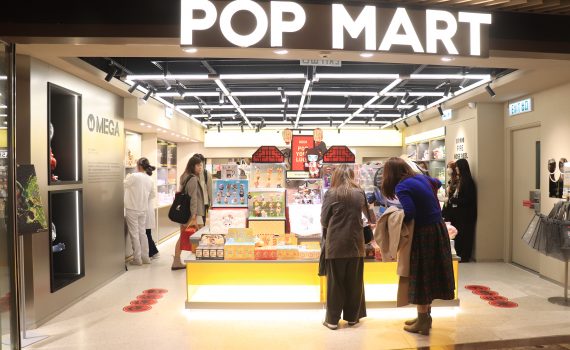
Eager to buy a limited edition “goods” of Chiikawa, a Japanese anime character, Connie Fung was contacting a Japanese buyer on social media platforms to negotiate price and delivery details. "These characters aren’t just toys," Fung said, her eyes lighting up. "When I secure a rare piece by buying an edition, it's like winning a cultural badge of honour." Fung, a university student, spends around HK$5,000 a year on collecting Chiikawa-related items. Like Fung, Ada Liu is also a fan of Chiikawa, who hangs the figure on her bag, noting that many fans do this as a form of identity. “We can start a conversation easily while shopping in a goods store, as ‘goods’ helped us identify each other–You are also a fan of a certain series,” said Liu. In the context of Anime, Comics, and Games (ACG) culture, “goods” refer to merchandise derived from Intellectual Properties, including items such as badges, dolls, figures, cards, etc. These IP-related items are adored by ACG fans as cultural currency to show their identity and devotion to virtual characters. The passion for collecting goods has heated the wave of “goods economy,” signalling a new consumption trend that “pays for emotional value.” The popularity of the “goods economy” has even caught the attention of Financial Secretary Paul Chan Mo-po, who addressed it in his weekly blog entry. He noted that the rapidly emerging “goods economy” has successfully attracted young people's attention and tapped into their enormous spending power, estimated to be in the hundreds of billions of dollars. “Goods economy” is not only visible on the streets of Hong Kong, but has also entered the city’s capital market. For example, Pop Mart, a Chinese toy company that leads in merchandising Intellectual Properties and was listed in HKEX five years ago, performed exceptionally well in …
Digital Asset Week Hong Kong 2025 took place as Asia Pacific’s first tokenised retail fund prepares to be launched
- 2025-02-27
- Business
- By: Haoming Zhou、XIA FanEdited by: ZHAO Runtong、XIA Fan、BO Chuxuan
- 2025-02-27
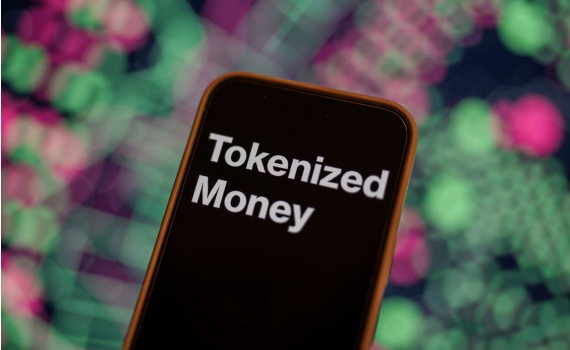
Digital Asset Week Hong Kong 2025 kicked off with the Leadership Summit on Wednesday, bringing global traditional and digital asset insiders together, amid the launch of the Asia-Pacific’s first tokenised retail fund in the near future. “Digital Asset Week is the best event to connect to the people building the future of the digital asset ecosystem,” said Daniel Coheur, co-founder and chief commercial officer of Tokeny, an on-chain finance operating system developing company headquartered in Luxembourg. Known for inventing the ERC3643, one of the newest token standards for tokenisation of the Real World Asset in the blockchain, Tokeny plans to expand the number of employees in Hong Kong to capitalise on the opportunity. Confident about the industry's future, Thomas Zhu, Head of Digital Assets and Family Office Business of China AMC (HK), who will launch Asia Pacific’s first tokenised retail fund tomorrow, is confident about the future development of digital assets. Supported by Standard Chartered Bank, the tokenised retail fund will offer investors “opportunities to earn returns in Hong Kong dollars” through blockchain-based instruments. “We may be able to build another Chinese asset management company on the chain through blockchain technology,” he said. Hong Kong has recently taken action to boost digital assets, including preparing to issue the third tranche of digital bonds through the Hong Kong Monetary Authority, the city’s de facto central bank, and the hosting of Consensus 2025, the world’s top crypto and Web3 summit. Up to now, 10 virtual asset trading platforms have been operating in Hong Kong in the past five years, with the HKEX Bitcoin Reference Index surging more than 870%. As a response to its increasing development, the Hong Kong Securities and Futures Commission launched the “A-S-P-I-Re” for the regulatory roadmap for Hong Kong’s virtual asset market with 12 significant initiatives. “These movements …
Room for improvement in protecting consumer rights in online shopping
- 2025-02-27
- Business
- The Young Reporter
- By: ZHANG Yiping、QIN ZiyangEdited by: WONG Hong Ni
- 2025-02-27
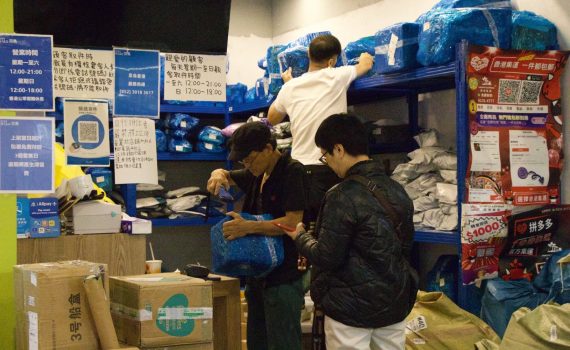
Jiong Jiali, 23, a Malaysian customer, was disappointed when she received a pair of trousers she bought from an Instagram shop in February last year. “This is nothing like the high-quality homemade trousers the shop claimed to sell,” she said on Rednote, a Chinese social media platform. The cutting of the trousers was awkward, and they hung loose around her waist and dragged on the floor. “What is worse is that the shop offered to change the trousers to a smaller size only if I cover the cost of shipping,” said Jiong. “It means I spent over HK$90 on this disappointing pair of trousers.” Despite the sluggish performance of the retail industry, online shopping has been blooming, as the total sales of Hong Kong stores without a physical storefront reached HK$1.41 billion in November 2024 after consecutive 17 months of year-on-year growth. However, the number of consumer complaints regarding online shopping are also on the rise. In 2023, online shopping complaints saw an increase of 19% from the previous year, reaching 12,696 cases and accounting for two-fifths of the total number of retail complaints received, according to the Consumer Council. The amount of money involved also increased by 20% from the previous year, exceeding $43 million. Online shopping consumers often face problems such as delayed delivery, goods not matching descriptions, counterfeit and copyright-infringing products, and difficulties in returning and exchanging goods. According to the Annual Report of the Consumer Council, in 2024, delays, non-delivery and loss of couriers was the most prominent issue, accounting for 24% of total complaints with 3,969 cases recorded. Dr. Yang Lin from the faculty of law at the University of Hong Kong, who specialises in dispute resolution and e-commerce law, said the rise in consumer complaints is a result of a lack of government regulations. …

Budget 2025: Hong Kong to issue third tranche of tokenised bonds and boost digital bonds market
- 2025-02-26
- Business
- By: Haoming Zhou、WANG RuoshuiEdited by: BO Chuxuan
- 2025-02-26
Hong Kong will continue to encourage the issuance of digital bonds through the Digital Bond Grant Scheme and prepare the third tranche of tokenised bond issuance, said Paul Chan, the financial secretary, at his 2025 Budget Speech on Wednesday. The government will explore measures to enhance the wider adoption of bond tokenisation and tokenising traditional bonds, said Chan. “Any movement conducive to the promotion of digital bonds is a good thing,” said Simon Lee, a member of the Legislative Council of Hong Kong, “there has to be enough diversified products to activate the market, so that Hong Kong's position in the financial market can be consolidated.” HKMA has issued two batches of tokenised green bonds, HK$ 800 million in February of 2023 and around HK$ 6 billion in February of 2024, enabling tokenisation to move beyond the proof-of-concept stage to the practical application level. Tokenised bonds, issued and traded with blockchain technology, are a type of digital bond, which globally has reached an issuance value of US$3.9 billion (HK$ 30 billion) by the end of March 2023, according to the Hong Kong Monetary Authority. To encourage more institutions to participate in the issuance of digital bonds, the Digital Bond Grant Scheme (DBGS), a three-years grant scheme of up to HK$2.5 million to cover the eligible digital bond issuance costs, was announced in November last year, after first introduced on Oct. 16, 2024, in the 2024 Policy Address. The echo comes in quick succession as Singapore launched Global-Asia Digital Bond Grant Scheme (G-ADBGS), a five-year digital-bonds-supporting scheme, to promote the issuance of digital bonds in January 2025. “I would consider tokenised bonds as a very good way to invest,” said Chen Shiyi, a virtual asset investor from mainland China who works at Pleasanton Ventures Limited, …