
Business

Chinese Gen Z shifts focus to lesser-known European destinations amid social media trend
- 2026-01-23
- Business
- By: XIA Fan、WANG RuoshuiEdited by: BO Chuxuan
- 2026-01-23
Big city lights? Too mainstream. Young Chinese travellers now prefer to crave the road less travelled. Chinese Gen Z travellers are ditching crowded classics for off-the-beaten-path destinations in Europe. The hunt is on for niche places that promise more profound, more authentic local experiences, turning once-mainstream spots into personalised immersions. Gen Z travellers, generally defined as those born from the mid-to-late 1990s to the early 2010s, favour cultural deep dives over cash-splashing consumption. They seek stories and experiences that resonate long after the trip ends. Wang Yang, 28, came to the Netherlands to visit the Van Gogh Museum on October 1 after learning on social media that the museum faced the risk of closure due to budget constraints. His reservation wouldn't load on his phone at first, but a tip from Rednote, a popular Chinese social media, helped him purchase a ticket at the entrance. “Enjoy your visits!” chirped the staff as Wang secured his ticket, sharing a warm grin with the ticket inspector—a moment that felt like a heartfelt welcome to this 28-year-old adventurer. His 22-day European odyssey, blending annual leave with the National Day Golden Week, cost him roughly 50,000 RMB—about a quarter of his yearly income. Departing from Xi’an, China, Wang and his friends didn’t book any travel agent’s service or pay for a local guide; instead, they followed tips and routines shared on social media platforms as a way to craft their personalised journey. “Europe’s cities pulse with a deeper cultural and historical soul than most places,” Wang explained. “That’s why I came back.” Ditching the well-trodden Barcelona-Paris-Rome circuit, Wang and his friends ventured to Europe’s hidden gems—the Czech Republic, Greece, Portugal, and the Netherlands—while revisiting Spain, a nostalgic nod to a trip six years prior. “Golden Week outbound demand in China is breaking records. We …
IPO regulation reform in the hot market burns winning spaces for retail investors
- 2026-01-22
- Business
- By: ZHOU Yun、CHEN Yongru、ZHONG XinyunEdited by: ZHAO Runtong、BO Chuxuan
- 2026-01-22
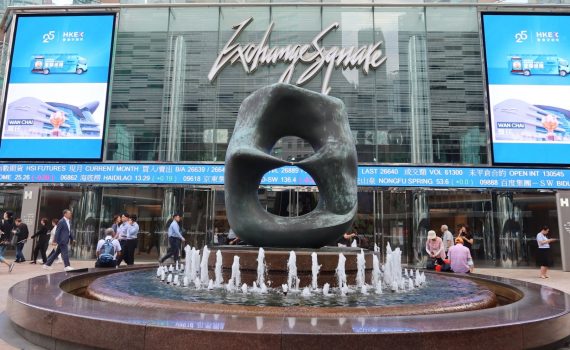
Every time Liu Busi, a retail investor in the initial public offering (IPO) market in Hong Kong, checks the result of his new stock subscription, he feels a mix of uncertainty and excitement. Joining the IPO subscription game this year amid intense oversubscription, Liu has subscribed to 25 new listings and was allocated shares in 17 of them, including CATL and Zijin Gold, the two largest IPOs in 2025, with approximately HK$ 41 billion and HK$ 25 billion raised respectively. Of the 17 allocations, 14 have gained value after subscription, with his best performing IPO investment - Bloks, a Chinese toy company, having generated HK$ 11,059 for him as of Nov. 6. However, Liu noticed a sharp change in his subscription success rate after Hong Kong Stock Exchange's (HKEX) new reforms on IPOs in August. The HKEX implemented new optimisation measures on stock allocation and subscription mechanisms, including stipulating that issuers must allocate at least 40% of the shares in the IPO to the book-building placement portion and introducing two public subscription mechanism options. Before the reform, Liu was allocated shares in 10 out of 13 subscriptions, a 77% success rate. After the reform, he could only secure allocations for 7 out of 12 subscriptions, a 58% success rate. The city has seen 69 IPOs raise over HK$160.4 billion as of Sept. 30, a 183% surge compared with last year. According to Deloitte China's analysis, the city is projected to see over 80 IPOs raising HK$250 billion to HK$280 billion for the full year 2025. HKEX did not comment on the reduced success rate of subscriptions by retail investors when asked by TYFP reporters. In an earlier news release, Katherine Ng, HKEX Head of Listing, said the exchange “has sought to enhance the robustness of the IPO pricing and allocation …
After the crowds go home: Can Kai Tak turn mega events into lasting growth?
- 2026-01-21
- Business
- By: LIN Xiaoyou、Wang Yunqi、LO Shing KwanEdited by: Yichun Fang、BO Chuxuan
- 2026-01-21
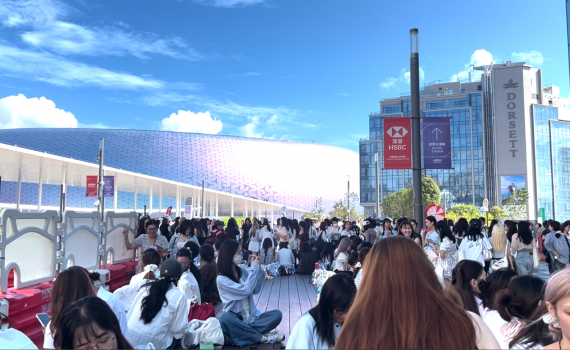
Clutching a concert ticket for her idol, Amy Cao, 21, made her way straight to the Kai Tak Sports Park without any hesitation on the morning of Sep. 27. Having travelled from Shenzhen for 1.5 hours, Cao’s face betrayed no trace of travel fatigue, but showed unconcealed excitement and anticipation. "I'm incredibly excited!” said Cao, stating that this is the closest location for her of Seventeen’s world tour." I saw reviews on social media saying the Kai Tak Sports Stadium has excellent acoustics and is incredibly spacious, perfect for a large crowd. I'm looking forward to the venue." Located on the former runway area of Kai Tak Airport, Kai Tak Sports Park covers approximately 28 hectares, making it the largest sports infrastructure project in the city's history, capable of accommodating tens of thousands of spectators. According to the government’s estimate, the Kai Tak Stadium and Kai Tak Arena recorded about 590,000 spectators for all pop concerts as of May 31, 2025. Since its commissioning, the two venues have hosted 16 large-scale concerts by international and Asian performers. Edward Leung, a Legislative Council member, pointed out that Hong Kong is taking advantage of its unique location, attracting concerts, especially for Korean artists who struggle to gain approval in mainland China. "Moreover, Hong Kong's visa-free access for travellers from most countries makes it an ideal platform for international cultural and sports exchanges," he added. Echoing Leung, Tina Wong, the chairperson of the Hong Kong Rope Skipping Association, mentioned that the upgraded sports facilities in the newly established stadium have provided Hong Kong with more opportunities to host major national events. Since opening, the Kai Tak Stadium and Kai Tak Arena have hosted a total of 15 sports events, including rugby sevens, snooker, and other large-scale competitions. The Hong Kong government elevates the …

Saudi-Chinese cultural festival: Chinese cuisine draws crowds in Riyadh
- 2026-01-19
- Business
- By: ZHOU YunEdited by: ZHOU Yun
- 2026-01-19
The Common Ground Festival was held in Riyadh, the capital of Saudi Arabia, with the authentic Chinese cuisine cooked on the spot becoming a highlight. Set against the backdrop of traditional Chinese markets, this festival presented the cultures of China and Saudi Arabia in a single space, featuring artistic performances, intangible cultural heritage displays, art exhibitions, and food culture. Among all the exhibition areas, the food experience area was one of the busiest sections, bustling with people. Three booths were set up in the food area, two of which offered China-Saudi fusion dishes, and the other one that drew large crowds served authentic Chinese food prepared on-site. “Saudis generally like Chinese cuisine,” said Jade He, the vendor of Chinese cuisine, during the festival. “Every day, visitors queue up in long lines to pick up the freshly cooked Chinese food we provide.” Delicacies such as beef noodles, steamed buns, dumplings and rice noodles are provided to tourists for free within a limited time and quantity every day. All the freshly made delicacies here still retain the authentic Chinese flavors and were not specially adjusted to cater to the tastes of locals. “Saudis generally have a sweet tooth,” he said. “So for those who come to taste Chinese cuisine, we will also offer customers some free localized sweet noodles according to their taste preferences.” Basseh, a local university student at Princess Noor University, is a fan of Chinese food. “Chinese food is really delicious, and the meat tastes really good,” said Basseh. She said that if more Chinese restaurants will open in Riyadh in the future, she is willing to try them one by one. Mahamed, a staff at the event site said that the cultural festival is so popular that more than 3,000 people come to visit the exhibition every day, …

Performative Male: Gen Z new solution to attract female?
- 2025-12-11
- Culture & Leisure
- The Young Reporter
- By: FENG Zhenpeng、Li YinhengEdited by: LAI Uen Ling、LI Sin Tung
- 2025-12-11
“Performative male”, a western Gen Z pop trend begins to enter Asia. Young people have unique attitudes and views towards performative male in Hong Kong. TYR spoke to Gen Zers and psychological expert to know more about what behind the new trend. Reported by Stephen Feng Zhenpeng, Henry Li Yinheng Edited by Elaine Lai Uen-ling, Tricia Li Sin-tung

Labubu powers Pop Mart’s revenue, but can it last?
- 2025-11-25
- Business
- The Young Reporter
- By: LAI Uen Ling、SIU Tsz HangEdited by: Robin Ewing
- 2025-11-25
Yoko Chan, 35, a clerk, wearing a Labubu T-shirt and a pink Labubu charm on her handbag, wandered around a Pop Mart shop in Sha Tin. It is her weekly ritual to go to the store to look for new items. Known for its high, pointed ears, mischievous grin, and serrated teeth, the small plush toy monster Labubu is one of the most popular products at Pop Mart, the leading Chinese toymaker with over 500 physical stores in over 30 countries and regions. Since falling in love with Labubu in 2024, Chan has spent several thousand Hong Kong dollars on Labubu products. Labubu charms are her all-time favourite, and she has nearly 100 of them at home. "Labubu has different looks. Sometimes they have clothes, or smaller in size, and even with festive decorations,” Chan said. Chan is one of millions whose enthusiasm for the plushie toy helped push Pop Mart’s revenue up 250% this year, according to company data. But a recent share price drop shows that interest may be declining, and experts say the company needs new strategies to sustain investor confidence. In the Asia-Pacific region, Pop Mart’s revenue rose by between 170% and 175% compared to the same period last year. Despite the strong revenue growth, Pop Mart’s share price had fallen by 18.5% as of Nov. 6, following the release of its revenue figures on Oct. 21. Designed by Hong Kong-based illustrator Kashing Lung, Pop Mart started selling Labubu in 2018 and it went viral in 2024 after K-pop star Lisa, who has 107 millions followers, showcased the bag charm on her social posts. Other pop singers, such as Rihanna and Dua Lipa, were also spotted with these fluffy creatures adorning their bags, which further sparked public curiosity about Labubu. Pop Mart achieved revenue of US$861 …
JD shares fall over 6% in Hong Kong as Q3 net income halves on new business losses
- 2025-11-14
- Business
- By: ZHOU Yun、TANG SiqiEdited by: Yichun Fang、BO Chuxuan
- 2025-11-14
Chinese tech and service giant JD.com achieved revenue growth but it was offset by dramatic expenses, resulting in shareholders’ net income being chopped in half, as the Company released its third-quarter results on Thursday evening. Non-GAAP net income attributable to ordinary shareholders reduced by 56.1%, despite the company’s net revenue in Q3 reaching 299.1 billion yuan, up 14.9% year-on-year, with its core business, JD Retail, reporting 11.4% revenue growth to 250.6 billion yuan, as highlighted in the company’s statement. The operational loss of the company’s new business, including JD Food Delivery, JD Property, Jingxi, and overseas operations, widened dramatically more than 24 times from 615 million yuan to 15.7 billion yuan, mainly because of a 3.4 and 7.3 times increase in cost of revenue and operational expenses, respectively. Dual-listed in the US and Hong Kong, the company’s overall marketing expenses rose 110.5% year-on-year to 21.1 billion yuan this quarter. Kenny Wen, Executive Committee Member of the Hong Kong Society of Financial Analysts, said that the main reasons for the situation of increased revenue but decreased profit margin are the JD price subsidy policy and its large-scale investment in new businesses. As for the retail sector, Sandy Xu, Chief Executive Officer of JD.com, said that the electronics and home appliances category has been facing a high base since the second half of Q3, which is expected to continue in the short term, and it has been weighing on its growth momentum. Ian Shan, Chief Financial Officer of JD.com, said during the earnings conference call, in terms of investment in new businesses, JD will further enhance its supply, performance, and service, and bring greater growth potential through the expansion of product categories, customer groups, and regions. Under the code 9618 in the Hong Kong market, JD.com closed at HK$116.9 on Friday, dropping …
First-person shooter game leaves young Chinese players with heavy losses after the collapse of virtual trading market
- 2025-11-10
- Society
- The Young Reporter
- By: Lou Zhengzheng、Lan XinbeiEdited by: WANG Ludan
- 2025-11-10
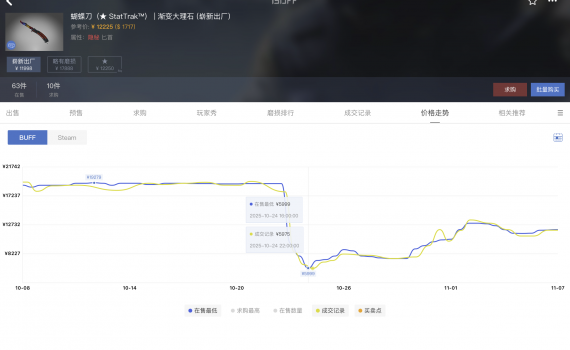
A developer update to the first-person shooter video game Counter-Strike 2 triggered a collapse in its virtual trading market on Oct 22, wiping out almost US$2 billion in real money. Valve, the American video game developer of Counter-Strike 2, released an update that allowed players to more easily craft rare weapon skins in the game, causing a plunge in the value of skins that are purchased and traded with real-world money. Although the value rebounded in November, it remains below most buyers’ original purchase price. Skins are virtual cosmetic items that change the appearance of weapons without affecting the gameplay. They are categorized by color, ranging from basic white to the rarest gold. The price of gold skins dropped by approximately 30% to 40% on the international third-party game trading platform Buff Market, hitting players who had collected them as virtual investment commodities for future resale and rental. Previously, the gold skins could only be obtained either by unlocking in-game loot boxes containing randomized virtual items such as skins, gloves, and other weapons, or by trading with other players through third-party online marketplaces, including NetEase Buff and Youyou Youpin, which are both platforms that primarily serve Chinese players. John Liu, 20, a mainland Chinese student at Lingnan University in Hong Kong, said he purchased a rare “marble fade” butterfly knife skin for approximately 13,000 yuan (HK$14,201.54) on NetEase Buff because he anticipated later reselling it at a higher price for a profit. After the update, the “marble fade” Butterfly knife’s skin value fell to 5,999 yuan (HK$6,553). “I just gave up on selling after seeing the price hit its lowest point a couple of days ago,” he said. According to data from Buff Market, several virtual items in the game, such as gloves and knives, experienced a price recovery in …

Hong Kong Eco Expo Asia 2025: Cost concerns shadow ESG push as Hong Kong firms seek greener image
- 2025-11-04
- Business
- By: ZHONG Xinyun、CHEN Yongru、LIN XiaoyouEdited by: WANG Ruoshui、BO Chuxuan
- 2025-11-04
The 20th edition of 2025 Eco Expo Asia wrapped up on Friday at Hong Kong AsiaWorld-Expo, with exhibiting firms promoting Environmental, Social, and Governance (ESG) transformation for a better image. Carmen Lau, the assistant marketing manager at ESGreen, an ESG-driven motor tech firm, said that as people pay increasing attention to environmental issues, such as extreme weather conditions, the company will prioritise ESG practices to enhance its brand image. Markus Ho, the sustainability strategies manager of Allied Environmental Consultants Limited, a sustainability and environmental consulting firm, said companies such as real estate developers or those in the financial industry can better promote ESG-related actions when they have extra resources due to their relatively abundant resources. “As a business platform for ESG and sustainable solutions, the Expo will showcase the latest products and technologies in new energy, green living, and environmental protection,” said Jenny Koo, HKTDC Deputy Executive Director, at a press conference in early October ahead of the event. According to a study by Hong Kong Trade Development released this June, the city gained 64.2 points in the ESG Index, with respondents from Mainland China giving the highest rating of 69.1, underscoring the city's reputation as an ESG business hub. https://public.flourish.studio/visualisation/25951653/ The banking and financial services sector had the highest percentage of practitioners engaged in sourcing or providing ESG solutions, followed by the fashion industry and the international trade and manufacturing industries. Cost is one of the challenges companies face when implementing ESG standards. “(The aspect that) is difficult to advance is probably the cost,” said Lau. “It is necessary for that company to invest first, and then there will be profits.” Oscar Chan, the product owner of Green AI Technology Limited, a company that uses AI to track the quantity and weight of recycled items, also highlighted cost concerns. …

“Little Bangkok” in Kowloon City finds ways to keep its Thai flavors amid redevelopment
- 2025-10-28
- Society
- The Young Reporter
- By: Lou Zhengzheng、Li ZhongyiEdited by: WANG Ludan、AO Wei Ying Vinci
- 2025-10-28
In the bustling food court on the roof of the Kowloon City Municipal Services Building, the air is filled with the enticing aroma of food from 10 restaurant stalls. Sukulporn Paipha, 59, owner of Chiangrai Thai Food, a 27-year-old eatery, welcomed diners as they entered the cooked food centre. Her daughter served the Thai dishes while her grandson played with toys at a nearby table. This scene is set to disappear with the demolition of the building, which includes a wet market and the cooked food centre, sometime in the next few years under the government’s redevelopment plan for the neighborhood. Around 120 buildings will be demolished, including current public facilities such as the Kowloon City Municipal Services Building and the Kowloon City Lions Clubs Health Centre. According to the Urban Renewal Authority, the redevelopment scheme in the Lung Shing area is divided into three areas, including the replanning of Nga Tsin Wai and Carpenter roads. In July this year, the government reclaimed the land along the two roads, forcing the closure of dozens of businesses. Outside the municipal building, the streets are nearly desolate. Only a few shops remained open, with others busy packing up to relocate. Metal shutters were pulled down for most shops, displaying signs that read “Urban Renewal Authority Property: No Trespass or Unauthorized Entry.” Some simply note “Clearance Sale” or “Relocation Notice” in Chinese nearby. Approximately 140 floor shops across the three sites are affected. During a visit, TYR found that while most are looking for new premises, other businesses that have operated for decades are preparing for permanent closure. “I arrived in Hong Kong when I was just 20, and now at 59, my family has grown deep roots here, three generations in all,” Sukulporn said. “I started with one shop, then opened a …