
News
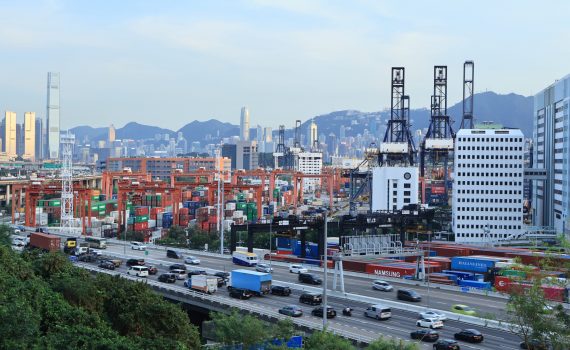
Hong Kong’s port battles to stay afloat amid green and digital shift
- 2025-11-10
- Society
- By: QIN ZiyangEdited by: NG Natasha Goa Sheng
- 2025-11-10
The Kwai Tsing Container Terminal was once the world’s busiest port and a symbol of Hong Kong’s economic boom. In 2023, for the first time in history, it fell off the list of the top 10, marking the end of a five-decade maritime dominance. Shipping data provider Alphaliner ranked Hong Kong in11th place that year. In 2024, it fell again to the 13th. According to Lloyd's List, in the top 10 global freight ports in 2024, mainland Chinese ports account for 7 of the largest ports, with Shanghai topping the list. In 2023, its throughput reached 49 million standard containers, 34 million more than Hong Kong. “Initially, Hong Kong's container throughput has fallen mainly because manufacturing has shifted away from China, reducing goods routed through Hong Kong," said Henry Ko Hok-han, professor at the School of Business of City University of Hong Kong. "Then, mainland ports like Shanghai and Ningbo have become more technologically advanced and handle more cargo directly, and rising operating costs have weakened Hong Kong’s competitiveness," he added. The government has introduced new policies to enhance port competitiveness, including connecting the port to shipping lines in the mainland and promising to push its green transformation and digital technologies, said Chief Executive John Lee Ka-chiu in the 2025 Policy Address. “The mainland government subsidises its ports, which has created unfair competition for Hong Kong,” said Ryan Chan, Secretary General of the Hong Kong Container Terminal Operators Association. “The relocation of manufacturing industries from Hong Kong to cities in the Greater Bay Area and the competition from other ports in the GBA, like Shenzhen and Nansha, are the key factors in the transit port of cargo shifting from Hong Kong to mainland ports,” said Chan. “Mainland ports are being supported by advancing the sharing of railway and port facilities, …
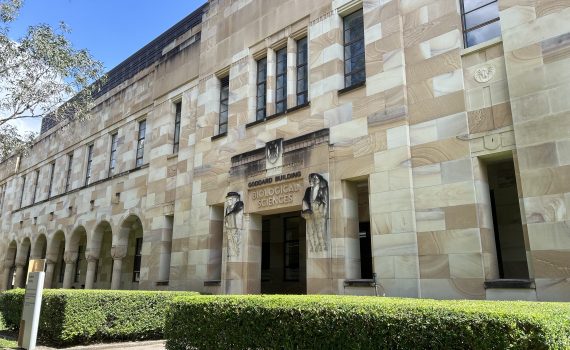
Australia sees a 20-year dip in Hong Kong students' enrolment as preferences shift
- 2025-11-09
- Society
- The Young Reporter
- By: CHAU Wing Yau、SIU Tsz HangEdited by: KURNIAWAN Trista Vania
- 2025-11-09
The number of Hong Kong students studying in Australia has dropped to a 20-year low, according to government data, signalling a shift in study abroad preferences among Hong Kong students. Data from Australia’s Department of Home Affairs reveals a stark decline: only 1,766 student visas were issued to Hongkongers in the 2024-2025 period – less than a quarter of the total from two decades ago. The trend is part of a broader downturn in new enrolments from key markets. Mainland Chinese students newly enrolled at Australian universities in the same period also fell by 2.4% to 41,442, contributing to a 17% year-on-year national drop in new international students reported in August 2025, according to Australia’s Department of Education. Despite this, the total number of international students studying in Australia remained unchanged. This could be a result of an influx of students arriving from countries like Bangladesh, Nepal, and Sri Lanka, and the continued presence of returning students. Hongkongers have long favoured Australia for its high-ranking universities, friendly immigration policies, and minimal time difference from home. However, observers have noted a combination of factors that are diverting Hong Kong students elsewhere. Willy Kwong, a Hong Kong-based migration agent, said the drop is partly due to the expansion of tertiary education opportunities in Hong Kong, which has reduced the need for students to study abroad. Australia has been known among Hong Kong students as a popular backdoor into competitive fields. Health-science majors such as physiotherapy, veterinary studies and environmental studies have been particularly popular as admission is often more accessible than Hong Kong. Kristy Lau, a Melbourne-based education consultant, said many secondary students were drawn to Australian universities as a more accessible alternative to highly competitive local programmes in Hong Kong. “The acceptance rates of these [health-science related] majors at Australian universities …

Wong Tai Sin's human oracle: how fortune-tellers endure the challenge posed by AI
- 2025-11-07
- Culture & Leisure
- The Young Reporter
- By: YANG ShuyiEdited by: WANG Jing
- 2025-11-07
The 73-year-old Frankie Chan Wang-yuen is not your average fortune teller at Wong Tai Sin Temple, especially in an age where AI can decode insights into your destiny in just seconds using traditional Chinese fortune-telling concepts. Below the large, dark green Chinese shop sign – founded in 1940 – is a small, lime-green, A4-size paper with four lines of English in Arial font that reads: Frankie Chan, spiritual therapist, M.A. (Social Work), English and Putonghua. That is about all one needs to know how Chan’s fortune-stick reading service would differ from his peers at Wong Tai Sin Temple. Chan inherited the fortune-telling store from his mother and ran it for 15 years after retiring from a lifelong career in social work focusing on children and mental health. In the face of pervasive anxiety in a post-pandemic era and demand for insights to control uncertain life circumstances, Chan said he could offer a bit more than just straightforward fortune-telling. Most of his early life revolved around the proximity of Wong Tai Sin, a Taoist temple offering worship and fortune-stick reading service. It remains one of Hong Kong’s most popular tourist destinations and also a place where he discovered the connections between traditional Chinese fortune-telling concepts and spiritual guidance via building connections with his customers. "Many of my customers have been coming since my mother's time," said Chan."They keep returning because of the deep connections we've built over the years." Like many, Chan too was faced with the impact of technological advancement, where traditional fortune-telling was outsourced to large artificial reasoning models that could generate insights using a wide range of Chinese astrological models. According to a report published by the Chinese online media outlet 36 Kr on Aug. 25, about 60% of respondents, who are mostly aged under 35, have used …
Wan Chai District hub for Hong Kong’s LGBTQ community
- 2025-11-06
- Society
- The Young Reporter
- By: Fu RongEdited by: Cheuk Chi Maggie YEUNG
- 2025-11-06
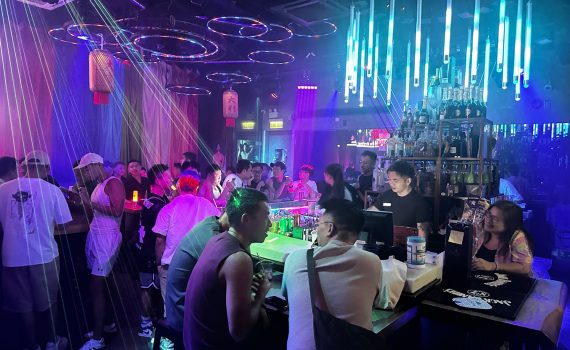
On a Saturday night, men in t-shirts and tank tops and a few women sip cocktails and chat in Hong Kong’s highest and one of its most popular gay bars, Bing Bing, on the 22nd floor of the Oliv building in Causeway Bay. “Bing Bing is a safe space for us,” said Felicia Ho Chui-man, 49, a straight woman who was at the bar. “To my gay friends, Bing Bing is what they are used to and the most comfortable with.” Bing Bing, located in the Wan Chai district, is known for its eight years of history, Korean pop music and affordable cocktails. Together with the several gay bars in the district and those in the neighbouring Central and Western District, they form a hub for the LGBTQ+ community in Hong Kong. “We try to provide a private space for gay community, to connect and to share all the support and fear,” said Yim Kai-kong, the manager of Bing Bing for the last seven years. Wu, the chairman of GayHK_caring, an NGO that helps local gay teenagers and students, said one of the reasons why gay people go to the Wan Chai district for entertainment, especially nightlife, is its deep historical roots.” According to the Hong Kong Public Records Office, nightlife in Wan Chai can be traced back to the Japanese occupation period from 1941 to 1945. At the time, Wan Chai district was a designated “entertainment area.” During the Korean War from 1950 to 1953, Hong Kong began to receive servicemen from the United States who were on leave. Bars and nightclubs in Wan Chai prospered when Americans from the United Nations Command landed at a small pier on Fenwick Street that was demolished in 2022. Published in 1957, British writer Richard Mason's book “The World of Suzie Wong” …

Advocate pushes Hong Kong to see refugees with compassion amid global backlash
- 2025-11-06
- Society
- The Young Reporter
- By: FENG Zhenpeng、Li YinhengEdited by: Cheuk Chi Maggie YEUNG
- 2025-11-06
Building public awareness about the hardships faced by 15,000 refugees and asylum seekers in Hong Kong remains a priority for the city, a rights group says. Speaking on the sidelines of the Home and Away charity football tournament it organised last week, Branches of Hope executive director Alexander Pforte said an intensifying global refugee resettlement challenge, fuelled by geopolitical tensions, anti-immigrant sentiment and populism, has compounded their clients’ hardships “exponentially”. “We can see this anywhere in the world. If you look at Europe and North America, which are the [primary] countries for resettlement, geopolitics and domestic politics [both] play a role…in fuelling rejection and reluctance to accept refugees and asylum seekers,” Pforte said. The annual tournament, which has been growing each year, attracted 29 teams last week to King’s Park, with about 580 players participating in this fourth consecutive edition. This year also marked the first time the tournament has branched out to youth, involving schools across Hong Kong to raise awareness of an issue it described as polarising. “Either people don’t know that there are refugees and asylum seekers in Hong Kong, or if they know, they think that they’re here illegally or don’t have a proper claim and that they have no right to be here,” Pforte said. As of September this year, Hong Kong’s Immigration Department received 1,925 applications for torture claims or non-refoulement protection. While the city does not grant asylum or legally recognise refugees, it has systematically screened asylum applications since late 2009. Of the 33,060 cases it has determined, only 379 or approximately 1% of those, have been successful. The majority of successful claimants have come from Pakistan, Yemen and Indonesia. Often, these non-refoulement claimants or refugees must wait for years, if not decades, for authorities to determine their cases. During this prolonged limbo, …
Shatin hostel scramble, housing quagmire under Hong Kong's policy of expanding non-local student enrolment
- 2025-11-05
- Society
- The Young Reporter
- By: Lan XinbeiEdited by: LIU Yutong
- 2025-11-05
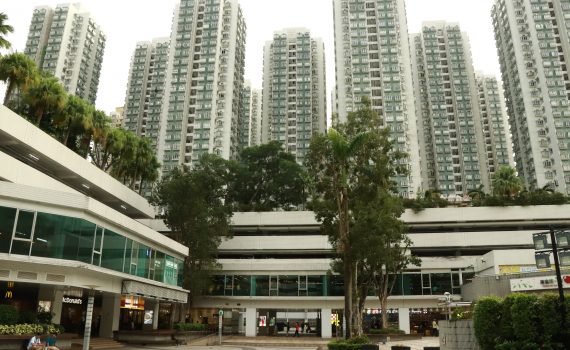
Joey Li's dream of studying in Hong Kong is confined to a 10-square-meter room barely larger than a parking space. The 21-year-old undergraduate from Guangdong, who majors in Integrated Communication Management at Hong Kong Baptist University’s College of International Education, paid HK$4,000 monthly for this partitioned corner in a shared 30-square-meter apartment. She shares this apartment at a cost of HK$15,500 a month with two other roommates, each of whom has a private bedroom. The sacrifice is a loss of privacy, where she is constantly accompanied by the noises of roommates cooking or using the bathroom. "It makes me feel bad, but I have no choice," Li said. To save more money, she mainly cooks at her residence and resorts to McDonald's and frozen food. Li is one of nearly 89,000 non-local students studying in Hong Kong, a number set to grow dramatically as the government pushes its “Study in Hong Kong” brand. Non-local student quotas have been doubled by 40% and are set to hit 50% next academic year. However, the city’s eight top universities are only offering about 42,000 dormitory places. This severe shortage forces the majority of non-local students into the private rental market, where soaring demand squeezes prices in university-adjacent districts like Shatin. According to the University Grants Committee, all full-time UGC-funded undergraduate students are only eligible for one year of on-campus housing during their studies at universities. Starting from the second year, both non-local and local students must apply for on-campus accommodation, with allocation subject to a screening process. The school considers factors such as commuting time, academic performance, and participation in student activities when assessing applications, according to the official websites of HKBU, CUHK and HSU. For postgraduate students, on-campus housing is not guaranteed, especially when the number of applicants exceeds available places. At …
From street to stall: How Kwun Tong’s evicted hawkers fight for survival
- 2025-11-05
- Society
- The Young Reporter
- By: LAU Ka YanEdited by: LI Sin Tung
- 2025-11-05
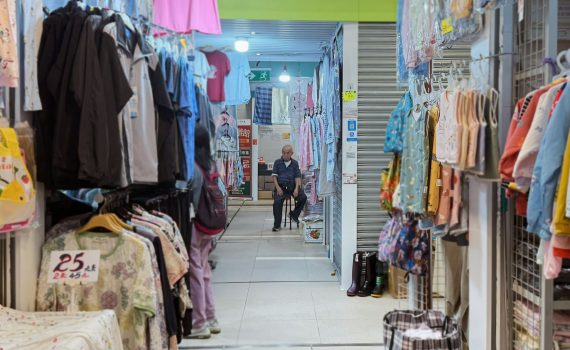
Beneath Kwun Tong's gentrified Yue Man Square lies a descending escalator that leads one to a ghost market. Despite bright lighting and air conditioning, the Yue Man Hawker Bazaar is drawing only a handful of visitors each day to the basement market selling household supplies. Off-seasoned pyjamas and bath towels are seen hanging on store fronts where shop owners idled by, barely making any sales. This is a stark contrast to the former street vendors who used to huddle up in the heart of Kwun Tong’s hustle and bustle while making a living to sustain their families. Since 2021, more than 100 stalls have been relocated to the Yue Man Hawker Bazaar, which was designed to support hawkers’ livelihood. But they complained that its hidden basement location and a surging popularity with online sales have made their businesses no longer sustainable. Although there are efforts to revive the market, its once-vibrant atmosphere was killed in the process. Fung Kwong-wai, 88, is a stall owner in Kwun Tong who has been selling mostly pyjamas for all ages for over 50 years. “I can only make a hundred dollars a day. It is not enough, as even lunch now costs at least HK$40,” said Fung. Many hawkers, like Fung, face a similar situation at Yue Man Hawker Bazaar. “No one comes here except for some neighbours occasionally,” said Janet Chan, 50, another old stall owner who sells daily items including combs, hair ties and pouches at the bazaar. Lau Sze-ying, 80, has been an owner who sells Chinese New Year couplets and red pockets for over 50 years. “Half of the day goes by, and only two to three people out of every 10 people who take the escalators down may buy things here. Most of the people who come are usually …

Hong Kong Eco Expo Asia 2025: Cost concerns shadow ESG push as Hong Kong firms seek greener image
- 2025-11-04
- Business
- By: ZHONG Xinyun、CHEN Yongru、LIN XiaoyouEdited by: WANG Ruoshui、BO Chuxuan
- 2025-11-04
The 20th edition of 2025 Eco Expo Asia wrapped up on Friday at Hong Kong AsiaWorld-Expo, with exhibiting firms promoting Environmental, Social, and Governance (ESG) transformation for a better image. Carmen Lau, the assistant marketing manager at ESGreen, an ESG-driven motor tech firm, said that as people pay increasing attention to environmental issues, such as extreme weather conditions, the company will prioritise ESG practices to enhance its brand image. Markus Ho, the sustainability strategies manager of Allied Environmental Consultants Limited, a sustainability and environmental consulting firm, said companies such as real estate developers or those in the financial industry can better promote ESG-related actions when they have extra resources due to their relatively abundant resources. “As a business platform for ESG and sustainable solutions, the Expo will showcase the latest products and technologies in new energy, green living, and environmental protection,” said Jenny Koo, HKTDC Deputy Executive Director, at a press conference in early October ahead of the event. According to a study by Hong Kong Trade Development released this June, the city gained 64.2 points in the ESG Index, with respondents from Mainland China giving the highest rating of 69.1, underscoring the city's reputation as an ESG business hub. https://public.flourish.studio/visualisation/25951653/ The banking and financial services sector had the highest percentage of practitioners engaged in sourcing or providing ESG solutions, followed by the fashion industry and the international trade and manufacturing industries. Cost is one of the challenges companies face when implementing ESG standards. “(The aspect that) is difficult to advance is probably the cost,” said Lau. “It is necessary for that company to invest first, and then there will be profits.” Oscar Chan, the product owner of Green AI Technology Limited, a company that uses AI to track the quantity and weight of recycled items, also highlighted cost concerns. …
Sham Tseng: A place defined by its geese
- 2025-11-04
- Society
- The Young Reporter
- By: Wing Chi HOEdited by: Chun Hei LUK
- 2025-11-04
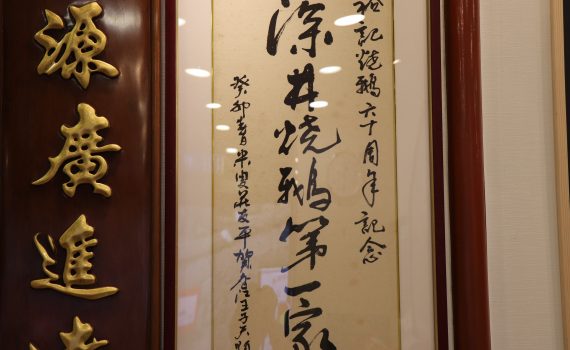
In the heart of Tsuen Wan, along the coastline with streets lined with banyan trees and village houses, lies a name that has become known for a particular dish: roasted goose. The neighbourhood of Sham Tseng is synonymous with the traditional dish and is often seen in its television advertisement. Yue Kee Roasted Goose Restaurant, founded by Ng Chun-yam in 1958, caters to factory workers with its charcoal-roasted Guangdong geese, made from recipes passed down through two generations. Ng’s eldest daughter, Ng Juan-hua, who is now the owner of the family business, started working in the restaurant at age 12. She said she gave up further education to help her parents run the shop, allowing her younger siblings to continue their studies. On June 4, 1992, a level 3 fire broke out at Yu Kee Restaurant. The owners, Ng and his wife, died in the fire. Since then, Ng Juan-hua took on the role of second-generation leader and worked with her siblings to revitalise Yu Kee. Now, Ng Juan-hua’s son, Ng Guo-han, runs the operations. In the kitchen, a fortress of heat and focused energy, head chef Lee Ming-kwok is a man of few words but action. His canvas is a goose, his tools are time and fire. He cooks and chops 50 to 100 geese daily. The process includes marinating the geese for several hours, air-drying them, and roasting them for about 45 minutes to an hour. The dish stands out due to the blend of spices and the chef’s technique. Lee has worked at Yu Kee for over a decade. The large oven contains burning charcoal at the bottom, and the goose hangs suspended above it, slowly roasting as the heat rises and envelops the meat, ensuring an even cooking process. “Many places use gas or electric ovens …
Sham Tseng — The story of Hong Kong’s roasted goose restaurant
- 2025-11-04
- Society
- The Young Reporter
- By: Wing Chi HOEdited by: Chun Hei LUK
- 2025-11-04
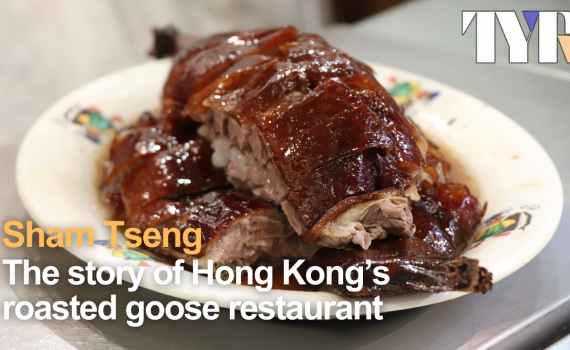
TYR stepped into the kitchen of Yue Kee restaurant in Sham Tseng, known for its roasted goose. We’ll talk with Ng Juan-hua, the second-generation owner, to learn about the techniques behind this dish. Discover the history and methods that have kept customers returning for years. Yue Kee, along with Chan Kee, is one of the oldest roast goose restaurants in the area, both operating since the 1950s. Join this exploration of the history and flavor of Shum Tseng. (4th November, 2025) Reported By Gigi Ho Edited By Anson Luk