
TOP STORIES

GBA forum: Hong Kong firms urged to tap mainland demand amid sluggish retail recovery
- 2026-01-30
- Business
- By: LIN Xiaoyou、ZHONG XinyunEdited by: CHEN Yongru、ZHOU Yun
- 2026-01-30
The Hong Kong Trading Development Council held a seminar on Thursday on new consumption trends in the Greater Bay Area (GBA), guiding Hong Kong enterprises to seize opportunities in the GBA amid the city’s modest retail recovery. Howie Wong, General Manager of Kampery, a Hong Kong-based retailer and manufacturer, said that mainland China’s consumption momentum is robust, driven by highly convenient e-commerce. Therefore, it is a great opportunity for Hong Kong enterprises to expand their exports now. The latest data from the Census and Statistics Department shows that although Hong Kong’s total retail sales in November 2025 increased by 6.5% compared with the same period in 2024, reaching HK$33.7 billion, it is still much lower than the level before the COVID-19 pandemic. Wong added that some mid-tier, more value-for-money consumers may choose to spend in mainland stores, causing purchasing power to shift northwards. Sherriff Luk, professor of marketing at Emlyon Business School, cited research by Agent Ocean showing that mainland consumers are increasingly focused on product quality, safety, and health benefits. Hong Kong businesses need to understand the changes in the consumer base of the Greater Bay Area. If they stick to the old ways, they may not keep up with the trend. More specifically, Luk said that the pursuit of “quality of life” is a new consumption trend and mainland consumers are shifting from price-driven to experience- and emotion-driven spending. On corporate strategy, Billy Cheung, founder and CEO of Sparkdemy, said that in an environment where social media content is highly saturated, brands need to enhance their exposure and content production capabilities. “As long as you can be found in Search Engine Optimization searches, you win,” he added. Regarding how Hong Kong enterprises can enter and capture the Greater Bay Area market, Cheung said that it is important to …
New Lives, New Challenges: Chinese expats seek openness in Saudi Arabia’s workplace
- 2026-01-29
- The Young Reporter
- By: LAI Uen Ling、MAO AnqiEdited by: Robin Ewing
- 2026-01-29
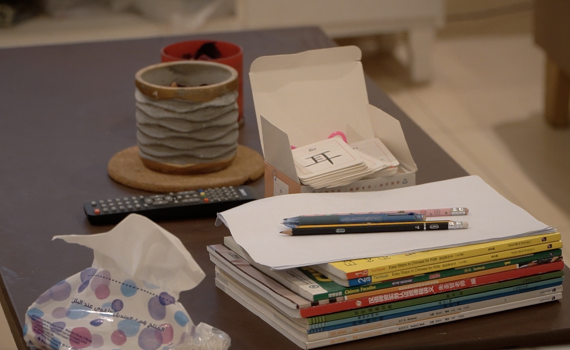
Driven by Saudi Vision 2030, Saudi Arabia is opening new doors for expats, but challenges remain: cultural differences, language barriers, and visa regulations. RIYADH, Saudi Arabia Jan 23 – Jamie Chou, 38, lies in bed at her home in Taiwan, cradling her newborn daughter. Having recently been laid off just after a five-month maternity leave, though not because of it, she scrolls through LinkedIn, applying for jobs all over the world. Suddenly, a message lights up her screen: a Saudi company is offering her the role of chief marketing officer. It’s not the first time Chou has received job offers from the Middle East. With a master’s degree in business and 15 years of marketing experience, she is an attractive candidate. If this had happened in 2014 when she had just graduated, Chou said she would have rejected the offer without hesitation because of gender discrimination in Saudi Arabia. But now, with restrictions on women relaxed, one of her female classmates from her master’s program, who is a single mother, is still able to have a thriving career there with a kid. Chou accepted the offer after flying to Riyadh and discussing the opportunity with the company. In 2025, she moved to Saudi Arabia with her husband and one-year-old daughter. Attracting foreign talent is part of Saudi Vision 2030, a long-term strategy launched in 2016 by the Saudi government to promote economic diversification and development. While the kingdom promises new opportunities and a more open society, expats say a truly open, welcoming work environment is still a work in progress. Chou said she still remembers when she tried to look up the company, she found almost no information. “Is this a scam? Could I be kidnapped after I arrived in Riyadh?” she said, torn between a lucrative offer and a …
Doha’s Falcon Souq keeps a century-old tradition alive
- 2026-01-29
- Photo Essay
- The Young Reporter
- By: LAI Uen Ling、Dake LiuEdited by: Robin Ewing
- 2026-01-29
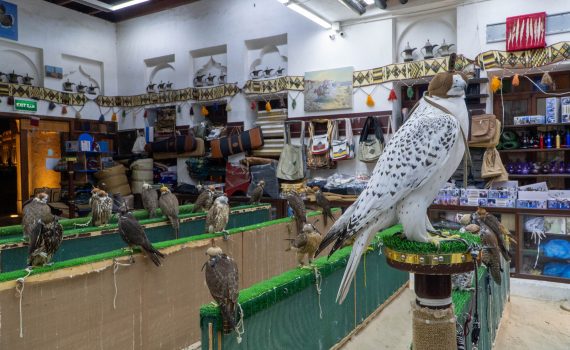
DOHA, Qatar Jan 14 – Falconry is one of the world’s oldest hunting traditions with a documented history spanning over 4,000 years. Introduced from Central Asia around the 7th century, Bedouin tribes of the Arabian Peninsula relied on falcons’ speed, sharp eyesight and innate hunting instincts to survive in the harsh desert, long before the rise of modern urbanisation. Today, this practical survival skill has evolved into a revered cultural tradition embedded in local folklore, poetry and royal customs. The Falcon market at Doha’s Souq Waqif is more than just a marketplace for local enthusiasts. It is a living landmark where visitors can experience firsthand the legacy of falconry in Qatari culture. Aziz, 65, is the owner of a falcon shop in the market. Originally from Pakistan, he came to Qatar in 1993. In 2012, Aziz opened his first falcon shop. He has since expanded to three shops in Qatar and employs 22 workers including three of his sons. According to Aziz, a falcon can fetch prices anywhere from 2,000 up to 1.75 million Qatari riyals (around HK$4,280 to HK$3,600,000). Among his collection, the most unique falcon is Rambo, a Gyrfalcon bred in Germany. With mostly white feathers and brown spots, this bird belongs to one of the largest birds of prey in the falcon family. In ancient times, northern emperors prized them for their outstanding hunting skills.
Passengers and drivers doubt effectiveness and fairness of the new seatbelt rules
- 2026-01-28
- Society
- The Young Reporter
- By: Cao Beiyu、Ng Wing Sum JodieEdited by: LEUNG Chi Ngai
- 2026-01-28
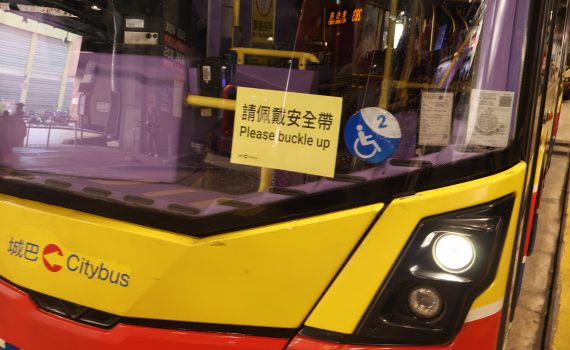
Passengers and drivers are concerned about the fairness and effectiveness of the seatbelt amendment that officially took effect on Jan. 25. All passengers on public transport and drivers who fail to wear seatbelts without a reasonable excuse are now liable to a maximum fine of HK$5,000 and up to 3 months’ imprisonment, according to the new amendment. “I think there is enough publicity for this new rule. I’ve been seeing the government’s promotion on TV since December,” said Ng Siu-leung, 58, a passenger at Sha Tin bus terminus. Another passenger, Wong Tsui-yim, 90, said she was aware of the new rule after seeing the news on TV, and her elderly friends would remind one another of the new seatbelt rules via WhatsApp groups. Despite the notice signs, Zhang Lan, a mainland Chinese tourist who had just arrived in Hong Kong for a vacation, said she had heard nothing about the amendment of the new rules. “I don’t think they are talking about it enough,” said Noa Navet, 19, a French woman living in Hong Kong. Although the new seatbelt rule can better protect passenger safety, the government should promote the new rules for younger people and foreigners via social media, she added. The new amendment also states that drivers will receive an HK$2,000 fine if they have more than two technology devices placed in front of them while driving. Local resident Chan Chung-kei, 31, said it is unfair to have a higher penalty for passengers not wearing seatbelts compared to drivers who look at their digital devices while driving. “It is the driver's responsibility to ensure the passengers’ safety, but why should inattentive drivers be fined less than passengers without seatbelts?” she said. Kong Pak-tung, 24, a Kowloon bus driver of route 289R, said he saw some passengers who didn’t …
Fans flock to Kai Tak commercial district as Blackpink concert doubles Hong Kong restaurant revenue
- 2026-01-28
- Culture & Leisure
- The Young Reporter
- By: LIU Rui Reena、Baguio AnneEdited by: Lan Xinbei
- 2026-01-28
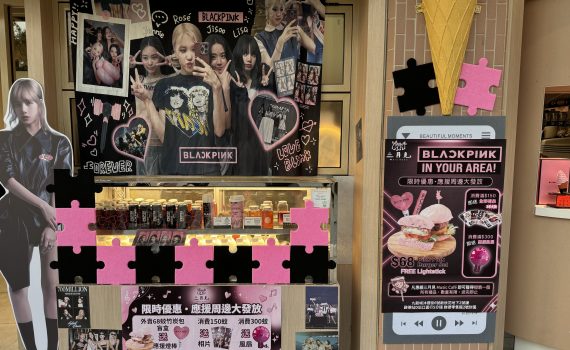
Restaurants near the Kai Tak Stadium in Hong Kong saw a surge in business during K-pop powerhouse Blackpink’s concert weekend, with many reporting a 100% increase in customers compared with usual days. The globally popular Korean girl group Blackpink held the final stop of their "Deadline" world tour at the Kai Tak Stadium from Jan. 24 to 26. The event not only created a vibrant scene inside the venue, but also significantly boosted the surrounding commercial consumption. Since Friday, excitement filled the area around Kai Tak MTR station, where crowds of fans dressed in black-and-pink outfits and carrying Blackpink’s signature hammer light stick gathered. Inside the station concourse, some of the group’s best-known tracks – including “Kill This Love” and “How You Like That” – played to welcome concertgoers. Many fans chose to dine in the surrounding area before entering, boosting the popularity of the commercial district. Hongkongers Jadie Wong and Emily Lee, who attended the show, said they waited nearly an hour in line for a table at a restaurant inside the Airside, a shopping complex near the stadium. “The restaurant is very busy today with a large number of customers,” they added. Several eateries around the stadium launched themed promotions to draw in fans. "Garden of Eatin," located near the sports arena, introduced limited edition items such as a "Pink Burger" and Earl Grey tea served in Blackpink-style cups. Owner Edward Tsang said these special items were designed specifically for Blackpink fans. “This type of limited-time product was very popular during Blackpink concerts, with customer traffic increasing by 80% to 100%,” he added. Tsang expected the momentum to continue with upcoming shows at Kai Tak, including a concert by K-pop boy band Seventeen on Feb. 28. A barbecue restaurant “Gyu-Kaku” located in a shopping mall near the Kai …

Hong Kong rates follow the US lower as the 2025 easing cycle begins
- 2026-01-27
- Business
- By: Wang Yunqi、Zhou Xinying、Yau Ka MingEdited by: ZHAO Runtong、BO Chuxuan
- 2026-01-27
In 2025, the US Federal Reserve cut rates twice in the second half of the year. Under Hong Kong's dollar peg system, local rates followed the downward trajectory. For nearly four decades, Hong Kong has operated under a dollar peg system that ties the city's currency to the US dollar. This mechanism means local interest rates track Federal Reserve decisions, transmitting US monetary policy to the local economy. AI Analogy: The Dollar Peg in Simple TermsImagine asking a fortune teller at Wong Tai Sin Temple about whether property prices will drop next year, only to receive the answer: “Everything depends on the mood of the US Federal Reserve.” In Hong Kong, even the gods of fortune sometimes have to check Powell’s latest speech before blessing your investments. On Oct. 30, 2025, Federal Reserve Chairman Jerome Powell announced a 25 basis point cut to the federal funds rate to 3.75%-4.00%, marking the second rate cut of the year amid a sluggish job market. The same day after the rate cut, the Hong Kong Monetary Authority (HKMA) announced a reduction in its base rate to 4.25%. Under the linked exchange rate system, Hong Kong dollar interbank rates generally converge with US dollar interest rates, said Eddie Yue, Chief Executive at HKMA. As the year 2025 unfolded, US President Donald John Trump challenged Powell’s January message of caution, pushing instead for faster rate cuts. The federal funds rate was cut twice, 25 basis pointsat a time, in September and October to the range of 3.75% to 4.00%. Following HKMA’s adjustment, several major commercial banks such as HSBC, Hang Seng Bank, and Bank of China (Hong Kong) also lowered their prime lending rates accordingly. However, the banks' reductions were smaller than the Federal Reserve's cuts. Most major banks reduced their prime rates by …

From ‘brain rot’ to balance: Gen Z’s pursuit of meaningful content in fragmented media
- 2026-01-26
- Society
- The Young Reporter
- By: Yu Yan Pui、Edited by: CAO Jiawen、ALISHIBA MATLOOB
- 2026-01-26
Every day, Zhang Danying, 22, an undergraduate student from mainland China at Hong Kong Baptist University, turns her phone on to enjoy scrolling through clips and image-driven posts on social media from the moment she wakes up. She spends almost 12 hours a day watching netizens dancing to pop music, or trying out various challenges. Zhang aspires to seek learning advice and reach for lighthearted social snippets to feel relaxed. Instead, she grew anxious from social comparison with people, and came down to media addiction that disrupted her daily routines out of the cyberworld, with constant inner struggles. “It is hard not to watch social media for a day,” Zhang Danying said. “But after watching it, I feel uncomfortable all day.” Zhang is not alone. In mainland China as well as globally, it has become common for Gen Z to jokingly claim they are suffering from “brain rot”—a slang phrase that means poor cognitive skills and fading memory after hours of social media scrolling. As noted by the Oxford University Press in 2024, usage of the term “brain rot” surged by 230% from 2023 to 2024. According to a 2024 survey by Bazaarvoice in Statista, 34% of interviewees' responses that short-form videos, such as TikTok and Instagram reels, are more effective at spreading online than text-based posts. Based on Metricool Viral Trends Analysis, popular social media posts include catchy music, timely hashtags, evolving cultural conversations and collective online experiences, shaping as a market strategy. As noted by the China Trends 2024 by Groove Dynasty, it highlights Douyin phenomena of emerging social experiment-type challenges, one case is that participants stage humiliating acts in crowded elevators to capture bystander reactions. Other examples include the ‘APT. Dance’ that features hand gestures with upbeat music. Zhang Danying is caught up in the wave of …

Raise “fur kids” rich way: Hong Kong pet expenses continue to rise, with emerging premium consumption
- 2026-01-24
- Business
- By: TANG Siqi、Zhou Xinying、Yau Ka MingEdited by: Haoming Zhou、BO Chuxuan
- 2026-01-24
At MegaBox shopping mall, Giuliana, a border collie known for the breed’s its intelligence and agility, sat quietly in a pet stroller while her owner, Gabriella Ng, bent over to straighten the hem of her dress, ensuring Giuliana could present her best performance during their walk show on Sep. 27. As a fashion designer and content creator, Ng took one month to design her and Giulian’s dress to match each other stylishly for the showcase during the Pet Walk Show 2025. “It cost about HK$10,000 for these two dresses,” said Ng, pointing at her piece. With an average cost of HK$700, Ng shared that Giuliana has around 20 items of clothing. According to Exhibition Group, the organiser of another pet show, 80.1% of about 1,000 respondents reported an increase in expenditure over the past 12 months, with average monthly spending reaching HK$2,086, up 6.3% from HK$1,962 the previous year. The proportion of people spending between HK$1,501 and HK$2,500 per month on pet care rose from 27.5% to 32.4%. Additionally, 79.1% of respondents expect their spending to increase within the next six to 12 months, over half anticipating at least a 10% rise. A trend toward premium, personalised pet care is redefining Hong Kong’s pet consumption economy as owners allocate larger budgets into their “fur kids,” boosting the related products and services market. The global dog clothing market reached US$1.5 billion (HK$11.7 billion) in 2024, according to internal data and industry insights from 6Wresearch released in April. Tomas Yuen, a retired professor from the Department of Economics and Finance at Hong Kong Shue Yan University, noted the spending shift marks a broader change in consumption patterns. Most pet owners prefer high-quality and luxurious services and products for their “fur kids,” which could change the market’s business model. “They care about the …

Chinese Gen Z shifts focus to lesser-known European destinations amid social media trend
- 2026-01-23
- Business
- By: XIA Fan、WANG RuoshuiEdited by: BO Chuxuan
- 2026-01-23
Big city lights? Too mainstream. Young Chinese travellers now prefer to crave the road less travelled. Chinese Gen Z travellers are ditching crowded classics for off-the-beaten-path destinations in Europe. The hunt is on for niche places that promise more profound, more authentic local experiences, turning once-mainstream spots into personalised immersions. Gen Z travellers, generally defined as those born from the mid-to-late 1990s to the early 2010s, favour cultural deep dives over cash-splashing consumption. They seek stories and experiences that resonate long after the trip ends. Wang Yang, 28, came to the Netherlands to visit the Van Gogh Museum on October 1 after learning on social media that the museum faced the risk of closure due to budget constraints. His reservation wouldn't load on his phone at first, but a tip from Rednote, a popular Chinese social media, helped him purchase a ticket at the entrance. “Enjoy your visits!” chirped the staff as Wang secured his ticket, sharing a warm grin with the ticket inspector—a moment that felt like a heartfelt welcome to this 28-year-old adventurer. His 22-day European odyssey, blending annual leave with the National Day Golden Week, cost him roughly 50,000 RMB—about a quarter of his yearly income. Departing from Xi’an, China, Wang and his friends didn’t book any travel agent’s service or pay for a local guide; instead, they followed tips and routines shared on social media platforms as a way to craft their personalised journey. “Europe’s cities pulse with a deeper cultural and historical soul than most places,” Wang explained. “That’s why I came back.” Ditching the well-trodden Barcelona-Paris-Rome circuit, Wang and his friends ventured to Europe’s hidden gems—the Czech Republic, Greece, Portugal, and the Netherlands—while revisiting Spain, a nostalgic nod to a trip six years prior. “Golden Week outbound demand in China is breaking records. We …
IPO regulation reform in the hot market burns winning spaces for retail investors
- 2026-01-22
- Business
- By: ZHOU Yun、CHEN Yongru、ZHONG XinyunEdited by: ZHAO Runtong、BO Chuxuan
- 2026-01-22
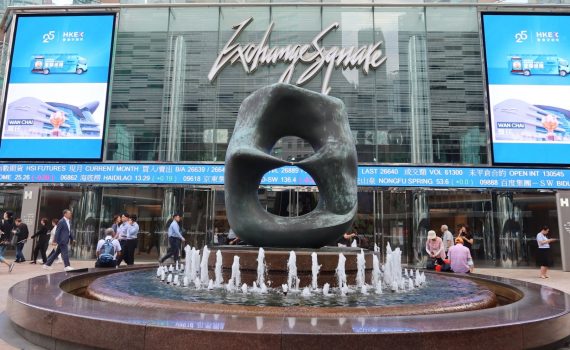
Every time Liu Busi, a retail investor in the initial public offering (IPO) market in Hong Kong, checks the result of his new stock subscription, he feels a mix of uncertainty and excitement. Joining the IPO subscription game this year amid intense oversubscription, Liu has subscribed to 25 new listings and was allocated shares in 17 of them, including CATL and Zijin Gold, the two largest IPOs in 2025, with approximately HK$ 41 billion and HK$ 25 billion raised respectively. Of the 17 allocations, 14 have gained value after subscription, with his best performing IPO investment - Bloks, a Chinese toy company, having generated HK$ 11,059 for him as of Nov. 6. However, Liu noticed a sharp change in his subscription success rate after Hong Kong Stock Exchange's (HKEX) new reforms on IPOs in August. The HKEX implemented new optimisation measures on stock allocation and subscription mechanisms, including stipulating that issuers must allocate at least 40% of the shares in the IPO to the book-building placement portion and introducing two public subscription mechanism options. Before the reform, Liu was allocated shares in 10 out of 13 subscriptions, a 77% success rate. After the reform, he could only secure allocations for 7 out of 12 subscriptions, a 58% success rate. The city has seen 69 IPOs raise over HK$160.4 billion as of Sept. 30, a 183% surge compared with last year. According to Deloitte China's analysis, the city is projected to see over 80 IPOs raising HK$250 billion to HK$280 billion for the full year 2025. HKEX did not comment on the reduced success rate of subscriptions by retail investors when asked by TYFP reporters. In an earlier news release, Katherine Ng, HKEX Head of Listing, said the exchange “has sought to enhance the robustness of the IPO pricing and allocation …