
TOP STORIES
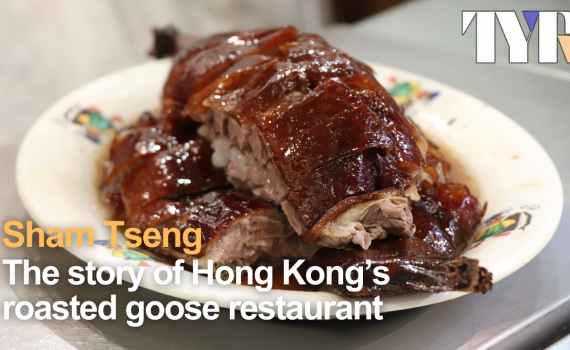
Sham Tseng — The story of Hong Kong’s roasted goose restaurant
- 2025-11-04
- Society
- The Young Reporter
- By: Wing Chi HOEdited by: Chun Hei LUK
- 2025-11-04
TYR stepped into the kitchen of Yue Kee restaurant in Sham Tseng, known for its roasted goose. We’ll talk with Ng Juan-hua, the second-generation owner, to learn about the techniques behind this dish. Discover the history and methods that have kept customers returning for years. Yue Kee, along with Chan Kee, is one of the oldest roast goose restaurants in the area, both operating since the 1950s. Join this exploration of the history and flavor of Shum Tseng. (4th November, 2025) Reported By Gigi Ho Edited By Anson Luk

Running together: how a running club in Tai Po is bringing the community closer
- 2025-11-01
- Health & Environment
- The Young Reporter
- By: CHAN Hiu YingEdited by: LAI Uen Ling
- 2025-11-01
Ng Po-ki, the 34-year-old star with boy band Error, was not performing at Tai Po Sports Ground on a recent Tuesday evening. Dressed in a blue T-shirt bearing "Tai Po Running Club", Ng was seen warming up with a crowd of more than 60 runners in the club that he founded. Hands clapping, runners changed their stretching poses from left to right. After the warm-up session, the pacers divided people by skill level, tightening their shoelaces before the run. From urban pavement to sports tracks, the area soon resonates with the sound of determined footsteps as runners begin their run. “I am here to support these people on their running journeys, whether it’s for health or personal best," said Ng who founded the club in 2023 with former TV journalist, Lau Chun-kong, following a local TV sports reality show that documented celebrities training for a marathon. Amid Hong Kong’s growing fitness enthusiasm, the running club is more than a place to sweat, it is a hub for social bonds. It has helped transform Tai Po, a district framed by valleys and rivers, into a vibrant destination for both seasoned athletes and casual joggers. Tai Po, a suburban district in northeastern Hong Kong overlooking the Tolo Harbour with a growing population of 300,000, has been highly favoured by runners and cyclists along its tree-lined coastal walkways. Ng recalled the club’s beginning with only a dozen participants. “When more people join the running, some members come up with different plans and set the levels of intensity based on each individual’s ability. Some groups stay in the sports grounds, some have street running," Ng said. The club now holds free running sessions every Tuesday evening and Sunday morning. Welcoming all fitness levels, it has drawn over 21,000 members to its Facebook group. “I …

Nepalese Community Seeks to Call Hong Kong Home
- 2025-10-31
- Society
- The Young Reporter
- By: Ye EnyiEdited by: CAO Jiawen
- 2025-10-31
Every afternoon, a diverse crowd sits in the dimly lit bar at The Nest, a Nepalese restaurant in Jordan, savouring its happy hour buy-one-get-one-free drink special and listening to jazz music. “My guests are saying that this place is very cozy and relaxing,” said Pradeep Kandangwa, 55, the owner of The Nest. “They keep coming here once they come.” Jordan, referred to as “Little Nepal,” is dotted with restaurants like the Nest and specialty shops selling Nepalese food and daily necessities. It’s part of the Yau Tsim Mong District, which has the highest concentration of ethnic minority residents among Hong Kong’s 18 districts, approximately 8.6% of the city’s total ethnic minority population, according to the 2021 census. The largest portion of these are Nepalese. Many, like Kandangwa, work in the catering and hospitality industry, which employs the largest proportion of ethnic minorities in Hong Kong, according to a 2023 study from Lingnan University and Hong Kong Baptist University. But experts say that ethnic minorities in the city are pushed into service industry or construction jobs because of a lack of Chinese language skills. For some, especially those who were born in Hong Kong, this can lead to an identity crisis. Kandangwa said he first worked in construction when he arrived in Hong Kong from Nepal 25 years ago before opening his restaurant in 2016. “Nepalese who don’t speak Chinese and even English still make a living in places like restaurants, salons and hotels,” said Kandangwa. “Finding work in Hong Kong’s local community isn’t easy for non-Chinese individuals. We may meet the qualifications, but the issue is language, our Chinese isn’t fluent enough.” “While I can manage basic communication, read and write some words, it’s insufficient to secure a job at a local company, so I decided to start my own …
Local artsy businesses transform old district into trendy check-in spots
- 2025-10-30
- Society
- The Young Reporter
- By: ZHOU ShiqingEdited by: MAO Anqi、CHEN Yik Nam
- 2025-10-30
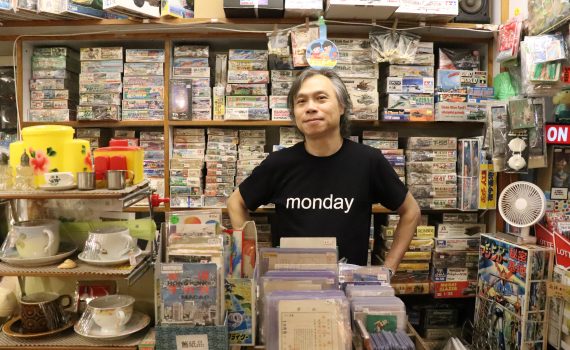
In the century-old neighbourhood of Sham Shui Po, a poster shop stands on the corner of Ki Lung Street. Its classic Hong Kong film posters tell the stories of the past. Wong Tak-hei, 32, has spent five years transforming his obsession with local films into a small shop called Moviemarks that sells what he calls collective memories. “Unlike those fancy shopping malls you wouldn’t visit every day, Sham Shui Po is the kind of place you can visit on two different days and have a completely different experience,” Wong said. Moviemarks is one of the small creative businesses located in Sham Shui Po, a district that was developed as early as the 1910s. A report by the Urban Renewal Authority in September 2023 highlighted the age of the area, as reflected in the old buildings, high population density and social problems related to subdivided residential houses. But recently, the community has nurtured creative local businesses and has become a haven for artistic shops. The area is bustling with trendy cafes and craft shops, and its themed streets have their own specialised categories of goods. Fuk Wing Street is the place for toy wholesale and retail, and Nam Cheong Street features ribbon selling. In October 2020, urban culture magazine TimeOut selected Sham Shui Po as the third coolest neighbourhood in the world, in recognition of its creativity. “The atmosphere here is unique, and I like it very much. These modern stores blend well with the old community, creating an interesting and fresh experience,” Wong added. Xie Yongqi, 18, who has been living in Sham Shui Po since she was born, said she visits boutiques and toy stores every two weeks. “I usually come here with my brother to pick out toys or buy gifts for friends. Sham Shui Po is undoubtedly …

“Little Bangkok” in Kowloon City finds ways to keep its Thai flavors amid redevelopment
- 2025-10-28
- Society
- The Young Reporter
- By: Lou Zhengzheng、Li ZhongyiEdited by: WANG Ludan、AO Wei Ying Vinci
- 2025-10-28
In the bustling food court on the roof of the Kowloon City Municipal Services Building, the air is filled with the enticing aroma of food from 10 restaurant stalls. Sukulporn Paipha, 59, owner of Chiangrai Thai Food, a 27-year-old eatery, welcomed diners as they entered the cooked food centre. Her daughter served the Thai dishes while her grandson played with toys at a nearby table. This scene is set to disappear with the demolition of the building, which includes a wet market and the cooked food centre, sometime in the next few years under the government’s redevelopment plan for the neighborhood. Around 120 buildings will be demolished, including current public facilities such as the Kowloon City Municipal Services Building and the Kowloon City Lions Clubs Health Centre. According to the Urban Renewal Authority, the redevelopment scheme in the Lung Shing area is divided into three areas, including the replanning of Nga Tsin Wai and Carpenter roads. In July this year, the government reclaimed the land along the two roads, forcing the closure of dozens of businesses. Outside the municipal building, the streets are nearly desolate. Only a few shops remained open, with others busy packing up to relocate. Metal shutters were pulled down for most shops, displaying signs that read “Urban Renewal Authority Property: No Trespass or Unauthorized Entry.” Some simply note “Clearance Sale” or “Relocation Notice” in Chinese nearby. Approximately 140 floor shops across the three sites are affected. During a visit, TYR found that while most are looking for new premises, other businesses that have operated for decades are preparing for permanent closure. “I arrived in Hong Kong when I was just 20, and now at 59, my family has grown deep roots here, three generations in all,” Sukulporn said. “I started with one shop, then opened a …

Thousands march in Brisbane against mass immigration
- 2025-10-27
- Society
- The Young Reporter
- By: CHAU Wing YauEdited by: KURNIAWAN Trista Vania
- 2025-10-27
Around 2,000 protesters gathered in Brisbane’s central business district on Oct.19 to call for an end to mass immigration, which they believe is worsening Australia’s housing and cost-of-living crisis. Nearly 300 counterprotesters joined nearby, with banners calling the protest a racist and fascist movement. This is the second round of anti-immigration protests, also known as “March for Australia”, across the country. The first was held on Aug. 31 with thousands protesting in major cities, such as Sydney, Melbourne and Perth. In Brisbane, 6,000 protesters, out of a city of 2.5 million, joined the demonstrations. “Racism may intensify, and I feel concerned about my safety,” said Alice Wong, 28, a Hong Kong student in Melbourne planning to obtain permanent residency, who didn’t go to the protest for physical safety concerns. Wong said the protest promotes the idea of white superiority. “When they protest against immigration, it feels like they think immigrants are taking away their resources, like housing or job opportunities,” she said. Australia’s housing market is surging at its fastest pace in almost four years, with Brisbane becoming Australia’s second-most expensive housing market, according to the House Price Report in 2025. Kev, 72, an Australian who participated in the protest and preferred to keep his last name anonymous, said he has never seen a country in such a bad economic position. “We’ve never had so many people coming to the country so quickly, and the government has been no help,” he said. In September 2023, Australia’s net overseas migration peaked at 558,000 after lifting COVID-19 restrictions, according to the Australian Bureau of Statistics. Australia recorded a net overseas migration of 446,000 people in 2024, down from the previous year but still far from pre-pandemic numbers of 239,000 in 2020. Kev said he isn’t against immigrants, but he wants to see …

Starting salaries of Hong Kong bachelor’s graduates end five-year upward trend
- 2025-10-26
- Society
- The Young Reporter
- By: YANG ShuyiEdited by: WANG Jing
- 2025-10-26
The average starting salary for university graduates of bachelor’s degrees in Hong Kong remained at HK$19,500 this year, marking the end of a five-year upward trend amid the US-China trade war, a survey has found. The “2025 Guangdong–Hong Kong–Macau Greater Bay Area Pay and Benefits Survey” published on Oct. 23, also reported that the production, sales, and customer service sectors face the highest declines in the starting salary. "Due to Hong Kong's poor economic conditions and uncertain future outlook, some employers tend to lower the starting salary for fresh graduates," said Huang Xu, director of the Centre for Human Resources Strategy and Development at Hong Kong Baptist University, who led this survey. Huang said Hong Kong’s current economic situation is significantly impacted by the new round of the US-China trade war that began in April this year, and that is one of the reasons why the average starting salary for university graduates has not increased as expected. "In our long-term tracking of employee salaries offered by 2,000 Hong Kong companies, we observed a significant decline following the outbreak of the trade war in April," said Huang. The average salary increase rate in Hong Kong is 2.5%, and it is below last year's figures of 3.5%. This year’s survey was conducted from July to September, with a total of 258 participating companies that represent over 240,000 employees. Gou Jyun-lung, 20, who studies interactive design at the Chinese University of Hong Kong, said the average starting salary meets his expectations for his first job in the future. "With many universities in Hong Kong expanding enrollment, competition for jobs is becoming more intense,” Gou said. “So, if my future salary can reach HK$19,500, I would be satisfied." Zhang Que, 21, is a final-year social science student who is currently looking for a job, …

Live: 4th Plenum of 20th Congress
- 2025-10-23
- Politics
- By: Dake LiuEdited by: Xiangwei Wang
- 2025-10-23
18:39 Among the nine senior generals previously announced as expelled from both the Party and the military following review by the plenum session, eight had been members of the 20th Central Committee. The nine disciplined senior generals are He Weidong, Miao Hua, He Hongjun, Wang Xiubin, Lin Xiangyang, Qin Shutong, Yuan Huazhi, Wang Houbin, and Wang Chunning. 18:36 Despite consistently ranking as the top four alternate members in votes for two consecutive terms of the Communist Party of China Central Committee, Ding Xiangqun, Ding Xingnong, Yu Lijun, and Yu Jihong were not elevated to full membership at this Plenum. Lieutenant General Ding Xingnong serves as the Deputy Political Commissar of the PLA Rocket Force. The other high-vote recipients were Ding Xiangqun (Party Secretary and Chairwoman of China People's Insurance Group Co., Ltd., and also serves as Chairwoman of China People's Property Insurance Co., Ltd), Yu Lijun (Head of the Organization Department of the Sichuan Provincial Party Committee), and Yu Jihong (President of Beijing Normal University). 18:30 The Plenum proposed to further advance the construction of Digital China. The Digital China initiative, first produced in 2023, stands as the most overarching proposal, encompassing the development of digital infrastructure and data resource systems. It is dedicated to integrating the content, services, and industrial growth within China's existing internet ecosystem. 18:30 The Plenum proposed accelerating the pursuit of high-level scientific and technological self-reliance and self-strengthening to lead the development of new quality productive forces, a concept not only including the well-concentrated industries like AI, Biotech, and Electric Vehicle, but also including frontier industries like Quantum Technology and Life Science. 18:26 The Plenum pointed out that efforts should be intensified to rectify wage arrears. 18:25 The Plenum urged more efforts to accelerate modernization of agriculture and rural areas, and make solid progress in the …
Aberdeen faces challenges amid its deep-rooted fishing culture
- 2025-10-22
- Culture & Leisure
- The Young Reporter
- By: CHEN Ziyu、MA Tsz Chiu OscarEdited by: MA Tsz Chiu Oscar
- 2025-10-22
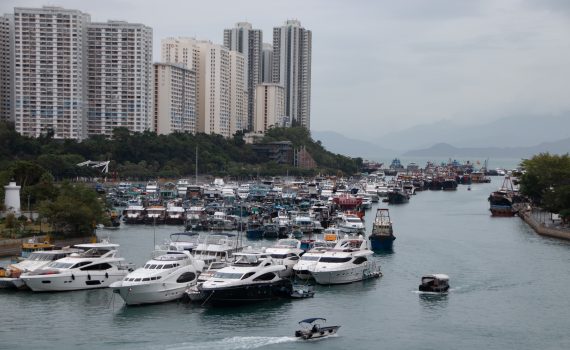
Every typhoon, the two Aberdeen Typhoon Shelters are filled with fishing vessels seeking refuge from strong winds. On the southwest coast of Hong Kong Island, across from the small island of Ap Lei Chau, Aberdeen Harbour is a natural shelter for boats. When Super Typhoon Ragasa struck Hong Kong and prompted the Observatory to hoist the highest level T10 signal in September, the two shelters were full. “Ragasa left a trail of destruction in Hong Kong, but it didn’t affect Aberdeen much,” said Lee Choi-wah, 68, the former president of the Hong Kong Chamber of Seafood Merchants, who owns a seafood store in Aberdeen Wholesale Fish Market. Because of its geographic location, this naturally protected harbour made Aberdeen the most important fishing village in Hong Kong before the 1970s, with more than 50,000 residents active here, according to the Fishermen Museum. They were known as “boat dwellers” and many of them worked as fishermen. “Aberdeen is an important spot for seafood trading,” said Lee. “At its peak, 80% of seafood products in Hong Kong were traded here.” Boat dwellers in Aberdeen operated grocery stores and restaurants on boats, forming a community on the water. This includes Jumbo Floating Restaurant, the most well-known seafood restaurant on boats in Aberdeen, which operated for 44 years before it was closed during the pandemic and subsequently sank in the South China Sea in 2022. Lee, from a family of boat dwellers, spent his childhood living on a boat. “It was exciting when I could just jump off and swim with other kids after finishing my homework,” said Lee. He added that sometimes he and his friends casually fished together between the moored boats. The 1961 Hong Kong Census recorded the highest number of boat dwellers since the end of World War II. Over 138,000 …
Mental health stigmas stop treatment, scholars say
- 2025-10-17
- Health & Environment
- The Young Reporter
- By: Fu RongEdited by: Robin Ewing
- 2025-10-17
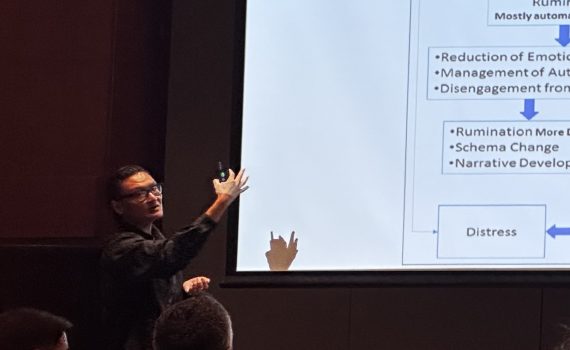
Stigmas over mental health stop people from seeking out help, said scholars at a global conference on mental health in Hong Kong yesterday. Breaking stigmas is important for getting better social support and professional engagement, said Paul Wong Wai-Ching, a professor of social work and social administration at the University of Hong Kong and one of thirteen scholars speaking at the National Counselling and Psychotherapy Conference Hong Kong 2025. “The main issue is that people don’t come to counselling or therapy,” said Kenneth Law, a social worker from the Zubin Foundation, a local charity that works with ethnic minorities. “Either they are afraid or don’t know how to.” Hong Kong fell at 88 out of 147 in Oxford University’s World Happiness Report this year, its lowest-ever position. Around a quarter of Hong Kong children suffer from mental disorders and a quarter of people aged 15 to 24 show suicidal behavior, according to surveys by the Chinese University of Hong Kong and the University of Hong Kong in 2023. “I got inspired on what to do in my field,” said Cathy Wu Jiaxu, a student at Hong Kong Baptist University who attended the conference. “This conference provided me an opportunity to be updated and prepared,” said Caroline Shaw, a wedding planner for more than two decades who changed careers and is studying to be couples counselor. Other talks included female menstrual mentality from Vanessa Wong; athletic performance from Karen Lo Eugene-chuang; narcissistic relationships from Armani Durvasula and teenage digital usage from Nicolson Siu Yat-fan, Evgeny Evseev and Kimberly Carder; suicide bereavement by Paul Wong Wai-Ching. The conference will move to Malaysia and then the Philippines in October and November.