
The Young Reporter

Low rent at lunar new year fair helps small businesses
- 2025-01-25
- Culture & Leisure
- The Young Reporter
- By: CHENG Tsz Sen Sean、QIN ZiyangEdited by: MAO Anqi
- 2025-01-25
Stall owners at Hong Kong’s largest fair in Victoria Park are paying lower rent than last year. Successful bids for wet stalls ranged from HK$6,530 to HK$75,000, with the aggregate bidding price declining nearly 30% compared to last year, while rent for fast food stalls was reduced by around 20%, according to the government data. Cheung Hon-fung, 22, a university student, partnered with two friends to sell drinking board games and wooden decorations which they designed. “The rent was fortunately cheaper than last year which was good news to us. But I don’t think there will be a great growth in sales, due to the bad weather and people going to mainland China to spend their holidays,” he said. Adrian Choy, 22, is another business owner at Victoria Park. “I ran a store seven years ago selling New Year’s favourites, but I didn't keep it going because of the high rent. This year's rent in the market is HK$8,000 cheaper than what it was then,” he said. To usher in the Year of Snake, many dry stalls sell snake themed items such as cushions and accessories, attracting locals and foreign visitors to stop in the tracks. “It was a collective effort to come up with different products. Some came up with neck cushions and some promoted Fai Chun with snake puns,” Choy said. Visitors at the fair include locals and people from overseas. Sherry Stephany, 58, a former Hong Kong resident, came back from New Jersey in the US during the holiday to visit family members. “We find the fair very festive and hope to buy some souvenirs and clothings with snake patterns,” she said. The Victoria Park fair opens on Jan.23 and lasts for six days with free admission. On Jan.29, it will remain open to the public until …

Knowledge meets cocktails: How academic bars in Shenzhen blend intellectual pursuits with social drinking
- 2024-12-23
- Society
- The Young Reporter
- By: LIU YutongEdited by: Robin Ewing
- 2024-12-23
At a cozy Shenzhen bar, soft jazz music plays as colorful cocktails glimmer on a Sunday night. The audience was focused on a speaker discussing the dichotomy between materialism and idealism with a few slides projected behind him on a screen. Neighbor House, Shenzhen's first “academic bar," hosted its first event on Sept. 27, exploring the question “Is life a wilderness or a track?”. “The bar was packed that night,” said Yu Yang, 32, a bar partner of Neighbor House. “I wanted to open a bar with spiritual pursuits, like in the movie Midnight in Paris, to make social drinking more interesting and intellectual.” Academic bars blending intellectual discussions with socializing have become popular in China’s first-tier cities this year, mostly in Beijing and Shanghai, before recently finding their groove in Shenzhen. People recruited from social media gather at venues like Neighbor House for lectures and debates on various topics, all while enjoying drinks. On Xiaohongshu, a popular lifestyle social media platform in China, topics related to "academic bars" have gained more than four million views, with more than 6,000 related posts. “At least 30 people attended each event, which is beyond our expectations,” Yu said. “We had to turn up the speakers so that people gathered outside could also hear.” “I want to get away from work and learn more things other than making money,” Xu Yihua, a 30-year-old participant, said. “I expect to have discussions with others and make more like-minded friends through this platform.” Xu Yihua, a human resource manager, participated in the academic salon held at the Neighbor House for the second time. She said she cherishes it because there are few opportunities to participate in such activities after graduating from university. Academic bars originate from “Science in a Bar” in the UK. The SciBars are …
Increasing use of social media for news risks overloading users’ mental well-being
- 2024-12-21
- Society
- The Young Reporter
- By: AU YEUNG Jim、AO Wei Ying VinciEdited by: KONG Tsz Yuen
- 2024-12-21
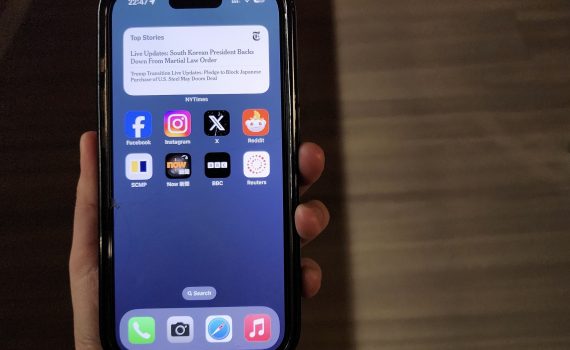
Conor James Walker, 22, a university student majoring in history and politics, gets his daily news from websites such as the BBC and Al Jazeera. He said the current amount of information online is detrimental to his mental health. “A lot of information online, and it doesn’t matter whether it’s true or not, is mostly quite depressing subjects,” said Walker. “Fear of war, disease, disasters, and how politics rarely has a good story that comes out of it, no matter what country you look at,” he said. “It can take quite a mental toll on any individual,” said Walker. Walker added that he is less likely to read social media news unless it appears on his social media feed. “There’s the thing with social media,” said Walker, “which is anything can be said by anyone, and it turns out there’s a good chance it may not be true.” According to a report from the UK Office of Communications (Ofcom), the country’s telecommunications watchdog, 82% of those aged 16-24 years relied on social media for news, while only 28% of those aged 55 years do so. The report added that of all Britons aged 16 or above, 52% now consider social media their primary news source, whereas 51% still watch news on television via main broadcasters. This means online media has overtaken television as the biggest source of news. The American Psychological Association describes that constant feed of negative news as “media saturation overload.” Online platforms, especially social media, have algorithms that feed users more of the same to drive views and engagement. Bryan Mclaughlin, an associate professor in the College of Media and Communication at Texas Tech University, said that social media access leads to people being constantly caught up on the news. “If you don't have social media, even …

Canto slang connects Gen Zers in Hong Kong
- 2024-12-15
- The Young Reporter
- By: Lok Tung LAU、Cheuk Chi Maggie YEUNGEdited by: Yi Yin CHOW
- 2024-12-15
In the bustling shopping mall in Hong Kong, where people weave in and out of stores with shopping bags in hand, a unique tapestry of language thrives. Terms like “Kam” (meaning embarrassing situations), “Siu4” (a homophone for “laughing to death” in Cantonese), and “firm” (meaning everything is on the right track) are all part of Hong Kong’s distinctive blend of English and Chinese slang. These expressions are commonly used by young people in Hong Kong. The use of slang provides an accessible platform for sharing and communication, especially on social media. As a result, online language—particularly slang—has emerged as a powerful tool for teenagers seeking to connect with others and express themselves. Ryan Lee, a 20-year-old university student, said using slang phrases gives him a sense of social identity, enabling Gen Zers to integrate into society. He recalled not knowing what “Kam” meant when he first heard it and needing an explanation from a friend before he started using it. “I mostly use slang on the internet to express my feelings more easily,” he said. According to the Hong Kong Education City report, most members of Gen Z possess a strong sense of innovation and curiosity. The internet language they use often helps forge a unique identity, allowing them to fulfil different roles, express their creativity and showcase their personalities. Professor Zhang Ling from the Department of Chinese Language Studies at the Education University of Hong Kong said that students using slang demonstrate a tacit understanding among peers, reducing their psychological distance. “Every era and district has its own words. I think Hong Kong has promoted its era and district features through slang,” Zhang said. In the Gen Z culture, slang often involves code-mixing and the simultaneous use of two or more languages in written or spoken conversation. Additionally, there …

Feed Your Brain: What You Eat Affects Your Mind
- 2024-12-14
- Health & Environment
- The Young Reporter
- By: LAI Uen Ling、KURNIAWAN Trista VaniaEdited by: Ji Youn Lee
- 2024-12-14
A healthy diet is essential to a healthy mind. A 2022 study found that the more ultra-processed food you eat, the more likely you are to experience mild depression or feelings of anxiety. We spoke to nutritional experts to understand how simple changes, like eating breakfast regularly and cutting down on processed foods, can boost our mental well-being.

ChatGPT as psychological counsellor: lifeline or limitation?
- 2024-12-11
- Society
- The Young Reporter
- By: YANG Haicen、WANG JingEdited by: Juncong SHUAI
- 2024-12-11
Anne Li, ( not her real name) ended her long Friday of classes in solitude, buying dinner from the vending machine outside her dorm and confiding in ChatGPT. “In high school, we had fixed classes and a group of friends who were always there for you. But now, every class and every person is different—it felt like no one stayed around for long,” Li said. The 18-year-old recently moved from Xi’an to study in Hong Kong. The transition turned her from an outgoing personality into a quiet and reserved individual. “Sometimes I thought I might be depressed, but I was too scared to go to the clinic. What if I am really sick?” Li discovered posts on Xiaohongshu where others had shared their experiences using ChatGPT to talk about emotional struggles. Out of curiosity and a need for support, she began using the AI chatbot for emotional guidance in October last year. “It felt like a friend who would never betray or judge you,” Li said. “In many lonely moments, it truly gave me a sense of comfort and belonging.” Li is among a growing number of users who have turned to ChatGPT for emotional or psychological support. According to Xiaohongshu, searches for "using GPT for therapy" resulted in 4.3 million posts, while "GPT and psychotherapy" had over 330 posts. Initially created for tasks such as answering questions and providing recommendations, generative AI has evolved to handle more complex and personalised uses, including mental health support. OpenAI’s GPT-4.0, the latest version of the model, has become capable of engaging in fluent discussions and identifying users’ emotions through text. Character.ai, a platform where people can create chatbots based on fictional or real people, for example, introduced a chatbot called “Psychologist”, which is described as mental health specialists helping people improve their …

College Students Seek Sleep Solutions Beyond Medication
- 2024-12-04
- Society
- The Young Reporter
- By: WANG Ludan、LIU YutongEdited by: Yuqi CHU
- 2024-12-04
At midnight, Guo Tongshun, 19, a second-year student from Hong Kong Baptist University, found himself exhausted but unable to sleep. After an hour of tossing and turning, his anxiety about getting up early made him more restless. In desperation, he gave up on sleeping and picked up his phone to watch videos. But the light of the phone and the fast-swiping videos made him more and more excited. At 3 am, he felt anxious but was no longer sleepy. He then took a melatonin tablet to try to sleep again. “It works well, but I am afraid to take more,” Guo said. “I hate the feeling of being weak and fuzzy after taking it, and I am worried that it would cause hormonal disruption.” Many university students in Hong Kong are overwhelmed by the problem of sleep disorders and sleep anxiety, caused by excessive screen time, heavy academic pressure and mental stress. Some of them take medication to combat sleep disorders, but they are also trying to explore other solutions. Sleep disorders can have multiple psychological and physical effects. People who suffer from it often do not have good sleep quality and sufficient sleep time, which may lead to function impairment and fatigue during the day, thus increasing the risk of anxiety, depression, high blood pressure, diabetes, and heart attack, according to the National Library of Medicine in the US. According to a "White Paper on the Sleep Health of Chinese Residents 2024" published by the Chinese Association for Sleep Research, more and more young people in China suffer from sleep disorders. According to the Paper, people aged between 14 and 34 are troubled by sleep difficulties, falling asleep after midnight on average, more than an hour later than those aged above 34. In Hong Kong, nearly 70% of local …

The Mental Health Struggles of Young Athletes in Hong Kong: Insights from the Field
- 2024-11-27
- Health & Environment
- The Young Reporter
- By: Ben Rong LiEdited by: Ka Man Wong
- 2024-11-27
The mental health crisis among young athletes in Hong Kong has become a pressing concern, with many facing significant psychological pressures as they strive for success in sports while managing academic commitments. A recent survey by the Hong Kong Sports Institute reveals that approximately 40% of young athletes aged 18-25 experience symptoms of anxiety, while 35% show signs of depression. These statistics highlight the urgent need to address mental health issues within the sports community. Young athletes are navigating a complex landscape where the demands of competitive sports often clash with their educational pursuits. Or Siu-yuen, a 20-year-old football player in the Wing Yee Football Team in the Hong Kong First Division League, shared his personal experiences with these pressures. “After graduating from secondary school, the pressure increased significantly because my academic performance was not ideal. This led me to enrol in a higher diploma program related to fitness and exercise nutrition. The challenge of balancing my studies and my football career leaves me feeling increasingly lost about my future,” he said. Or elaborated on the difficulty of pursuing his dream of becoming a professional footballer while managing his education. “The conditions for advancing to the Hong Kong Super League are tough, and to pursue my dream of becoming a professional footballer, I might have to sacrifice my studies. But currently, I feel stuck at a crossroads, unable to fully commit to either path,” he said. Or also expressed the familial pressures he faces, “My family expects me to finish my studies and start working soon, but my progress in football hasn’t reached a level where I can support myself. This creates immense pressure every time I engage with football, making me feel that if I don’t succeed, I might have to give up …

Icelandic volcano erupts for the seventh time in a year
- 2024-11-25
- Health & Environment
- The Young Reporter
- By: AO Wei Ying VinciEdited by: Ka Man Wong
- 2024-11-25
REYKJAVÍK, Iceland, November 23 (The Young Reporter) – A volcano in the Reykjanes Peninsula near Grindavik in Iceland erupted on Wednesday night for the seventh time in a year with limited impact on safety and infrastructure. It started its first eruption at 11:14 pm, and eruptions are steady and still ongoing. Located in southwest Iceland, the volcano lies on the same peninsula as the Reykjavík’s Keflavík Airport. “The airport is fully operational. Flights have not been impacted by recent eruptions and are on schedule,” the country’s international airport said. The lava is flowing primarily westward and gas emissions are going southward over Grindavik, according to Iceland’s meteorological office. Lasha Shinjikashvili, a resident of Hafnarfjörður, a city south of Iceland’s capital, said he witnessed a road closure 8 kilometres from the volcano. “I wanted to get closer but the police closed all the roads in the direction of the volcano,” he said. “There were lots of people with smartphones,” he added. He said he was in his car to take photos of the eruption around Thursday midnight, while the majority of Grindavik’s residents had already evacuated. Grindavik, with a population of 3,800, is southwest of the erupting site. The Icelandic Meteorological Office said most of Grindavik’s residents were evacuated. Lava has engulfed the car park of the internationally well-known geothermal spa Blue Lagoon. The spa has evacuated all people from its operational units, including surrounding hotels and retreats. Blue Lagoon said they will remain closed until next Thursday, Nov 28 and there is currently no damage to their main infrastructure. According to an officer at the visitor centre, there are helicopter tours available to take tourists to see the lava and the eruption. He said for safety, the helicopter stays at a certain distance. “Even if you walk on the street …

Heavy Rainfall Floods Southeast Queensland, More Wet Weather Ahead.
- 2024-11-22
- Health & Environment
- The Young Reporter
- By: KURNIAWAN Trista VaniaEdited by: Ji Youn Lee
- 2024-11-22
Several parts of Queensland are bracing for more flooding after days of extreme rainfall in the area. Brisbane and greater southeast Queensland were drenched after days of severe thunderstorms and heavy rainfall. Though the rain is expected to end on Thursday, more flooding is possible near the Warrego River, which flows through Queensland and New South Wales. According to the Bureau of Meteorology, the river saw heavy rainfall of over 150 millimetres in the last 8 hours to 6 p.m. on Wednesday, leaving rising water levels and major flooding in southeast Queensland. More showers are expected on Thursday and Friday, with flooded areas under close monitoring and warnings to be issued. On Wednesday, BOM released a severe weather warning for central Queensland, stating that total rainfall could reach 160 to 180 millimetres in six hours and up to 250 to 300 millimetres over 24 hours. The department warned residents in the area to brace for heavy rainfall which may lead to flash flooding, floods caused by rain in less than six hours. Last Saturday, the police rescued a woman who was trapped in her car in Rochedale, South Brisbane, after nearly 100 millimetres of rain fell within three hours in the region. In 2022, the state saw a record average rainfall of 778 millimetres which was 25% above the average of over 20 years. As of Tuesday, the BOM recorded heavy downpours for several Brisbane suburbs, including Rosalie with 46mm, Toowong with 45 mm, Green Hill with 43mm and Youngs Crossing with 33mm. Samuel Karjadi, a resident of northern Brisbane, said that he almost experienced a car accident on his way home last Thursday because of the storm. “It was quite dark and the road was slippery as well. I nearly hit someone’s car in an intersection near my house,” …