
Images
Budget 2026: MTR expansion to Shenzhen fully operational by 2035 to enhance cross-border transportation
- 2026-02-25
- Society
- The Young Reporter
- By: Li Yinheng、XIE Xinni CindyEdited by: Lou Zhengzheng
- 2026-02-25
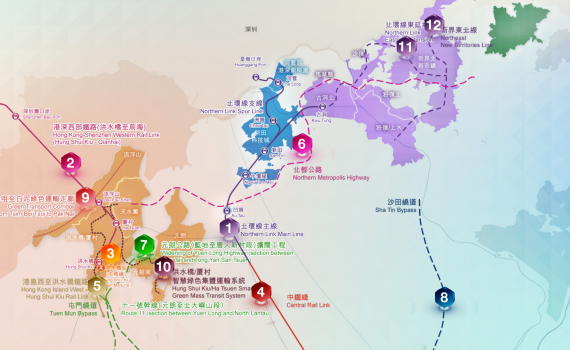
The MTR expansion with the Northern Link will open before 2034 and the Hong Kong-Shenzhen Western Rail Link the following year, Hong Kong Financial Secretary Paul Chan Mo-po said in the budget plan today. The Northern Link will be used to connect the Tun Ma Line and the East Rail Line and extends to the Huanggang Port in Shenzhen, while the Hong Kong-Shenzhen Western Rail Link will run to Shenzhen Bay Port. Both will connect to Shenzhen’s railways. “The strategies will focus on public transportation, and promote the flow of people and goods within the Greater Bay Area,” Chan said. MTR’s official website reports that the total passenger flow on the MTR border crossings is projected to be 106.673 million in 2025, which is the highest number in the past three years. Chen Nga-Yau, 20, a local university student living on Hong Kong Island, travels between Shenzhen and Hong Kong once every two weeks. Chen said Lo Wu and Lok Ma Chau MTR stations are especially crowded on weekends and holidays and sometimes she has to wait for 30 minutes to return. “If I want to go to Bao’an District in Shenzhen, I need to change two modes of transportation to get to Shenzhen Bay Port,” Chen added. “It’s really too troublesome.” According to the MTR Corporation 2025 Results Report, HK$140 billion will be invested in developing new railway projects. Zou Zhang, 37, Business Manager of China Railway Rolling Stock Qingdao Sifang Company (the major supplier of MTR train cars), said the company has already begun technical preparations and signaling system research for the construction of the Western Railway and Northern Link. Peng Huiwen, 31, Hong Kong University urban planning lecturer, said that the connection between the Hong Kong and Shenzhen MTRs is of great help in promoting the integration …
Budget 2026: Hong Kong reinforces its roles as international gold trading centre
- 2026-02-25
- Business
- The Young Reporter
- By: ZHANG Jiahe Roys、LI Jinyang CarlosEdited by: CHEN Ziyu
- 2026-02-25
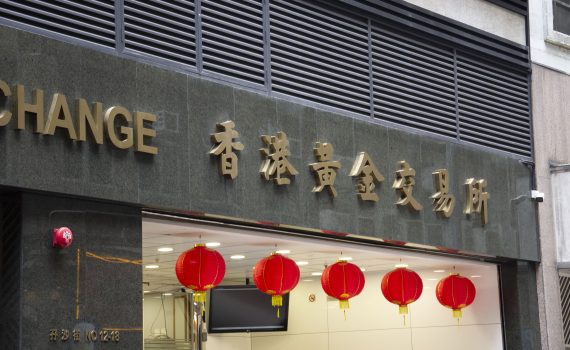
Financial Secretary Paul Chan Mo-po announced that the government will establish Hong Kong as an international gold trading centre, providing relevant services including tax incentives, setting up industry associations and training for eligible gold trading institutions. Hong Kong plans to lift its gold storage capacity to over 2,000 tonnes within three years, according to Chan Ho-lim, the Under Secretary for Financial Services and the Treasury at the Hong Kong Gold Exchange 2026 opening ceremony. At the Asian Financial Forum on Jan.26., Hong Kong Financial Services and the Treasury Bureau signed a co‑operation agreement with the Shanghai Gold Exchange, establishing Hong Kong Precious Metals Central Settlement System Company Limited to create a gold settlement system. More than 10 banks, both local and overseas, will participate in the system to commence within the year. Hui Ching-yu, Secretary for Financial Services and the Treasury Bureau, said at the forum that gold is important under current geopolitical uncertainty and inflationary pressures. Lau Hou, 42, project manager of CNI Securities Group, said the key to increasing gold reserve capacity is whether Hong Kong could be a stronger physical hub in the Asia-pacific zone capable of storage, allocation, delivery and financing. “Hong Kong’s advantages lie in connecting the mainland with the international market, Asia-pacific time zone delivery, offshore RMB products and funding pools,” he said. “Through complementary cooperation with existing major international gold markets, participants can view Hong Kong as a key point in the global chain. This will increase the feasibility and attractivity of RMB-denominated gold productions, making market makers and institutions prefer to offer more products,” Lau added. Chan Wah, 25, local investor and lawyer, said he holds a wait-and-see attitude regarding the gold policy in today’s budget. “ I hope the government can prioritize training on market regulation and risk management, such as …
Policy Address 2025: Hong Kong develops tourism economy to revitalise retail industry
- 2025-09-17
- Business
- By: Wang Yunqi、LO Shing Kwan、Zhou XinyingEdited by: Yichun Fang、BO Chuxuan
- 2025-09-17
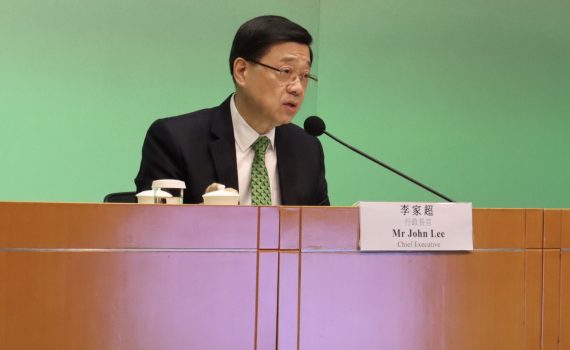
The Hong Kong government plans to unveil the “ Tourism Everywhere” strategy, combining local characteristics with international elements, to develop the tourism economy, said Chief Executive John Lee Ka-chiu during his Policy Address Speech on Wednesday. The tourism economy strategy encompasses a diverse portfolio of targeted initiatives, with yacht economy, horse racing tourism, cruise tourism, and eco-experiences included. These efforts of the government in tourism strategy aim to attract high-spending visitor segments, boost consumption, and drive growth across the retail, F&B, and hospitality sectors, according to Colliers, a global real estate and investment management consultancy, in a comment after the speech was delivered. “As of August this year, the overall visitor arrivals had reached 33.2 million, a significant increase of 12% over the same period last year", said Lee. Sophia Lam, a member of the Southern District Council, which is home to tourist attractions like Ocean Park and Repulse Bay, said the aim of promoting tourism by leveraging local culture is to boost the retail economy and stimulate consumer spending. According to the release from the Census and Statistics Department, the provisional estimate for total retail sales value was HK$214.8 billion for the first seven months of 2025, a decrease of 2.6% compared to the sum of the first 7 months in 2024. The government shows that from January 2023 to July 2025, the number of visitor arrivals in Hong Kong increased significantly, while the retail sales slightly declined during the same period. After the epidemic, Hong Kong's tourism industry gradually recovered, with the number of visitors to Hong Kong in the first seven months of 2025 reaching about 28 million. Chen Sihao, a professor of the Department of Accountancy, Economics and Finance at Hong Kong Baptist University, explained that the depreciation of the RMB has dampened mainland tourists’ enthusiasm …

Hindu devotees celebrate Thaipusam in Singapore
- 2025-02-16
- People
- The Young Reporter
- By: LIU Yutong、BO ChuxuanEdited by: WANG Ludan
- 2025-02-16
Around 16,000 Hindu devotees carried their Paal Kudam (pots of milk as offerings) or Kavadis (ornate structures that symbolise burden) in Singapore to mark the annual rite of Thaipusam, the sacred Hindu Thanksgiving Festival on Feb. 11. From 11:30 pm on Feb. 10, batches of devotees set off from Sri Srinivasa Perumal Temple and started a 3.2-kilometer barefoot walk to Sri Thendayuthapani Temple, together with friends and relatives chanting hymns and prayers to support them along the way. “Thaipusam is celebrated on the first full moon in the Tamil month of Thai, dedicated to the Hindu god Lord Murugan, who is the deity of courage, power, and virtue," said Edwin Tong, Minister for Culture, Community, and Youth, in his post on Facebook. Karthi Keyan, 24, a chef in an Indian restaurant, pierced his tongue, chest, and back with several rods as part of his Kavadi to express thanks to God. “I carry Kavadi to redeem a vow to god," he said. “I asked God to let me work in Singapore, and he gave it to me last year.” The Kavadi means “burden” in Hindu, elaborate metal structures adorned with spikes or hooks used to pierce the bodies symbolise "sacrifice at every step" and are borne as a vow to Murugan or as an act of gratitude. “When the Kavadi stings, there is pain, and after that, the pain is not known by God’s grace,” Keyan said. “It is very severe, and we have to bear the pain, leaving the burden on God,” he added. To prepare for the Thaipusam, devotees must be spiritually prepared and lead a life of abstinence, including a strict vegetarian diet for at least one month, according to the National Library Board of Singapore. Rajkirren, 31, had vegan meals cooked by his wife for the 21 …

M+ museum is criticized for hindering artistic freedom
- 2023-07-30
- Politics
- By: Bella DingEdited by: Bella Ding
- 2023-07-30

Xia has to stand close to the only window and air conditioner at the end of the aisle to get a little bit of fresh air.
- 2023-07-29
- Photo Essay
- By: Yuqi CHU、Juncong SHUAIEdited by: Chengqi MO
- 2023-07-29
Budget Plan 2023: health care spending reduced; no more free COVID tests
- 2023-02-22
- Health & Environment
- By: Yiyang LI、Hanzhi YANGEdited by: Tsz Yin HO
- 2023-02-22
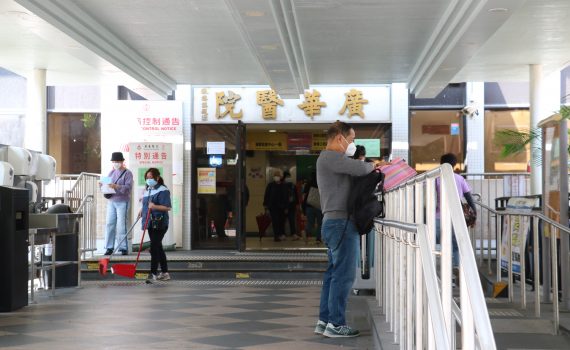
Financial Secretary Paul Chan Mo-po will cut the health care expenditure amid the easing of COVID-19 regulations and an overall financial deficit. The Hong Kong government will lower the healthcare budget to HK$104.4 billion, nearly 35% less than last year, still accounting for 19% of government spending. The funding will be mainly used to improve public medical services, such as temporary cancer services, along with building more beds and operating rooms for public hospitals. As the government has dropped all COVID policies, including mandatory PCR test requirements, free testing services will be cancelled from March.1. Only paid testing services will remain. “Very few people come for tests and our workload is much lighter,” said Tong Man-fa, 37, who works for a community testing centre in Yau Ma Tei. A paid test costs HK$240 for express service and HK$150 for standard service; the government has covered these costs since they began. “I think it’s time to shut down this place, and I return to my department,” Tong added. “The decrease in spending is a reasonable move,” said Dr Ada Fong, a doctor of Internal Medicine at Kwong Wah Hospital. She said the number of hospital admissions last year was significantly higher than this year and most of those patients were seeking COVID treatment. “Despite the reduction in spending, the quality of overall medical service should still remain,” Fong said. Chan also said in the budget that the government will invest more in strengthening televisual diagnosis to lower the queuing time. Dr Fong said that it may not be very effective as most diseases require physical checks and hospital care. “I don’t feel it’s more useful than hiring more medical staff,” Fong said.
Secrets of animated film production revealed in new Pixar exhibition
- 2021-07-29
- The Young Reporter
- By: YANG ZhenfeiEdited by: Editor
- 2021-07-29
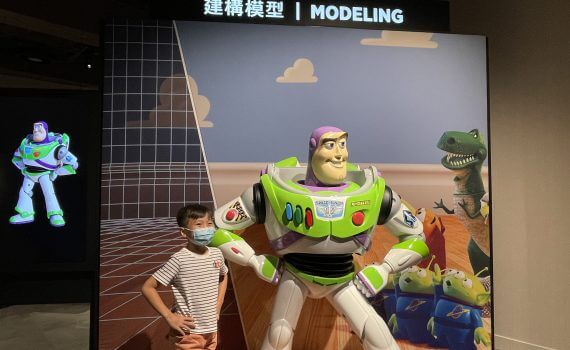
Barking out “A good soldier never leaves a man behind,” a life-sized model of Buzz Lightyear, one of Pixar’s most recognizable animated characters, flashes a broad smile and stands arms akimbo, ready to welcome visitors to a new museum exhibition that reveals through hands-on activities how to bring pixels to life. The Science Behind Pixar, a traveling interactive exhibit planned and produced by Boston’s Museum of Science and Pixar Animation Studios, opens to the public tomorrow through Dec. 1 at the Hong Kong Science Museum. Around 30 members of the news media and guests were allowed exclusive access to the exhibition a day before it officially opens. Pixar Animation Studios, owned by Disney, is known for its globally award-winning digitally animated short and feature films including Toy Story, Monsters, Inc., Up, Finding Nemo and more recently Luca. In the exhibition, visitors will learn how these films ingeniously merge science, technology, engineering, art and maths (STEAM) to create the lively characters and realistic scenes that have been projected on movie screens worldwide for the past 25 years. More than 50 interactive exhibits, physical models and videos will be on display across eight areas. In addition to the informative and enlightening videos, the exhibition also includes screen-based activities so visitors can experience different roles in movie-making production and understand each behind-the-scenes process. Visitors will also be allowed to pose and take pictures with the life-sized models of some classic Pixar film characters, such as Buzz Lightyear, Mr.Q and Sullivan. General admission price is HK$30 on most days and HK$5 for full-time students. If you are interested, remember to make an appointment on the website of the Hong Kong Science Museum. Reservation website: https://hkscm-pixar.com/zh/event/the-science-behind-pixar/1.
The journey of enlightenment
- 2018-05-15
- Culture & Leisure
- The Young Reporter
- By: Tomiris UrstembayevaEdited by: Angie Chan
- 2018-05-15
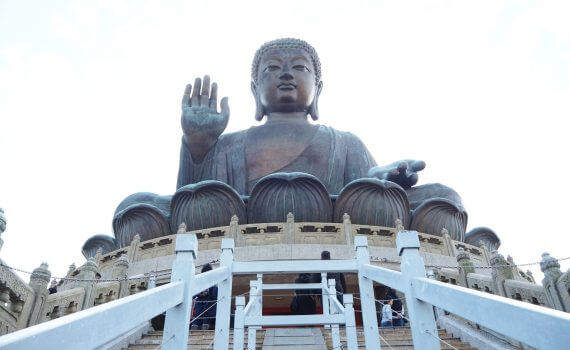
In almost 25 years, the Tian Tan Buddha, the biggest outdoor seated bronze statue of Gautama Buddha on Lantau Island, has become one of the most visited places in Hong Kong.