
Culture
Doha’s Falcon Souq keeps a century-old tradition alive
- 2026-01-29
- Photo Essay
- The Young Reporter
- By: LAI Uen Ling、Dake LiuEdited by: Robin Ewing
- 2026-01-29
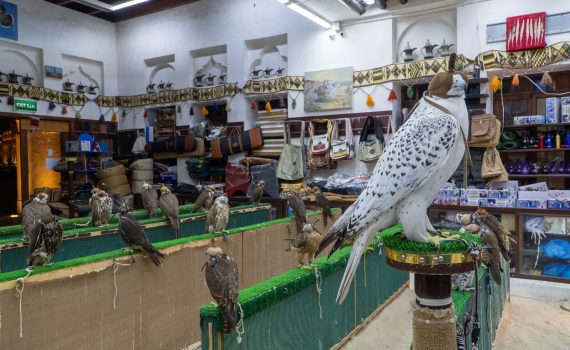
DOHA, Qatar Jan 14 – Falconry is one of the world’s oldest hunting traditions with a documented history spanning over 4,000 years. Introduced from Central Asia around the 7th century, Bedouin tribes of the Arabian Peninsula relied on falcons’ speed, sharp eyesight and innate hunting instincts to survive in the harsh desert, long before the rise of modern urbanisation. Today, this practical survival skill has evolved into a revered cultural tradition embedded in local folklore, poetry and royal customs. The Falcon market at Doha’s Souq Waqif is more than just a marketplace for local enthusiasts. It is a living landmark where visitors can experience firsthand the legacy of falconry in Qatari culture. Aziz, 65, is the owner of a falcon shop in the market. Originally from Pakistan, he came to Qatar in 1993. In 2012, Aziz opened his first falcon shop. He has since expanded to three shops in Qatar and employs 22 workers including three of his sons. According to Aziz, a falcon can fetch prices anywhere from 2,000 up to 1.75 million Qatari riyals (around HK$4,280 to HK$3,600,000). Among his collection, the most unique falcon is Rambo, a Gyrfalcon bred in Germany. With mostly white feathers and brown spots, this bird belongs to one of the largest birds of prey in the falcon family. In ancient times, northern emperors prized them for their outstanding hunting skills.

Chinese Gen Z shifts focus to lesser-known European destinations amid social media trend
- 2026-01-23
- Business
- By: XIA Fan、WANG RuoshuiEdited by: BO Chuxuan
- 2026-01-23
Big city lights? Too mainstream. Young Chinese travellers now prefer to crave the road less travelled. Chinese Gen Z travellers are ditching crowded classics for off-the-beaten-path destinations in Europe. The hunt is on for niche places that promise more profound, more authentic local experiences, turning once-mainstream spots into personalised immersions. Gen Z travellers, generally defined as those born from the mid-to-late 1990s to the early 2010s, favour cultural deep dives over cash-splashing consumption. They seek stories and experiences that resonate long after the trip ends. Wang Yang, 28, came to the Netherlands to visit the Van Gogh Museum on October 1 after learning on social media that the museum faced the risk of closure due to budget constraints. His reservation wouldn't load on his phone at first, but a tip from Rednote, a popular Chinese social media, helped him purchase a ticket at the entrance. “Enjoy your visits!” chirped the staff as Wang secured his ticket, sharing a warm grin with the ticket inspector—a moment that felt like a heartfelt welcome to this 28-year-old adventurer. His 22-day European odyssey, blending annual leave with the National Day Golden Week, cost him roughly 50,000 RMB—about a quarter of his yearly income. Departing from Xi’an, China, Wang and his friends didn’t book any travel agent’s service or pay for a local guide; instead, they followed tips and routines shared on social media platforms as a way to craft their personalised journey. “Europe’s cities pulse with a deeper cultural and historical soul than most places,” Wang explained. “That’s why I came back.” Ditching the well-trodden Barcelona-Paris-Rome circuit, Wang and his friends ventured to Europe’s hidden gems—the Czech Republic, Greece, Portugal, and the Netherlands—while revisiting Spain, a nostalgic nod to a trip six years prior. “Golden Week outbound demand in China is breaking records. We …
Saudi-Chinese cultural festival: Chinese cuisine draws crowds in Riyadh
- 2026-01-19
- Business
- By: ZHOU YunEdited by: ZHOU Yun
- 2026-01-19
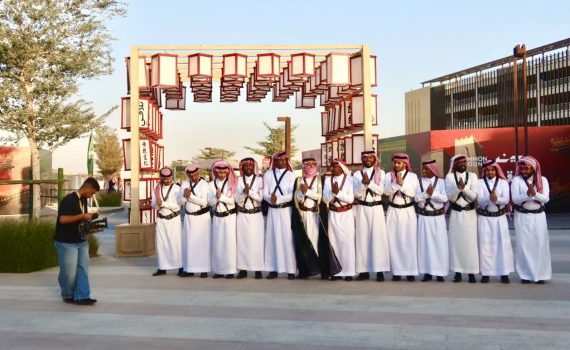
The Common Ground Festival was held in Riyadh, the capital of Saudi Arabia, with the authentic Chinese cuisine cooked on the spot becoming a highlight. Set against the backdrop of traditional Chinese markets, this festival presented the cultures of China and Saudi Arabia in a single space, featuring artistic performances, intangible cultural heritage displays, art exhibitions, and food culture. Among all the exhibition areas, the food experience area was one of the busiest sections, bustling with people. Three booths were set up in the food area, two of which offered China-Saudi fusion dishes, and the other one that drew large crowds served authentic Chinese food prepared on-site. “Saudis generally like Chinese cuisine,” said Jade He, the vendor of Chinese cuisine, during the festival. “Every day, visitors queue up in long lines to pick up the freshly cooked Chinese food we provide.” Delicacies such as beef noodles, steamed buns, dumplings and rice noodles are provided to tourists for free within a limited time and quantity every day. All the freshly made delicacies here still retain the authentic Chinese flavors and were not specially adjusted to cater to the tastes of locals. “Saudis generally have a sweet tooth,” he said. “So for those who come to taste Chinese cuisine, we will also offer customers some free localized sweet noodles according to their taste preferences.” Basseh, a local university student at Princess Noor University, is a fan of Chinese food. “Chinese food is really delicious, and the meat tastes really good,” said Basseh. She said that if more Chinese restaurants will open in Riyadh in the future, she is willing to try them one by one. Mahamed, a staff at the event site said that the cultural festival is so popular that more than 3,000 people come to visit the exhibition every day, …
Sham Tseng: A place defined by its geese
- 2025-11-04
- Society
- The Young Reporter
- By: Wing Chi HOEdited by: Chun Hei LUK
- 2025-11-04
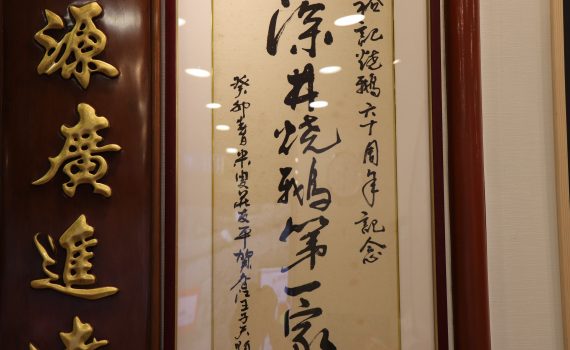
In the heart of Tsuen Wan, along the coastline with streets lined with banyan trees and village houses, lies a name that has become known for a particular dish: roasted goose. The neighbourhood of Sham Tseng is synonymous with the traditional dish and is often seen in its television advertisement. Yue Kee Roasted Goose Restaurant, founded by Ng Chun-yam in 1958, caters to factory workers with its charcoal-roasted Guangdong geese, made from recipes passed down through two generations. Ng’s eldest daughter, Ng Juan-hua, who is now the owner of the family business, started working in the restaurant at age 12. She said she gave up further education to help her parents run the shop, allowing her younger siblings to continue their studies. On June 4, 1992, a level 3 fire broke out at Yu Kee Restaurant. The owners, Ng and his wife, died in the fire. Since then, Ng Juan-hua took on the role of second-generation leader and worked with her siblings to revitalise Yu Kee. Now, Ng Juan-hua’s son, Ng Guo-han, runs the operations. In the kitchen, a fortress of heat and focused energy, head chef Lee Ming-kwok is a man of few words but action. His canvas is a goose, his tools are time and fire. He cooks and chops 50 to 100 geese daily. The process includes marinating the geese for several hours, air-drying them, and roasting them for about 45 minutes to an hour. The dish stands out due to the blend of spices and the chef’s technique. Lee has worked at Yu Kee for over a decade. The large oven contains burning charcoal at the bottom, and the goose hangs suspended above it, slowly roasting as the heat rises and envelops the meat, ensuring an even cooking process. “Many places use gas or electric ovens …
Aberdeen faces challenges amid its deep-rooted fishing culture
- 2025-10-22
- Culture & Leisure
- The Young Reporter
- By: CHEN Ziyu、MA Tsz Chiu OscarEdited by: MA Tsz Chiu Oscar
- 2025-10-22
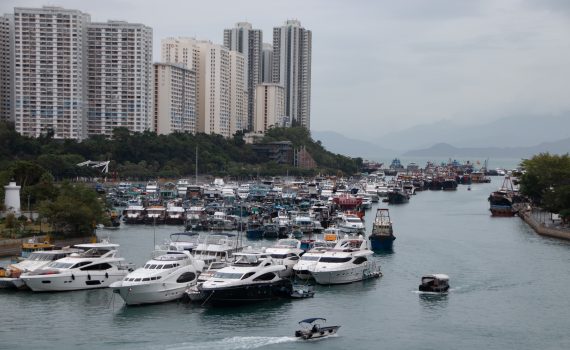
Every typhoon, the two Aberdeen Typhoon Shelters are filled with fishing vessels seeking refuge from strong winds. On the southwest coast of Hong Kong Island, across from the small island of Ap Lei Chau, Aberdeen Harbour is a natural shelter for boats. When Super Typhoon Ragasa struck Hong Kong and prompted the Observatory to hoist the highest level T10 signal in September, the two shelters were full. “Ragasa left a trail of destruction in Hong Kong, but it didn’t affect Aberdeen much,” said Lee Choi-wah, 68, the former president of the Hong Kong Chamber of Seafood Merchants, who owns a seafood store in Aberdeen Wholesale Fish Market. Because of its geographic location, this naturally protected harbour made Aberdeen the most important fishing village in Hong Kong before the 1970s, with more than 50,000 residents active here, according to the Fishermen Museum. They were known as “boat dwellers” and many of them worked as fishermen. “Aberdeen is an important spot for seafood trading,” said Lee. “At its peak, 80% of seafood products in Hong Kong were traded here.” Boat dwellers in Aberdeen operated grocery stores and restaurants on boats, forming a community on the water. This includes Jumbo Floating Restaurant, the most well-known seafood restaurant on boats in Aberdeen, which operated for 44 years before it was closed during the pandemic and subsequently sank in the South China Sea in 2022. Lee, from a family of boat dwellers, spent his childhood living on a boat. “It was exciting when I could just jump off and swim with other kids after finishing my homework,” said Lee. He added that sometimes he and his friends casually fished together between the moored boats. The 1961 Hong Kong Census recorded the highest number of boat dwellers since the end of World War II. Over 138,000 …
2025 Japan World Expo: Kawaii culture fuels consumer spending
- 2025-06-07
- Business
- By: XIA Fan、ZHAO Runtong、WANG RuoshuiEdited by: WANG Ruoshui、ZHAO Runtong、XIA Fan
- 2025-06-07
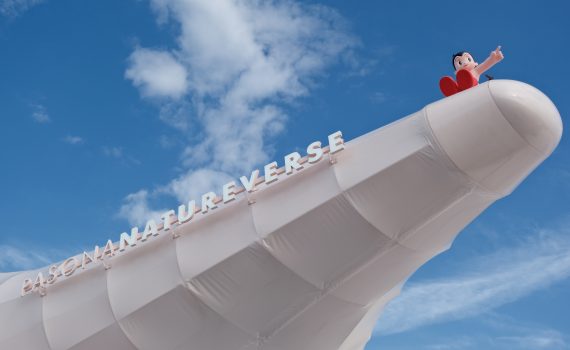
The Osaka Expo 2025 kicked off on April 13 under the theme 'Designing Future Society for Our Lives,' featuring Myaku-Myaku, a multi-eyed, red-and-blue blob as its official mascot along with other global partners’ mascots reflecting their home countries’ culture, highlighting Japan's renowned and thriving ACG (anime, comics, and games) industry. Japan’s unique animation-producing environment catalyses “Kawaii Culture” (かわいい文化), which emphasizes appealing characters. The "performativity of cute," as anthropologist Christine Yano describes it, is deeply embedded in contemporary Japanese culture. In her book Pink Globalization: Hello Kitty’s Trek Across the Pacific, Yano explains that kawaii culture serves multiple roles: it’s a playful, personal mode of self-expression and identity, while also functioning as a potent tool for branding and cultural diplomacy. While Japan has this unique cultural phenomenon, many countries around the globe also have their mascot traditions, leading them to bring their mascots to the party. Outstanding examples ranged from the host country, Japan, to European countries such as Italy and Germany, as well as Asia, including China. Designed by children’s book author Kohei Yamashita through the government’s open call to the Japanese public, Japan’s mascot’s name—an onomatopoeia evoking a pulse — was also chosen from public submissions. Described as "creepy but cute", MYAKU-MYAKU has already sparked significant economic activity through popular merchandise and has greatly enhanced the exhibition's global visibility. At the spot, people lined up for hours to get official plush toys or related items. Visitors poured in to take group photos with the mascot. Elements of Myaku-Myaku can be seen around the exhibition, being part of the whole event. Sato Ryoko rushed to the satellite store of MARUZEN JUNKUDO right after her visit to the Japan Pavilion, spent over one hour waiting in line to get in, and won the first prize of a giant MYAKU-MYAKU plush toy …

Canto slang connects Gen Zers in Hong Kong
- 2024-12-15
- The Young Reporter
- By: Lok Tung LAU、Cheuk Chi Maggie YEUNGEdited by: Yi Yin CHOW
- 2024-12-15
In the bustling shopping mall in Hong Kong, where people weave in and out of stores with shopping bags in hand, a unique tapestry of language thrives. Terms like “Kam” (meaning embarrassing situations), “Siu4” (a homophone for “laughing to death” in Cantonese), and “firm” (meaning everything is on the right track) are all part of Hong Kong’s distinctive blend of English and Chinese slang. These expressions are commonly used by young people in Hong Kong. The use of slang provides an accessible platform for sharing and communication, especially on social media. As a result, online language—particularly slang—has emerged as a powerful tool for teenagers seeking to connect with others and express themselves. Ryan Lee, a 20-year-old university student, said using slang phrases gives him a sense of social identity, enabling Gen Zers to integrate into society. He recalled not knowing what “Kam” meant when he first heard it and needing an explanation from a friend before he started using it. “I mostly use slang on the internet to express my feelings more easily,” he said. According to the Hong Kong Education City report, most members of Gen Z possess a strong sense of innovation and curiosity. The internet language they use often helps forge a unique identity, allowing them to fulfil different roles, express their creativity and showcase their personalities. Professor Zhang Ling from the Department of Chinese Language Studies at the Education University of Hong Kong said that students using slang demonstrate a tacit understanding among peers, reducing their psychological distance. “Every era and district has its own words. I think Hong Kong has promoted its era and district features through slang,” Zhang said. In the Gen Z culture, slang often involves code-mixing and the simultaneous use of two or more languages in written or spoken conversation. Additionally, there …

Ocean Park celebrates Hong Kong’s first newborn panda twins 100 day birthday with 16,000 visitors
- 2024-11-26
- By: Chun Lim LEUNG、Wing Chi HOEdited by: Sze Kei WONG
- 2024-11-26
Hong Kong's first locally born pandas cubs turned 100 days old on Saturday at Ocean Park, which drew more than 16,000 to its birthday celebrations. Panda twins’ father Le Le also made an appearance for the first time in two months. Some visitors were given Chinese traditional blessing food, including red eggs and pork knuckles. While visitors won’t be able to see the twin pandas until they are at least 6 months old, the park live streamed video footage of the twins. “Elder sister weighs 5.3kg, while the little brother is now 5.5kg,” Chairman of Ocean Park, Paulo Pong Kin-Yee, said in a media Q&A. “They are undergoing an explosive growth and appear to have teeth now,” Pong said. “We need to cherish them because pandas represent China,” Queenie Yu, 40, who dressed as a panda for the celebration, said. “Le Le and Ying Ying finally got their children.” “Le Le looked shy at the beginning.When the staff took a ball for him to play, he moved around and appeared to us, we miss him a lot,” Yu said. Zheng Deliang, 27, a visitor from Shenzhen, came to Hong Kong at 7am today. “I am fascinated with the cute pandas,” he said. “Their fluffy skin and color pattern attracted me most.” “I will participate in some events later because it is a treasured moment in Hong Kong,” Zheng said. Yeung Yun-Hung, Secretary for Culture, Sports and Tourism, said a campaign named Hello Pandas will kick off next month. “It is a time to enhance the panda economy, as the giant panda will act as a mascot promoting Hong Kong tourists,” he said in a press Q&A session. Hong Kong also received two giant pandas as a gift from China in September, bringing the number of Hong Kong’s pandas to six. …

Luminous dragon brightens up Tai Kok Tsui Temple Fair
- 2024-11-04
- Culture & Leisure
- By: WANG JingEdited by: Lisheng CHENG
- 2024-11-04
Dancing lions and a grand parade made their way down Fuk Tsun Street as part of the Tai Kok Tsui Temple Fair on Nov 3. People in the neighbourhood were treated to a Poon Choi feast, plus a spectacular 500-foot LED dragon dance, all in honour of the 75th anniversary of the founding of the People's Republic of China. All the street lights in much of the district were turned off, as the dragon made its way down the street , accompanied by colorful fish lamps at 8:45pm. The dragon weaved its way through the crowds to the sound of traditional drums and gongs. Organized by the Mong Kok Kai Fong Association and co-organized by the Yau Tsim Mong District Office, this event aims to enhance residents' sense of belonging, foster community engagement, and boost tourism and the local economy, according to the speech given by Leung Wah Sing, the chairman of this event. In the morning, nearly 1,000 people took part in a traditional folklore parade. “I've been hearing the music of this event performed from morning to night, so I was attracted by it and came to see what happened.” said Zhang Janci, a tourist from mainland China, staying at a hotel near Fuk Tsun street. “I think Hong Kong is doing well in preserving the traditional culture,” said Zhang. “You can see traditional elements like lion dance here and listen to the traditional folk music.” Wendy Chai, 62, participated in this event ten years ago. “The atmosphere is still great and this year’s LED dragon impressed me as its appearance is beautiful when lit up,” said Chai. Noire Chung, 64, who returned to Hong Kong from the United States, was there with her friend. “I am impressed by the dragon dance, but not because of its length, …

Popfest brings the community together to support local talent
- 2024-11-02
- Society
- By: Chun Hei LUKEdited by: Yau To LUM
- 2024-11-02
Popfest returned to the West Kowloon Cultural District on Oct. 31, 2024, Thursday as independent singers and bands collaborated to inspire and uplift the crowd with their unique musical aptitude and performances during the first day of the festival. The HKT x WESTK POPFEST was designed to create a musical environment and attract more local artists to share their talents. It promotes community engagement through a showcase of music and the arts. Last year, the festival attracted thousands of attendees and provided a platform for emerging artists, reinforcing the importance of arts and culture in community wellbeing. This year, the organizer invited well-known local music groups such as MIRROR and COLLAR and local singers Chow Yan-ting to perform during the four day event. Independent singers and bands were invited on the first day to perform in front of the crowd. Tomii Chan, vocalist and guitarist of Stranded Whales and Majestic G, said the festival brought the audience together. "I want to share my passion for music and create a memorable experience for the audience,” Chan said. “Every note and lyric I sing brings us together, and I hope my performance encourages others to support local talent with his own style.” "We are thrilled to engage in a local event that fosters a deeper connection between music and community,” said Feng Yi, a local guitarist and singer-songwriter“The atmosphere at the festival every year is lit, and we can't wait to share our sense of art with everyone.” “It’s more than just a performance for us. It’s about connecting with the audience and creating a memorable experience together,” said Gill Mok, drummer of local band Wantamnam. Li Yun-kit, 33, a local resident was in the audience. “The music was incredible, and it felt great to support local talent in such a beautiful …