
Society & Politics

126-year-old Sincere to close Central store after lease renewal fails
- 2026-10-08
- Society
- By: SHI Puxuan Amy、MA Yifan ChloeEdited by: Fu Rong
- 2026-10-08
Hong Kong’s first Chinese-owned department store, Sincere, will close its Central store in early December after nearly 126 years of business, as it failed to renew its lease. The company is searching for new premises in Sheung Wan or Central for a new store, yet no suitable location has been found by Oct. 4, according to an official announcement by Sincere. Only a four-storey store in Mong Kok and an online store will be left in Hong Kong after the Central store closure. Lily Chan, 74, a customer who lives in Hong Kong Island, lamented the closure of Sincere’s Central store since it had been her top shopping destination for more than 50 years. “I started shopping in Sincere when I was only 20 years old,” she said. “Back then, few Hong Kong department stores like Sincere carried such a wide range of European brands, covering apparel, kitchenware, and furniture.” “I am unsure where I can go shopping after the store shuts down. The Mong Kok one is far from my home,” Chan added. Anny Lau, 42, said her family spanning from her parents down to her children had shopped here. “It carries memories for several generations since it is more than a century old,” she added. Ahead of the closure, the Central store is selling its remaining stock at discounted prices. A cleaner who has worked at the store for a year said customer numbers had been generally low, and only surged these days amid the sale. She declined to be named for fear of repercussions from the company. Sincere’s consolidated revenue dropped from around HK$146 million in 2023 to roughly HK$134 million in 2025, according to Sincere’s annual report. Heidi Cheung, 25, said she seldom shops at traditional department stores such as Sincere, as online shopping is more …
Policy Address 2026: HK$10 billion loan ‘not enough’ for building new campus site, after John Lee announced the development of Northern Metropolis University Town
- 2026-09-16
- Society
- The Young Reporter
- By: ZHENG WU Anny、ZHENG Yuan ElaineEdited by: CHAU Wing Yau
- 2026-09-16
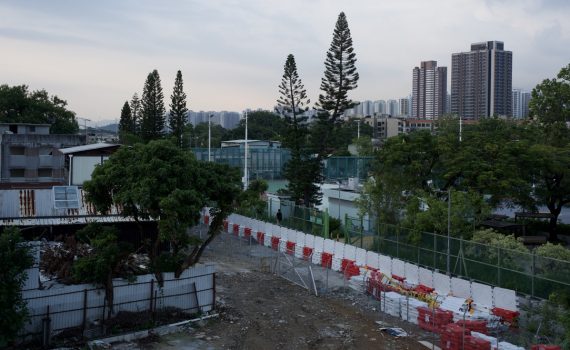
The new university town in the Northern Metropolis Development area will be expanded, Lee said today in the policy address, but universities, which are expected to fund new campuses, say the government is not offering enough money for building costs. In April, the government announced a low-interest loan scheme with HK$10 billion reserved to support universities in building campuses in the new development area. Dr Albert Chau, the Vice-President (Teaching and Learning) at Hong Kong Baptist University, said the low-interest loan is “not enough”. “Our university may build new laboratories and buildings, and the required funding is substantial, despite a HK$10 billion loan for universities.” Nineteen universities have submitted proposals for building a new campus in NMUT, Choi Yuk-lin, the secretary for Education of Hong Kong, said in a press conference in June. If all the proposals are accepted, each university would receive an average of around HK$500 million. According to the University Engagement Office of HKBU, its new Jockey Club Campus of Creativity, which opened in 2024 on its Kowloon Tong campus, cost HK$2.22 billion for 7,430 square metres, far exceeding HK$500 million. Zhou Haoming, a post-graduate student at the University of Hong Kong, said he is concerned that universities may raise tuition fees to fill the funding gap. “Government loans are a policy concession, but the school will ultimately have to put up the money for construction,”he said. Chau said that the tuition fee at HKBU will only be raised to meet inflation and won’t be a major way to gather funding for expanding the campus site. “We have no reason to transfer the burden of university development to our students. We should set proper tuition figures which students can afford. This is our social responsibility,” Chau said. Universities are expected to seek funds by utilising reserves or …

Anti‑abortion march, pro‑choice protests clash in central Munich
- 2026-04-20
- The Young Reporter
- By: Yu Yan PuiEdited by: LAU Ka Yan
- 2026-04-20
Munich, Germany April 18 – Around 2,500 protesters gathered on Saturday for an anti-abortion rally, March for Life, at King’s Square, with counter-protests supporting pro-choice unfolding along the route. Under Sections 218 and 218a of the German Criminal Code, abortion is technically a criminal offence punishable by fines or up to three years in prison. It is permitted within the first 12 weeks under certain conditions, including state approval from a counselling centre. Organised by a Munich group Voice of the Silent, the rally promoted messages like “protect life” and “every person is wonderful.” Event speaker Mathias von Gersdorff said broader abortion access overlooks what he described as “the killing of children” and fosters a “culture of death.” “Don’t give up on protecting the privileges of the unborn, and reject attempts to legalise abortion,” US Catholic bishop Robert Barron said in a video message. “Keep on praying for the blessing from God when living in a secular environment,” he said. “It is my responsibility to speak up for unborn babies in the womb who have no voice of their own to say they don’t want to die,” Fritz, 38, a participant whose brother has Down syndrome. “My brother is a full and valued human being who is living a happy life even though he is sick. But if abortion is promoted, many babies with the same condition may not be born in the future as people would be influenced by eugenics,” she said. Fritz called for more financial support for pregnant women, restrictions on organisations funding abortions and options for doctors to opt out. “If public attitudes toward permitting abortion shift, that could directly influence individual decisions, given that the current legal restrictions are disregarded in practice,” Fritz added. Christina Karmann, 21, a promoter from the partnering organisation Sunday for …
“Too big and too difficult”: fire officers defend response as Tai Po Fire hearing continues
- 2026-04-14
- The Young Reporter
- By: Dake LiuEdited by: LAI Uen Ling
- 2026-04-14
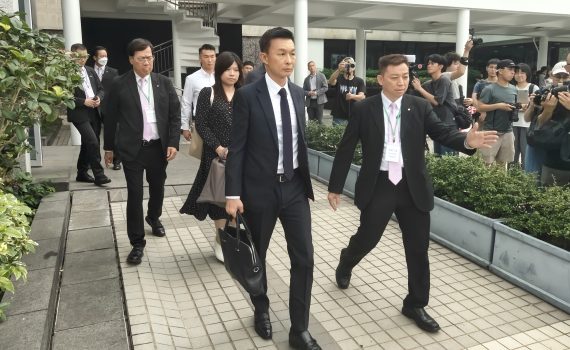
Senior firefighters testified Monday at the Tai Po Fire public hearing, describing how the rapid spread of the blaze and the absence of working building alarms created major challenges in coordinating rescues during the inferno that killed 168 people. Senior Station Officer Hui Kin-on, the first commander on the scene from Tai Po Fire Station’s B Team, told the committee he arrived at 2:56 p.m., just five minutes after the initial call reported scaffolding fire and explosions at Wang Cheong House. He said the flames spread “extremely fast", shooting straight to the roof with loud explosions and collapsing bamboo scaffolding. “When we arrived at the scene, we did not see any property management staff, nor did we hear the fire alarm bells ringing,” Hui said. The public's reliability of on-site firefighting information systems has also been concerned. Hui said it is a common practice to install the mobile data terminal on every fire engine, which displays real-time incident details, including specific building information. “During this fire, however, I cannot recall whether the terminal indicated exactly which fire safety installations had failed,” Hui said. “In every other incident I have attended, the terminal would always specify the faulty equipment.” Hui said when he arrived on spot, he saw all exits were blocked by falling debris and bamboos, which prevented firefighters from entering to activate the internal alarm system. “The entire building was surrounded by thick smoke and fire,” he recalled. The team attempted to activate the fire alarm bells in nearby buildings but none of them were functioning properly, Hui added. Hui also said firefighters had to rely on police assistance for evacuation and on radio communications with the control centre, while the committee counsel noted that there was no specific guidance for the estate’s pre-arranged fire plan for situations where the alarm failed to activate. As fire alarm upgraded to fourth level in an hour, the Fire Services Department was in effort to arrange more manpower. Wong King-man, Deputy Director of Fire Services in New Territories North, said the command centre received over 300 help …
Once a prisoner, forever a prisoner: The struggles of rehabilitated persons being labeled by society
- 2026-03-20
- Society
- The Young Reporter
- By: RONG Miu Tung Shelly、ZHENG WU Anny、ZHENG Yuan ElaineEdited by: CHAU Wing Yau
- 2026-03-20
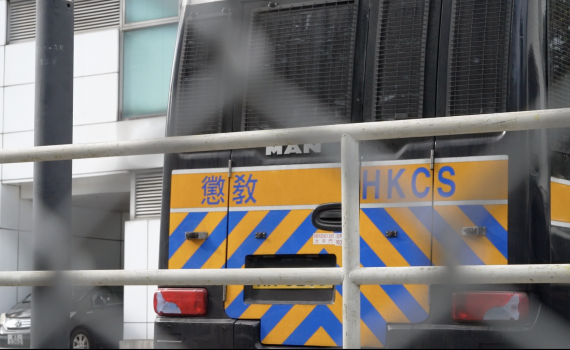
Rehabilitated persons are facing various challenges as they work to reintegrate into society, including social discrimination, changes in living habits, and mental issues, despite government support. Report indicates that many rehabilitated persons struggle with societal integration. 54% of the rehabilitated interviewees reported financial difficulties, having to rely on the Comprehensive Social Security Assistance, according to Hong Kong SideBySide, an NGO aims to help rehabilitated persons. According to Correctional Services Department, in Hong Kong, until Dec 31, 2025, the current number of persons in custody is 10,679. While the government provides support such as halfway houses and Caring Employer Scheme, some individuals continue to face challenges when seeking employment. TYR reporters spoke to some ex-offenders d citizens to find out more about the challenges they face in Hong Kong. https://youtu.be/XX924pEXyo0?si=buKwB8RbZtF2xFyq
Inside Myanmar’s tightened passport system
- 2026-03-08
- Society
- The Young Reporter
- By: LI Yuzhou Asher、Pann Hnin Nay ChiEdited by: ZHENG Xinyi
- 2026-03-08
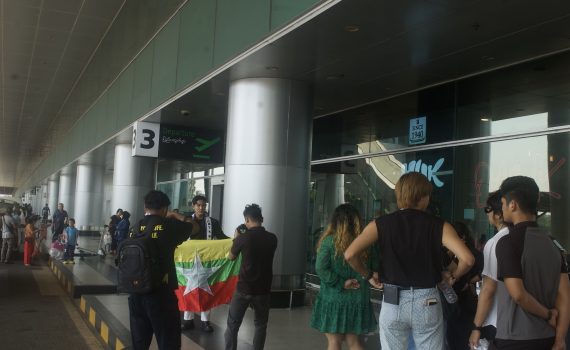
In early 2023, 28-year-old Scarlett, not her real name, queued up to enter Thailand at the Thai-Myanmar border, clutching her passport as she waited for her turn at the checkpoint. This was not for studying abroad, but an escape for survival. She feared that staying longer would permanently strip her of the possibility of leaving legally. “If my passport were scanned at the airport, I am afraid that it would be flagged,” said Scarlett. “That’s why I chose to leave from the Thai-Myanmar border,” she said, referring to its less stringent procedures. When she stepped up to the counter, the officer flipped through her red passport and looked at her briefly. “Okay, next,” said the immigration officer. He waved her through without running the passport through a scanner. Scarlett exited the gate and dared not slow down until she reached Thailand. Since the 2021 military coup, Myanmar’s passport system has increasingly functioned as a tool of exit control rather than merely a document for international travel. According to a 2025 report by the Danish Immigration Service, Myanmar authorities have circulated files of blacklisted people to airports and border checkpoints, allowing immigration officers to identify individuals and bar them from leaving the country with a passport scan. Those barred from leaving include participants in the Civil Disobedience Movement — a nationwide non-violent protest campaign that started in February 2021, in which civil servants went on strike in protest of military rule following the coup. More than 417,000 civil servants had joined the movement, according to an official brief from the National Unity Government of Myanmar. The movement was even nominated for the Nobel Peace Prize in 2022. Scarlett was one of them. Before the 2021 movement, she worked as a doctor at a public hospital. After the military seized power, she joined …
Budget 2026: MTR expansion to Shenzhen fully operational by 2035 to enhance cross-border transportation
- 2026-02-25
- Society
- The Young Reporter
- By: Li Yinheng、XIE Xinni CindyEdited by: Lou Zhengzheng
- 2026-02-25
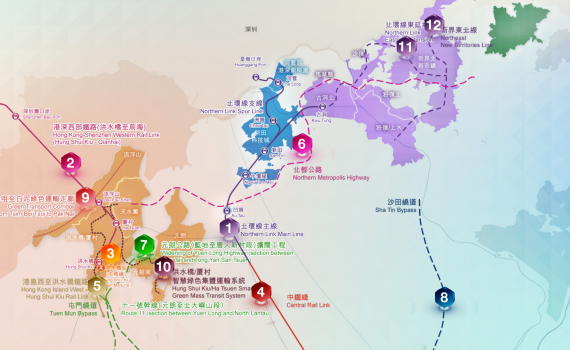
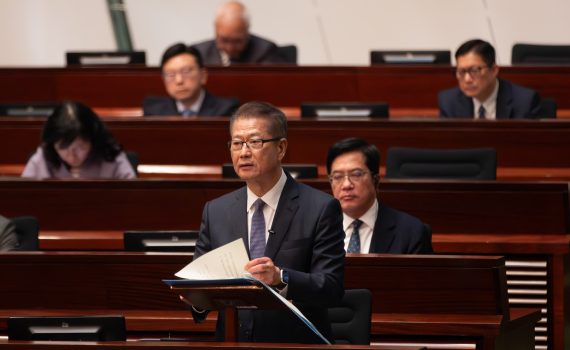
The MTR expansion with the Northern Link will open before 2034 and the Hong Kong-Shenzhen Western Rail Link the following year, Hong Kong Financial Secretary Paul Chan Mo-po said in the budget plan today. The Northern Link will be used to connect the Tun Ma Line and the East Rail Line and extends to the Huanggang Port in Shenzhen, while the Hong Kong-Shenzhen Western Rail Link will run to Shenzhen Bay Port. Both will connect to Shenzhen’s railways. “The strategies will focus on public transportation, and promote the flow of people and goods within the Greater Bay Area,” Chan said. MTR’s official website reports that the total passenger flow on the MTR border crossings is projected to be 106.673 million in 2025, which is the highest number in the past three years. Chen Nga-Yau, 20, a local university student living on Hong Kong Island, travels between Shenzhen and Hong Kong once every two weeks. Chen said Lo Wu and Lok Ma Chau MTR stations are especially crowded on weekends and holidays and sometimes she has to wait for 30 minutes to return. “If I want to go to Bao’an District in Shenzhen, I need to change two modes of transportation to get to Shenzhen Bay Port,” Chen added. “It’s really too troublesome.” According to the MTR Corporation 2025 Results Report, HK$140 billion will be invested in developing new railway projects. Zou Zhang, 37, Business Manager of China Railway Rolling Stock Qingdao Sifang Company (the major supplier of MTR train cars), said the company has already begun technical preparations and signaling system research for the construction of the Western Railway and Northern Link. Peng Huiwen, 31, Hong Kong University urban planning lecturer, said that the connection between the Hong Kong and Shenzhen MTRs is of great help in promoting the integration …
Budget 2026: Hong Kong reduces taxes to attract enterprises and investment
- 2026-02-25
- Business
- The Young Reporter
- By: YANG Shuyi、Cao BeiyuEdited by: QIN Ziyang
- 2026-02-25
To further attract enterprises to Hong Kong, the government will adjust preferential tax rates to 8.25% or 5%, depending on the company. Financial Secretary Paul Chan Mo-po said that the government will introduce policy tools, which also include land grant arrangements and financial subsidies, for new enterprises. The amendment bill will be introduced this year. The government introduced a framework for preferential policies to promote industry and investment in last year’s policy address. According to the Census and Statistics Department, the number of companies in Hong Kong with parent companies located outside Hong Kong has increased from 9,049 to 11,070 in four years, an increase of 22.3%. Yang Xiaofeng, one of the founders of Chengdu Vifortek Healthcare Technology Co., Ltd, said the company has plans to set up in Hong Kong. “Tax incentives can significantly reduce the operating costs of our research and development center, enabling us to attract more international talent,” said Yang. Yang added that tax incentives have solidified their company's resolve to use Hong Kong as a base to expand globally. “Taxes don't concern me much as a small business owner, since our business is now only marginally profitable,” said Wu Xiaoli, the founder of Tang Le Le Trading Limited, a mainland toy company set up in Hong Kong in August 2024, adding that she’s more concerned with rental and labour costs. Wu said Hong Kong offers more opportunities for growth and this is a core demand for enterprises. According to Ryan Ip, vice president of Our Hong Kong Foundation, a think tank focused on economic development, said the most common difficulties for enterprises that want to establish themselves in Hong Kong are that they are unfamiliar with local procedures for registration, office space and team building. He added that to solve this difficulty, the government should …
Budget 2026: Hong Kong plans to attract more family offices for the ultra rich
- 2026-02-25
- Politics
- The Young Reporter
- By: Ng Wing Sum Jodie、PENG Yixin NaomiEdited by: ZHENG Xinyi
- 2026-02-25
Hong Kong Financial Secretary Paul Chan Mo-po proposed a tax regime augmentation, aiming to attract more family offices, which manage money for ultra wealthy individuals. “Tax regime coverage will expand the scope of funds to specific ‘funds-of-one’, as well as classifying digital assets, precious metals, and specific commodities as investments with tax concession eligibility,” said Chan. Chan added the changes will take effect from the year of assessment 2025/26. A family office is a private wealth management company established by ultra-high-net-worth individuals, responsible for the day-to-day management of family assets. According to Chan Ho-lim, Under Secretary for the Treasury Bureau, single family offices generally refer to institutions established by a single family for wealth, family affairs, and long-term equity investment management. Multi-family offices, on the other hand, are licensed companies that “serve more than one high-net-worth family” by providing outsourced services and are “typically established and run as commercial ventures”. There are 3,384 single family offices in Hong Kong, according to research from Deloitte. According to Financial Services and the Treasury Bureau, this is a 25% increase from 2023. Half of the current offices are serving families with more than US$51 million of accumulated wealth. Since 2023, the Hong Kong government has issued a policy statement supporting the development of a global ecosystem for family offices and asset owners, promoting the growth of the industry. The bureau also said a single office contributes approximately HK$12.6 billion annually to the local economy through operating expenses alone, directly creating over 10,000 full-time professional positions, covering high-value-added fields such as financial advisors, legal and accounting. Yu Ann, 36, Co-Founder of Jadewell Family, a multi-family office, said, compared with banks and securities firms that have a single perspective, family offices can provide a comprehensive view and risk analysis across banks and even platforms, …
From ‘brain rot’ to balance: Gen Z’s pursuit of meaningful content in fragmented media
- 2026-01-26
- Society
- The Young Reporter
- By: Yu Yan Pui、Edited by: CAO Jiawen、ALISHIBA MATLOOB
- 2026-01-26
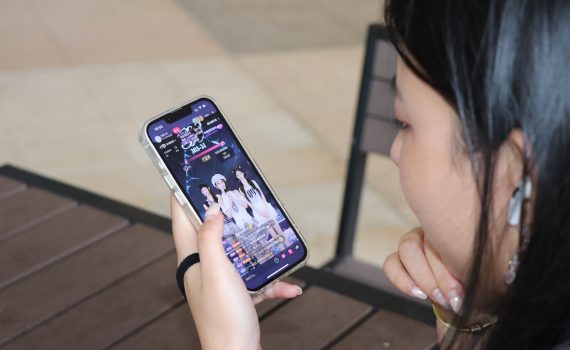
Every day, Zhang Danying, 22, an undergraduate student from mainland China at Hong Kong Baptist University, turns her phone on to enjoy scrolling through clips and image-driven posts on social media from the moment she wakes up. She spends almost 12 hours a day watching netizens dancing to pop music, or trying out various challenges. Zhang aspires to seek learning advice and reach for lighthearted social snippets to feel relaxed. Instead, she grew anxious from social comparison with people, and came down to media addiction that disrupted her daily routines out of the cyberworld, with constant inner struggles. “It is hard not to watch social media for a day,” Zhang Danying said. “But after watching it, I feel uncomfortable all day.” Zhang is not alone. In mainland China as well as globally, it has become common for Gen Z to jokingly claim they are suffering from “brain rot”—a slang phrase that means poor cognitive skills and fading memory after hours of social media scrolling. As noted by the Oxford University Press in 2024, usage of the term “brain rot” surged by 230% from 2023 to 2024. According to a 2024 survey by Bazaarvoice in Statista, 34% of interviewees' responses that short-form videos, such as TikTok and Instagram reels, are more effective at spreading online than text-based posts. Based on Metricool Viral Trends Analysis, popular social media posts include catchy music, timely hashtags, evolving cultural conversations and collective online experiences, shaping as a market strategy. As noted by the China Trends 2024 by Groove Dynasty, it highlights Douyin phenomena of emerging social experiment-type challenges, one case is that participants stage humiliating acts in crowded elevators to capture bystander reactions. Other examples include the ‘APT. Dance’ that features hand gestures with upbeat music. Zhang Danying is caught up in the wave of …