
TOP STORIES

Would you like to be “friends with badminton”? Hong Kong focuses on abstinence, not sex education
- 2026-04-02
- Society
- The Young Reporter
- By: LAU Ka Yan、CHAN Hiu YingEdited by: MAO Anqi
- 2026-04-02
When she was just 15, Fung, who does not want to reveal her full name for fear of negative consequences, found herself having her first sexual encounter. It was neither planned nor reckless. Years later, she said she did not regret it, but she wished she had known more about her body, consent and the emotions she felt that night. “I don’t feel bad about my decision, but if I had known more about this behaviour, I wouldn’t have felt so confused,” Fung said. Fung’s story is not unique. As access to social media, pornographic content and online conversations about sex continue to rise, the city’s Gen Z population is learning about intimacy at a younger age in a world that they say is more confusing than ever. But they say sex education in public schools has not caught up. Fewer young people are having sex, according to the latest survey by the Family Planning Association of Hong Kong in 2021. But among those who are, the average age has dropped to 14. In 1997, the Education Bureau published guidelines for schools on sex education, but left it up to the schools to design their own programmes. By following those guidelines, schools focused more on values and attitudes towards sexuality, while providing less information about practical knowledge, such as condom use and how to prevent HIV. Sex education in formal lessons often emphasises the physiological aspects, such as reproduction mechanics, which may overlook psychological and social topics, such as sexual consent and gender equality, according to a 2022 study by the Equal Opportunities Commission, a semi-governmental agency concerned with public social issues. “When condoms or the process of sexual intercourse were mentioned in class, the teacher just briefly glossed over them and moved on. I didn’t get any practical knowledge …
Hong Kong office market active on relocations, but recovery fragile
- 2026-04-01
- Business
- By: LIN Xiaoyou、ZHONG XinyunEdited by: Zhou Xinying、ZHOU Yun
- 2026-04-01
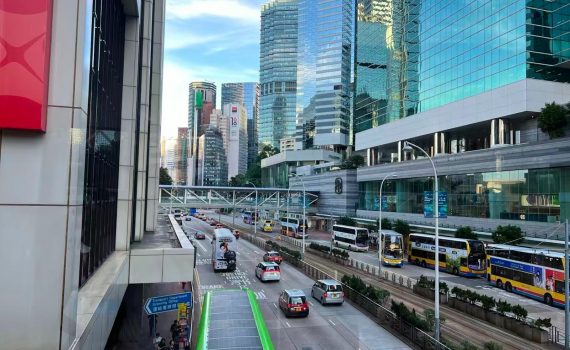
Zhou Haoming, a marketing and editing position in a publishing company at Park Commercial Centre in Tin Hau, observed that an increasing number of companies had moved out of the building over the past six months, leaving the premises noticeably quieter and less populated. After the companies moved away, the number of partner businesses in the office building, with which Zhou’s company could jointly carry out promotional activities, decreased significantly. Corporate relocation activity was active in 2025. AIA Hong Kong announced in 2024 that it would expand into AIRSIDE, an A-grade commercial building in Kai Tak, as a new operations and training base for its financial planners. Activities gradually moved into the new office in 2025. Cory Tsai, a financial planner at AIA, said the new location offers better transport connectivity and amenities, as Kai Tak is now regarded as Hong Kong’s new economic centre. AIA’s relocation to new business areas is not an isolated case. Since the second half of 2025, Hong Kong’s office market has seen a period of heightened activity driven by large-scale leasing transactions and relocations. Among the more notable cases is UBS, which announced on February 3, 2026, that it would relocate and consolidate all of its Hong Kong offices into a single hub at the International Gateway Centre in West Kowloon. Sam Gourlay, JLL Head of Office Leasing Advisory, also noted that more firms are expanding to emerging business centers such as West Kowloon and Tsim Sha Tsui, drawn by their strategic connectivity and access to the high-speed rail link to mainland China. While Hong Kong’s office market has found some stability supported by such high-profile leasing deals, the improvement has come mostly from corporate relocations, Gourlay said. JLL said in its press release that the office market showed a gradual recovery in the …
Singapore’s dining shake-up: How a wave of foreign brands is reshaping the food scene
- 2026-04-01
- Business
- By: CHEN Yongru、Wang YunqiEdited by: TANG Siqi、ZHOU Yun
- 2026-04-01
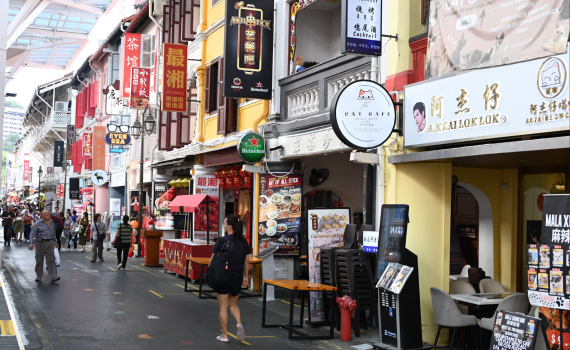
At 11 pm on a weeknight, Reenice Lim was still on her feet. The head of House of Roasted Meats, a homegrown roasted meat brand, was juggling walk-in customers and a stream of online delivery orders. Even with four outlets in Singapore, Lim stressed that running the business still comes with significant challenges. In 2025, Singapore’s dining scene underwent a major shake-up. Between Jan. 1 and Oct. 23, 2,431 food and beverage (F&B) outlets shuttered, while 3,357 new ones opened. Among those bowing out were homegrown brands like Fluff Stack, a six-year-old Japanese-style soufflé pancake chain that closed all five of its outlets in May, citing a challenging F&B environment in Singapore. Accounting and Corporate Regulatory Authority (ACRA) data shows that over 60% of 2025’s shuttered F&B outlets had operated for fewer than five years. Amid the fierce market competition marked by a major reshuffle, Lim said for local operators like herself, “the biggest difficulties are the increasing rental costs and manpower costs”. This struggle is echoed by 33-year-old Xia Ziwen, a veteran Chengdu restaurateur turned Singapore entrepreneur, who noted that a local labor shortage has pushed manpower costs to 30% of total operating costs. Starting in March 2025, Ministry of Manpower (MOM) regulations further mandate a minimum gross monthly wage of S$2,080 (HKD 12,850) for F&B stall assistants, intensifying the financial pressure on small-scale operators. To comply with the manpower quotas set by MOM, businesses must hire a specific number of locals to “unlock” foreign work permits. Xia noted that this regulatory obligation can push the total monthly cost of employing a single Malaysian retail assistant to S$5,000 (HKD 30,900). Businesses heavily reliant on migrant workers, such as Lim’s roasted meat stalls, are especially hard hit by the mounting costs brought by higher government levies and stricter wage requirements. …

Art Basel Hong Kong: Asia debut of Zero 10 sparks mixed reactions
- 2026-03-31
- Culture & Leisure
- The Young Reporter
- By: MA Yifan Chloe、SHI Puxuan AmyEdited by: LAU Ka Yan
- 2026-03-31
Zero 10, a digital art-theme exhibition area featuring 14 exhibitors, made its Asian debut on March 27 at the three-day Art Basel Hong Kong this year. The event drew 91,500 visitors, but scepticism towards digital art and AI use remains. Harvey Rayner, 51, an English artist for Art Blocks, writes code and algorithms to let people generate their own digital artwork on the computer and in print. “This type of digital artwork is not yet widely acceptable,” said Rayner. Joan Chen, 24, an exhibitor of Art Blocks, said some buyers may not have been exposed to digital artworks before, but they find participating in the creation of digital art a novel experience. Lydia Lee, 37, visited Rayner’s exhibition area and asked for the story behind the digital art piece creation. “I believe the collection value of digital artworks lies in the public’s interaction with them,” said Lee. “It is only valuable if one fully participates and understands the creative logic behind it.” “We’re really interested in educating and showing people here what generative art is,” said Rayner. According to the Art Market Report 2026 by Arts Economics, digital art is one of the most popular purchases among high-net-worth individuals. In the early sales of digital works at Art Basel Hong Kong this year, seven artworks priced over US$10,000 have been successfully sold. Joshua Chan, a 36-year-old visitor, said digital art is a new trend in the art world, but he finds it difficult to assess its value because of AI development. “I think the general public will be attracted by the interesting interactive installations in Zero 10,” he said. “But it still takes time for people to truly appreciate and accept new forms of art.” “Everyone may use AI to generate unique works. This is not something that only artists …
Edible art fair debuts in Hong Kong with mixed reactions
- 2026-03-31
- Culture & Leisure
- By: PENG Yixin Naomi、WU Sitan ElaineEdited by: Fu Rong
- 2026-03-31
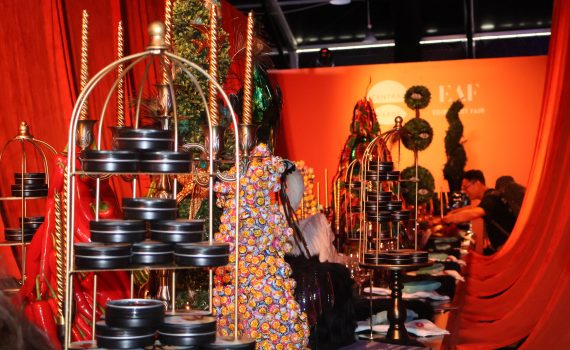
Hong Kong’s first edible art fair opened on March 26 in Central, drawing visitors’ appreciation, though some questioned its educational value and food safety. Located at the Harbourfront Event Space, the Central Yards Edible Art Fair features a 20,000-square-foot tent, which houses 10 galleries showcasing different art movements. “You're not only looking and listening, but you can play, take pictures and also taste the edible art treat, which makes for a more immersive cultural experience,” said Levina Li-Cadman, 55, curator of the fair. “Our daughter was quite excited when she found out she could get different snacks from each exhibit. We are very happy to see her running around the interactive areas,” said Steve Jon, 36, who visited with his family. Cathery Xu, 39, chief executive officer of Sunflower Media, a cultural industry operator, said the exhibition had provided her with new ideas for planning future art and cultural events. Several visitors said the ticket was expensive, at over HK$300 per adult depending on the time slot. “The experience is quite fresh, but it doesn't seem to be worth it, considering that only two exhibition halls feature works by individual artists,” said Shelly Zheng, 25, a short video content creator on Rednote and Instagram. The fair features installations by two local artists, while the remaining exhibition halls are themed around art movements, including Modernism, Pop Art and Surrealism. Tom Audrew, director and head of leasing & operations of Central Yards, said in a press release that the fair allows both residents and tourists of different ages and backgrounds to learn about different forms of art, introducing a more accessible and inclusive art experience. “This exhibition aims to promote art education, but the content is too shallow," said Anthea Fan, chief editor of Art Map, a cross-disciplinary art platform focusing on …

Zero 10 makes its Asian debut at Art Basel Hong Kong
- 2026-03-31
- Culture & Leisure
- The Young Reporter
- By: YANG Shuyi、Li YinhengEdited by: QIN Ziyang
- 2026-03-31
Art Basel Hong Kong 2026, the annual art event, returned on March 27 at the Hong Kong Convention and Exhibition Centre and will run for three days. This year's exhibition introduces the “Zero 10” digital art zone – its first appearance in Asia. The zone focuses on the use of technology in art, with 14 exhibitors showcasing how new tools are changing the way artists create. According to the Art Basel and UBS Global Art Market Report 2026, digital art is the third-largest category in total expenditure. And the expert said that with Zero 10 in Hong Kong and heading to Art Basel Switzerland this June, watchers expect digital wave growth through 2026. Follow the link below to watch the full reel: https://youtube.com/shorts/IkZ7smdla6k?si=sUcoGRbA6Qd92MWf
HKwalls 2026 innovates moving street art
- 2026-03-30
- Society
- The Young Reporter
- By: MA Yifan Chloe、SHI Puxuan AmyEdited by: Chun Lim LEUNG
- 2026-03-30
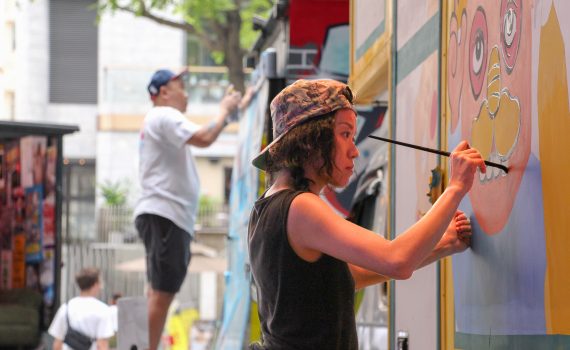
HKwalls Street Art Festival debuted its 11th edition from March 21 to 29 at the former Police Married Quarters in Central, turning Central and Western District into an open studio for street art. More than 20 local and international artists from 14 countries took part in workshops, art tours and traditional wall paintings, with the festival proposing a moving street art exhibition that allows artists to paint on trucks and let them roam across the city. Jason Dembski, co-founder of the HKwalls, said he had tried multiple channels to cooperate with truck owners willing to have their track be graffitied, including approaching individual truck owners on the street and contacting companies. “All the truck owners will keep the artwork for around three months,” he said. “Especially the drivers who are independent owners, they all seem very happy about the artwork and want to keep it for a long time.”. He added the project was an opportunity to integrate street art into more parts of Hong Kong. Ten artists jointly completed the graffiti or hand-painted designs for six trucks, which will later be used for regular cargo transportation. Taiwanese graffiti artist Leho, 30, said it was rare to have a chance to complete such a full-scale work on a truck. “It was usually identified as illegal graffiti in Hong Kong to paint on a vehicle," he said. Mooncasket, a 35-year-old local illustrator, painted on a truck for the first time. “I feel like the works that are created on small canvases might only sit inside a gallery or at home, while the audience could interact with my artworks and get more attention when there was a truck painting,” she said. Lindsey McAlister, 65, an artist who has attended the festival as a visitor for years, said she was looking forward to …
Hong Kong’s first secondhand fashion festival pushes for environmental friendly
- 2026-03-30
- The Young Reporter
- By: CHEUNG Ka Yi Ann、XIE Xinni CindyEdited by: Fu Rong
- 2026-03-30
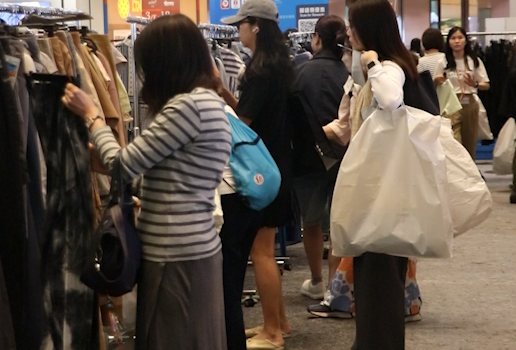
The first secondhand fashion festival “Secondhand Easter” opened today in Wan Chai Hopewell Centre, running three days until 29th March 2026. The event features a marketplace, pop-up clothing swap, upcycling workshop and also garment repair and maintenance services. It aims to address Hong Kong’s textile waste crisis, using Easter Festival as a theme to symbolise giving secondhand clothes a new birth. Follow the link below to watch the full reel: https://youtube.com/shorts/5xwSgY1CdYo?si=uISP1f2Z5kIQJZXz
Plush flower exhibition marks its Asian debut in Hong Kong
- 2026-03-27
- Culture & Leisure
- The Young Reporter
- By: ZHOU Shiqing、Ye EnyiEdited by: Yu Yan Pui
- 2026-03-27
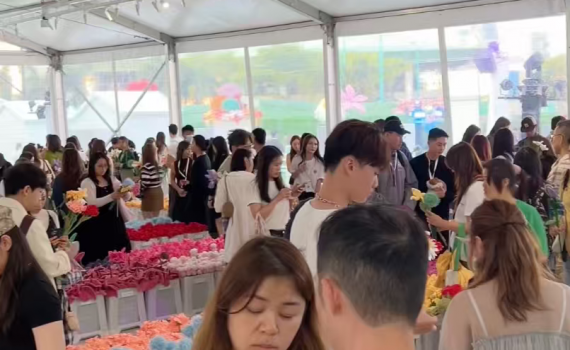
The Plush Flower Market was held at the Central Harbourfront from Mar. 19 to Mar. 22. It offers a variety of plush flowers for purchase. The touring exhibition marks its first presentation of plush flowers from the renowned Australian hyperrealist artist CJ Hendry outside the United States, with Hong Kong as its first stop in Asia. It is also one of the highlights in Hong Kong’s Art March 2026 programme. Follow the link below to watch the full reel: https://www.youtube.com/shorts/KguLlHIyo2c
Once a prisoner, forever a prisoner: The struggles of rehabilitated persons being labeled by society
- 2026-03-20
- Society
- The Young Reporter
- By: RONG Miu Tung Shelly、ZHENG WU Anny、ZHENG Yuan ElaineEdited by: CHAU Wing Yau
- 2026-03-20
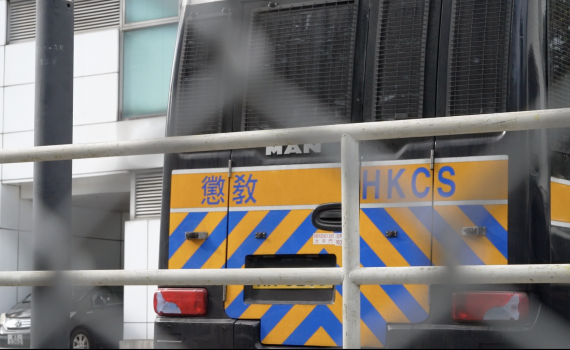
Rehabilitated persons are facing various challenges as they work to reintegrate into society, including social discrimination, changes in living habits, and mental issues, despite government support. Report indicates that many rehabilitated persons struggle with societal integration. 54% of the rehabilitated interviewees reported financial difficulties, having to rely on the Comprehensive Social Security Assistance, according to Hong Kong SideBySide, an NGO aims to help rehabilitated persons. According to Correctional Services Department, in Hong Kong, until Dec 31, 2025, the current number of persons in custody is 10,679. While the government provides support such as halfway houses and Caring Employer Scheme, some individuals continue to face challenges when seeking employment. TYR reporters spoke to some ex-offenders d citizens to find out more about the challenges they face in Hong Kong. https://youtu.be/XX924pEXyo0?si=buKwB8RbZtF2xFyq