
The Young Reporter
Policy Address 2025: Hong Kong lowers house-purchasing money threshold to facilitate cross-border buyers
- 2025-09-17
- The Young Reporter
- By: Ye Enyi、Lan XinbeiEdited by: MAO Anqi
- 2025-09-17
Non-locals hoping to obtain Hong Kong residence through investment will be able to purchase residential property for a minimum of HK$30 million rather than the current HK$50 million, said Chief Executive John Lee Ka-chiu in Wednesday’s policy address. But the amount of the property purchase allowed to be counted towards the visa scheme eligibility of HK$30 million in investments will remain HK$10 million. This is under the New Capital Investment Entrant Scheme, which was launched on Mar. 1 last year, to help investors settle down in the city without the need to establish or join a business. As of February this year, the scheme has received 918 applications and expects to inject over HK$270 billion into the local market, according to the government’s press release in March. But among the approved applications, no applicant has made an investment in residential real estate. They all choose to invest in non-residential approved assets to meet the eligibility requirements. Wu Cheuk-him, district councillor of Tai Po, said the government’s move is positive. “I am confident that lowering the investment threshold for property purchases will draw more people to buy homes in Hong Kong, and as a result, to stimulate the local property market,” he added. Mainland residents face a stringent cap on foreign exchange conversion of US$50,000 (HK$389,000) a year, which means they cannot buy property that costs more than this with direct remittance. Viola, 26, from the mainland and working in a Hong Kong local school, said she purchased a residential property in Hong Kong at the end of 2023. She does not want to reveal her full name as she had to get creative, which may not be legal, with how she moved her money from a mainland bank into Hong Kong for the transaction. “I am constrained by the rule …
Policy Address 2025: Pundits criticised industry mismatch despite the city’s Top Talent Scheme has contributed HK$34 billion to local economy
- 2025-09-17
- Society
- The Young Reporter
- By: FENG Zhenpeng、Li YinhengEdited by: LIU Yutong
- 2025-09-17
Chief executive John Lee Ka-chiu defended the controversial top talent scheme in his latest policy address but observers urged the government to address the talent mismatch by bringing in more high-tech elites. The Top Talent Pass Scheme generated around HK$34 billion a year for the local economy, accounting for approximately 1.2% of economic growth, said Chief Executive John Lee Ka-chiu, in the policy address on Wednesday. This is the first time the Hong Kong government has quantified the scheme’s economic contribution to the city in light of mounting criticism against the scheme being abused. Former chief executive Leung Chun-ying criticised last month that most applicants did not settle in Hong Kong, but returned to the mainland with their families after obtaining Hong Kong identity cards. When delivering the 2025 Policy Address, Lee said Hong Kong attracted over 230, 000 talents to work and live in the city under a number of new talent talent admission policies, including the TTPS. About 14,000 of TTPS applicants, or 54%, had their visas renewed. “Of them, 95% receive a monthly income higher than the local median income of about $20,000, and 50% earn a monthly income nearly double that amount. This reflects a strong demand for TTPS talents and the market's willingness to offer higher salaries to attract them,” Lee said most of the admitted talents to Hong Kong are relatively young, with 70% being under 40 years old, which helps to address the challenge of the aging population. However, observers did not see a picture-perfect reality. Lawmaker Wendy Hong Wen said Hong Kong lacks high-end tech talents but the TTPS is mainly bringing in talents from the finance sector. “To address the mismatch between the talent supply and industry demand, the government should adopt a demand-driven approach by enabling companies to directly search for …
Policy Address 2025: Hong Kong to take further actions for land management in Northern Metropolis
- 2025-09-17
- Politics
- The Young Reporter
- By: CHEN Xiyun、CHEN ZiyuEdited by: CAO Jiawen
- 2025-09-17
A land use review over the Sha Po area, as part of the Northern Metropolis, a development priority proposed four years ago, will be established to discuss its development potential and the feasibility of constructing more private housing in the region, Chief Executive John Lee Ka-chiu said in his policy address on Wednesday. According to the Planning Department, Hong Kong will build 500,000 housing units in the coming decade in the Northern Metropolis for 2.5 million people. Mak Sui-choi, Associate Professor who researches finance and investment at Hong Kong Baptist University, said the Northern Metropolis may attract labour to the local industry. “The increase in Hong Kong's population is a good thing, driving the development of other local industries,” Mak said. “But the construction of the Northern Metropolis should first address the conflicting land status,” he added. According to the commissioned Farm Land Survey Report by the Chinese University of Hong Kong, most farmland in San Tin and Ngau Tam Mei has been rebranded as non-arable fields. “The first step for the government is to reacquire the land and adjust its current land status,” Mak said. “This is going to be a long and cumbersome process, but it is doable,” he added. Lee said the government will arrange three sites for the Urban Renewal Authority to build new housing in Kwu Tung North and Fanling North, areas that are part of the Northern Metropolis. While the Northern Metropolis area presented certain property development potential, a 28-year-old two-time mainland home buyer Cissy Chen opted for Kai Tak instead. “The Northern Metropolis is far away from Hong Kong Island as compared to Kai Tak, location is my main consideration when it comes to real estate investment," Chen said. She added that it would be long before infrastructures in the northern metropolis would …
Policy Address 2025: Hong Kong extends tax allowance for parents with newborns in its latest fertility push
- 2025-09-17
- The Young Reporter
- By: YANG Shuyi、Lou ZhengzhengEdited by: WANG Jing
- 2025-09-17
Hong Kong parents with newborns are set to get more tax allowance as the city strives to boost its birth rate. Currently, parents receive a HK$260,000 tax exemption in the baby’s first year, but this is going to be extended for another year, said Chief Executive John Lee Ka-chiu in 2025 Policy Address. Those with older children will continue to get HK$130,000 of their taxable income exempted. Hong Kong has been struggling with a declining birth rate, with the number of babies born dropping from 60,900 in 2016 to a low of 32,500 in 2022. In 2024, there was a slight improvement to 36,700 babies. A 36-year-old mother of a toddler from Kowloon welcomed the additional tax break. “As someone from the 80s generation, I really want to have children, this policy will help us to relieve some financial pressure,” said Ruby Tse, who is trying for a second child. Lawmaker Chan Wing-kwong, who specializes in medicine, said the allowances are a welcome addition for families trying for more children, but it would be an unlikely fertility boost for those who don’t. “The additional newborn allowance is merely a drop in the bucket when it comes to the cost of raising a child in Hong Kong,” said Lin Sen, who has been married for six years but has remained reluctant to have a baby. Lin said the intensifying competition for schools and jobs a child might face in the future deters him from giving birth. Lee also pledged more childcare resources for babies and schoolchildren. Chan said that although the direction of the current encouraging policies is right, a series of supporting measures must keep pace. The lawmaker called on the government to provide more measures for schools and job placements. “Only when the social environment can let people ‘live …
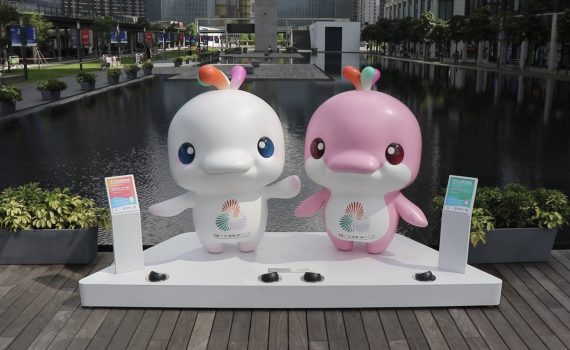
Policy Address 2025: Leveraging Kai Tak Sports Park to popularise sports in Hong Kong
- 2025-09-17
- Health & Environment
- The Young Reporter
- By: Fu RongEdited by: AU YEUNG Jim
- 2025-09-17
John Lee Ka-chiu said in this year’s Policy Address that the government will support elite sports and leverage Kai Tak Sports Park to further develop the “sports + mega events” model in Hong Kong. “We will continue to promote sports development by supporting elite sports, maintaining Hong Kong as a centre for major international sports events, enhancing professionalism in sports, developing sports as an industry and promoting sports in the community,” said Lee. The Policy Address also focused on enhancing professionalism in sports, improving the functionality and positioning of sports venues, reviewing the governance of sports and boosting the publicity of sports by the media. “Elite sports and popularisation are mutually supportive. Elite sports can promote public participation and ‘sports for all’ through the celebrity effect. Expanding the proportion of the grassroots in sports will in turn promote the selection of elites and further promote the popularisation of sports events,” said Patrick Lau, Professor and Associate Academy Director (Research) of the Academy of Wellness and Human Development of Hong Kong Baptist University. Hong Kong already plans to co-host part of this year’s National Games, the National Games for Persons with Disabilities and the National Special Olympic Games in November and December. The city’s portion of the National Games include bowling, track cycling, fencing, golf, Rugby Sevens, a triathlon, beach volleyball, men's handball and men's U22 basketball. The golf will be played in Fanling, and the Hong Kong Golf Association has announced that Xu Longyi, individual gold medalist of the Hangzhou Asian Games, will represent Hong Kong. “To attract more world-class players to compete in Hong Kong, we have agreed on a multi-year partnership arrangement with LIV Golf, one of the most important golf tours in the world,” said Lee. "Kai Tak Sports Park is an important vehicle for the eventisation …
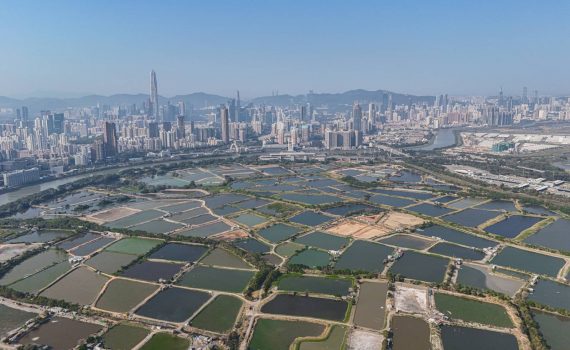
Policy Address 2025: Hetao Cooperation Park layout to be finalised as Hong Kong aims to speed up area development
- 2025-09-17
- Politics
- The Young Reporter
- By: WANG Ludan、Li ZhongyiEdited by: YANG Haicen
- 2025-09-17
Hong Kong hopes to speed up the development of a newly constructed park on the border that is cooperatively managed by Hong Kong and Shenzhen, as part of the government’s focus on innovation and technology, said John Lee Ka-chiu in today's Policy Address. The park’s layout has yet to be finalised even as the first batch of enterprises has already taken up residence in the Hetao Shenzhen-Hong Kong Science and Technology Innovation Cooperation Zone. “We will finalise the Park’s overall layout and consider offering workspaces flexibly to companies under the ‘moving in while construction is underway’ approach; that will enable them to move in earlier without having to wait for the completion of the entire park's construction,” said Lee. The new tenants include companies and talents specializing in life and health technology, microelectronics, new energy, AI and other pillar industries. This is connected to the government’s broader plan to develop Hong Kong into a global AI hub. The second phase of construction, which includes another five buildings in addition to the current three, will be completed progressively from 2027, Lee said. According to reports from Chinese state media, companies including The Hong Kong and China Gas Company, RoadAGI, Ping An Technology, and Siemens Energy have established a presence in the park. The Cooperation Zone will be used as a dedicated hub for cutting-edge research in biomedicine, artificial intelligence, applied mathematics and new materials. Earlier this year, Financial Secretary Paul Chan Mo-po highlighted in the 2025 budget plan that the government has earmarked HK$3.7 billion for the Hetao Innovation Zone, supporting the first-phase construction of infrastructure and public facilities, as it is one of the key projects in the Northern Metropolis development strategy. Chan estimated that upon the full completion of Hong Kong Park, it will contribute approximately HK$52 billion annually …
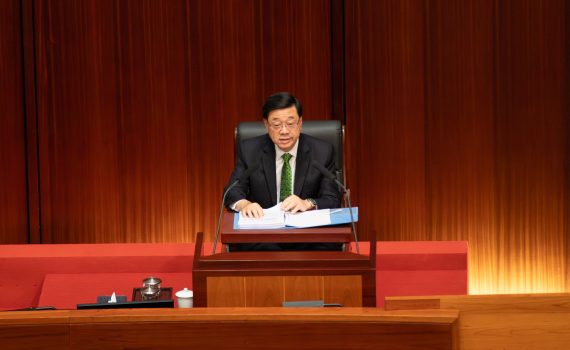
Chief Executive John Lee Ka-chiu delivers Policy Address 2025
- 2025-09-17
- Politics
- The Young Reporter
- By: SIU Tsz HangEdited by: AO Wei Ying Vinci
- 2025-09-17
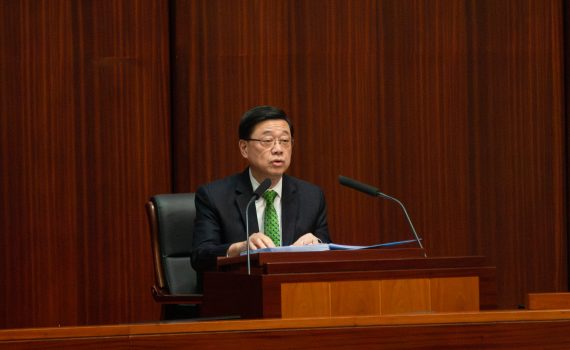
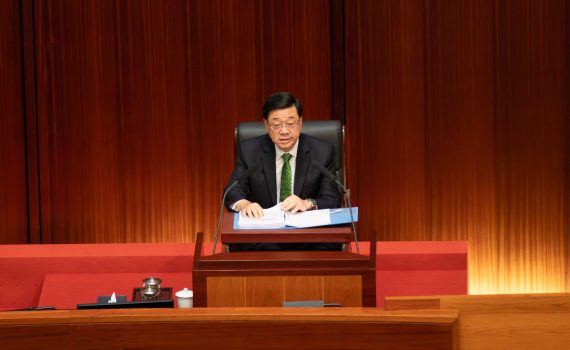
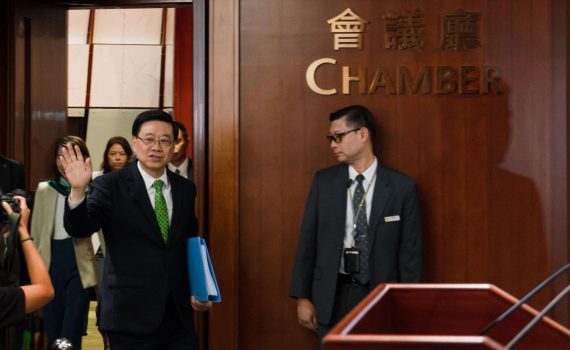
Chief Executive John Lee Ka-chiu announced his fourth policy address at 11am today. As in the case in the past three years, Lee continues to stick with green as the theme colour. His policy address mainly focuses on several areas such as promoting patriotic education, setting up an accountability system for senior civil servants to enhance governance, accelerating the development of the Northern Metropolis, improving innovation and technology industry’s development, reforming the economy and healthcare system. This year, his address lasted 174 minutes, which is his second longest in history, followed by the longest record of 202 minutes in 2023.

Brisbane’s West End celebrates Kurilpa Derby with parade and festivities
- 2025-09-17
- Society
- The Young Reporter
- By: CHAU Wing YauEdited by: CHAN Wing Yiu
- 2025-09-17
BRISBANE, Australia — The 2025 Kurilpa Derby took place on 14 September, continuing an 18-year tradition in the West End suburb in Brisbane, Australia. The word “Kurilpa” means “home of the water rat”, showing the West End suburb’s history as a natural habitat for water rats and a place where First Nations people once lived. The West End Community Association organises the parade annually in recognition of Indigenous heritage and celebrates the community’s spirit. Participants decorated their wheels in various creative styles and dressed up for the parade. A series of activities following the Kurilpa Derby parade, including a doggy fashion parade, Samba performance and live music. Follow the link below to watch the full reel: https://youtube.com/shorts/vOYWsjYb81Q?si=i10rLg1kZpImBD-d
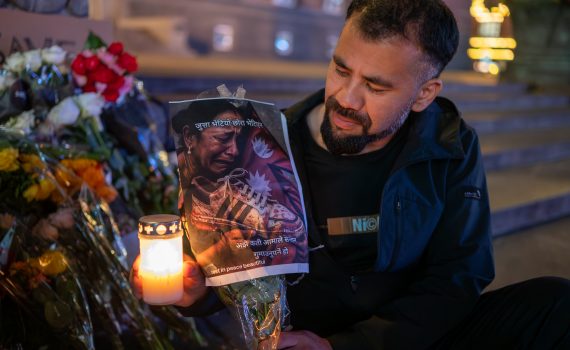
Nepali people protest and pay tribute at Copenhagen’s City Hall and Nepal Embassy
- 2025-09-13
- Society
- The Young Reporter
- By: LEUNG Chi NgaiEdited by: AO Wei Ying Vinci
- 2025-09-13
Flowers, candles, and handwritten cardboard signs sat on the stairs of a public square in the city centre of Copenhagen to commemorate more than 50 Nepali protesters who died protesting against the government in Nepal on Monday and Tuesday. Hundreds of Nepalis living in Copenhagen gathered at the City Hall Square on Tuesday evening, said Jyotindra Thapa Ais, 29, a Nepali living in Copenhagen who attended the gathering. On Wednesday morning, 23 Nepalis gathered again outside the Nepal Embassy to protest Nepal government policies, youth unemployment and a lack of opportunities and to pay tribute to the dead protesters. The protest, which started against a social media ban in Nepal, has escalated into a deadly conflict involving tens of thousands of mostly young people taking to the streets of Kathmandu. More than 50 Nepali protesters, mainly students and young people, have died from clashes with security forces and police, according to the BBC. The Nepali Supreme Court, parliament and other major government buildings were set on fire. Houses that belong to government officials were raided by demonstrators. The dissent has created a power vacuum in the Nepali government, as the prime minister, ministers and high-ranking members of political parties resigned. Bel Gurung, 50, from Nepal who lives in Copenhagen, said he initiated the two events in Copenhagen on Tuesday morning, after hearing requests from Nepalis in Copenhagen to raise their voices. “No corruption, no violence, no injustice” were the key messages Gurung and other protesters spread, he said. “When you speak a voice, the true voice, it doesn't matter how loud or how small it was. That spread all over the world to the right people, to the right country,” he said. Jyotindra said: “Today was just for the death of the students, and we were not focusing on other …
Music, beer, and sweat: Copenhagen metro turns into a dancefloor for locals
- 2025-09-10
- Society
- The Young Reporter
- By: LEUNG Chi NgaiEdited by: AO Wei Ying Vinci
- 2025-09-10
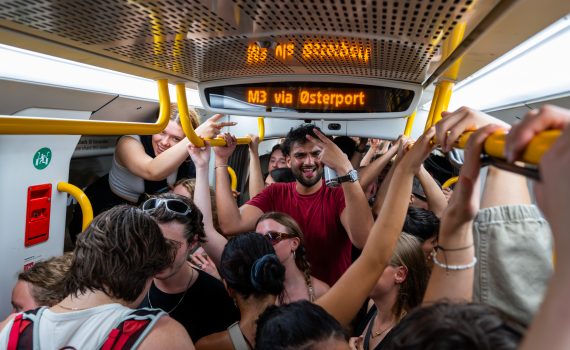
COPENHAGEN, Denmark – Hundreds of revelers danced to electronic music with beer in an hours-long metro party in Denmark’s capital of Copenhagen on Sept. 7. The rave took place in a running metro train circulating the Copenhagen City Circle Line from 8:30pm to 11pm, with people joining or leaving at any station. Four music artists played live techno music, with big speakers installed in each car. Some party-goers brought beer along with them on the train. Metro staff regulated the flow of passengers at the gates to prevent overcrowding. Augustinas, 20, from Lithuania, said he has a broad interest in different music genres and is a fan of Peachlyfe, one of the DJs at the event. “I just want to have a great time. I want to dance. I want to listen to some good stuff,” he said before entering the metro party. The metro party is one of the events of the 2025 Strøm Festival, an annual festival since 2006 that promotes electronic music to both Danes and international audiences. Around one-fifth of Nordic listeners chose “dance & electronic” as their favourite music genres, according to a 2020 study by YouGov, an international market research and data analytics firm. “We often present electronic music in unconventional settings: urban spaces, nature and other unexpected places where audiences do not typically expect to encounter electronic music,” said a spokesperson for the non-profit Strøm, which organizes the festival, in an email interview. Theo Pallesen, 21, a Danish local resident, found himself passing through one extra station due to the crowds. “I was at the right station and tried to squeeze off and suddenly the door shut and then I was stuck just right in the middle of the party, where people were jumping, sweating and drinking alcohol,” he said.