
The Young Reporter

From ‘brain rot’ to balance: Gen Z’s pursuit of meaningful content in fragmented media
- 2026-01-26
- Society
- The Young Reporter
- By: Yu Yan Pui、Edited by: CAO Jiawen、ALISHIBA MATLOOB
- 2026-01-26
Every day, Zhang Danying, 22, an undergraduate student from mainland China at Hong Kong Baptist University, turns her phone on to enjoy scrolling through clips and image-driven posts on social media from the moment she wakes up. She spends almost 12 hours a day watching netizens dancing to pop music, or trying out various challenges. Zhang aspires to seek learning advice and reach for lighthearted social snippets to feel relaxed. Instead, she grew anxious from social comparison with people, and came down to media addiction that disrupted her daily routines out of the cyberworld, with constant inner struggles. “It is hard not to watch social media for a day,” Zhang Danying said. “But after watching it, I feel uncomfortable all day.” Zhang is not alone. In mainland China as well as globally, it has become common for Gen Z to jokingly claim they are suffering from “brain rot”—a slang phrase that means poor cognitive skills and fading memory after hours of social media scrolling. As noted by the Oxford University Press in 2024, usage of the term “brain rot” surged by 230% from 2023 to 2024. According to a 2024 survey by Bazaarvoice in Statista, 34% of interviewees' responses that short-form videos, such as TikTok and Instagram reels, are more effective at spreading online than text-based posts. Based on Metricool Viral Trends Analysis, popular social media posts include catchy music, timely hashtags, evolving cultural conversations and collective online experiences, shaping as a market strategy. As noted by the China Trends 2024 by Groove Dynasty, it highlights Douyin phenomena of emerging social experiment-type challenges, one case is that participants stage humiliating acts in crowded elevators to capture bystander reactions. Other examples include the ‘APT. Dance’ that features hand gestures with upbeat music. Zhang Danying is caught up in the wave of …

From concert dreams to criminal threats: Hong Kong students trapped in cross-border scams
- 2026-01-22
- Society
- The Young Reporter
- By: CHEN Ziyu、ZHENG XinyiEdited by: YANG Haicen
- 2026-01-22
When K-pop boy group Seventeen announced it was holding two concerts in Hong Kong in September, devoted fan Tsai Oi-wai, 20, knew it was an opportunity she couldn’t miss. But by the time she was online, tickets were sold out. Tsai scrolled endlessly on Instagram until she came across a second-hand ticket reseller who seemed trustworthy. “I even checked his profile, which had photos of everyday life—scenery, food, and other pictures—so I didn’t suspect anything,” Tsai said. Tsai’s ideal seat was priced at HK$2,099 on the official website, and the seller asked for HK$2,599. “I think the price was still within a reasonable range, so I transferred the money to him without further hesitation,” she said. The entire conversation and transaction took place over WhatsApp. “The seller told me that all payments and refunds had to go through a third-party partner company, which required additional verification procedures,” she added. “The scammer then asked me to enter a verification code, and I did so,” said Tsai. “Ever since then, I’ve never heard from that person again, nor any updates about my ticket.” She was scammed out of HK$42,034. Tsai’s experience is far from unique. According to the Hong Kong Police, fraud cases have surged dramatically, rising from 15,553 cases in 2020 to 444,480 in 2024, representing an increase of nearly thirtyfold, with the upward trend continuing in the first half of 2025. Students are easy targets for scammers. As of September, university students have reported 1,711 scam cases with total losses of HK$180 million, according to the Hong Kong police’s Anti-Deception Coordination Centre. Phone scams accounted for HK$16 million in losses among local students, while mainland students suffered significantly higher losses at HK$87 million. “Students are an ideal target for scammers, as their limited life experience and lack of familiarity with …

Hong Kong’s last Eurasian otters spark a conservation race
- 2025-12-26
- Health & Environment
- The Young Reporter
- By: Lou ZhengzhengEdited by: LIU Yutong
- 2025-12-26
North of Lantau Island, waves crashed against coastal rocks. In February 2024, a team from Kadoorie Farm and Botanic Garden discovered a white, crumbly solid — the first Eurasian otter feces recorded there in half a century. Back at the lab, Aiko Leong Kwok-yi, a 30-year-old conservation staff at the Fauna Conservation Department under the KFBG, handled the sample for DNA testing, leaning in to sniff its scent. “Otter faeces do not smell foul, they smell salty like dried salted fish. When fresh, it smells like tea, jasmine tea, not stinky at all,” Leong said. The discovery on Lantau Island has ignited a fragile hope for Eurasian otters clinging to survival in the city. With only seven individuals remaining, primarily in the Mai Po and Inner Deep Bay Wetlands, the otters are at extremely high risk of extinction. In response, KFBG, the only local team dedicated to otter conservation, launched a two-and-a-half-year Eurasian otters research project on Dec. 1 this year. The project received HK$2.2 million funding from the Civil Engineering and Development Department. The study will deepen understanding of the distribution and status of otters, identify habitats and threats of it within Lantau Island, beginning with the collection of feces samples. Leong, who joined the team in 2020 and now leads the project, set her sights on animal research after reading about legendary conservationist Jane Goodall at the age of 11. “Jane Goodall’s story just hit me that there are people who can work with animals every day. I found my life’s purpose at that moment,” Leong said. “From that day on, I've been heading straight in this way, never turning any corners,” Leong added. The path has been physically demanding. During early fieldwork, she navigated slippery coastal rocks, once nearly falling into the sea. “I asked myself, why …
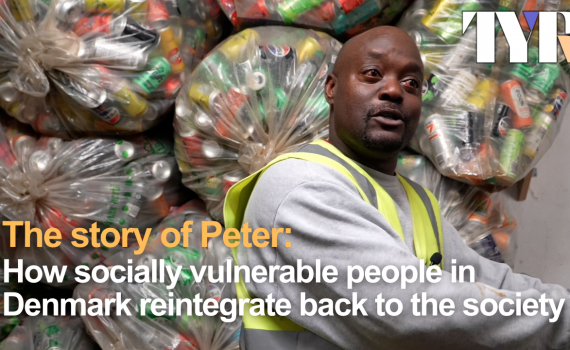
The story of Peter: How socially vulnerable people in Denmark reintegrate back into the society
- 2025-12-21
- Society
- The Young Reporter
- By: LEUNG Chi NgaiEdited by: SIU Tsz Hang
- 2025-12-21
Reported by Bono Leung Chi-ngai Edited by Henry Siu Tsz-hang Video description: Peter is one in around 17,000 people in Denmark receiving a Socialt Frikort, a card that is applicable for socially vulnerable people to obtain a certain amount of tax-free income. He is currently a driver for PantForPant, a working community under the NGO Foreningen Gade Liv that hires socially vulnerable people. Here he shares his reintegration process back into the society.

Mourners grieve at Taipei Main Station after deadly stabbings
- 2025-12-21
- Society
- The Young Reporter
- By: CHAN Wing Yiu、LAI Uen LingEdited by: Wing Chi HO
- 2025-12-21
Flowers, handwritten notes and candles for memorial are placed at Taipei Main Station, following a deadly attack on Friday night that left at least four people dead and 11 others injured. Police said the suspect, Chang Wen, 27, set off multiple smoke bombs inside the station before launching a knife attack. Police added that he later moved to the Zhongshan shopping district, a popular commercial area, where the assault continued. After the attacks, the suspect fell to his death from a department store building, Director-General of National Police Agency of Taiwan Chang Jung-hsin said at a press conference. Authorities said Chang had an outstanding warrant for evading military service and is believed to have committed the crime alone. While the motive remains unclear, investigators said the attacks appeared to be planned. In response to the incident, Taipei Mayor Chiang Wan-an announced on Saturday that the city government implemented various measures, including strengthening police deployment and increasing random inspections throughout the city. Around 2,000 police officers are assigned at metro stations and other key locations to enhance security measures across the city, according to the National Police Agency. Taiwan President Lai Ching-te pledged a full public inquiry and offered condolences to the victims and their families on his official page. According to his Facebook page, he visited hospitals on Saturday to meet survivors and express support.

Apple Daily founder Jimmy Lai found guilty in national security trial
- 2025-12-17
- Politics
- The Young Reporter
- By: Dake LiuEdited by: LAI Uen Ling
- 2025-12-17
Jimmy Lai Chee-ying, 78, the founder of pro-democracy newspaper Apple Daily, was found guilty on three charges of violating national security. Lai was convicted of two counts of "conspiracy to collude with foreign or external forces to endanger national security" under the National Security Law and one count of "conspiracy to publish seditious publications." He faces a maximum sentence of life imprisonment. Judge Esther Toh Lye-ping said in the judgment that Lai's evidence was “contradictory and inconsistent and he was evasive and unreliable in many instances" and dismissed some of his testimony. The court also said in concluding remarks that during the 2019 anti-extradition bill movement, Lai had “constant invitation to the US to help bring down the Government of the PRC with the excuse of helping the people of HK.” The trial, which spanned 156 days, is the first in Hong Kong to involve the charge of "conspiracy to collude with foreign forces.” Lai was arrested by Hong Kong's national security police in August 2020 and has remained in custody since December that year, a detention of nearly five years. Hong Kong’s officials and Beijing's official representative body the Liaison Office of the Central People's Government in Hong Kong have both issued statements welcoming the court's guilty verdict. Press freedom organisations around the world criticised the ruling. Reporters Without Borders wrote in a statement that it is a “shame trail” for Lai and “emblematic of a wider and devastating collapse of press freedom” in Hong Kong. The British Consulate General in Hong Kong and the European Union Office in Hong Kong also issued statements to show their concern regarding the verdict. The British Consulate General condemned “the politically motivated prosecution" on Monday evening and called for “immediate release” of Lai. Lai became a British citizen after obtaining a UK …

No more clubs and wine: the rise of morning rave in Australia
- 2025-12-16
- Society
- The Young Reporter
- By: CHAU Wing YauEdited by: KURNIAWAN Trista Vania、LAI Uen Ling
- 2025-12-16
Young Australians are leading a new trend all over social media, focusing on alcohol-free socialising and personal wellness. The trend is on the news everywhere in Australia. Data shows 76% of 1000 young Australians, aged 18-24, prefer to socialise without alcohol. Meanwhile, one in four Australians has reduced their alcohol consumption over the past year. Instead of bars and clubs, people in Brisbane, Sydney, and Melbourne are flocking to cafes and bakeries hosting 8 am morning raves to kick off the day feeling fresh and energised.

Gen Z disconnect from social media for “digital detox”
- 2025-12-13
- Health & Environment
- The Young Reporter
- By: Lan Xinbei、Fu RongEdited by: ALISHIBA MATLOOB、CAO Jiawen、AO Wei Ying Vinci
- 2025-12-13
Reported by Audrey Fu Rong, Betty Lan Xinbei Edited by Alishiba matloob Aloosh, Carmen Cao Jiawen, Vinci Ao Wei-ying Video Description : Research shows social media increases Gen Z’s anxiety. The idea of "digital detox" is emerging as a trend among Gen Zs to combat mental health damage due to comparisons of doomscrolling. Betty Lan, one of our TYR reporters, embarks on a 24-hour digital detox challenge. Staying away from electronic devices, she was not adapted without them before experiencing different activities with her friends.
Remnants of the City of Victoria: from colonial boundary stones to modern hiking landmarks
- 2025-12-11
- Culture & Leisure
- The Young Reporter
- By: CHEN Xiyun、FENG Zhenpeng、Li YinhengEdited by: YANG Haicen
- 2025-12-11
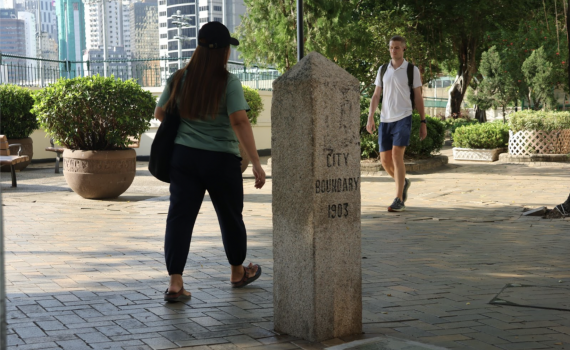
Along the shaded fitness path on Broadwood Road in Happy Valley, a weathered stone stands quietly by the trail. “City Boundary, 1903,” reads its surface, reminding pedestrians of the remnants of Hong Kong’s colonial past. “I'm not sure what they are, but they lie along my running route, so I always treat them as rest stops and jogging milestones,” said Solo Chan, 56, a hiking fan who walks along Broadwood Road daily. “Every time I meet a new one, I pause and search for the recreational spot recommended nearby, so that I can decide the next leg of my trip,” Chan added. “It has become a great pleasure of mine during the daily morning runs.” These stone monuments, now over a century old, were erected in 1903 by the British colonial government to delineate the limits of the early developed administrative area on the north shore of Hong Kong Island, called the City of Victoria, according to the Development Bureau. The stones are crafted from hard granite, with a square columnar body and a pointed pyramidal top. They were originally designed to be approximately 1.3 meters high, but current records indicate that some stones are between 98 centimetres and 1 metre in height. The boundary the stones mark is still legally defined in the Interpretation and General Clauses Ordinance, and include what Chinese residents commonly refer to as the “Four Circuits and Nine Yeuks,” the colonial-era predecessor of today’s Central and Western District and Wan Chai District, according to official records from the Lands Department. Although the city’s boundaries have since expanded and no longer carry significance in city planning, they offer tangible links to the history of Hong Kong’s urban development, the Development Bureau added. Now, they have become landmarks for hikers to check in. “People look for boundary …

“I’m raising the child I once was”: why young Chinese find healing in personified pet parks
- 2025-12-11
- Society
- The Young Reporter
- By: Li ZhongyiEdited by: YANG Haicen
- 2025-12-11
Outside a small pet barbershop, a brown poodle stood on a grooming table while a groomer trimmed its coat. On the fresh grassland a short distance away, a Border Collie ran through a line of training obstacles, landing steadily after each jump. Nearby, a Teddy dog sat in a stroller, waiting for its afternoon snack as its owner stood beside it. This scenario was taking place in reality in a pet entertainment park named LOHAS located at the top floor of China plaza in China Guangzhou’s Yuexiu district. Opened at the end of 2025, the park is the first-of-its-kind in Guangzhou, pet-themed entertainment zone that comes with a hotel, club, barbershop, grocery store, coffee shop and even a “marriage corner” for pets. Hegla Li, 26, and her one-year-old Border Collie, Doubao, are one of the first customers at LOHAS. “I am always afraid my little one might get lonely and depressed at home, so I took him to the pet entertainment park, basically to help him make more furry friends,” she said. Li, single and unmarried, has no plan for having a child and recently put on hold her plans of furthering her studies of medicine and travelling around the world, all for her furry friends. “To me, my dog is the emotional anchor that brings me comfort. Doubao gives happiness, energy and vitality and I would like to give him my company, money and anything that I think is interesting and worthy to him in return,” She said. There are many young Chinese like Li who would much rather devote their energy and resources on pets rather than building a family. Since 2020, the birth rates of China have been continuously declining and dropped to an all-time low of 6.39% in 2023, according to the National Bureau of Statistics …