
Housing
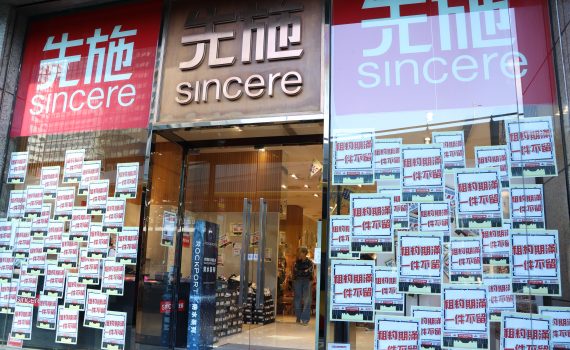
126-year-old Sincere to close Central store after lease renewal fails
- 2026-10-08
- Society
- By: SHI Puxuan Amy、MA Yifan ChloeEdited by: Fu Rong
- 2026-10-08
Hong Kong’s first Chinese-owned department store, Sincere, will close its Central store in early December after nearly 126 years of business, as it failed to renew its lease. The company is searching for new premises in Sheung Wan or Central for a new store, yet no suitable location has been found by Oct. 4, according to an official announcement by Sincere. Only a four-storey store in Mong Kok and an online store will be left in Hong Kong after the Central store closure. Lily Chan, 74, a customer who lives in Hong Kong Island, lamented the closure of Sincere’s Central store since it had been her top shopping destination for more than 50 years. “I started shopping in Sincere when I was only 20 years old,” she said. “Back then, few Hong Kong department stores like Sincere carried such a wide range of European brands, covering apparel, kitchenware, and furniture.” “I am unsure where I can go shopping after the store shuts down. The Mong Kok one is far from my home,” Chan added. Anny Lau, 42, said her family spanning from her parents down to her children had shopped here. “It carries memories for several generations since it is more than a century old,” she added. Ahead of the closure, the Central store is selling its remaining stock at discounted prices. A cleaner who has worked at the store for a year said customer numbers had been generally low, and only surged these days amid the sale. She declined to be named for fear of repercussions from the company. Sincere’s consolidated revenue dropped from around HK$146 million in 2023 to roughly HK$134 million in 2025, according to Sincere’s annual report. Heidi Cheung, 25, said she seldom shops at traditional department stores such as Sincere, as online shopping is more …
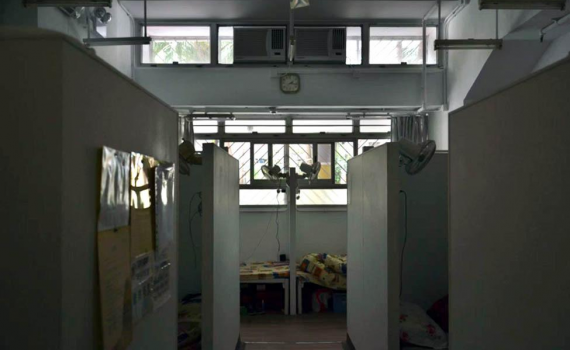
Shelters and government housing for street sleepers don’t meet needs, experts say
- 2026-03-04
- Society
- The Young Reporter
- By: LI Jinyang Carlos、ZHANG Jiahe RoysEdited by: CHEN Ziyu
- 2026-03-04
At night, Wong Hiu-fan, a 46-year-old former street sleeper, returns to her temporary home at the Jockey Club Hostel in Lok Fu, a single bed in a dormitory room she shares with other women. She stores her personal belongings in a small locker she has a key for. For her, it is a warm harbour and a place to restart her life after a period she described as “full of worries". Wong became a street sleeper six months ago -- after losing her job at a temple -- which she had relied on for income, meals and accommodation. After sleeping on the street for a while, Wong moved into the temporary shelter in Lok Fu. According to the Labour and Welfare Bureau, Wong was one of around 750 street sleepers in Hong Kong last year. To get off the street, many look for places in temporary shelters funded by the Social Welfare Department or NGO-funded hostels like this one in Lok Fu. Those who are eligible and lucky can move into government transitional housing units. The Lok Fu hostel where Wong lives in is a shelter managed by the NGO Neighbourhood Advice-Action Council that provides six-month accommodation, including 16 beds for men and 26 for women for street sleepers and needy persons with a monthly rent of HK$2,000. Residents facing significant financial difficulties can apply for rent reduction. It is now fully occupied. Law Sze-ha, 35, a hostel supervisor of Lok Fu, said the hostel does not have enough beds to meet demand. While many residents wish to stay longer than the maximum six months allowed, the hostel must accommodate new applicants waiting for a spot. “A stable place to live is the foundation for starting a new life. We offer guidance and information to our residents for applying to …
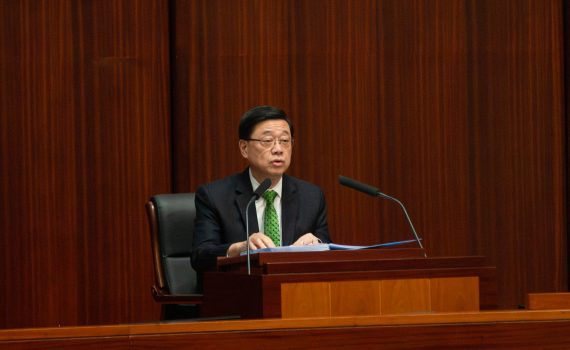
Policy Address 2025: Hong Kong lowers house-purchasing money threshold to facilitate cross-border buyers
- 2025-09-17
- The Young Reporter
- By: Ye Enyi、Lan XinbeiEdited by: MAO Anqi
- 2025-09-17
Non-locals hoping to obtain Hong Kong residence through investment will be able to purchase residential property for a minimum of HK$30 million rather than the current HK$50 million, said Chief Executive John Lee Ka-chiu in Wednesday’s policy address. But the amount of the property purchase allowed to be counted towards the visa scheme eligibility of HK$30 million in investments will remain HK$10 million. This is under the New Capital Investment Entrant Scheme, which was launched on Mar. 1 last year, to help investors settle down in the city without the need to establish or join a business. As of February this year, the scheme has received 918 applications and expects to inject over HK$270 billion into the local market, according to the government’s press release in March. But among the approved applications, no applicant has made an investment in residential real estate. They all choose to invest in non-residential approved assets to meet the eligibility requirements. Wu Cheuk-him, district councillor of Tai Po, said the government’s move is positive. “I am confident that lowering the investment threshold for property purchases will draw more people to buy homes in Hong Kong, and as a result, to stimulate the local property market,” he added. Mainland residents face a stringent cap on foreign exchange conversion of US$50,000 (HK$389,000) a year, which means they cannot buy property that costs more than this with direct remittance. Viola, 26, from the mainland and working in a Hong Kong local school, said she purchased a residential property in Hong Kong at the end of 2023. She does not want to reveal her full name as she had to get creative, which may not be legal, with how she moved her money from a mainland bank into Hong Kong for the transaction. “I am constrained by the rule …
Legal and financial liabilities burdened Stakeholders as Hong Kong subdivided units policy revised
- 2024-11-30
- Business
- By: BO Chuxuan、ZHAO RuntongEdited by: ZHAO Runtong、BO Chuxuan
- 2024-11-30
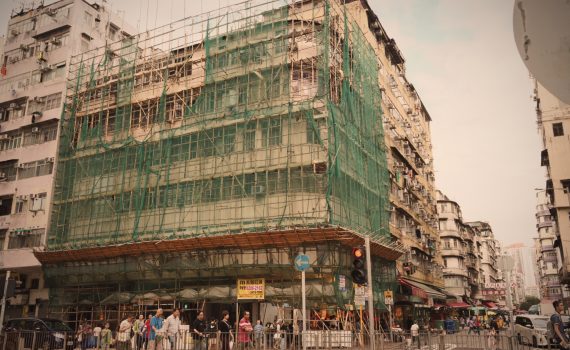
“I don’t want to recall the depressed time when I lived in that cramped room and faced a narrow ceiling when getting up, doubting the meaning of my existence,” said Mou On-kei, 20, a university student who just moved out from her previous resident, a subdivided unit (SDU) in Yee Kuk Street, Sham Shui Po, an overcrowded neighbourhood in Hong Kong. In a room measuring less than 80 square feet, Mou paid HK$4,800 monthly for the previous SDU, where geckos, cockroaches, and rats appeared every month due to the squalid housing conditions, causing her severe acne problems. Among the other 220,000 residents of subdivided units in Hong Kong, like Mou, 41.6% have rodent problems, and 69.7% have cockroach problems. John Lee Ka-chiu, Hong Kong’s chief executive, proposed legislation in his policy speech in October to improve living conditions by phasing out subdivided houses smaller than 86 sq ft and converting them to basic housing units (BHU), up-to-standard units that have individual toilets and windows. There are 110,000 SDU households, of which approximately 30% (33,300 units) are required to be upgraded into basic housing units. “The lack of uniform standards for SDUs has led to greatly varying living conditions of different SDUs,” said Chen Lihong, a district council member in Sham Shui Po. Lee’s announcement aims to improve the SDUs’ environment, minimise potential safety hazards, safeguard tenants’ rights and interests, and enhance the sense of belonging of SDU tenants, Chen added. Lee’s announcement is align with Beijing’s hope of eradicate infamous SDUs and cage homes, as Xia Baolong, the top official on Hong Kong affairs said to solve this “deep-rooted problem” by 2049. Echoing the central instruction, Lee established a task force to tackle the SDU in the 2023 policy address, and set a series of minimum living standards as well …

How Green Roofs Can Encourage a Green City Revolution
- 2024-05-12
- Society
- The Young Reporter
- By: KURNIAWAN Trista Vania、AO Wei Ying VinciEdited by: Elif Lale AYHAN、Yee Ling TSANG
- 2024-05-12
As Brisbane aims to become a greener city, the trend of green roofs is gaining momentum. While green roofs offer benefits, they also present challenges that cities must address before implementing new policies. Green roofs are also just one piece of the puzzle. Rather than relying on green roofs as one solution, cities like Hong Kong should view them as catalysts for inspiring more initiatives that pave the way towards a greener future.

A glimpse inside Hong Kong’s iconic Choi Hung Estate amidst redevelopment talks
- 2023-12-12
- Society
- By: James Ezekiel Kalaw MODESTOEdited by: Ho Yi CHEUNG
- 2023-12-12
Choi Hung Estate, one of Hong Kong's iconic urban photography spots, is set to undergo phased redevelopment, according to local media. With its construction dating back to the early 60s, Choi Hung Estate stands as one of Hong Kong's largest and earliest public housing estates, situated in the Wong Tai Sin District. The housing complex spans over 5.1 hectares and consists of 11 blocks comprising 7,400 flats that provide homes for more than 17,000 residents. In the past, Choi Hung Estate was visited by members of the Royal Family, including Princess Margaret in 1966 and foreign dignitaries, such as US’s Richard Nixon in 1964 before his assumption as the nation’s leader in 1969. The estate, managed by the city's Housing Authority, attracts both locals and tourists due to its rainbow-coloured buildings. Most notably, the basketball courts within the estate serve as popular backdrops for photos, with their vibrant walls complementing the snapshots taken there. Beyond its colourful exterior walls and “social media-worthy” appeal, Choi Hung Estate buzzes with everyday scenes of people engaged in their daily routines, as well as the vibrant presence of shops and other amenities, mirroring the essence of any residential community.

Midland Realty and subsidiaries face commission manipulation allegations
- 2023-11-17
- Society
- By: Xiya RUI、Hanzhi YANGEdited by: Ming Min AW YONG、Noah Tsang
- 2023-11-17
The Competition Commission filed a lawsuit yesterday accusing Midland Realty. Holdings and its two subsidiaries over alleged sales commission fixing. The Competition Commission alleges that Midland Holdings and its subsidiaries instructed agents to charge a minimum net commission rate of 2 percent for first-hand residential properties, starting from December 2022. Some members of the public have given their support to further address unethical practices in the real estate industry. "I am very grateful to the Competition Commission for strictly supervising this matter," said Hurry Lee, 42 years old, a buyer who bought a home at Midland Realty in February. "The price-fixing in the real estate industry is deeply concerning," Lee said, "It means that homebuyers like me may have been paying inflated prices due to collusion. I paid nearly HK$200,000 in agency fees, but that could potentially be lower if there is fair competition." According to the data from The Land Registry, since the alleged commission manipulation artificially increased the rate to 2% in December 2022, the number of sale and purchase agreements of building units for that month hit its lowest point of the year at 3,565. Furthermore, last month witnessed a decline of 33.9% compared to October last year. "I also wish for lower agency fees, because it would make it easier for us to attract potential buyers when selling properties," said Galong Wong, a staff member at Midland Real Estate Agency. "Our salary is composed of a base salary and commissions earned for each transaction completed. While the entire real estate industry has collectively increased the commission rates to 2%, allowing the company to earn more money, our individual commission for selling a property has not seen a corresponding increase," Wong said. According to the investigation by the Hong Kong's Competition Commission, Midland had conspired with Centaline …

Xia has to stand close to the only window and air conditioner at the end of the aisle to get a little bit of fresh air.
- 2023-07-29
- Photo Essay
- By: Yuqi CHU、Juncong SHUAIEdited by: Chengqi MO
- 2023-07-29

2023-24 Budget: Government lowers decade-old ad valorem stamp duty for ordinary first-home buyers
- 2023-02-23
- Society
- By: Yuhe WANGEdited by: Bella Ding、Jiaxing Li、Rex Cheuk
- 2023-02-23
The Hong Kong government announced the adjustment in the value band of ad valorem stamp duty to relieve the burden on ordinary families to purchase residential houses. Under the updated tax band, the threshold for the HK$100 stamp duty will increase from HK$2 million to HK$3 million while the stamp duty for houses worth between HK$6.6 million and HK$9 million will decrease from 3.75% to 3%. Only first-time ordinary buyers could be benefited. “It is anticipated that this measure will benefit 37,000 buyers,” said Paul Chan Mo-po, the Financial Secretary of Hong Kong. Chong Tai-leung, an economics professor at the Chinese University of Hong Kong, said that the new policy would improve the environment of the property market in 2023. The government announced the detainment of 12 residential sites for the 2023/24 land sale programme, providing more purchasing opportunities. However, Chong said the hundred-dollar stamp duty is only for units under HK$3 million, while the stamp duty rate for flats over HK$10 million remains unchanged. “The policy may only stimulate the property market under HK$3 million, which are usually the nano flats and remote village houses,” said Chong. Starter Homes Pilot Scheme for Hong Kong Residents, included in the 2020-2021 Budget, intends to relieve the house-purchasing burden of ordinary families, mainly by providing low-price flats. Kenneth Chiu Hung-wan, the regional sales director of Centaline Property Agency Limited said the demand for starter homes will show gradual growth this year under the adjusted stamp duty policy. Chiu expects the local property market will rebound by 5% to 10% this year after the city’s finance Chief announced a 15% decline in flat prices last year. The current demand-side management measures for residential properties, curbing external demand and reducing investment demand, remain unchanged. The Hong Kong Authorities announced the full border reopening starting …

Housing pressure forces Hongkongers to leave
- 2022-11-01
- Society
- The Young Reporter
- By: Mei Ching LEEEdited by: YANG Zhenfei
- 2022-11-01
Wong Chun-yip moved to London from Hong Kong with his wife in 2019. They have just bought a house in the city. In Hong Kong, where housing prices are among the highest in the world, owning an apartment was something the 37-year-old could hardly imagine. "I am a freelance writer with a very unstable income. It was too much of a struggle to rent a flat and support my family on a basic salary of $37.5 per hour in Hong Kong. The high property prices gave me no hope," Wong said. Hong Kong ranked the least affordable housing market for the 12th consecutive year in 2022. Hongkongers can expect to work up to 23 years before they can buy their first home, according to Demographia’s International Housing Affordability report. High housing prices were one of the reasons that drove Wong to leave. He said it was a difficult decision because his family and friends are in Hong Kong, but he had no better option. Data from the Hong Kong General Chamber of Commerce showed that 27% of Hong Kong people moved to foreign cities for a better quality of life in 2005. “It is much easier to buy an apartment in the UK than in Hong Kong,” Wong said. According to the latest data from Numbeo, a global statistical database, it is twice as expensive to buy an apartment in Hong Kong as it is in London. The cost per square metre of an apartment in central Hong Kong is HK$249,000, compared to an average of HK$115,000 in London. However, the average monthly net salary (after tax) was HK$23,637.69 in Hong Kong, while HK$26,333.14 in the UK. Wong also said that many of his friends in Hong Kong thought about leaving because of political issues and to seek a better …