
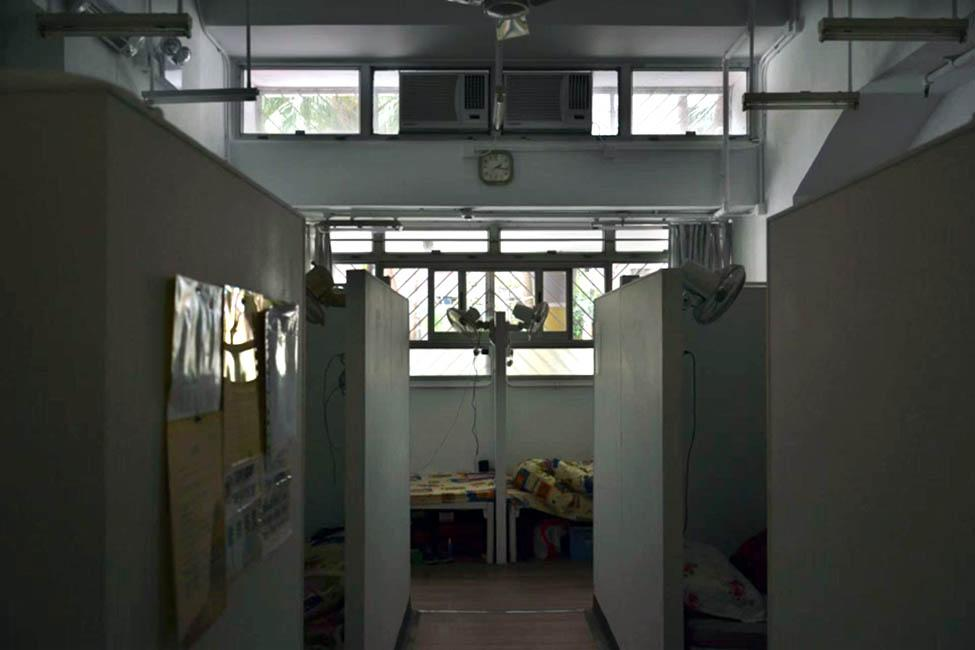
At night, Wong Hiu-fan, a 46-year-old former street sleeper, returns to her temporary home at the Jockey Club Hostel in Lok Fu, a single bed in a dormitory room she shares with other women. She stores her personal belongings in a small locker she has a key for. For her, it is a warm harbour and a place to restart her life after a period she described as “full of worries".
Wong became a street sleeper six months ago -- after losing her job at a temple -- which she had relied on for income, meals and accommodation. After sleeping on the street for a while, Wong moved into the temporary shelter in Lok Fu.
According to the Labour and Welfare Bureau, Wong was one of around 750 street sleepers in Hong Kong last year. To get off the street, many look for places in temporary shelters funded by the Social Welfare Department or NGO-funded hostels like this one in Lok Fu. Those who are eligible and lucky can move into government transitional housing units.
The Lok Fu hostel where Wong lives in is a shelter managed by the NGO Neighbourhood Advice-Action Council that provides six-month accommodation, including 16 beds for men and 26 for women for street sleepers and needy persons with a monthly rent of HK$2,000. Residents facing significant financial difficulties can apply for rent reduction. It is now fully occupied.
Law Sze-ha, 35, a hostel supervisor of Lok Fu, said the hostel does not have enough beds to meet demand. While many residents wish to stay longer than the maximum six months allowed, the hostel must accommodate new applicants waiting for a spot.
“A stable place to live is the foundation for starting a new life. We offer guidance and information to our residents for applying to transitional housing, and we also introduce suitable housing resources if a resident wishes to rent a private flat,” Law said.

But strict eligibility requirements and a cumbersome application process have left many street sleepers unable to benefit from the government’s transitional housing.
According to press releases from the Housing Bureau, transitional housing provides interim support to public rental housing applicants until the public rental housing units become available.
By the end of December 2025, the Housing Bureau states that roughly 18,400 transitional housing units were available for application. But an expert said they were nearly full.
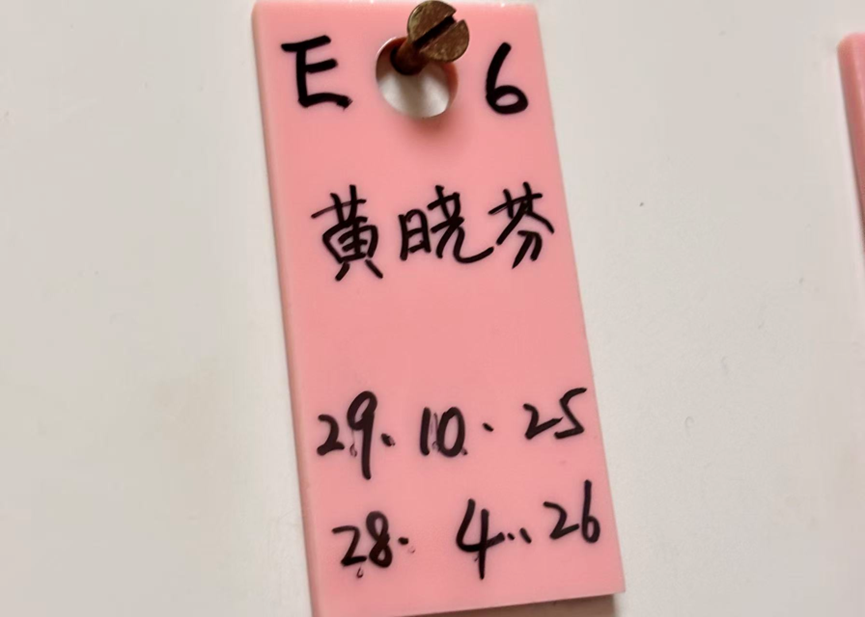
Wong said the transitional housing policy is not well known among street sleepers.
“Some people are unable to read and do not pay attention to the news. As a result, they often hold outdated perspectives and are unaware of both the policies and the relevant application requirements.”
Wong added the application process for transitional housing also impose significant challenges for homeless people.
“The process sometimes confuses me. It may be even more difficult for those with lower education levels,” she said.
“People cannot apply for a transitional housing unit if they are not eligible for public housing. It does little to address the real needs of street sleepers. It’s just an additional option for them,” said Chan Siu-ming, assistant professor at the City University of Hong Kong who researches poverty and housing. He added that over 60% of homeless people have not applied for public housing units.
Wong recently found a cleaning job and a part-time delivery job at another temple. She said her income may make her ineligible to apply for public housing.
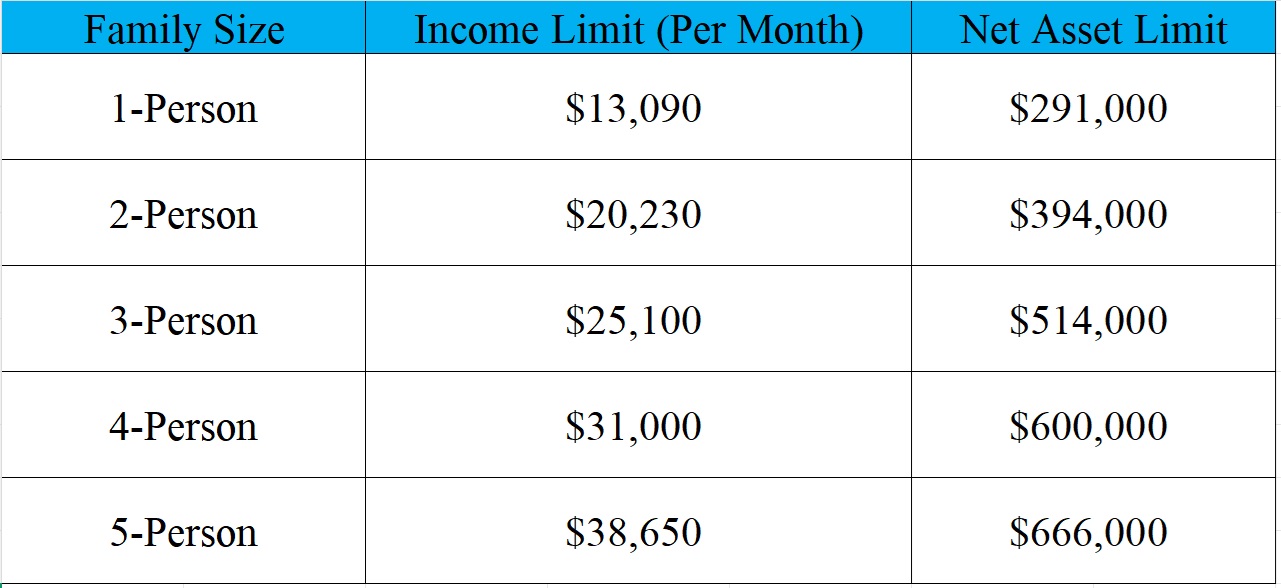
Lo Yut-fung, 49, another Lok Fu hostel resident who used to be a street sleeper, could not apply for a transitional housing unit because he was also considered ineligible.
“Since I previously gave up my public rental housing qualification due to family conflicts, I’m not eligible to reapply yet. For now, I can only stay in temporary shelters,” Lo said.
Lo said he will try to apply for another temporary hostel when he reaches the maximum stay allowed. If his application is rejected, he may have no choice but to sleep on the streets again.
According to Chan’s 2021 Summary Reports of Hong Kong Street Sleepers Census, 19.9% street sleepers worked as waiters or food delivery workers, while 16.1% of them were cleaners.
“Location is also a key consideration that affects one’s decision to move to transitional housing,” Chan said.
“Most of the transitional housing projects are located in the New Territories. They are too far from usual workplaces,” said Wong.
Street sleepers who move to the New Territories have fewer job opportunities, according to the Qualitative Research Report of Transitional Housing Implementation by the Hong Kong Society for Community Organization.
According to government estimates, its new Basic Housing Units Ordinance which was to require subdivided units to meet minimum standards is expected to affect at least 30,000 units in Hong Kong.
He expressed worries for the policy increasing the number of street sleepers as landlords renovate or shut down their subdivided properties. "They may end up sleeping on the streets," he said.
“So where can they live? No one can say clearly,” Chan said.
《The Young Reporter》
The Young Reporter (TYR) started as a newspaper in 1969. Today, it is published across multiple media platforms and updated constantly to bring the latest news and analyses to its readers.

Budget 2026: Hong Kong to expand bond issuance for infrastructure projects
Space Museum cancels lunar eclipse viewing due to bad weather


Comments