
News

Super Typhoon Ragasa: Travellers stuck in airport after flight suspension
- 2025-09-24
- Society
- The Young Reporter
- By: AO Wei Ying Vinci、AU YEUNG JimEdited by: LI Sin Tung
- 2025-09-24
Hundreds of travellers remained stranded at Hong Kong International Airport from 6pm on Tuesday due to flight cancellations, after the Observatory issued the T8 warning signal for the approaching Super Typhoon Ragasa. All flights scheduled to depart after 6pm on Tuesday have been cancelled, as well as most flights scheduled to fly out after 5pm. Air France flight AF8404 to Amsterdam, originally scheduled to depart from Hong Kong at 10:45pm, was moved forward to board passengers at 4pm. Travellers are stuck at the airport as they await updates from their airlines, while take-offs and landings remain suspended until resumption from Thursday 6am, according to the Airport Authority. Jonas Humann, a traveller from Germany whose flight was originally scheduled for Tuesday evening, said he was confused about where to get information regarding the typhoon. Humann said he will be sleeping on a bench for the night, at the airport, as he could not find a staff member who could offer him help. “Qatar Airways isn’t paying for a hotel, and there are no meal vouchers or anything either, the hotels nearby are very pricey,” said Humann. Upon enquiries, the Qatar Airways customer service hotline said they are not responsible for handling any arrangements online, while there were no staff present at the Qatar help desk in Hong Kong International Airport on Tuesday at 7pm. A couple from Papua New Guinea, Vanessa and Ronald, said they are satisfied with the clear instructions given by the Hong Kong government. “We do appreciate the timely announcements that they have been given, and it's good to see that they're not trying to just create a mass panic,” said Vanessa. The customer service counter of the airport distributed small pillows to stranded travellers, and restaurants will operate normally throughout the 36 hours of flight suspension. Flight …
Typhoon Ragasa: Preparation of supplies before storm approaches
- 2025-09-23
- Society
- The Young Reporter
- By: AO Wei Ying Vinci、MA Tsz Chiu OscarEdited by: NG Natasha Goa Sheng
- 2025-09-23
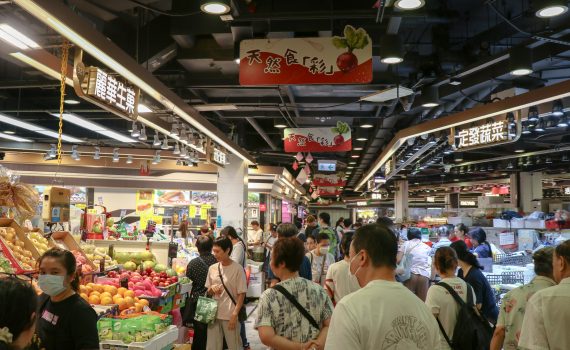
Residents in Hong Kong rushed to markets to purchase food and supplies on Monday and Tuesday, before the arrival of Super Typhoon Ragasa. The Hong Kong Observatory issued the T8 signal at 2:20pm on Tuesday, after a pre-T8 announcement on Monday when the T1 and T3 signals were hoisted. Markets were packed with people wanting to stock up food and supplies in advance before stores close. Products including bread, vegetables and fresh meat ran out of stock in many stores. As of 8:45pm on Tuesday, the Observatory estimated that Ragasa will be closest to Hong Kong on Wednesday morning. Higher signals will be considered for issuance from 11pm on Tuesday to 3am the following day. Our reporters visited markets and supermarkets in Kowloon, Sha Tin and Tai Po to capture how locals prepare for the storm.
What Sparked Indonesia’s Violent Protests and What It Means for Democracy
- 2025-09-19
- Society
- The Young Reporter
- By: KURNIAWAN Trista VaniaEdited by: LAI Uen Ling
- 2025-09-19
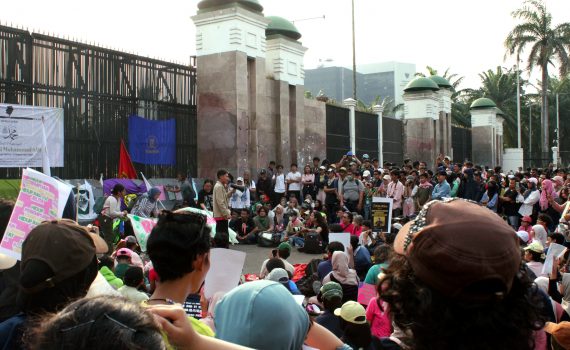
Thousands of protesters swarmed the streets of Jakarta on Aug. 25, outraged by Parliament’s approval of a new monthly housing allowance that is ten times the minimum monthly wage in Indonesia. Within a week, what began as questions over economic imbalances turned into violent protests in 20 major cities against police brutality, demands for the protection of vulnerable communities, and worries about the future of Indonesia’s democracy. From Aug. 25 to 31, the Indonesian Legal Aid Foundation reported more than 3,000 people were arrested and 10 were killed. Despite a government response, people are still unsatisfied and fighting for democracy. The Underlying Cause Tito Ambyo, an Indonesian journalist and journalism lecturer at the Royal Melbourne Institute of Technology, said the political and economic frustrations have been growing since people expected reformation after the violent protests in 1998. In May 1998, a riot broke out due to economic inequality, corruption, and the authoritarian rule of President Suharto. It escalated to the targeting and attacks of Chinese Indonesians and the destruction of public property. “After the 1998 riots and our president stepped down, we won. But the next leaders were disappointment after disappointment,” he said. In 2012, former President Susilo Bambang Yudhoyono’s cabinet faced corruption allegations, with his ministers, including the Chairman of the House of Representatives, indicted by the Corruption Eradication Commission. Ex-President Joko Widodo’s government passed a job creation law aimed at easing work regulations and encouraging investment in 2020. However, it sparked public protests because the bill was seen as weakening workers’ rights and opportunities. He described the Indonesian elites in the government as “careless” and “callous” with their actions. Protesters took to the streets on Aug. 25 after the House of Representatives announced the members of parliament would receive a monthly housing allowance of 50 million rupiah (HK$23,676). …
Policy Address 2025: Government provides sufficient focus on the needs of subdivided communities amid continued poverty concerns
- 2025-09-19
- Society
- The Young Reporter
- By: Chun Hei LUK、Wing Chi HOEdited by: CHAN Wing Yiu
- 2025-09-19
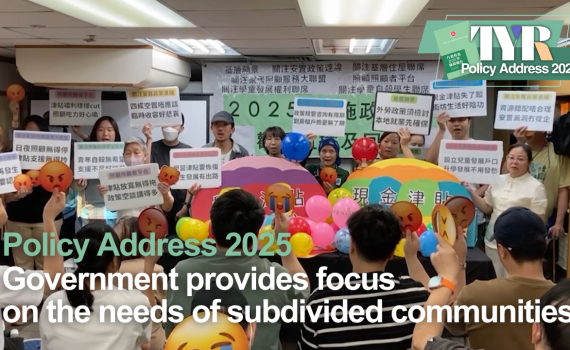
As the Chief Executive prepares to unveil the 2025 Policy Address, poverty reduction is in the spotlight, especially regarding Hong Kong’s subdivided flats. Concern for Grassroots' Livelihood Alliance emphasizes that the government has given little attention to the specific needs and wants of subdivided flat users. Our reporter Gigi Ho explores how proposed initiatives aim to support vulnerable communities. This address could be crucial in the fight against poverty, emphasizing the urgent need for effective policies to uplift marginalized citizens and improve their quality of life. (Sept 17, 2025) Reported By: Gigi Ho Wing-chi, Anson Luk Chun-hei Edited By: Yoyo Chan Wing-yiu
Key Highlights from Policy Address 2025
- 2025-09-17
- Politics
- The Young Reporter
- By: LI Sin Tung、ZHENG XinyiEdited by: CHEN Yik Nam
- 2025-09-17
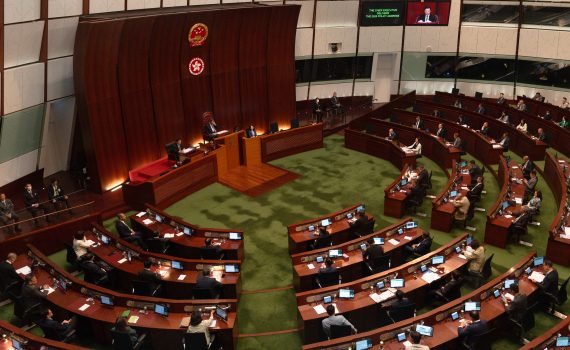
Chief Executive John Lee Ka-chiu delivered his fourth Policy Address on Wednesday morning, pledging to deepen reform and prioritise public livelihood. The following are the key takeaways. New action plan for the low-altitude economy More legislation to promote the low-altitude economy, mostly about drone activities. Including the improvement of civil aviation legislation and regulatory framework, promotion of infrastructure facilities, organisation of more talent training, enhancement of the application system and development of low-altitude economy insurance products Potential activities in airspace under 1,000 metres include drone rescues, surveys and deliveries Satellite positioning, three-dimensional spatial data systems and a smart traffic-management system for low-altitude passenger aircraft will be established Patriotic Education Collaboration with Shenzhen to promote a red education route and patriotic education venues in the mainland A series of activities called "Love Our Home, Treasure Our Country" by the Education Bureau will be organised and the Constitution and Basic Law Student Ambassadors Training Scheme will be strengthened Arts and Culture A premium arts trading hub will be built An arts ecosystem in the Airport City with studios, galleries, and trading facilities will be established Large-scale art storage and arts plaza buildings will be constructed to attract galleries and family offices West Kowloon Quay will be opened and a cultural district academy will be set up The Hong Kong Fashion Fest will be launched, and the government will further support the local cultural and creative industries Education Cap on self-financing non-local students' enrolment will be increased from 40% of available spots to 50% The over-enrolment ceiling of self-financing places of funded research postgraduate programs will be increased from 100% to 120% Task Force on Study in Hong Kong to be established to step up promotion of higher education in Hong Kong Eight supported universities will be given HK$40 million to improve their …
Policy Address 2025: Hong Kong lowers house-purchasing money threshold to facilitate cross-border buyers
- 2025-09-17
- The Young Reporter
- By: Ye Enyi、Lan XinbeiEdited by: MAO Anqi
- 2025-09-17
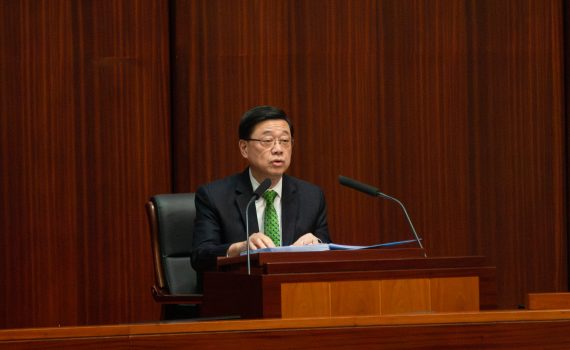
Non-locals hoping to obtain Hong Kong residence through investment will be able to purchase residential property for a minimum of HK$30 million rather than the current HK$50 million, said Chief Executive John Lee Ka-chiu in Wednesday’s policy address. But the amount of the property purchase allowed to be counted towards the visa scheme eligibility of HK$30 million in investments will remain HK$10 million. This is under the New Capital Investment Entrant Scheme, which was launched on Mar. 1 last year, to help investors settle down in the city without the need to establish or join a business. As of February this year, the scheme has received 918 applications and expects to inject over HK$270 billion into the local market, according to the government’s press release in March. But among the approved applications, no applicant has made an investment in residential real estate. They all choose to invest in non-residential approved assets to meet the eligibility requirements. Wu Cheuk-him, district councillor of Tai Po, said the government’s move is positive. “I am confident that lowering the investment threshold for property purchases will draw more people to buy homes in Hong Kong, and as a result, to stimulate the local property market,” he added. Mainland residents face a stringent cap on foreign exchange conversion of US$50,000 (HK$389,000) a year, which means they cannot buy property that costs more than this with direct remittance. Viola, 26, from the mainland and working in a Hong Kong local school, said she purchased a residential property in Hong Kong at the end of 2023. She does not want to reveal her full name as she had to get creative, which may not be legal, with how she moved her money from a mainland bank into Hong Kong for the transaction. “I am constrained by the rule …
Policy Address 2025: More patriotic education on the 80th anniversary of Chinese WWII victory
- 2025-09-17
- By: CHENG Tsz Sen SeanEdited by: MA Tsz Chiu Oscar、AO Wei Ying Vinci
- 2025-09-17
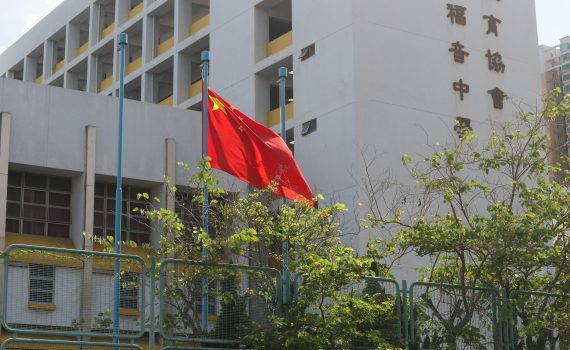
Chief Executive John Lee Ka-chiu said the government is widening the scope of patriotic education provision to cover the Hong Kong public with Communist-themed tourist sites. This year marks the 80th anniversary of the end of the Second World War. Collaborating with the Shenzhen government, Hong Kong will roll out new tourist attractions highlighting the Chinese role during the Japanese invasion of British colonial Hong Kong. According to the 2025 Policy Address, the government is launching new tourist attractions to strengthen patriotism. Dubbed as “Chinese Cultural Celebrity Rescue”, a series of historic spots in Hong Kong and Shenzhen would be listed in the new red educational route. The route stems from the four-year history of the Hong Kong Independent Battalion of the Dongjiang Column’s rescue mission during the Japanese occupation. Meanwhile, Lee called on Hong Kong students and young people to visit more mainland Communist-themed tourist sites, making the sites “patriotic education bases of Hong Kong”. Wu Siu-wai, vice-chairman of Hong Kong Federation of Education Workers, told TYR in an email interview that the new red education route can allow the public to learn more about Hong Kong’s contribution to the establishment of the People’s Republic of China. Citing the existing poor outcome of patriotic education and Hong Kong youngsters’ distorted understanding of China, Wu cautioned ill-prepared patriotic education visits to the mainland might worsen the situation. Hans Yeung Wing-yu, a former manager at the Hong Kong Examinations and Assessment Authority and education policy commentator, mocked the government for not building more of its own patriotic sites. “By making the mainland’s facilities the patriotic bases of Hong Kong, does it mean Hong Kong has no ability to create its own patriotic education base?” Yeung said. Following a series of large-scale commemorative activities, including exhibitions, film screenings and library events, Hong …
Policy Address 2025: Pundits criticised industry mismatch despite the city’s Top Talent Scheme has contributed HK$34 billion to local economy
- 2025-09-17
- Society
- The Young Reporter
- By: FENG Zhenpeng、Li YinhengEdited by: LIU Yutong
- 2025-09-17
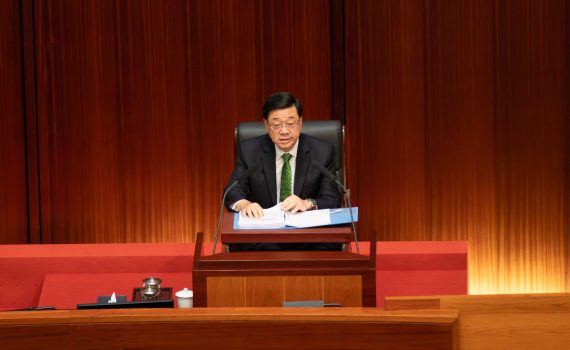
Chief executive John Lee Ka-chiu defended the controversial top talent scheme in his latest policy address but observers urged the government to address the talent mismatch by bringing in more high-tech elites. The Top Talent Pass Scheme generated around HK$34 billion a year for the local economy, accounting for approximately 1.2% of economic growth, said Chief Executive John Lee Ka-chiu, in the policy address on Wednesday. This is the first time the Hong Kong government has quantified the scheme’s economic contribution to the city in light of mounting criticism against the scheme being abused. Former chief executive Leung Chun-ying criticised last month that most applicants did not settle in Hong Kong, but returned to the mainland with their families after obtaining Hong Kong identity cards. When delivering the 2025 Policy Address, Lee said Hong Kong attracted over 230, 000 talents to work and live in the city under a number of new talent talent admission policies, including the TTPS. About 14,000 of TTPS applicants, or 54%, had their visas renewed. “Of them, 95% receive a monthly income higher than the local median income of about $20,000, and 50% earn a monthly income nearly double that amount. This reflects a strong demand for TTPS talents and the market's willingness to offer higher salaries to attract them,” Lee said most of the admitted talents to Hong Kong are relatively young, with 70% being under 40 years old, which helps to address the challenge of the aging population. However, observers did not see a picture-perfect reality. Lawmaker Wendy Hong Wen said Hong Kong lacks high-end tech talents but the TTPS is mainly bringing in talents from the finance sector. “To address the mismatch between the talent supply and industry demand, the government should adopt a demand-driven approach by enabling companies to directly search for …
Policy Address 2025: Hong Kong relaxes loan application period alleviating capital pressure for SMEs
- 2025-09-17
- Politics
- By: ZHONG Xinyun、LIN Xiaoyou、Yau Ka MingEdited by: ZHAO Runtong、BO Chuxuan
- 2025-09-17
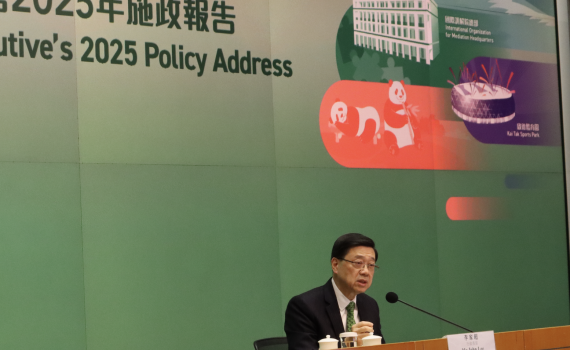
Hong Kong to reduce capital pressure for Small and Medium-sized Enterprises by extending principal payment as well as application for guarantee products, said John Lee Ka-chiu during his fourth Policy Address speech on Wednesday. Application period for principal moratorium arrangement and 80% of Guarantee Products under the SMEs Financing Guarantee Scheme will be extended for one year and two years, respectively, said Lee. “The biggest problem SMEs face is that they have no way to borrow money,” said Cheung Ki-ling, Associate Professor in the Department of Information Systems, Business Statistics & Operations Management at Hong Kong University of Science and Technology. He explained that the decrease in customers and consumption has led to a decrease in income, so they have less to pledge as collateral, making it difficult for banks to lend them money. “(These policies) give companies more opportunities to obtain government-guaranteed loans,” wrote Tam Yiu-chuen Sam, Steering Chairman of the Hong Kong Federation of Commerce for Small and Medium Enterprises, in a written response. He explained that the measures allow SMEs longer timeframes to apply for funding while easing their capital pressure. Previously, the government’s policy had postponed the application for principal moratorium for up to 12 months in November 2024. As of March 2025, the number of small and medium-sized enterprises was 356,128, according to the government website. However, Cheng Chung-pong, chairman of the Hong Kong Small and Medium Enterprises Association, called for more measures to support local SMEs. "The support for our small and medium-sized enterprises is not that great," said Cheng. "On the contrary, I have seen a lot of mention in the policy on how to help mainland businesses." “I think the government and banks still need to review which industries truly need priority support, to prevent the number of bankruptcies from increasing,” said …
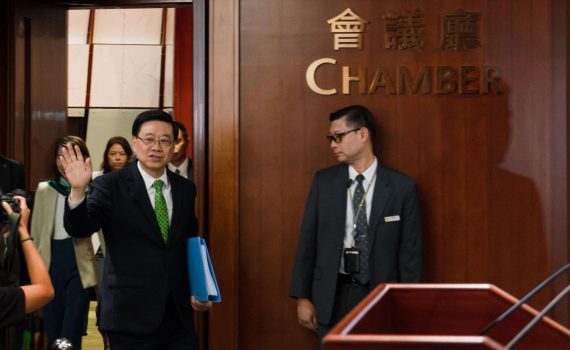
Policy Address 2025: Hong Kong to take further actions for land management in Northern Metropolis
- 2025-09-17
- Politics
- The Young Reporter
- By: CHEN Xiyun、CHEN ZiyuEdited by: CAO Jiawen
- 2025-09-17
A land use review over the Sha Po area, as part of the Northern Metropolis, a development priority proposed four years ago, will be established to discuss its development potential and the feasibility of constructing more private housing in the region, Chief Executive John Lee Ka-chiu said in his policy address on Wednesday. According to the Planning Department, Hong Kong will build 500,000 housing units in the coming decade in the Northern Metropolis for 2.5 million people. Mak Sui-choi, Associate Professor who researches finance and investment at Hong Kong Baptist University, said the Northern Metropolis may attract labour to the local industry. “The increase in Hong Kong's population is a good thing, driving the development of other local industries,” Mak said. “But the construction of the Northern Metropolis should first address the conflicting land status,” he added. According to the commissioned Farm Land Survey Report by the Chinese University of Hong Kong, most farmland in San Tin and Ngau Tam Mei has been rebranded as non-arable fields. “The first step for the government is to reacquire the land and adjust its current land status,” Mak said. “This is going to be a long and cumbersome process, but it is doable,” he added. Lee said the government will arrange three sites for the Urban Renewal Authority to build new housing in Kwu Tung North and Fanling North, areas that are part of the Northern Metropolis. While the Northern Metropolis area presented certain property development potential, a 28-year-old two-time mainland home buyer Cissy Chen opted for Kai Tak instead. “The Northern Metropolis is far away from Hong Kong Island as compared to Kai Tak, location is my main consideration when it comes to real estate investment," Chen said. She added that it would be long before infrastructures in the northern metropolis would …