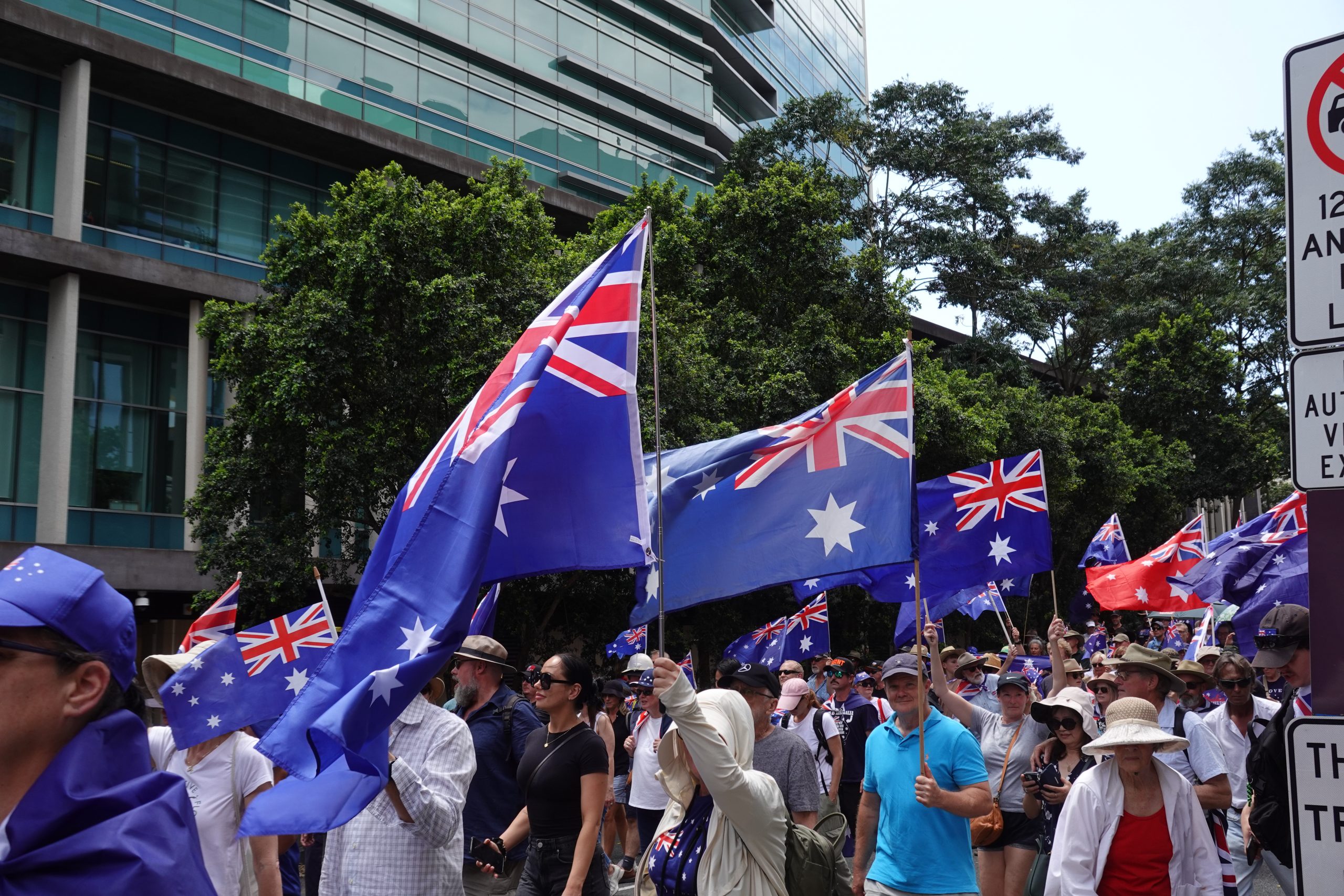
Around 2,000 protesters gathered in Brisbane’s central business district on Oct.19 to call for an end to mass immigration, which they believe is worsening Australia’s housing and cost-of-living crisis.
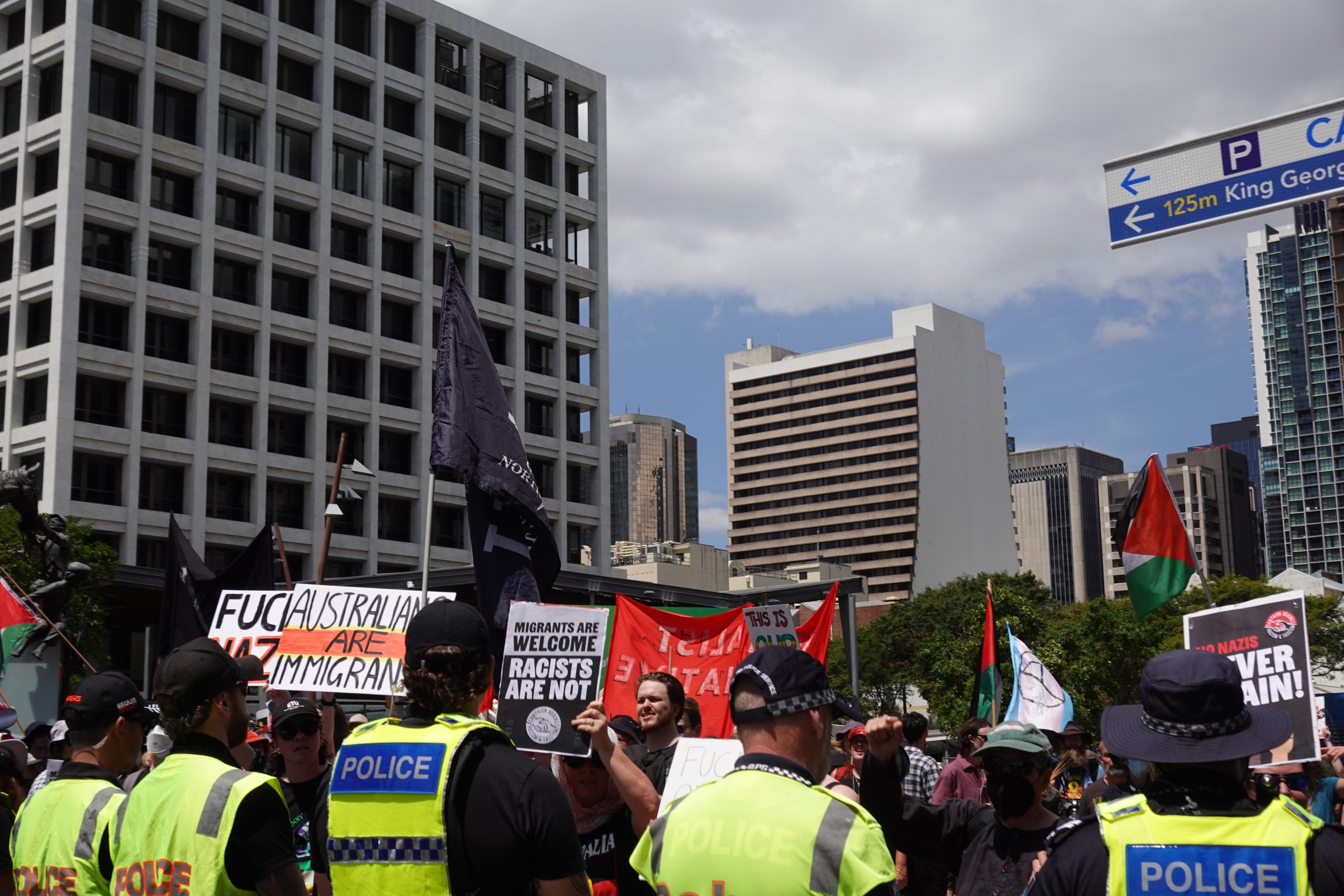
Nearly 300 counterprotesters joined nearby, with banners calling the protest a racist and fascist movement.
This is the second round of anti-immigration protests, also known as “March for Australia”, across the country.
The first was held on Aug. 31 with thousands protesting in major cities, such as Sydney, Melbourne and Perth. In Brisbane, 6,000 protesters, out of a city of 2.5 million, joined the demonstrations.
“Racism may intensify, and I feel concerned about my safety,” said Alice Wong, 28, a Hong Kong student in Melbourne planning to obtain permanent residency, who didn’t go to the protest for physical safety concerns.
Wong said the protest promotes the idea of white superiority.
“When they protest against immigration, it feels like they think immigrants are taking away their resources, like housing or job opportunities,” she said.
Australia’s housing market is surging at its fastest pace in almost four years, with Brisbane becoming Australia’s second-most expensive housing market, according to the House Price Report in 2025.
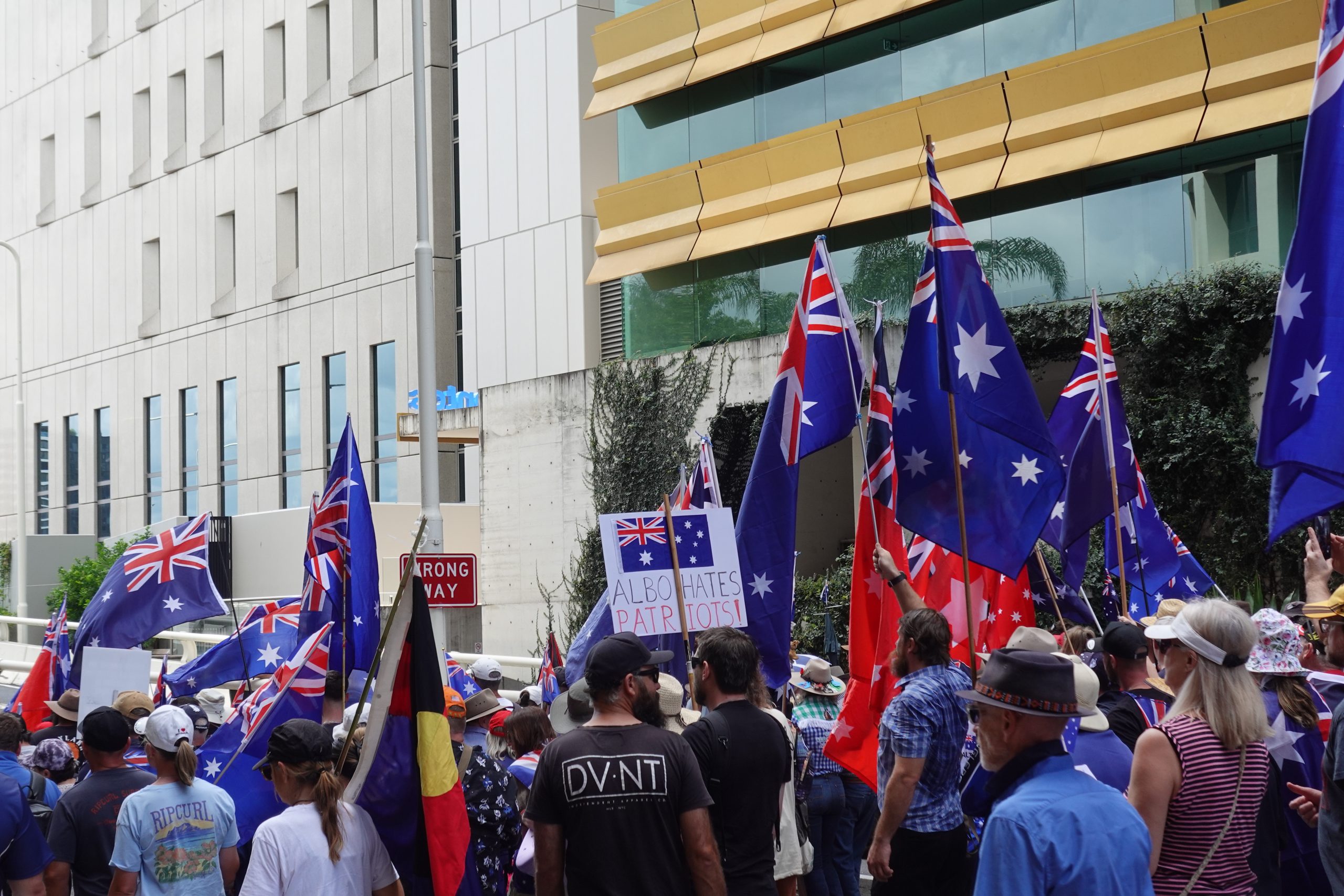
Kev, 72, an Australian who participated in the protest and preferred to keep his last name anonymous, said he has never seen a country in such a bad economic position.
“We’ve never had so many people coming to the country so quickly, and the government has been no help,” he said.
In September 2023, Australia’s net overseas migration peaked at 558,000 after lifting COVID-19 restrictions, according to the Australian Bureau of Statistics.
Australia recorded a net overseas migration of 446,000 people in 2024, down from the previous year but still far from pre-pandemic numbers of 239,000 in 2020.
Kev said he isn’t against immigrants, but he wants to see a slower migration rate.
Australia has capped permanent migrant visas at 185,000 for 2025–26, unchanged from the previous year but 12% lower than the 2023–24 level, according to government data.
《The Young Reporter》
The Young Reporter (TYR) started as a newspaper in 1969. Today, it is published across multiple media platforms and updated constantly to bring the latest news and analyses to its readers.

Starting salaries of Hong Kong bachelor’s graduates end five-year upward trend
“Little Bangkok” in Kowloon City finds ways to keep its Thai flavors amid redevelopment


Comments