
News

Two Jabs Required To Enter HKU
- 2022-01-17
- Society
- The Young Reporter
- By: Clarice WuEdited by: KOO Chi Tung 顧知桐
- 2022-01-17
Students and staff from the University of Hong Kong are required to have two jabs in order to access campus starting from Monday. According to an internal email sent to students and staff, anyone who wishes to enter the campus will need either to be fully vaccinated or to take weekly self-tests. The same measure will also be applicable to HKU School of Professional and Continuing Education (SPACE) premises throughout Hong Kong. No exemption is available. All HKU staff and students need to register their COVID-19 status via HKU portal or the HKU COVID-19 Control App. They will be allowed into campus after presenting their HKU ID cards to card readers installed at the entrances of HKU. People who choose to self-test will need to upload their records on a weekly basis. Presentation of original copies, photocopies, or screenshots of vaccination records and self-test records to security guards are also acceptable. Visitors will need to scan the QR code at the entrance to show that they have complied with the COVID-19 control measures before being granted access to the campus. Tam Siu-yee, a Year 3 HKU Science student majoring in Speech and Hearing Science said that the new measure does not really affect her since she has already been fully vaccinated. “I have been out in the clinic being in contact with patients since last semester so I have been vaccinated for a while,” Tam said. Although the measure does not affect her, she disagrees with the implementation. She thinks the new measure does not respect students’ personal wishes and the right to be on campus. Tam doubted the effectiveness of the two available vaccines in Hong Kong on combating Omicron and “doesn’t see the point for mandatory vaccination for COVID-19 control on campus.” Eight universities in Hong Kong have …

COVID-19 quarantine and travel restrictions challenge Hong Kong’s domestic helpers
- 2022-01-13
- Society
- The Young Reporter
- By: Malick GaiEdited by: Robin Ewing
- 2022-01-13
Ybañez’s 68-year old mother, living in Cebu City in the Philippines, was hospitalized for high blood pressure and diabetes for two months before her death. Ybañez, 40, who has been working in Hong Kong for almost three years, would have to quarantine in both the Philippines and upon return in Hong Kong for five weeks in total. Employers of foreign domestic helpers in Hong Kong are required to pay for one trip home for each helper every two years. In response to the pandemic, the Immigration Department mandates that prospective employers sign the undertaking of the employer document agreeing to pay for their employees’ Covid tests and all quarantine expenses upon entry to Hong Kong. “My employer couldn't afford it," said Ybañez. "Even if I had gone, they could only wait for one week before burial and I had to do two weeks of quarantine in the Philippines, so it was impossible to see her.” Low availability of flights and quarantine hotel rooms, travel bans and vaccination requirements have made travel in and out of the city challenging for foreign domestic helpers. In April, Hong Kong banned flights from the Philippines, and in June this year another flight ban extended to Indonesia, significantly impacting the wait time for inbound employees. Both these bans were lifted in August. In September, the government opened Penny’s Bay Quarantine Centre on Lantau Island to helpers who are fully vaccinated with non-Hong Kong available vaccinations for 21 days quarantine, allocating nearly 800 rooms with a price capped at HK$500 per night. Helpers vaccinated with either Pfizer/BioNTech or Sinovac can also quarantine in hotels upon their arrival. The pandemic has doubled the number of foreign domestic helpers in Hong Kong seeking help from local NGO Mission For Migrant Workers this year, the NGO said. More than …
Lowest ever turnout under revamped LegCo Election system
- 2021-12-20
- Politics
- The Young Reporter
- By: Nick Yang、Kate Zhang、Leona LiuEdited by: Kiki Lo
- 2021-12-20
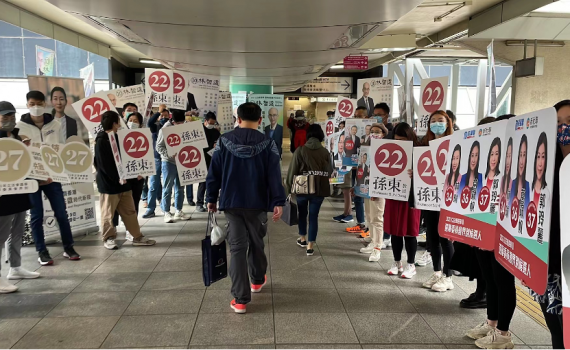
The first Legislative Council election under the revamped electoral system ended last night with a 30.2% turnout rate in the geographical constituency races, the lowest since the handover in 1997. About 1, 350, 680 people cast their ballots in 10 geographical constituencies, a 28% percent decrease from the last Legco election in 2016. The turnout in the Election Committee constituency was 98.5% and 32.2% for the functional constituencies, according to official statistics. Click here to see the voting rates of different districts (made by Grace Koo). “Their votes are not only for choosing their own LegCo members. They are also a show of support for the improved electoral system and their aspirations for effective enhancement of the governance efficiency of the HKSAR as well as the resulting economic development and livelihood improvements,” Chief Executive Carrie Lam Cheng Yuet-ngor said in a press release yesterday. Beijing reformed Hong Kong’s electoral system in March, by creating an Election Committee constituency of 40 seats to be voted on by a body established in September. The electorate is made up of 1500 Election Committee members. The total number of seats in Legco also increased to 90 from 70. “The election committee is composed of elites from all walks of life,” said Allan Zeman, chairman of Lan Kwai Fong Group, and a member of the Election Committee. “I think the new system can really work.” Mr Zeman though failed to secure a seat in the Election Committee constituency. A total of 153 candidates competed for this term of LegCo. For the first time since the handover, there is more than one candidate running for every seat, including the functional constituency seats. Twenty members were directly elected in the geographical constituencies. Voting was changed to a double seat, single-vote system, which means each voter can vote …

Hong Kong Health Code for travel to mainland launches next week along with update for LeaveHomeSafe; city still waiting for quarantine-free travel
- 2021-12-02
- Society
- The Young Reporter
- By: Hamish CHANEdited by: SHI Ruoshui
- 2021-12-02
The government said the new health code app compatible with Guangdong and Macau to facilitate travel to the mainland will be available at 9am on Dec 10, though it has not yet announced when quarantine-free travel will begin. “The government is still negotiating with the mainland authorities but said it had come to the final stage after the visit of mainland experts to Hong Kong,” Alfred Sit Wing-hang, the Secretary for Innovation and Technology, said in a press conference today. The government said it will also provide an update for the LeaveHomeSafe app, which allows users to transfer visiting records to the mainland-compatible Hong Kong Health Code app. The app will be launched as a “pilot run” before quarantine-free travel starts with no need to rush, said Sit. Users will need to provide personal information, such as their address and HKID card number, and upload the visiting record from LeaveHomeSafe. The authorities said 31 days of record will be uploaded, but only the past 21 days of record will be used to generate the code required for border crossings. Users whose records do not show visits to high-risk places and are not close contacts or household contacts of close contacts of confirmed cases in the past 21 days will get a green code. For those who have no plan to travel to the mainland, Sit said they do not need to update their LeaveHomeSafe app. “The government has no plan, and did not see the need for real-name registration for the LeaveHomeSafe App,” Sit added. Li Yan-yi, 27, said she will not use the Hong Kong Health Code app. “I have no plan to go to the mainland, and have tons of privacy concerns for the app,” said Li. “When the government launched the app, they said it is all …

Secretary for Education denounces "lying flat" trend, emphasizes values education
- 2021-11-29
- Society
- The Young Reporter
- By: Tracy LeungEdited by: BellaHuang
- 2021-11-29
Secretary for Education, Kevin Yeung Yun-hung, denounced the “lying flat” trend, the attitude of doing nothing popular among young people in the mainland, and highlighted the importance of values education in Hong Kong schools in an online post yesterday The “lying flat” movement started in April when a post on the Chinese popular website Baidu titled “Lying Flat Is Justice” went viral. It refers to young people who strive for nothing more than what is essential for survival. “The recent trend of "lying flat" is even more worrying. A negative life attitude can easily cause depression and hinder social development in the long run,” Yueng wrote in his post. “I am grieved for that, just the same feeling as many parents and teachers who love those kids.” Yeung also said the government will soon release the curriculum framework for the recently proposed values education, which includes moral and ethical education, civic education, and national education. The education bureau said promoting activities related to Chinese history will allow students to learn about the essence of Chinese culture, absorb traditional wisdom, and cultivate moral sentiment. “We must work together to promote values education rooted in Chinese culture together and support students to build positive thinking,” the online article said. “I think the new curriculum has a political agenda and I hope the teachers could be professional enough to tackle this,” said Lau, a local high school teacher who said he is responsible for executing the values education curriculum at his school. He requested anonymity over concerns about his work. In June, Yeung told the Legislative Council that the bureau will send teachers to mainland universities to enhance their understanding of the nation's development. Teachers will also attend training courses related to national affairs, the Basic Law and the National Security Law. The …

Light rail passengers worried about safety after a woman was pushed onto the track
- 2021-11-29
- Society
- The Young Reporter
- By: Kelly PangEdited by: BellaHuang
- 2021-11-29
Sarah Chan Miu-ching, 21, lives in Tuen Mun and takes the light rail transit three or four times a week. "I am definitely worried about falling on the track just like what happened to the woman yesterday as there is no platform screen door,” Ms. Chan said. A 47-year-old woman was walking on the platform at Tai Hing (North) station yesterday when a man whom she did not know suddenly pushed her onto the track. The woman’s left shoulder was injured. Police later arrested the suspect at Ching Chung station. Safety facilities at road junctions in the light rail system include traffic lights, road signs on light rail reserved area and vehicle height restrictions, yellow box marking and a bell before the light rail enters a road junction, according to the spokesman in the Legislative Council in 2011. Kitty Wong Yuen-yi, a secretary working in the MTR company, said that the automatic platform gates cannot be installed on the light rail because its operation system is different from other railway systems in the city. “When a train approaches a station, only the driver can stop the carriage and open or close the platform gates,” Ms Wong explained.”Since the road is shared with other vehicles, it’s technically difficult to install the gates.” “There are no platform screen doors like at MTR stations. It’s so easy to be shoved onto the track just like what happened to the woman yesterday,” Zoe Cheung Man-yi, 46, a Tuen Mun resident said. She urged the MTR corporation to pay more attention to accidents at railway stations and tackle them as soon as possible. In 2017, a man pushed a female cleaning worker off the track at the Yuen Long Light Rail Station. The worker had fractured elbows and injuries to her jaw and lips.

Man jailed for more than two years for rioting after throwing plastic bottle at police during 2019 protests
- 2021-11-22
- Society
- The Young Reporter
- By: KOO Chi Tung 顧知桐Edited by: Jasmine Tse
- 2021-11-22
A stone factory worker was sentenced to two years and four months in jail for rioting in a shopping mall in Shatin during the 2019 protests. Lai Chun-lok, 29, was arrested for unlawful assembly on Mar. 27, 2020. He was found guilty of rioting at Wan Chai District Court today. The court heard that Lai and four others threw objects at police officers at New Town Plaza when chaos broke out in the mall on July 14, 2019. Lai pleaded not guilty to the charge, but he admitted he threw a plastic bottle on the ground out of anger. He joined the crowd after netizens called for a protest in the district against the extradition bill. “I went to Sha Tin, but I did not do anything illegal,” Lai said previously under vigilance. Judge Ernest Lin Kam-hung said there had been violent protests in the mall and more than ten people had thrown umbrellas and plastic bottles at the police before the defendant threw his bottle. He did not believe Lai’s action was a lone wolf attack. Although Lai was not dressed in any protective gear nor did he cover his face, the judge said there were people delivering safety helmets, plastic bottles and umbrellas, and he believed Lai was at the mall for the same purpose as the others. The judge added that Lai may not have planned his action and was instead influenced by the social atmosphere at the time. However, he criticised Lai for being arrogant, greedy and irresponsible. He also said Lai not only took part in the rioting but was among the main participants. His goal was to cause harm to the police officers and “reasonable people” would be threatened by his action.

Mental health impact of quarantine under COVID-19
- 2021-11-19
- Society
- The Young Reporter
- By: Malick GaiEdited by: LI Chak Ho Samuel
- 2021-11-19
Charlene Flores and her husband nearly got divorced in the last two hours of a 14-day quarantine. “We ended up arguing. There were a lot of rules. It really affected our mental well-being," said Ms Flores. Those who have to be confined in a room for weeks report impacts on their mental health because of the resulting loneliness and anxiety. She is a French freelance photographer for Paris-based national newspapers and magazines and has lived in Hong Kong since January 2020. Ms Flores, her 14-month old daughter and her 36-year old husband stayed at the Iclub Ma Tau Wai Hotel. She arrived in Hong Kong on August 18. Hong Kong has some of the strictest quarantine requirements in the world. Depending on which risk level their originating country falls under, the Department of Health requires in-bound travellers to be quarantined at designated hotels for either two or three weeks. As of September, fully vaccinated Hong Kong residents from “high risk” (or Group A) countries, including the UK, France, India, and Thailand, had to be quarantined for 21 days. Fully vaccinated travellers arriving from “medium risk” (or Group B) countries must test negative for Covid-19 and quarantine for 14 days while the unvaccinated in this group must quarantine for 21 days. Currently, the only places that fall under the “low risk” (Group C) category include New Zealand, mainland China and Macao. Non-Hong Kong and Hong Kong residents are required to quarantine for seven days if vaccinated, and 14 if not. "It was a tough, expensive and stressful experience. We were always afraid that there might be a false negative test or being identified as a close contact," said Mrs Flores. Karman Leung, Chief Executive of the Samaritan’s Hong Kong, an independent non-governmental organisation, said they receive approximately three to five calls …

Government looks into tactics to handle “fake news”, says Chief Secretary John Lee
- 2021-11-18
- Society
- The Young Reporter
- By: Karmen LiEdited by: CHEN Bingyi
- 2021-11-18
Chief secretary, John Lee revealed today that the government is looking at how other countries tackle the spread of disinformation. Speaking on RTHK, Mr. Lee said a legal study is underway on how to deal with the problem and he has not ruled out the possibility of new legislation. The move comes after the government introduced new laws earlier to clamp down doxxing and hate speech. “The fake news legislation can stop destructive rumors from spreading in Hong Kong. Freedom must be exercised under law, which allows people to enjoy more freedom,” Mr. Lee said. Another proposal to manage fake news is to require publishers to self-regulate. Where information is not verified or fact-checked, publishers would be required to make a statement, Mr. Lee said. He added that he preferred to act on content management first to seek a balance between controlling misinformation and freedom of the press. Tang Tak-shing, chairman of Politihk Social Strategic, a local political organisation, believes it is necessary to introduce a fake news law because of the rise of online news media and unchecked reporting. “We prefer legislation since it is difficult to ask online media with low credibility to be self-regulated. The bill can make the boundaries clear toward news media,” said Mr Tang. A survey released by the Foreign Correspondent Club earlier this month found that 75.8% of the 99 respondents including correspondents and journalist members were very concerned about the possible introduction of a “fake news” law in Hong Kong. The chairman of the Hong Kong Journalist Association (HKJA), Ronson Chan Long-sing, said that the government often claims that news media smear police officers, but “they can clarify this immediately instead of waiting for rumors to spread and blame the media”. “It is hard to self-regulate as proposed by John Lee,” said …

Hong Kong stocks close higher, up 5 consecutive days
- 2021-11-15
- Business
- The Young Reporter
- By: Serena KongEdited by: Zhu Zijin Cora 朱子槿
- 2021-11-15
Hong Kong stocks rose slightly on Monday, with the blue-chip index closing higher for five consecutive trading days after China’s announced better than expected October retail sales but trading volume remained thin. The Hang Seng Index ended at 25,390, up 62 points or 0.25% on turnover of about HK$118.6 billion. The index moved between within a narrow range of 253 points for the day. China’s industrial production rose 3.5 percent year-on-year in October and retail sales increased 4.9 percent, both were slightly better than market expected, according to the South China Morning Post. The Hang Seng technology index edged up 0.5% to 6,601, while Tencent rose more than 1%. Mainland property and property management stocks fell, while the performance of financial stocks was mixed. Shares of HSBC eased 0.22% but AIA rose more than 2%. The Beijing Stock Exchange started its first day of trading on Monday and the total trading volume of 9.573 billion yuan. At the close, 59 stocks or nearly three quarter of the 81 listed stocks, closed lower and three were suspended. The Shanghai and Shenzhen stock markets fell. Lithium battery stocks weakened while meta-universe concept stocks and food and beverage stocks rose. The Shanghai Composite Index closed at 3,533, down 0.16%. The Shenzhen Stock Exchange Composite Index eased 0.19% to 2,462.39.