
Uncategorized
Flea market closes after 17 years saddened locals
- 2026-02-04
- Culture & Leisure
- The Young Reporter
- By: LI Cin Hang Olivia、CHAN Hiu YingEdited by: CHAN Hiu Ying
- 2026-02-04
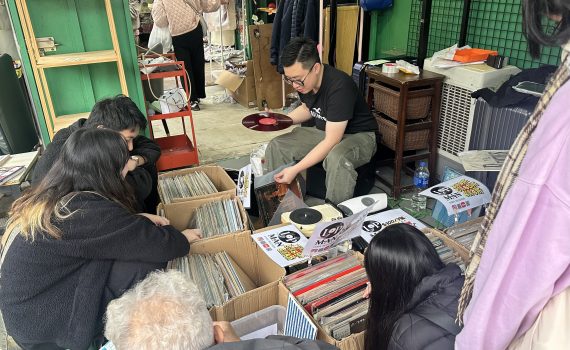
Reported by: Talja Blumenthal, Olivia LI Cin-hang, Kate Chan Hiu-ying Edited by: Kate Chan Hiu-ying A flea market in Kam Tin closed permanently on Jan. 31 after 17 years of operation due to the development plan of the Northern Link, leaving many visitors and merchants saddened as they attended its farewell. Located a few meters away from Kam Sheung Road Station, the Kam Sheung Road Flea Market has been a local landmark, renowned for selling nostalgic snacks, second-hand items and handmade clothes across nearly 200 colourful stalls every weekend since 2008. "I feel lost about not coming here on weekends anymore," said Liu Chau-king, 68, who has sold handmade crafts at the market for 17 years. Liu is reluctant to leave as she has become close friends with some merchants and customers. "I've known some of them since they were kids and I watched them grow into adults." Liu said she is considering moving to a new bazaar or selling her products in her daughter's shop in the future. A few stalls away from Liu’s stall, Tiffany Lam, a 50-year-old apparel manufacturer, said that discussing fashion styling with female customers who frequently visited her booth was part of her life after 16 years of the market, and now has come to an end. Lam said she will not continue her business after the closure as she plans to retire. A longtime local visitor, Connie Wong, 60, said this flea market cannot be replaced. "This place is special because what they sell is very unique and nostalgic, so it’s a pity that it is shutting down.” "There used to be many flea markets in Hong Kong, but now one of the larger ones is gone as well,"she said. After the closure of the Kam Sheung Road Flea Market, only a few …
Legislative Council Election 2025: generational handover as members stepping aside for younger generation
- 2025-12-08
- Politics
- By: Dake LiuEdited by: LAI Uen Ling
- 2025-12-08
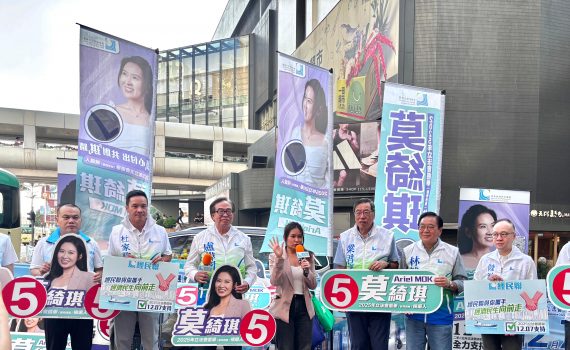
On a November morning in Hong Kong, the sun scorching the tiled roof of the Wong Tai Sin Temple, hundreds of people pressed together to head to the main altar in a rite for the upcoming Legislative Council election. Devotees walked slowly past the great bronze incense burner, heads bowed, respectfully planting three sticks of incense each. Alan Chan, 68, edged forward in the slow-moving river of bodies, his three incense sticks already lit and trembling between his fingers. For decades this had been his quiet anchor: a bow, a murmured name — Tommy Cheung Yu-Yan. But the 76-year-old lawmaker had just announced his retirement from Legco after 25 years. His prayer caught in his throat. He stared at the altar’s flickering candles, the sea of unfamiliar faces on campaign flyers taped to nearby pillars. "These young candidates I don’t recognise a single one…How am I supposed to vote? How am I supposed to pray?" he said. Cheung is one of 12 current Lego members aged 70 or above who declared they will not run in this year's election, including former Legco president Andrew Leung Kwan-yin, 74, and convener of the Executive Council Regina Ip Lau Suk-yee, 75, accounting for a little over a third of all 35 lawmakers who announced their election withdrawal. Most veteran lawmakers said that they hope to make way for the younger generation. This unprecedented wave of withdrawals is despite no existing legislation specifying a retirement age limit for members of Legco. Although the reasons for the generational shift remain unclear, some commentators have speculated that Beijing seeks a younger cohort of legislators who will appeal to Hong Kong’s youth and align more closely with national development priorities. Martin Cheung Tat-ming, Chief Researcher at a leading local think tank, said the most direct reason why …
At least 13 dead in Tai Po level-five fire
- 2025-11-26
- Society
- The Young Reporter
- By: Wing Chi HO、CHAN Wing YiuEdited by: SIU Tsz Hang、LAI Uen Ling
- 2025-11-26
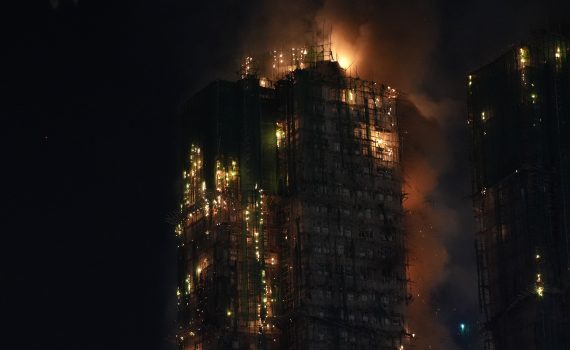
A No.5 alarm fire erupted at Wang Fuk Court in Tai Po, leaving at least 13 dead, including one firefighter, officials said. As of 6pm, there are at least five injuries, including three that were critically injured. One person was in serious condition, and one was in stable condition. Nine people felt unwell and were sent to Alice Ho Miu Ling Nethersole Hospital and Prince of Wales Hospital for treatment. Police have set up a hotline 1878999, for the public to inquire about information on the casualties of the fire.

FinTech Week 2025: Hong Kong Advances Asset Tokenisation Agenda Amid Industry Concerns Over Implementation
- 2025-11-10
- By: Zhou Xinying、Wang YunqiEdited by: XIA Fan、BO Chuxuan
- 2025-11-10
Hong Kong FinTech Week has unveiled “Fintech 2030” to reiterate its ambition for the tokenisation of real-world assets, with fintech exhibitors highlighting RWA bottlenecks. Eitan Katz, the CEO and Co-Founder of Kima, a company that focuses on atomic settlement at the forum, emphasises several significant challenges of RWA today: technical challenges, compliance-related and regulation-related challenges, operational challenges, and business challenges. “The core technical challenge we’re addressing is connecting two financial worlds - traditional and digital,” he said, “The risk today is that these are disparate ecosystems, assets can be issued on-chain without true backing in the real world, and they cannot be transferred between ecosystems.” Under the “Fintech 2030”, Eddie Yue Wai-man, Chief Executive of the Hong Kong Monetary Authority (HKMA), reinforced “tokenised finance” as one of the four strategic pillars. “To build a vibrant tokenisation ecosystem in Hong Kong, the HKMA will accelerate the tokenisation of real-world assets (RWAs), including financial assets, and lead by example by regularising the issuance of tokenised government bonds and exploring the concept of tokenising the Exchange Fund papers,” said Yue during his keynote speech. Such an address aligns with broader efforts, as Hong Kong has been pushing to position itself as a leading crypto hub in Asia by rolling out a licensing regime for stablecoins, a type of currency-pegged digital asset, alongside various tokenisation pilot programs. “We will now begin incubating mature real-value use cases where tokenised deposits can offer significant advantages, starting with tokenised money market funds,” said Yue. By converting traditional assets into digital tokens, Hong Kong aims to expand liquidity and bridge established financial instruments with decentralised digital markets. Meanwhile, the city’s regulatory action on stablecoin is another hot topic among exhibitors. "Hong Kong provides clear requirements, mandating that stablecoin issuers maintain a certain level of capital reserves. This regulatory …
Local artsy businesses transform old district into trendy check-in spots
- 2025-10-30
- Society
- The Young Reporter
- By: ZHOU ShiqingEdited by: MAO Anqi、CHEN Yik Nam
- 2025-10-30
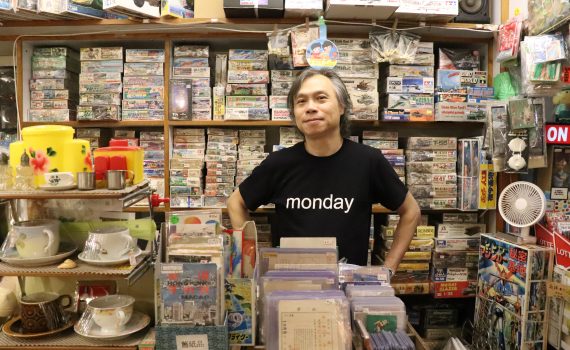
In the century-old neighbourhood of Sham Shui Po, a poster shop stands on the corner of Ki Lung Street. Its classic Hong Kong film posters tell the stories of the past. Wong Tak-hei, 32, has spent five years transforming his obsession with local films into a small shop called Moviemarks that sells what he calls collective memories. “Unlike those fancy shopping malls you wouldn’t visit every day, Sham Shui Po is the kind of place you can visit on two different days and have a completely different experience,” Wong said. Moviemarks is one of the small creative businesses located in Sham Shui Po, a district that was developed as early as the 1910s. A report by the Urban Renewal Authority in September 2023 highlighted the age of the area, as reflected in the old buildings, high population density and social problems related to subdivided residential houses. But recently, the community has nurtured creative local businesses and has become a haven for artistic shops. The area is bustling with trendy cafes and craft shops, and its themed streets have their own specialised categories of goods. Fuk Wing Street is the place for toy wholesale and retail, and Nam Cheong Street features ribbon selling. In October 2020, urban culture magazine TimeOut selected Sham Shui Po as the third coolest neighbourhood in the world, in recognition of its creativity. “The atmosphere here is unique, and I like it very much. These modern stores blend well with the old community, creating an interesting and fresh experience,” Wong added. Xie Yongqi, 18, who has been living in Sham Shui Po since she was born, said she visits boutiques and toy stores every two weeks. “I usually come here with my brother to pick out toys or buy gifts for friends. Sham Shui Po is undoubtedly …

Hong Kong Autumn Electronics Fair kicks off with Gerontechnology amid Silver Economy Boom
- 2025-10-13
- Business
- By: Yau Ka Ming、LO Shing KwanEdited by: Haoming Zhou
- 2025-10-13
Gerontechnology has taken the spotlight this autumn’s electronic fair on Monday, with multiple innovative elder-friendly products emerging amid the growing local silver economy. “The demand and acceptance (of our products) are both gradually increasing, ”said Richard, a staff member from VCOM, a start-up manufacturer and exhibitor of senior technology products. He added that the company provides corresponding products for both indoor and outdoor use. Virginia Ngai, Sales Manager of Max Care Industrial Ltd, a Hong Kong-based manufacturer of senior technology products, said Hong Kong has a significant elderly population with relatively long life expectancy, adding that the market for age technology products in Hong Kong still has room for growth. The percentage of the population aged 65 or above rose from 20.8% in mid-2022 to 23.9% in mid-2025 and is expected to continue growing in the future, presenting significant market potential, according to the Census and Statistics Department. According to the Consumer Council’s Consumer Survey for the Silver Economy in Hong Kong, the average monthly expenditure (in local currency, excluding housing) for the elderly population aged 60-79 in 2024 stands at HK$7,785. Average monthly spending for affluent and general senior consumers reached HK$13,649 and HK$4,284, respectively. Chloe Siu, Associate Director of the Master of Science in Smart Ageing and Gerontology, Hong Kong Lingnan University, said the elderly group shows a keen interest in medical products, such as intelligent health monitoring devices that track physical indicators and ensure safety, which can meet their needs. “There are now many different platforms where seniors can look for what they need,” said Siu. She added that both offline and online markets now offer a wide range of choices, making it easier for older consumers to find suitable products. She also noted that the purchasing power of individual users of gerontechnology mainly lies with “young …
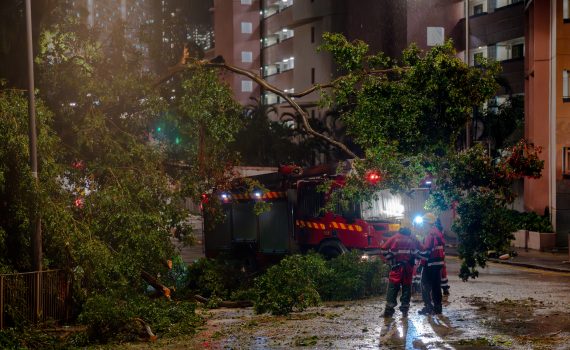
Typhoon Ragasa: Windthrown trees blocked several roads in Wong Tai Sin
- 2025-09-27
- Society
- The Young Reporter
- By: AO Wei Ying Vinci、LAU Ka YanEdited by: AU YEUNG Jim
- 2025-09-27
Super typhoon Ragasa hit Hong Kong on Wednesday, bringing gale and heavy rainfall to the city. The Observatory issued the highest-level T10 signal to alert the public about the extreme weather conditions. Staff members from the Fire Services Department and the Leisure and Cultural Services Department examined the road blockage by fallen trees in Wong Tai Sin during Wednesday evening after the T8 signal was cancelled. Workers continued clearing remaining debris in Diamond Hill on Thursday morning. The government's 1823 call centre, the Fire Services Department and the Leisure and Cultural Services Department had received 1,224 reports of fallen trees as of 8pm on Wednesday. The Hospital Authority said 101 people were injured during the typhoon period. Individuals concerned received the necessary medical treatment at the Accident and Emergency departments of designated public hospitals.

Super typhoon Ragasa: Fishing village withstands from storm with strong precautions
- 2025-09-26
- The Young Reporter
- By: CHAN Hiu Ying、LAU Ka YanEdited by: LAI Uen Ling
- 2025-09-26
Video description: Super Typhoon Ragasa hit Hong Kong on Tuesday evening, and officials recorded 22 flooding cases. Sam Mun Tsai New Village in Tai Po, one of the flooding blackspots, reported no flooding cases. While the fishing village quickly resumed after the storm, the local representative said he looked forward to long-term measures to address the increased frequency of stronger typhoons. Reported by Kate Chan Hiu-ying, Luna Lau Ka-yan Edited by Elaine Lai Uen-ling #typhoonragasa #hongkongnews
What Sparked Indonesia’s Violent Protests and What It Means for Democracy
- 2025-09-19
- Society
- The Young Reporter
- By: KURNIAWAN Trista VaniaEdited by: LAI Uen Ling
- 2025-09-19
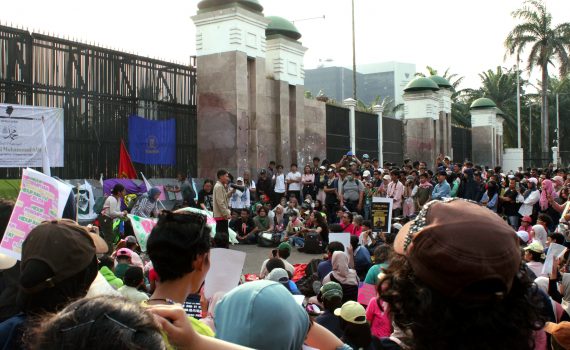
Thousands of protesters swarmed the streets of Jakarta on Aug. 25, outraged by Parliament’s approval of a new monthly housing allowance that is ten times the minimum monthly wage in Indonesia. Within a week, what began as questions over economic imbalances turned into violent protests in 20 major cities against police brutality, demands for the protection of vulnerable communities, and worries about the future of Indonesia’s democracy. From Aug. 25 to 31, the Indonesian Legal Aid Foundation reported more than 3,000 people were arrested and 10 were killed. Despite a government response, people are still unsatisfied and fighting for democracy. The Underlying Cause Tito Ambyo, an Indonesian journalist and journalism lecturer at the Royal Melbourne Institute of Technology, said the political and economic frustrations have been growing since people expected reformation after the violent protests in 1998. In May 1998, a riot broke out due to economic inequality, corruption, and the authoritarian rule of President Suharto. It escalated to the targeting and attacks of Chinese Indonesians and the destruction of public property. “After the 1998 riots and our president stepped down, we won. But the next leaders were disappointment after disappointment,” he said. In 2012, former President Susilo Bambang Yudhoyono’s cabinet faced corruption allegations, with his ministers, including the Chairman of the House of Representatives, indicted by the Corruption Eradication Commission. Ex-President Joko Widodo’s government passed a job creation law aimed at easing work regulations and encouraging investment in 2020. However, it sparked public protests because the bill was seen as weakening workers’ rights and opportunities. He described the Indonesian elites in the government as “careless” and “callous” with their actions. Protesters took to the streets on Aug. 25 after the House of Representatives announced the members of parliament would receive a monthly housing allowance of 50 million rupiah (HK$23,676). …
Policy Address 2025: Hong Kong extends tax allowance for parents with newborns in its latest fertility push
- 2025-09-17
- The Young Reporter
- By: YANG Shuyi、Lou ZhengzhengEdited by: WANG Jing
- 2025-09-17
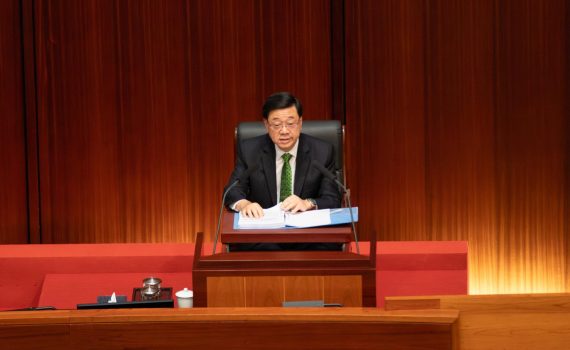
Hong Kong parents with newborns are set to get more tax allowance as the city strives to boost its birth rate. Currently, parents receive a HK$260,000 tax exemption in the baby’s first year, but this is going to be extended for another year, said Chief Executive John Lee Ka-chiu in 2025 Policy Address. Those with older children will continue to get HK$130,000 of their taxable income exempted. Hong Kong has been struggling with a declining birth rate, with the number of babies born dropping from 60,900 in 2016 to a low of 32,500 in 2022. In 2024, there was a slight improvement to 36,700 babies. A 36-year-old mother of a toddler from Kowloon welcomed the additional tax break. “As someone from the 80s generation, I really want to have children, this policy will help us to relieve some financial pressure,” said Ruby Tse, who is trying for a second child. Lawmaker Chan Wing-kwong, who specializes in medicine, said the allowances are a welcome addition for families trying for more children, but it would be an unlikely fertility boost for those who don’t. “The additional newborn allowance is merely a drop in the bucket when it comes to the cost of raising a child in Hong Kong,” said Lin Sen, who has been married for six years but has remained reluctant to have a baby. Lin said the intensifying competition for schools and jobs a child might face in the future deters him from giving birth. Lee also pledged more childcare resources for babies and schoolchildren. Chan said that although the direction of the current encouraging policies is right, a series of supporting measures must keep pace. The lawmaker called on the government to provide more measures for schools and job placements. “Only when the social environment can let people ‘live …