
By: Katherine LiEdited by: 、Michelle Ng
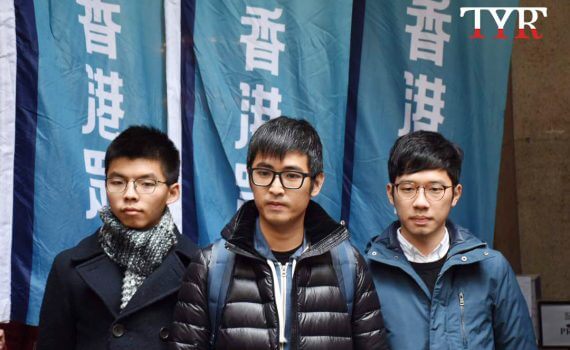
Democracy activists Joshua Wong, Alex Chow and Nathan Law set free by Court of Final Appeal
- 2018-02-06
- Politics
- The Young Reporter
- By: Katherine LiEdited by: 、Michelle Ng
- 2018-02-06
Alex Chow, Joshua Wong, and Nathan Law walk free as Court of Final Appeal accepts their appeal this afternoon. The trio was initially arrested for breaking into the Central Government Offices and for "civil disobedience" in September 2014, which triggered the Occupy Central. However, Wong said that even though they regained their freedom, this is by no means a victory for democracy. "This set the precedent of demonstrations being viewed as violent," Wong said, "which puts all future attempts of public assembly at risk. Those who attend may receive months or years of jail sentence." Furthermore, Chow said that the lines of what is considered as violent demonstration has been blurred through this case, which is unhelpful to Hong Kong's fight for democracy. He called the court's ruling "sugar coated". The trio raised concerns that with the recent disqualification of Agnes Chow, Hong Kong is going through a very tough time. Alex Chow ultimately said that it is obvious that people in the government are under pressure to behave a certain way. The trio is free for now. But Joshua Wong faces another appeal for "contempt of court" which will soon decide whether he remains free or goes back to jail.
Hundreds protest against suspension of Baptist University student duo
- 2018-01-26
- Society
- The Young Reporter
- By: 、Raphael Blet、Yoyo Chow、Katherine Li、Rob McGainEdited by: 、Ezra Cheung、Michael Shum、Michelle Ng、Wing Li
- 2018-01-26
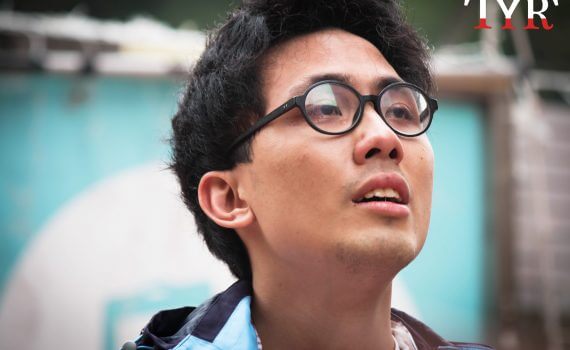
More than 200 people participated in a protest at Hong Kong Baptist University at 1.30 pm following the suspension of two students, according to the University's Students' Union. After being accused of threatening the staff and using abusive language during an eight-hour stand-off at the University's Language Centre, president of Hong Kong Baptist University Students' Union, Lau Tsz-kei, and a Chinese medicine student, Andrew Chan Lok-hang, were suspended pending disciplinary procedures. The University's decision to suspend the pair prompted mixed reactions with some praising the University's decision and others criticising the University for not awaiting the verdict of the disciplinary committee. A group of counter-protesters who were seen brandishing banners labelling the student union "a gang" and accused some professors of supporting the students. "We are proud of being Chinese citizens and right now, it's a Putonghua-speaking world," wrote a banner. Both parties could be seen hurling vulgarities at each other, but they were quickly separated by the security personnel. John Tse Wing-ling, former Legislative Councillor and Associate Professor of City University's Department of Applied Sciences, marched with the HKBU students in support for elimination to the compulsory Putonghua policy. "If Putonghua is really going to be a fixed standard, then this standard should also apply to all university staff members, including professors," he said, referring to the controversial requirement. Tse did not believe that a certain language should be a parameter of whether students could graduate. "If you judge everyone on the same standard, which is their Putonghua proficiency, then the Chief Executive of Macau won't even get his job," said Tse. The former lawmaker criticised the university for making the suspension of involved students public. "It's the first time in 30 years of teaching that I see a Vice-Chancellor announcing student suspension in front of the press," …

Children of asylum seekers deprived of education rights in Hong Kong
- 2017-12-30
- Society
- The Young Reporter
- By: 、Erica ChinEdited by:
- 2017-12-30
Education expert and legislator call for conditional working rights of asylum seekers in supporting their own education expenses and daily expenses Isabella Ng Fung-sheung, assistant professor at The Education University of Hong Kong, volunteers at the Hong Kong Society for Asylum Seekers and Refugees. She said only one out of 170 asylum seekers can successfully make a non-refoulement claim so that they are not forced to leave the city. This process might take years, and their children may be deprived of their rights to education during the wait. Asylum seekers are not allowed to work in Hong Kong. Each person receives $1200 a month in food stamps from the government, which is enough for staple food but not much else, according to Dr. Ng. And while their children can go to school for free, Dr. Ng said asylum seekers often find it difficult to pay for school uniforms and books. Although most schools reimburse the parents for their expenses, they do have to pay upfront and then claim the money back with receipts. "Some families are not able to reach here for weekly gathering as they can't afford the transportation expenses," said Dr. Ng. Language barrier is also a major obstacle for young asylum seekers who desire education in Hong Kong, Dr. Ng stated. " The teacher kept telling me that this child cannot speak Chinese, can she understand at least one word of Chinese, if not, this child is so difficult to manage," said Dr. Ng when she recalled her experience in helping child asylum seekers searching for schools. " Local schools accept few non-Chinese speaking children," Dr. Ng says. " I tried to look for a kindergarten for a daughter of an asylum seeker once. She had a Hong Kong identity card, but eight out of ten schools …

Somewhere over the rainbow - How an 8-year-old boy experience China's education gulf
- 2017-12-30
- Society
- The Young Reporter
- By: Edited by:
- 2017-12-30
https://youtu.be/PAqN7QcJ-j0 Every morning at 8:30, the muddy ocher-coloured cottage is blasted with young voices reading aloud textbook passages, so loud that it can be heard across the cement-levelled playground far from the school gate. There are three classrooms in the cottage with no lights but a rickety ceiling fan each. Drawings are repeatedly glued on and ripped off a section of the wall framed with red rice paper. On top, it wrote sloppily "In Celebration of the June First International Children's Day". This is where the eight-year-old Huang Wei-biao goes to school every day with his 22 young schoolmates, a village in the rural area of the East Guangxi province. The nearest town is 45 minutes of serpentine car ride away. One can tell Huang is a diligent student as he reads his textbook with his finger precisely pointing at each word when he pronounces it. One can tell Huang is an assiduous child as the veins of his neck appear every time he utters a word. One can tell Huang is an eager learner as each page of his textbook is torn and curled at the corners. Yet no matter how earnest or smart a student Huang is, he is just one the 13.8 million village primary students in China who are probably receiving education of lower quality than students who study in the urban parts of China. Village schools lack facilities and professionally trained teachers. Pupils do not have classes in other areas such as arts and physical education, let alone school outings. In comparison, the XinXing primary school in the same prefectural city has a multi-story building with a sports ground. There are more than 40 teachers and most of them have received tertiary education. Children's' parents can also find better working opportunities close by and not …

Highlights on Carrie Lam's responses in her press conference
- 2017-10-12
- Politics
- The Young Reporter
- By: Sharon PunEdited by:
- 2017-10-12
Chief Executive Carrie Lam Cheng Yuet-ngor further justified her plans for Hong Kong in a press conference Wednesday afternoon, following the announcement of her first policy address in the morning. Responding to the saying that her policy address highlights only livelihood issues but avoids political matters, Lam said Hong Kong has not had a proper atmosphere for such a discussion yet. Lam mentioned the acts of some legislators that morning in the Legislative Council, which she considered as disrespect, are a sign indicating that the city is not ready for much political discussion. She said political reforms, especially those regarding Article 23 and universal suffrage, could only be progressed when time is suitable. Concerning measures to ease housing problems, Lam said the best way for now is to increase the supply of flat units. She promised to make transparent discussions in the near future to confirm how the schemes can work feasibly in detail. While public doubts if the "Starter Homes" plan could solve pressing issues related to housing soon, Lam clarified that it is more important to provide every the opportunity in purchasing flats. Another focus of Lam's address is regarding to innovation and technology. Lam agreed that the industry in Hong Kong has been lagging behind that in the Mainland for years. Apart from the increase in research and development funding, Lam said she will put in extra effort to this field by supervising the whole process of development herself. Regarding Hong Kong audience booing the national anthem at a football match on Monday, Lam thought the irrational audience are only the minority of the whole. She reaffirmed that Hong Kong is part of China and such acts are considered deeply disrespectful to the home country.

Carrie Lam pledges better political inclusion of ethnic minorities
- 2017-10-11
- Society
- The Young Reporter
- By: 、Jade Li、Raphael BletEdited by: Choy York Borg Paulus、、Ellen He
- 2017-10-11
Requirements on Chinese proficiency will be relaxed to include more ethnic minorities in the government, announced Chief Executive Carrie Lam in her first policy address. "We need to increase the job opportunities for ethnic minorities to work in the government," said Lam. Civil Service Bureau has started a review on the entry requirements relating to Chinese proficiency to get more ethnic minorities working in the government. Currently, ethnic minorities willing to join the civil service are required to undergo a written Chinese proficiency test. The government launched Project Gemstone in 2013 to teach ethnic minority young people Chinese, making it easier for them to join the police. Apart from the support on language, representatives of ethnic minority have also been included in a preparatory committee chaired by Lam for children's issues. Shalini Mahtani, the founder of Zubin Foundation said it's a good start because at least Carrie Lam is looking into this issue. "We'll continue to ask Carrie Lam to get more ethnic minority members into government advisory committees to express their voices," she said. However, Pro-democracy lawmaker Claudia Mo said the policy address showed "complete ignorance" on long-lasting ethnic minority problems. "I feel pessimistic. We should keep on fighting and can see miracles on politics including ethnic minority's political participation in Hong Kong," said Mo. Abeer, spokesperson of HK Ethnic Minority Women, said the lack of political participation for ethnic minorities cannot be solved in a short time through those limited measurements. "Hong Kong is lagging behind in almost all aspects of life services for ethnic minorities," she said. "No doctors, no police officers, so even no need to mention politicians." Kathleen Magramo, a Filipino student from the University of Hong Kong said the framework is on the right track but concrete actors need to be mobilised to see …

Highlights on Carrie Lam's First Policy Address
- 2017-10-11
- Politics
- The Young Reporter
- By: Sharon PunEdited by: 、、Daisy Lee、James Ho
- 2017-10-11
Chief Executive Carrie Lam Cheng Yuet-ngor kicked off her first Policy Address of 2017-2018 by emphasising "one country two systems" this morning in the Legislative Council. She quoted President Xi Jin-ping's remarks during his visit to the city in July, that the framework of "one country two systems" is the best path for Hong Kong. Pinpointing on her maiden policy, she introduced the two-tier taxation system in which the profit tax rate is lowered from 16.5% to 8.25% for the first $2 million. Rate beyond $2 million remains unchanged. The government will set limits to big corporations, so that only one of the subsidiaries can be benefited. For housing, Lam put emphasis on the "Green Form Subsidised Home Ownership Pilot Scheme" which is expected to offer more than 4000 public housing flats by the end of 2018. Lam detailed the "Starter Homes" plan in cooperation with private developers to help young families with the income capped by about 30% higher than the home ownership ownership limits get onto the housing ladder. To alleviate the existing pressure on housing, Lam suggested several measures to increase transitional housing supply, such as utilising idle governmental premises to provide rental housings, and converting industrial building into transitional housing with land premium wavering. Lam suggests providing a maximum of $300 monthly travelling allowance to each Octopus user who spends over $400 on commuting by MTR, franchised buses, green minibuses and ferries. The policy using the dividends from MTR Corporation is expected to benefit 2 million citizens territory-wide. In order to encourage the youth's voices in policy discussion, she said the government will increase the ratio of teenagers within her government to 15%. In addition, the government will recruit more than 20 young people to take part in …

Lack of seat belts on minibus poses threats to passengers' safety
- 2017-10-04
- The Young Reporter
- By: 、Michelle Ng、Sharon Pun、Edited by: 、Celia Lai
- 2017-10-04
More than 40 per cent of light buses in the city do not have seat belts, despite mandatory requirements to install them. A crash involving a minibus in Shek O three days ago again raised concern on the potential threat to safety. Twenty six passengers were injured. A new law enacted in 2004 states that all minibuses must be fitted with seat belts. The Young Reporter talked to more than 60 minibus passengers and found that only 29% of them would wear seat belts when taking a ride. Tam Chun Tak, Secretary of HK, Kln & NT Public & Maxicab Light Bus Merchants' United Association, says the high cost of fitting seat belts is a problem. He believes that without government subsidy, it will take at least 15 years for seat belts to be installed on all light buses, and they have no plans to install seat belts in existing minibuses. "The only way to ensure all minibuses have seat belts is to replace some of the existing vehicles, " Tam said. That's because the frame of some of the current buses cannot be fitted with seat belts. But former Secretary for Transport and Housing, Cheng Yu-wah, now a legislator, says the government has provided help to the industry. She explained that there have been three incentive schemes since 2004 to encourage minibus owners to replace their own vehicles in order to comply with environmental and safety standards. Out of the 64 minibus passengers The Young Reporter reached, 87% pay attention to whether seat belts are installed on minibuses, but only 29% wears them sometimes. No one said they would refuse to take a minibus without seat belts. Wong Hei-man, 20, who was once fined for not wearing a seat belt on a minibus, says she is not concerned whether …

Decision was made out of "collective wisdom", the DR Group founder said
- 2017-09-21
- The Young Reporter
- By: Wing Li、Elisa LukEdited by: Daniel Ma、Celia Lai、
- 2017-09-21
The founder of DR Beauty Group should bear full responsibility for the whole incident, says the defence counsel of the group's technician in the hearing on Tuesday morning. Three defendants face charges of manslaughter regarding the death of a 46-year-old woman in 2012. The clinic head Stephen Chow Heung-wing, Chan Kwun-chung, a technician, and Mak Wan-ling, the patient's physician attended the hearing today. All of them pleaded not guilty. The defence counsel of Chan pointed out that Chow, who was also a doctor of the clinic, should be fully responsible since he was the one who made the decision of adopting CIK, a form of immunotherapy believed to be able to whiten and refine the skin. Chan's defence added that Chow made most of the decisions at the clinic, even the locations of the promotion posters. Chow denied the accusation and said most decisions were made by the whole central managerial team, claiming it was a common practice to make decisions with "collective wisdom". Meanwhile, Chow said he had appointed Chan to be in charge of the CIK treatment program. Chan's defence said Chan's Putonghua is "horrible" so he could not further enquire the supervisor at Guangzhou Military Hospital with the actual amount of cells needed for the treatment when they were learning about the CIK technology at the hospital . However, Chow responded that Li was able to communicate in Cantonese. Chow also could not answer the proper dosage and the frequency of injection when questioned by the judge. The trial continues on 16 Oct. [HCCC437/2015]
Conspiracy to make explosives hearing resumes as defence suspects insufficient evidence from police
- 2017-09-21
- The Young Reporter
- By: Erica Chin、Michael ShumEdited by: 、、Daisy Lee
- 2017-09-21
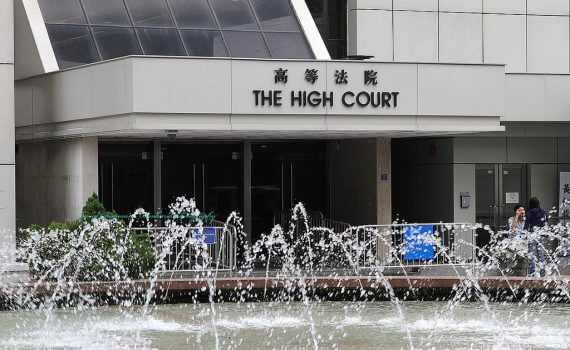
The defence council of the five males, accused of secretly making explosives in the abandoned ATV studio suspected the prosecution has brought insufficient evidence to court, heard in High Court on Wednesday. He questioned the sufficiency of evidence provided by the prosecution after cross-examining a CIB police officer who is the second witness. The officer told the court that he has not kept any records in words about their operations, only with his memory and audio reports. The prosecution refused to disclose how the oral report was recorded due to the risk of exposing confidential operation details in a public hearing when enquired by the defence. The defence suspected the police for providing insufficient evidence to the court after the prosecution suggested that a cousin document of the audio reports is available. The defence council doubted if the two CIB police officers could make a mistake on recognising the defendants. Defendants Chan Yiu-shing, 34, Cheng Wai-shing, 29, Pennelli Rizzy, 21, Wu Kai-fu, 21, Man Ting-lock, 23, was arrested after finding chemicals capable of producing explosives in former ATV premises in Sai Kung as police officers saw "yellowish white flashes" and smoke coming out from the building. The second CIB police officer told the court that they have been briefed by their superior Sgt. Lo Ka-shing of four male and two female as their targets, through the fourth defendant Wu Kai-fu was not one of their targets. "His [Wu's] name was not even known to the police before he was arrested," said the defence council of Wu, who also said it was a "chance encounter" for the police to have Wu arrested. Previous hearings revealed that Man Ting-lock, the fifth defendant, pleaded guilty and admitted that he has joined an anti-government organisation, "National Independence Party". They were experimenting with smoke bombs …