
Society

HKwalls 2026 innovates moving street art
- 2026-03-30
- Society
- The Young Reporter
- By: MA Yifan Chloe、SHI Puxuan AmyEdited by: Chun Lim LEUNG
- 2026-03-30
HKwalls Street Art Festival debuted its 11th edition from March 21 to 29 at the former Police Married Quarters in Central, turning Central and Western District into an open studio for street art. More than 20 local and international artists from 14 countries took part in workshops, art tours and traditional wall paintings, with the festival proposing a moving street art exhibition that allows artists to paint on trucks and let them roam across the city. Jason Dembski, co-founder of the HKwalls, said he had tried multiple channels to cooperate with truck owners willing to have their track be graffitied, including approaching individual truck owners on the street and contacting companies. “All the truck owners will keep the artwork for around three months,” he said. “Especially the drivers who are independent owners, they all seem very happy about the artwork and want to keep it for a long time.”. He added the project was an opportunity to integrate street art into more parts of Hong Kong. Ten artists jointly completed the graffiti or hand-painted designs for six trucks, which will later be used for regular cargo transportation. Taiwanese graffiti artist Leho, 30, said it was rare to have a chance to complete such a full-scale work on a truck. “It was usually identified as illegal graffiti in Hong Kong to paint on a vehicle," he said. Mooncasket, a 35-year-old local illustrator, painted on a truck for the first time. “I feel like the works that are created on small canvases might only sit inside a gallery or at home, while the audience could interact with my artworks and get more attention when there was a truck painting,” she said. Lindsey McAlister, 65, an artist who has attended the festival as a visitor for years, said she was looking forward to …

Different regional cultures blooms at HK Flower Show 2026
- 2026-03-23
- Society
- The Young Reporter
- By: XIE Xinni Cindy、Cao BeiyuEdited by: Lou Zhengzheng
- 2026-03-23
The Hong Kong Flower Show 2026 is hosted at Victoria Park from Mar 20 to 29. This year, the show features approximately 400,000 flowers, including about 40,000 violets as the main attraction. Exhibitors from 236 organisations across 10 countries and regions participated in this year’s show, showcasing flowers that represent the unique characteristics, traditions, and cultures. Follow the link below to watch the full reel: https://www.instagram.com/reel/DWNs67AE-Eu/?igsh=MTcweXg2MjcyNW91aA==
Once a prisoner, forever a prisoner: The struggles of rehabilitated persons being labeled by society
- 2026-03-20
- Society
- The Young Reporter
- By: RONG Miu Tung Shelly、ZHENG WU Anny、ZHENG Yuan ElaineEdited by: CHAU Wing Yau
- 2026-03-20
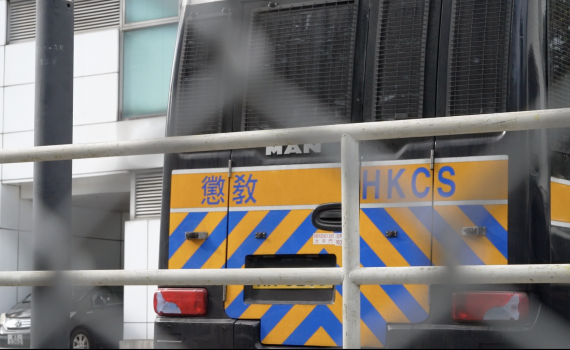
Rehabilitated persons are facing various challenges as they work to reintegrate into society, including social discrimination, changes in living habits, and mental issues, despite government support. Report indicates that many rehabilitated persons struggle with societal integration. 54% of the rehabilitated interviewees reported financial difficulties, having to rely on the Comprehensive Social Security Assistance, according to Hong Kong SideBySide, an NGO aims to help rehabilitated persons. According to Correctional Services Department, in Hong Kong, until Dec 31, 2025, the current number of persons in custody is 10,679. While the government provides support such as halfway houses and Caring Employer Scheme, some individuals continue to face challenges when seeking employment. TYR reporters spoke to some ex-offenders d citizens to find out more about the challenges they face in Hong Kong. https://youtu.be/XX924pEXyo0?si=buKwB8RbZtF2xFyq
Independent committee commences Wang Fuk Court fire public hearing
- 2026-03-19
- Society
- The Young Reporter
- By: ZHANG Jiahe Roys、CHENG Tsz Sen SeanEdited by: SIU Tsz Hang
- 2026-03-19
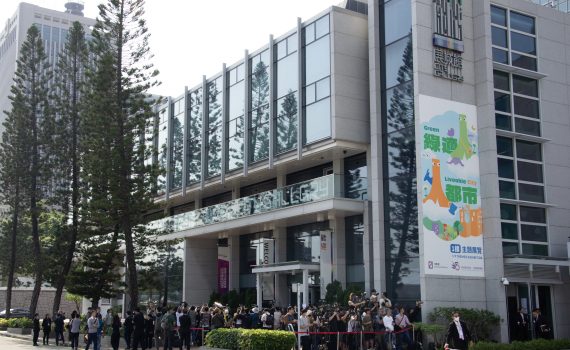
The Independent Committee in relation to the fire at Wang Fuk Court in Tai Po had their first evidential hearing this morning at City Gallery in Central. The committee's lead barrister Victor Dawes said the fire was a consequence of multiple overlapping human errors. “All fire safety measures were unavailable at the day of the fire, due to human wrongdoings,” Dawes said. Fire footage from the residents, passersby and media outlets were displayed at the hearing. Dawes said multiple CCTV footage from the buildings and the constructor indicate that cigarette butts are the fire’s main cause — engulfing the substandard combustible nets and bamboo scaffolding within 15 minutes. Evidence also showed failures in the fire alarms system, which affected the residents’ escape. Smoke was able to enter the buildings more easily since windows at the stairwells were replaced by wooden boards, for the convenience of construction workers. CCTV footage also showed residents were unable to put out the fire, as the hoses were not connected to any water tanks. Some audience cried during the hearing. Former Wang Tai House resident, 69-year-old Law, who lost a relative from the fire, said he wants the hearings to reconstruct what happened. “I think the government has to take responsibility. There are strict rules, but they were not executed with caution,” he said. Seven more hearings will be held on Mar. 20, 24, 26, 30, 31 and Apr. 1, 2. The hearing for the deadly fire on Nov. 26 — which took 168 lives — requires a pre-registration. Prioritised quotas are given to Wang Fuk Court residents, while members of the public and media are also welcomed. Registrations are now closed.
Elderly Hong Kong caregivers bear crushing load amid service gaps
- 2026-03-12
- Society
- The Young Reporter
- By: SIU Tsz Hang、CHENG Tsz Sen SeanEdited by: CHAN Hiu Ying
- 2026-03-12
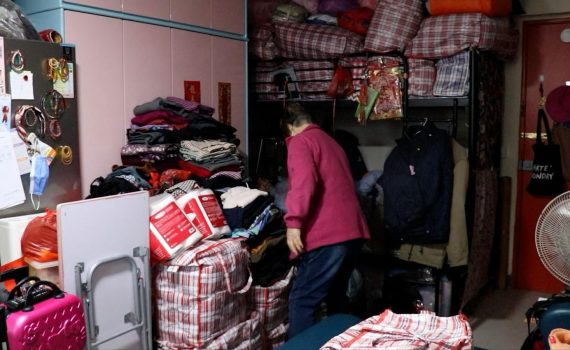
In a cramped public housing flat in Wong Tai Sin, Li Yuet-siu, 74, spends almost every hour of her day caring for her 89-year-old husband, who has been bedridden since he broke bones in both hips and legs in 2018. He can still stand and walk a few steps with a cane, but only as far as the toilet, clinging to furniture and walls for support. After the accident, Li said her husband was hospitalised and moved into two different government-funded care homes. But he repeatedly shouted and begged to go home, making it impossible for carers to help him. Since he has moved home, every need – from getting out of bed to going to the bathroom – has rested on Li’s shoulders. “Every day, I help him eat, wash and use the toilet. He refuses to wear adult diapers, saying they’re too hot and uncomfortable, so I have to wake up at midnight when he needs to urinate,” Li said, adding that her husband sometimes gets up by himself but falls. “Lifting him hurts my back badly, but if I drop him, it’s worse... Once when he fell, I couldn’t lift him, so I called the ambulance service. The staff said moving him could dislocate bones or injure him further, but I had no choice. I had no training and no one to help,” she said. Hong Kong’s rapidly aging population is straining family caregivers, many of whom are elderly themselves and face chronic exhaustion, injuries and emotional turmoil without adequate support. An expert estimates there are around 180,000 elderly caregivers in Hong Kong. According to the Census and Statistics Department, the number of elderly persons aged 65 and over is projected to nearly double over a 25-year period, from 1.45 million in 2021 to 2.74 million in …
Long queues for special child care centres: what does over a year’s wait mean for families?
- 2026-03-11
- Society
- The Young Reporter
- By: SHI Puxuan Amy、MA Yifan ChloeEdited by: QIN Ziyang
- 2026-03-11
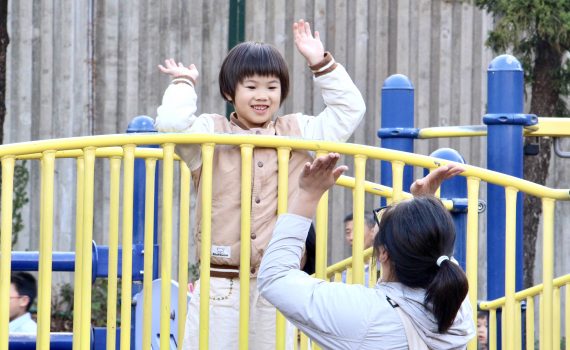
In a sunlit activity room of the Cheung Sha Wan Special Child Care Centre, young children are drawing with a therapist’s help. Nearby, another repeats words prompted by a speech therapist. These simple moments are government-subsidised intensive rehabilitation training for children with disabilities. Cherry Lee, 41, waited nearly two years for her daughter with moderate autism to access such a facility and receive intensive training. “It would have been better if my daughter could have entered the centre sooner,” she said. “At the very least, she could have had an earlier opportunity to develop essential self-care skills.” Hong Kong’s 52 government-funded Special Child Care Centres provide full-day centre-based care and cognitive training, speech, occupational and physiotherapy programmes for children with moderate to severe disabilities aged 2 to 6 before they enter primary school. Lee’s two-year wait is far from an isolated case. According to the Social Welfare Department, the average waiting time for the centres is 19.1 months in 2024. Experts and NGOs say that this wait means a delay in development for special needs children, while families are burdened with extra costs and stress in taking care of children. The government added 64 centre quotas for a total of 2,580 places in 2025, with 513 children on the waiting list, according to the Social Welfare Department. “The supply of places cannot keep up with the speed of increasing demand; it is not enough for those special needs children,” a representative from Hong Chi Association, an NGO operating three Special Child Care Centres, confirmed. “This is the core reason for the long wait.” Lee’s daughter, Sakina Muk, was placed in a centre run by NGO Heep Hong Society when she was 5 in August 2025, meaning she only has about a year she can use the service. “Even with early …
Back or stay? balancing mainland student integration with school language policy
- 2026-03-09
- Society
- The Young Reporter
- By: LIU Rui Reena、PENG Yixin NaomiEdited by: YANG Shuyi
- 2026-03-09
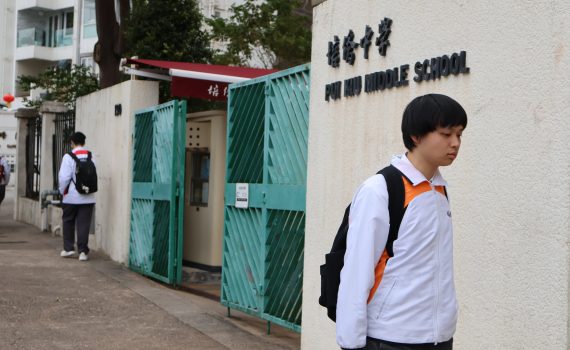
Last September, the 14-year-old Wang Yuqi moved from Beijing to Hong Kong to study in Hong Kong, hoping a new environment would offer a gentler and more balanced approach than the mainland’s exam-driven system. But her stint in the city only lasted two months before Wang returned to Beijing, citing her inability to cope with classes being taught in Cantonese at her Pui Kiu Middle School. Something similar happened to the 13-year-old Zhao Ziheng, a top math student from Wuhan who ranked last in his class at Tseung Kwan O’s Heung To Middle School after struggling for six-months with English as the medium of instruction. As Hong Kong strives to position itself as an international education hub, experts criticize the government and local schools for failing to provide adequate transitional support. This affects retaining mainland students arriving in large batches with parents under the Top Talent Pass Scheme amid other pathways. While non-government organizations offer limited Cantonese help, it remains poorly marketed. Wang arrived with her publisher father under the Top Talent Pass Scheme. She couldn’t fathom how the lack of Cantonese would paralyze her daily life. Since 2022, the scheme has allowed high earners and top university graduates worldwide to bring their children under 18 to live and study in Hong Kong. As of February 2025, a total of 131,818 such children had arrived. Wang’s first lesson at Pui Kiu Middle School was Chinese history, taught mostly in Cantonese. “By the end of the class, the teacher asked if we could all understand what was delivered in class, and if anyone didn’t understand Cantonese. I raised my hand, but I was the only one,” Wang said. Her teacher offered her some tutorials during lunch hours, in Putonghua. Similar help was also available by appointment for other subjects. Still, the …
Inside Myanmar’s tightened passport system
- 2026-03-08
- Society
- The Young Reporter
- By: LI Yuzhou Asher、Pann Hnin Nay ChiEdited by: ZHENG Xinyi
- 2026-03-08
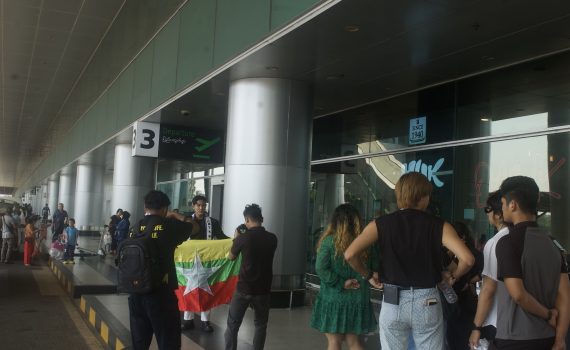
In early 2023, 28-year-old Scarlett, not her real name, queued up to enter Thailand at the Thai-Myanmar border, clutching her passport as she waited for her turn at the checkpoint. This was not for studying abroad, but an escape for survival. She feared that staying longer would permanently strip her of the possibility of leaving legally. “If my passport were scanned at the airport, I am afraid that it would be flagged,” said Scarlett. “That’s why I chose to leave from the Thai-Myanmar border,” she said, referring to its less stringent procedures. When she stepped up to the counter, the officer flipped through her red passport and looked at her briefly. “Okay, next,” said the immigration officer. He waved her through without running the passport through a scanner. Scarlett exited the gate and dared not slow down until she reached Thailand. Since the 2021 military coup, Myanmar’s passport system has increasingly functioned as a tool of exit control rather than merely a document for international travel. According to a 2025 report by the Danish Immigration Service, Myanmar authorities have circulated files of blacklisted people to airports and border checkpoints, allowing immigration officers to identify individuals and bar them from leaving the country with a passport scan. Those barred from leaving include participants in the Civil Disobedience Movement — a nationwide non-violent protest campaign that started in February 2021, in which civil servants went on strike in protest of military rule following the coup. More than 417,000 civil servants had joined the movement, according to an official brief from the National Unity Government of Myanmar. The movement was even nominated for the Nobel Peace Prize in 2022. Scarlett was one of them. Before the 2021 movement, she worked as a doctor at a public hospital. After the military seized power, she joined …
Shelters and government housing for street sleepers don’t meet needs, experts say
- 2026-03-04
- Society
- The Young Reporter
- By: LI Jinyang Carlos、ZHANG Jiahe RoysEdited by: CHEN Ziyu
- 2026-03-04
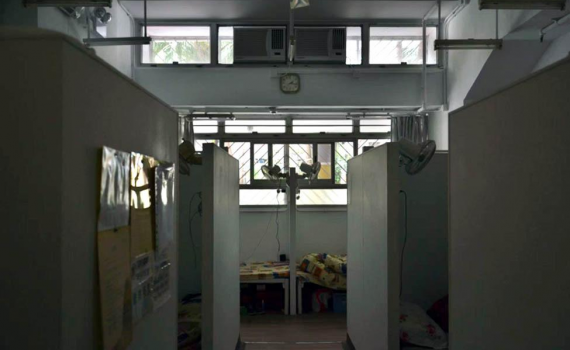
At night, Wong Hiu-fan, a 46-year-old former street sleeper, returns to her temporary home at the Jockey Club Hostel in Lok Fu, a single bed in a dormitory room she shares with other women. She stores her personal belongings in a small locker she has a key for. For her, it is a warm harbour and a place to restart her life after a period she described as “full of worries". Wong became a street sleeper six months ago -- after losing her job at a temple -- which she had relied on for income, meals and accommodation. After sleeping on the street for a while, Wong moved into the temporary shelter in Lok Fu. According to the Labour and Welfare Bureau, Wong was one of around 750 street sleepers in Hong Kong last year. To get off the street, many look for places in temporary shelters funded by the Social Welfare Department or NGO-funded hostels like this one in Lok Fu. Those who are eligible and lucky can move into government transitional housing units. The Lok Fu hostel where Wong lives in is a shelter managed by the NGO Neighbourhood Advice-Action Council that provides six-month accommodation, including 16 beds for men and 26 for women for street sleepers and needy persons with a monthly rent of HK$2,000. Residents facing significant financial difficulties can apply for rent reduction. It is now fully occupied. Law Sze-ha, 35, a hostel supervisor of Lok Fu, said the hostel does not have enough beds to meet demand. While many residents wish to stay longer than the maximum six months allowed, the hostel must accommodate new applicants waiting for a spot. “A stable place to live is the foundation for starting a new life. We offer guidance and information to our residents for applying to …

Budget 2026: HK$50 million for Hongkongers to receive AI training
- 2026-02-25
- Society
- The Young Reporter
- By: LI Yuzhou AsherEdited by: FENG Zhenpeng
- 2026-02-25
Hong Kong government will provide HK$50 million to invite public organizations to hold AI training courses for residents. The government will also provide HK$2 billion to improve AI education in primary, secondary schools, and universities, said Financial Secretary Paul Chan Mo-po in the budget plan on Wednesday. “While AI is advancing at a rapid pace, both students and teachers lack a basic understanding of it and the ability to apply it in practice; fewer than one in ten people have a grasp of it,” said Simon Wang, 48, a lecturer at Hong Kong Baptist University computer assisted language learning department. According to data research by Google, of the 4,446 US employees surveyed, only 40% of them have adopted AI in their work, and 5% are AI fluent. In the budget, Chan said public universities will launch 27 undergraduate courses that relate to AI. “HKBU has launched AI and Data Science as a new second major, and the computer science major includes Applied AI as a core course. Computer Science Department holds a supportive attitude to the application of AI in university education,” said Byron Choi Koon Kau, a professor from the Hong Kong Baptist University Computer Science Department. “Most professors still have a low acceptance of AI. Some assignments that could have been completed better with AI are not allowed to be used. It is necessary to fully implement AI training and education,” Wang said. In response to the budget plan for AI training, the Hong Kong Federation of Education Workers said, "We suggest that the government provide more systematic teachers’ AI training programs and add special subsidies to support all teachers in Hong Kong to take AI courses." According to Wen Hui Net, at the beginning of this month, the Education Bureau provided over 70,000 systematic AI training opportunities …