
Society

From concert dreams to criminal threats: Hong Kong students trapped in cross-border scams
- 2026-01-22
- Society
- The Young Reporter
- By: CHEN Ziyu、ZHENG XinyiEdited by: YANG Haicen
- 2026-01-22
When K-pop boy group Seventeen announced it was holding two concerts in Hong Kong in September, devoted fan Tsai Oi-wai, 20, knew it was an opportunity she couldn’t miss. But by the time she was online, tickets were sold out. Tsai scrolled endlessly on Instagram until she came across a second-hand ticket reseller who seemed trustworthy. “I even checked his profile, which had photos of everyday life—scenery, food, and other pictures—so I didn’t suspect anything,” Tsai said. Tsai’s ideal seat was priced at HK$2,099 on the official website, and the seller asked for HK$2,599. “I think the price was still within a reasonable range, so I transferred the money to him without further hesitation,” she said. The entire conversation and transaction took place over WhatsApp. “The seller told me that all payments and refunds had to go through a third-party partner company, which required additional verification procedures,” she added. “The scammer then asked me to enter a verification code, and I did so,” said Tsai. “Ever since then, I’ve never heard from that person again, nor any updates about my ticket.” She was scammed out of HK$42,034. Tsai’s experience is far from unique. According to the Hong Kong Police, fraud cases have surged dramatically, rising from 15,553 cases in 2020 to 444,480 in 2024, representing an increase of nearly thirtyfold, with the upward trend continuing in the first half of 2025. Students are easy targets for scammers. As of September, university students have reported 1,711 scam cases with total losses of HK$180 million, according to the Hong Kong police’s Anti-Deception Coordination Centre. Phone scams accounted for HK$16 million in losses among local students, while mainland students suffered significantly higher losses at HK$87 million. “Students are an ideal target for scammers, as their limited life experience and lack of familiarity with …
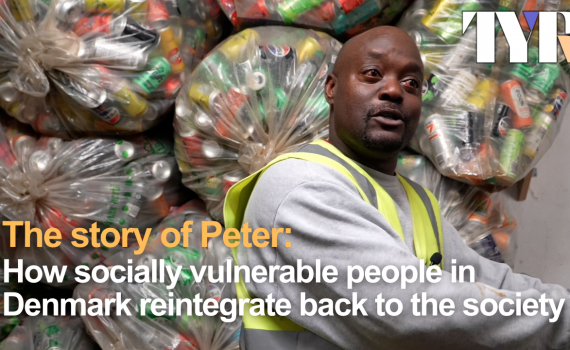
The story of Peter: How socially vulnerable people in Denmark reintegrate back into the society
- 2025-12-21
- Society
- The Young Reporter
- By: LEUNG Chi NgaiEdited by: SIU Tsz Hang
- 2025-12-21
https://youtu.be/CDTs4jNfeo0 Reported by Bono Leung Chi-ngai Edited by Henry Siu Tsz-hang Video description: Peter is one in around 17,000 people in Denmark receiving a Socialt Frikort, a card that is applicable for socially vulnerable people to obtain a certain amount of tax-free income. He is currently a driver for PantForPant, a working community under the NGO Foreningen Gade Liv that hires socially vulnerable people. Here he shares his reintegration process back into the society.

Mourners grieve at Taipei Main Station after deadly stabbings
- 2025-12-21
- Society
- The Young Reporter
- By: CHAN Wing Yiu、LAI Uen LingEdited by: Wing Chi HO
- 2025-12-21
Flowers, handwritten notes and candles for memorial are placed at Taipei Main Station, following a deadly attack on Friday night that left at least four people dead and 11 others injured. Police said the suspect, Chang Wen, 27, set off multiple smoke bombs inside the station before launching a knife attack. Police added that he later moved to the Zhongshan shopping district, a popular commercial area, where the assault continued. After the attacks, the suspect fell to his death from a department store building, Director-General of National Police Agency of Taiwan Chang Jung-hsin said at a press conference. Authorities said Chang had an outstanding warrant for evading military service and is believed to have committed the crime alone. While the motive remains unclear, investigators said the attacks appeared to be planned. In response to the incident, Taipei Mayor Chiang Wan-an announced on Saturday that the city government implemented various measures, including strengthening police deployment and increasing random inspections throughout the city. Around 2,000 police officers are assigned at metro stations and other key locations to enhance security measures across the city, according to the National Police Agency. Taiwan President Lai Ching-te pledged a full public inquiry and offered condolences to the victims and their families on his official page. According to his Facebook page, he visited hospitals on Saturday to meet survivors and express support.

No more clubs and wine: the rise of morning rave in Australia
- 2025-12-16
- Society
- The Young Reporter
- By: CHAU Wing YauEdited by: KURNIAWAN Trista Vania、LAI Uen Ling
- 2025-12-16
Young Australians are leading a new trend all over social media, focusing on alcohol-free socialising and personal wellness. The trend is on the news everywhere in Australia. Data shows 76% of 1000 young Australians, aged 18-24, prefer to socialise without alcohol. Meanwhile, one in four Australians has reduced their alcohol consumption over the past year. Instead of bars and clubs, people in Brisbane, Sydney, and Melbourne are flocking to cafes and bakeries hosting 8 am morning raves to kick off the day feeling fresh and energised.

“I’m raising the child I once was”: why young Chinese find healing in personified pet parks
- 2025-12-11
- Society
- The Young Reporter
- By: Li ZhongyiEdited by: YANG Haicen
- 2025-12-11
Outside a small pet barbershop, a brown poodle stood on a grooming table while a groomer trimmed its coat. On the fresh grassland a short distance away, a Border Collie ran through a line of training obstacles, landing steadily after each jump. Nearby, a Teddy dog sat in a stroller, waiting for its afternoon snack as its owner stood beside it. This scenario was taking place in reality in a pet entertainment park named LOHAS located at the top floor of China plaza in China Guangzhou’s Yuexiu district. Opened at the end of 2025, the park is the first-of-its-kind in Guangzhou, pet-themed entertainment zone that comes with a hotel, club, barbershop, grocery store, coffee shop and even a “marriage corner” for pets. Hegla Li, 26, and her one-year-old Border Collie, Doubao, are one of the first customers at LOHAS. “I am always afraid my little one might get lonely and depressed at home, so I took him to the pet entertainment park, basically to help him make more furry friends,” she said. Li, single and unmarried, has no plan for having a child and recently put on hold her plans of furthering her studies of medicine and travelling around the world, all for her furry friends. “To me, my dog is the emotional anchor that brings me comfort. Doubao gives happiness, energy and vitality and I would like to give him my company, money and anything that I think is interesting and worthy to him in return,” She said. There are many young Chinese like Li who would much rather devote their energy and resources on pets rather than building a family. Since 2020, the birth rates of China have been continuously declining and dropped to an all-time low of 6.39% in 2023, according to the National Bureau of Statistics …

Hong Kong team ends journey in Milwaukee Squash Open 2025
- 2025-12-04
- Society
- The Young Reporter
- By: CHEN Xiyun、CHEN ZiyuEdited by: WANG Ludan、YANG Haicen
- 2025-12-04
Hong Kong’s Simmi Chan Sin-yuk, 23, lost to Belgium’s Tinne Gilis at the single-elimination round of the Milwaukee Squash Open 2025 on Dec. 3, ending the team’s journey at the tournament. As the tournament entered its third day, Chan was the only one among the six Hong Kong players to advance to the second round of the five-round competition. Chan, who claimed the silver medal at the inaugural Under-23 World Squash Championships this April, found her match when faced against the world’s No. 8 squash player, Tinne Gilis, falling to a defeat with 9–11, 7–11, and 12–14 in the three rounds of the match, respectively, at the Hong Kong Squash Centre. “I have given out everything I could to win the game, so I carry no regret regarding the defeat,” Chan said. The tournament is divided into men’s and women’s main draws, each only featuring the top 30 players worldwide, and the local host was awarded two unrestricted qualifying spots in each draw, granting entry to local players with no restrictions on their world ranking. “It will be a tough game for Chan since Gilis is a formidable opponent,” said Wong Tsz-hin, 30, Chan’s teammate, adding that he hopes Chan can enjoy the game before the match begins. Gilis took the leading position in both the first and second rounds, at one point holding a five‑point advantage in an 11‑point game. Despite reaching the match point at 10–9 in the third game, Chan missed several shots from the same spot on the right forecourt, allowing Gilis to reverse the momentum and win. “She was able to complete the defence when the situation was unfavourable for her,” Chan said, describing Gilis as a rival who combines physical strength with steady play in the post-game media conference. Chan’s rival Gilis just won her …

Tai Po fire death toll rises to 151 as more bodies are discovered
- 2025-12-02
- Society
- The Young Reporter
- By: Wing Chi HO、AO Wei Ying VinciEdited by: SIU Tsz Hang
- 2025-12-02
The death toll from the deadly Tai Po blaze has risen to 151, as officers discovered eight additional bodies at Wang Cheong House, police said. More than 40 people listed as missing have yet to be traced, said Lam Man-han, police force’s New Territories North regional commander. “The condition inside Wang Cheong House is extremely bad. It is a scene of complete devastation,” she said. She added some remains were burned to ashes due to extreme temperatures, making identification more difficult. “The police deeply understand the deceased’s families are now enduring indescribable grief and torment,” Lam said. Lam thanked the frontline officers and Disaster Victim Identification Unit personnel, who continue to work under hazardous conditions inside the estate. She said DVIU is striving to locate the remains, recover personal belongings, and assist with identification, to complete the operation within three weeks.

Tai Po fire death toll rises to 156, residents to retrieve belongings on Dec 3–4
- 2025-12-02
- Society
- The Young Reporter
- By: Wing Chi HOEdited by: AO Wei Ying Vinci
- 2025-12-02
The death toll in the Tai Po Wang Fuk Court fire has risen to 156, the Police Regional Commander of New Territories North, Lam Man-han, said at a briefing. Lam said search operations have been completed in five residential blocks, including Wang Kin, Wang Shing and Wang Tai Houses. Searches at Wang Cheung House are about 40% complete, while Wang Sun House has reached 90% completion. Search work was suspended earlier today, to prevent families from witnessing the removal of bodies during roadside mourning ceremonies. She said 13 bodies were recovered in Wang Cheung House, including five newly located bodies, bringing the total death count to 156. Among those, 127 bodies have been identified, 29 of them pending identification and 30 people still reported missing. Lam added residents of Wang Chi House, the only block that was not directly affected by the fire, will be allowed a one-time return to their homes on Dec. 3 and 4 to collect essential items. Between 9am to 9pm, only up to two people per household will be permitted to enter their homes for a maximum of 90 minutes. Authority personnels will accompany residents during entry, and police officers will be stationed on each floor. To facilitate smooth operation, staff from the Social Welfare Department will provide on-site support. Additional transport services, including shuttle buses and volunteer taxi vehicles will be available for Wang Chi House residents.

Thousands mourn Tai Po fire victims continue as death toll rises
- 2025-12-02
- Society
- The Young Reporter
- By: Wing Chi HO、AO Wei Ying VinciEdited by: SIU Tsz Hang
- 2025-12-02
Thousands gathered at the nearby Kwong Fuk Sitting-out Area in Tai Po on Monday to lay flowers in remembrance of the fire victims. Bouquets, condolence cards and soft toys filled the lawn as citizens paid their respects to the victims of the deadly fire. Mourners penned blessings and messages on memos, which were posted at a pavilion near Wang Fuk Court. A similar display of memo wall appeared along a pedestrian tunnel leading to Kwong Fuk Sitting-out Area, but was later voluntarily removed after police cautioned against the practice.

Residents raise concerns as Hong Kong’s oldest housing estate remains under plans for redevelopment
- 2025-12-01
- Society
- The Young Reporter
- By: SIU Tsz Hang、YAM Long Hei JamieEdited by: KURNIAWAN Trista Vania
- 2025-12-01
Three years after Chan Sau-mei moved into her flat, the concrete wall started flaking off. Now, 20 years later, the entire building is full of exposed rebars, dust and concrete splatters. “It’s like a sandy beach at home everyday. It is an endless nightmare cleaning up all the mess at my house,” Chan, 52, said, adding that there is a new renovation project nearly every eight months. Chan lives in the Model Housing Estate, Hong Kong’s oldest existing public housing estate, sandwiched between Quarry Bay and North Point on Hong Kong Island. Five of the estate’s six blocks were built in 1954, with one, a redevelopment of the original, built in 1979. Chan’s block is one of the originals built with five to six stories and no lift. Announced in the 2025 Policy Address in September, Lee announced that redevelopment plans for some of Hong Kong's oldest estates will be announced. The Housing Authority is conducting a study on the redevelopment of Model Housing Estate, and will announce its preliminary findings in 2026-27, while redeveloping plans for Ma Tau Wai Estate and Sai Wan Estate by the end of this year. Chan said she is happy to finally hear about redevelopment plans. “I love living here. We have a very close relationship with our neighbours, and doing groceries and commuting around the estate is also convenient. I think this place is a golden location, but the only flaw is it’s old and is worn to a skeleton,” Chan said. With no lift in the five older blocks, Chan said she is lucky to live on the ground floor, as it is very inconvenient to climb five or six storeys every day to their unit, especially for older residents. Even if there are lifts, they sometimes cause inconvenience, said Huang Yang-hong, …