
A developer update to the first-person shooter video game Counter-Strike 2 triggered a collapse in its virtual trading market on Oct 22, wiping out almost US$2 billion in real money.
Valve, the American video game developer of Counter-Strike 2, released an update that allowed players to more easily craft rare weapon skins in the game, causing a plunge in the value of skins that are purchased and traded with real-world money. Although the value rebounded in November, it remains below most buyers’ original purchase price.
Skins are virtual cosmetic items that change the appearance of weapons without affecting the gameplay. They are categorized by color, ranging from basic white to the rarest gold.
The price of gold skins dropped by approximately 30% to 40% on the international third-party game trading platform Buff Market, hitting players who had collected them as virtual investment commodities for future resale and rental.
Previously, the gold skins could only be obtained either by unlocking in-game loot boxes containing randomized virtual items such as skins, gloves, and other weapons, or by trading with other players through third-party online marketplaces, including NetEase Buff and Youyou Youpin, which are both platforms that primarily serve Chinese players.
John Liu, 20, a mainland Chinese student at Lingnan University in Hong Kong, said he purchased a rare “marble fade” butterfly knife skin for approximately 13,000 yuan (HK$14,201.54) on NetEase Buff because he anticipated later reselling it at a higher price for a profit.
After the update, the “marble fade” Butterfly knife’s skin value fell to 5,999 yuan (HK$6,553).
“I just gave up on selling after seeing the price hit its lowest point a couple of days ago,” he said.
According to data from Buff Market, several virtual items in the game, such as gloves and knives, experienced a price recovery in November.
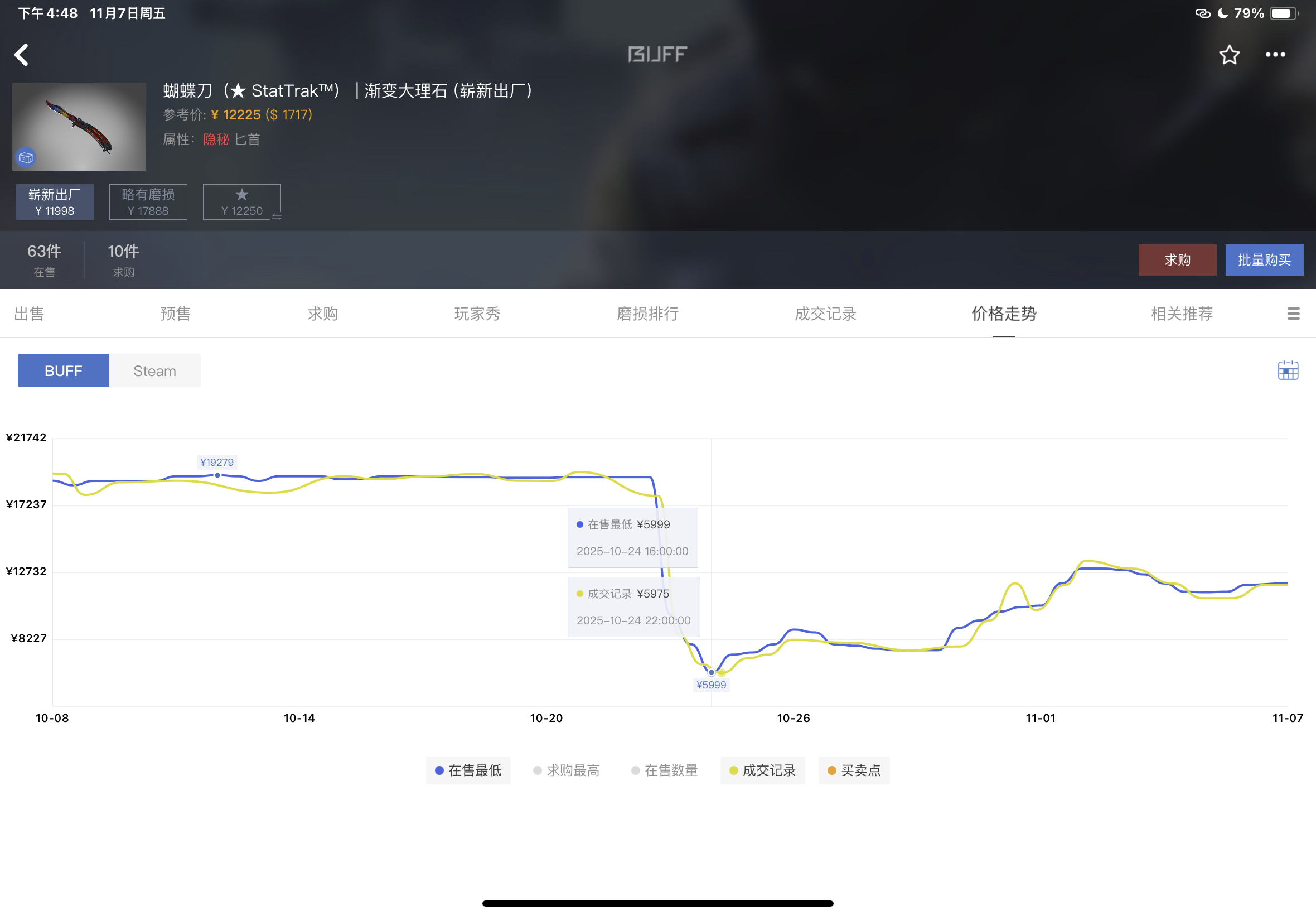
“I’ve been closely tracking the price trends these days. There’s been an upturn to 12,300 yuan, but the value is still below the peak of 20,000 yuan,” he added.
Liu said that although he had lost some money, the amount was manageable. However, he said that this experience had made him reconsider seeing games as an investment.
“I had no plan to sell the knife in the short term,” Liu said. “I would treat Counter-Strike 2 as a normal game,” he added.

For others who view skin trading like a stock market investment, their losses ranged from several thousand to tens of thousands of yuan.
Charles Song, 26, an employee at a state firm in Xi’an, China, lost over 200,000 yuan (HK$218,485.25) after the update.
“I started with free or cheap skins worth only about 10 yuan, and it’s just for fun, as they made my virtual character look cooler,” he said, adding that over five years, his interest shifted from fun to profit.
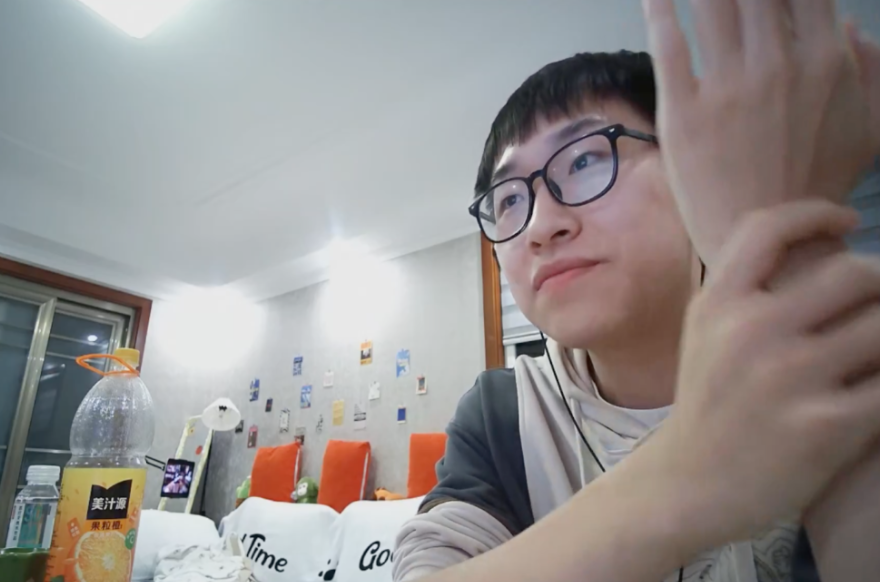
Later, Song said he began to notice that some of the virtual items appreciated steadily in value.
“Just like a real stock market,” he said.
Through buying and selling, he said his holdings reached 700,000 yuan (HK$764,698.38), including a 100,000 yuan (HK$109,242.63) loan.
“I thought it was safe,” he added.
Tang Weihan, 19, a university student from Beijing with three years of experience in the game, saw his profits drop by 5,000 yuan (HK$5,462.13). However, he said he would continue playing the game and trading in the market.
“Profit can be made rapidly, so in the future I might still invest, but I will do it in a properly regulated market,” Tang said.
《The Young Reporter》
The Young Reporter (TYR) started as a newspaper in 1969. Today, it is published across multiple media platforms and updated constantly to bring the latest news and analyses to its readers.

FinTech Week 2025: Hong Kong Advances Asset Tokenisation Agenda Amid Industry Concerns Over Implementation

Discover Hong Kong’s 18 Districts: An Interactive Map of Local Stories


Comments