
Society

Implementation of vaccine pass is in use
- 2022-02-25
- Society
- The Young Reporter
- By: Phoebe Law、Lokman YuenEdited by: Jenny Lam、Jayde Cheung
- 2022-02-25
From Thursday, visitors to a variety of public spaces must produce a vaccine pass this include shopping malls, wet markets and restaurants. Hong Kongers hold different views towards the new implementation.

Vaccine pass kicks in at public venues
- 2022-02-25
- Society
- The Young Reporter
- By: Kate ZhangEdited by: Nola Yip
- 2022-02-25
From today, visitors to government revenues and 23 categories of premises, including restaurants, malls, supermarkets, and wet markets must scan the Leave Home Safe app. The policy applies to everyone aged 12 years and above. The app sounds an alarm if the phone does not show proof of vaccination. Staff at these premises are then required to inform the visitors or ask for proof of exemption. Chan Chui-san, 58, thought it was cumbersome to use the vaccine pass. "The restaurant needs to scan my QR code again after I have scanned the "Leave Home Safe" app, but the scanning equipment in some restaurants are not sensitive, and they wasted my time," Chan said. The scheme will be phased in so that people have ample time to receive a second or third dose of the vaccine. But from 30 April, people aged 18 or above must show at least two doses of the COVID-19 vaccine on their vaccination passes. Premises are divided into two categories for implementation of the scheme, namely “active checking” and “passive checking” premises. At “passive checking” premises, such as shopping malls and department stores, patrons do not need to show their vaccine passes upon entry, but law enforcement officers will conduct spot checks. There are exceptions, for example, people who visit restaurants just to pick up takeaways or retrieve items, or are being tested or vaccinated, and receiving essential government services. People who cannot take the Covid-19 vaccine because of health reasons may be exempted for 3 to 6 months but they need to present a certificate issued by a doctor. Jessie Wong is not vaccinated because she believed her allergies make her unsuitable, but her doctor would not give her an exemption certificate. "I can only plan for getting injections now," she said. The president of …

Budget 2022: Hong Kong budget aims to tighten financial and economic ties with mainland China
- 2022-02-24
- Society
- The Young Reporter
- By: Ziyu Bruce Zhao、Kate ZhangEdited by: Summer Li
- 2022-02-24
Hong Kong’s Financial Secretary Paul Chan Mo-po addressed the HK$170 billion budget for the city in today's speech, with considerable mentions on integrating Hong Kong’s economy into the mainland China market and national-level development. Strengthening Hong Kong as a financial centre to integrate with mainland development Hong Kong will enhance its status as an international financial centre in line with the 14th Five‑Year Plan by strengthening its status as an offshore renminbi hub and asset management centre, the Financial Secretary said in his budget speech today. “In the future, we will explore ways to further expand the channels for the two-way flow of cross- boundary RMB funds, as well as continue to promote the development of offshore RMB products, including introducing more diversified RMB wealth management products and bonds,” Financial Secretary, Paul Chan said . The city launched the Southbound Trading of Bond Connect and the Cross‑boundary Wealth Management Connect Scheme in the Greater Bay Area (GBA) in September last year, which allows individual investors in the mainland to invest in offshore bonds through the Hong Kong bond market according to the Hong Kong Monetary Authority. Chan said the government is exploring more enhancement measures for these investment initiatives, including expanding quotas and scope of eligible investment products, inviting more companies to participate, and improving distribution. The Hong Kong Mortgage Corporation Limited will study and implement a pilot plan for infrastructure financing securitization within the year. According to the plan, the corporation is expected to issue infrastructure financing securitization products worth about HK$ 35.1 trillion (US$450 million) in the institutional market next year. “On the one hand, the local infrastructure financing market will be more vigorous and diversified, and at the same time, market capital will be introduced into high-quality infrastructure projects,” Chan said. Chan also proposed to set up …

Budget 2022: E-vouchers doubled to HK$10,000 to boost local consumption
- 2022-02-23
- Society
- The Young Reporter
- By: Karmen Li、Phoebe LawEdited by: Tiffany Ma
- 2022-02-23
Every permanent resident in Hong Kong will get $10,000 in electronic vouchers, the Financial Secretary announced in the budget today. But with tough Covid measures, some people in the restaurant industry doubt if they will benefit.

Budget 2022: Efficacy of HK$67.5 billion healthcare spending has been questioned
- 2022-02-23
- Society
- The Young Reporter
- By: Lokman Yuen、Gigi ChongEdited by: Hamish CHAN
- 2022-02-23
The budget sets aside $67.5 billion dollars to fight the pandemic. Those include funds for vaccines, new healthcare facilities and potential future spending. But some people involved in the fight against Covid question if the money will benefit those in need.

Five highlights from Hong Kong Budget Address 2022-23
- 2022-02-23
- Society
- The Young Reporter
- By: Nola YipEdited by: KOO Chi Tung 顧知桐
- 2022-02-23
In response to the fifth wave of outbreak in Hong Kong, Financial Secretary Paul Chan Mo-po unveiled today’s 2022-23 Budget online, a first for the city. Here are a few highlights of his speech: 1. Important figures The government’s total revenue is estimated to be HK$715.9 billion, a 3.3% increase compared with the previous year, while expenditures will increase 15.5% to HK$807.3 billion, Chan said. Hong Kong will have an HK$18.9 billion surplus for 2021-22, Chan said, rather than the expected HK$101.6 billion deficit. Fiscal reserves are expected to be HK$946.7 billion by the end of March. 2. Tax The rates of profits tax and salaries tax will remain unchanged in view of the current economic situation, Chan said. The government will also continue to waive up to HK$10,000 of salaries tax and tax under personal assessment. “With the outbreak of the fifth wave of the epidemic, businesses and individuals are generally under considerable financial pressure,” he said. 3. Progressive rating system A progressive rating system for domestic properties will be introduced to reflect the "affordable users pay" principle. For properties with a rateable value of HK$550,000 or less, rates will remain uncharged at the present level of 5% Property owners will pay 8% for a rateable value up to HK$800,00 and 12% over that. Chan said this will affect about 42,000 local properties, accounting for around 2% of private real estate, but will bring an increase of about $760 million in annual government revenue. 4. Anti-virus measure Chan added about HK$22 billion to the Food and Health Bureau to strengthen Covid-19 testing work, produce rapid antigen test kits and provide additional support for the Hospital Authority. 5. Green city The government will inject HK$200 million into the Green Tech Fund to build a liveable and green city and HK$1.5 …

Budget 2022: Financial Secretary announces additional $10 billion to boost Hong Kong’s biotechnology industry
- 2022-02-23
- Society
- The Young Reporter
- By: Malick Gai、Kelly PangEdited by: Nick Yang
- 2022-02-23
Hong Kong will continue to invest billions in the biotechnology industry as it works to enhance institutional capacity with HK$10 billion earmarked for life and health technology, Paul Chan Mo-po, Financial Secretary, said in his budget address today. The investment in the innovation and technology sector comes amid the Greater Bay Area development. The establishment of the InnoLife Healthtech Hub in the Hong Kong Shenzhen Innovation and Technology Park, announced in the 2021 policy address, will bring the research strengths and resources of laboratories to create greater synergy, Secretary for Innovation and Technology Alfred Sit Wing-hang said in October last year. Biotechnology plays a significant role globally as it will dominate important economic activities in the 21th century and firms or countries that control key biotechnology will be able to rule the market and the economic development, according to scholars. “With more than 16 laboratories and the eight relevant State Key Laboratories, we can pool together top‑notch research teams from all over the world and focus our efforts on R&D work as well as global research collaboration in the field of life and health sciences,” Chan said. There are more than 250 biotechnology‑related companies in Hong Kong, with the majority of them operating in pharmaceuticals, traditional Chinese medicinal, healthcare products or medical devices and diagnostics, according to the Hong Kong Trade Development Council. In the 2018-19 Budget Address, biotechnology was recognized as one of four priority sectors, which Chan had earmarked an additional $50 billion for developing innovation and technology in Hong Kong. “Continuous promotion of Innovation and Technology development is an important strategy to foster a more vibrant and diversified economy. The 14th Five‑Year Plan supports Hong Kong's development into an international I&T hub,” said Chan. The current-term government has invested more than $130 billion in I&T development, which …

Budget 2022: Silver Bonds and Care Homes to help Hong Kong’s elderly people
- 2022-02-23
- Society
- The Young Reporter
- By: Tracy Leung、Jayde CheungEdited by: Jenny Lam
- 2022-02-23
The Financial Secretary has earmarked an additional $2.38 billion in this year’s budget to provide an extra half-month payment of Comprehensive Social Security Assistance (CSSA), Old Age Allowance, Old Age Living Allowance, and Disability Allowance, to Hong Kong’s most needy. But Sze Lai-shan, deputy director of the Society for Community Organisation said more needs to be done, “There are very few measures for the elderly, but mainly giving money to the middle class. The budget should be allocated more to the grassroots like the elderly and the weak,”said Sze. “The government should spend more money on the healthcare services for the elderly as many of them are staying at home and no one can take care of them.” As of Jan. 31 last year, nearly 37,000 elderly were waiting for a subsidised place in Care and Attention homes and Nursing Homes, according to the Social Welfare Department. The budget sets aside an additional HK$19 billion to be spent on strengthening services for the elderly, the disabled and children. Part of the sum will go towards building eight new contract homes for residential elderly care service in the Kwu Tung North New Development area and Fanling, providing an estimated additional 800 places. On top of four existing neighbourhood elderly centres offering basic elderly support, one more will be constructed in Area 54 in Tuen Mun. To help well off elderly people, the government will issue at least HK$35 billion worth of silver bonds in the coming year. That’s an increase of HK$10 billion from last year. Only people aged 60 years and above can invest in silver bonds and it will give them a fixed income on a half-yearly basis. A fixed rate of 3.5% per annum is given to silver bonds due 2023 and 2024, according to the key features …
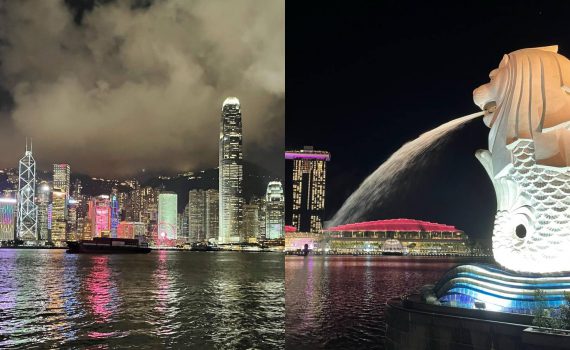
Budget 2022: How do Singapore and Hong Kong’s pandemic relief measures for the hardest hit compare?
- 2022-02-23
- Society
- The Young Reporter
- By: Nick YangEdited by: Kate Zhang
- 2022-02-23
Singapore and Hong Kong, two small and open Asian economies that are often compared, have adopted completely different COVID-19 policies. Singapore has moved to "living with COVID-19" while Hong Kong sticks to China’s "dynamic zero COVID" strategy. But the effects of the pandemic have not been equal, and both cities have implemented financial relief for the hardest hit. With the Hong Kong government announcing its 2022-23 budget today and the Singapore government delivering its 2022 Budget Plan last Friday, The Young Reporter explains five ways both Singapore and Hong Kong have attempted to alleviate COVID-19’s impact on its neediest residents. 1. Tax Relief Tax redistribution is a way to cope with inequality in many countries, according to the United Nations, as poor households are often affected more. Singapore: Consumption taxes tend to be regressive, meaning they are disproportionately difficult on low earners, economists say. The Singapore government suspended its plan to raise the goods and services tax from 7% to 9% in 2021, a broad-based consumption tax on nearly all supplies of goods and services in Singapore. It is expected to be raised in 2023. This year, a S$560 million ( HK$3.25 billion) Household Support Package, which provides support for daily essentials through utilities rebates, top-ups for children’s education and vouchers for use at heartland shops, will be provided to support households, especially poor families, in dealing with a future hike in the GST. The Singapore government also provided tax relief for the self-employed and low-income workers with pandemic-driven support schemes, including the Self-Employed Person Income Relief Scheme and Workfare Special Payment. Hong Kong: The government has waived a portion of employment taxes for three years, including salaries tax and tax under personal assessment reduction, with a ceiling of HK$10,000 this year and last year, and HK$20,000 in 2020. For …

Australia reopens to vaccinated travellers, while Hongkongers struggle with quarantine
- 2022-02-21
- Society
- The Young Reporter
- By: Hamish CHANEdited by: Clarice Wu
- 2022-02-21
After 704 days, Australia finally reopens its international border to fully vaccinated travellers, except for Western Australia, its border is scheduled to reopen on March 3. At least two jabs of vaccines are required to visit Australia. To visit State Victoria, travellers must be vaccinated with a booster on top of the two doses. Unvaccinated travellers with medical proof of not being suitable for vaccination may need to quarantine for 14 days, while the vaccinated do not need to undergo quarantine. There will be 56 international flights landing in Australia today worldwide, including Hong Kong. “My message to tourists all around the world is: ‘Pack your bags and come and have one of the great experiences you could ever imagine,” said Australian Prime Minister Scott Morrison. “Don’t forget to bring your money with you because you will find plenty of places to spend it’,” he added. Karla Warner, the manager of Queensland Museum Shop, said she is excited to see visitors returning to Australia. “Finally, we can have international visitors after two years,” said Warner. She expects that more visitors will go to the museum and grab souvenirs, which can boost the shop's sales. “I am optimistic with the sales,” said Warner. She expects that visitors will bring new energy to the economy which has been affected by the pandemic. However, potential visitors from Hong Kong are struggling with the local quarantine policy. Li Chi-chung, said he wants to meet his son, who is studying in Melbourne, but the quarantine policy in Hong Kong stops him. “I want to see my son face-to-face, but I do not want to spend a month in quarantine when I come back from Australia,” said Li over the phone. Currently, Australia is one of the listed countries with flight suspension in Hong Kong. Travellers …