
The Young Reporter
Oscars 2018: The results are in!
- 2018-03-05
- Culture & Leisure
- The Young Reporter
- By: Katherine Li、Edited by: 、Ezra Cheung
- 2018-03-05
The "most colourful" night of Hollywood is over and all awards this year are presented. The Shape of Water, the movie with 13 nominations, is the biggest winner of the night bringing home four trophies. Here is the list of Oscars 2018 nominations with the winners bold: Best Picture: Call Me by Your Name Darkest Hour Dunkirk Get Out Lady Bird Phantom Thread The Post The Shape of Water Three Billboards Outside Ebbing, Missouri https://twitter.com/ABC/status/970520810866831361 During the Cold War era in Baltimore in 1962, lonely and mute Elisa (Sally Hawkins) works as a cleaning lady in a high-security government laboratory. Her life forever alters when she and co-worker Zelda (Octavia Spencer) discover a secret project where a mythical humanoid amphibian, living underwater, was held captive, experimented on and then tortured. With the help of Zelda and Giles (Richard Jenkins), Elisa rescues the creature to her own home against life-threatening odds. As the two forms a deeper bond, a romance that transcends race and species unfolds. https://www.instagram.com/p/Bf7dvbUllt0/ Lead Actor: Timothée Chalamet, Call Me by Your Name Daniel Day-Lewis, Phantom Thread Daniel Kaluuya, Get Out Gary Oldman, Darkest Hour Denzel Washington, Roman J. Israel, Esq. https://twitter.com/ABC/status/970516904312897536 Lead Actress: Sally Hawkins, The Shape of Water Frances McDormand, Three Billboards Outside Ebbing, Missouri Margot Robbie, I, Tonya Saoirse Ronan, Lady Bird Meryl Streep, The Post https://www.instagram.com/p/Bf8lifdFWL1/ Actor in a Supporting Role: Willem Dafoe, The Florida Project Woody Harrelson, Three Billboards Outside Ebbing, Missouri Richard Jenkins, The Shape of Water Christopher Plummer, All the Money in the World Sam Rockwell, Three Billboards Outside Ebbing, Missouri https://twitter.com/ABCNetwork/status/970479025096282112 Sam Rockwell wins Actor in a Supporting Role for his role as Jason Dixon, an alcoholic and impulsive detective, in Three Billboards Outside Ebbing, Missouri. He is also known for his supporting roles in Iron Man 2 (2010), Cowboys & Aliens …
Oscars 2018: are there any colours other than white and black?
- 2018-03-05
- Culture & Leisure
- The Young Reporter
- By: Ezra CheungEdited by: 、
- 2018-03-05
Nominating only actors of European descent in the lead and supporting categories in 2015 and 2016, the Academy Awards were accused over the past few years of being too "white" and have received years of backfire and boycotts. Even the host Jimmy Kimmel made fun of that "whiter than white" phenomenon at last year's presentation. The Academy of Motion Picture Arts and Sciences then became rivetingly diverse last year, aiming to escape from the #OscarsSoWhite scandal with seven nominations of coloured actors; Moonlight also won Best Picture although its way towards the trophy was a downright blooper because it got mixed up with La La Land. https://twitter.com/ABCNetwork/status/970490435431886848 Its board of governors also approved in a unanimous vote on January 18 this year to alter its membership composition for the sake of increasing its diversity, committing to doubling the number of female and minority Oscars voters by 2020. And thanks to the spectacular performances of Daniel Kaluuya (Get Out), Denzel Washington (Roman J. Israel, Esq.), Mary J. Blige (Mudbound), Octavia Spencer (The Shape of Water) and the nomination of Mudbound, the Academy Awards seem to have succeeded in getting rid of being #OscarsSoWhite this time. Unfortunately, it seems that there is still a lack of some oriental tenor in the nominations. Asians have been denied altogether of any nomination of main acting categories. Lebanon's The Insult, directed by cinematographer Ziad Doueiri, nominated for Best Foreign Language Film, is imbued with the most noticeable sense of "eastern" ambience. This Near Eastern drama has earned a "certified fresh" with an approval rating of 88% based on 69 reviews from review aggregator Rotten Tomatoes and an audience score of 92%. "The Insult uses its familiar courtroom drama framework to deliver a hard-hitting statement on modern Middle Eastern politics as gripping as it is thought-provoking," the …
Oscars 2018: TYR's Picks and what we expect from the ceremony
- 2018-03-05
- Culture & Leisure
- The Young Reporter
- By: 、Ezra CheungEdited by:
- 2018-03-05
The 90th Academy Awards are just a few hours away. As the people of Hollywood get prepared for their big night. Much like the previous years, there are many speculations as to what people will wear, what the host, Jimmy Kimmel, will be saying, what topics would be mentioned during acceptance speeches, and most of all, who will be the winners. While we will have to wait until 5 pm PST on Sunday, March 4 (9 am HKT on Monday, March 5), editors Angie Chan and Ezra Cheung sat down with The Young Reporter's Editor-in-Chief Holly Chik and discussed the upcoming Oscars, before their live-streams on Facebook during the event. A: Angie Chan E: Ezra Cheung H: Holly Chik H: What makes the 90th Academy Awards so significant? E: I think it's fairly important because the ceremony is held amidst the #MeToo and #TimesUp movements, electrifying the whole American film industry. I am very curious about what one of the nominees, Meryl Streep, will say during the presentation (given she wins the Best Actress in a Leading Role). And besides, I did go to pretty much all of the films nominated. The race is fairly competitive and I am looking forward to (the announcement of) the winners. A: Well, it's the 90th Academy Awards, the number itself makes it significant. *laughs* I think with so much happening in Hollywood, it would be hard for the celebs not to be political one way or the other, and I think how they represent their stance will be what makes this year extra significant 'cause what these important figures of the entertainment industry say will easily determine the general public's view. And I think seeing Jimmy Kimmel a second time would be quite interesting as well considering his kind of awkward …

Budget 18/19: Hong Kong financial chief attempts to smarten up tourism
- 2018-02-28
- Politics
- The Young Reporter
- By: Amy Ho、Phoebe Lai、Rachel YeoEdited by: Ezra Cheung、James Edward Allen、Kobie Li
- 2018-02-28
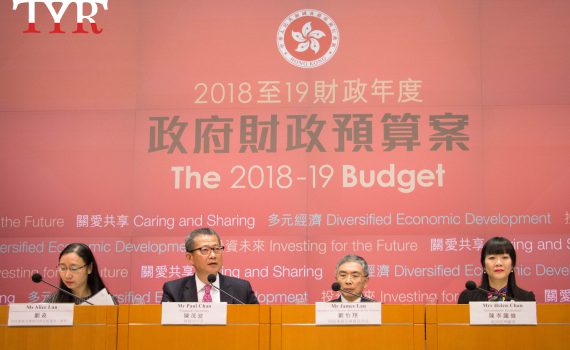
In the hope of developing smart tourism in Hong Kong, Financial Secretary, Paul Chan Mo-po, unveils today an additional provision of $396 million for the industry from last fiscal year's recording-breaking surplus of about $138 billion. This yearly budget proposes allocating $226 million to Hong Kong Tourism Board to implement four strategies to boost tourism. One of them is to refine smart tourism measures in a bid to attract more visitors to the city. The move comes in response to the latest 4.5% decrease, reported by the Tourism Commission in 2016, in visitors from around the world altogether. Smart tourism refers to a series of technologically innovative initiatives implemented to enhance sightseers' at-destination experiences. According to a paper from the International Journal on Networked Business in 2015, big data is employed for analysing current tourism trends. The findings then are used to improve current tourist attractions and to bring better accessibility for travellers. Tourism sector lawmaker, Wayne Yiu Si-wing, hopes Hong Kong could make use of such technology to collect data, such as putting sensors on streetlights to track traffic and pedestrian flows. "We hope that the data collected will allow tourists to make better choices when they visit (Hong Kong)," he said. Hong Kong is currently utilising QR codes and Wi-Fi hotspots for some of the smart tourism measures. However, Mr Yiu highlighted that the government could do more to develop Hong Kong into a smarter tourism destination. "For example, Wi-Fi hotspots in the city are still not fast enough because people may gather to use Wi-Fi in the same spot," he explained. Ling Ho, director of cultural tour agency Ho Ho Go Experience, mentioned past measures implemented by the government to improve IT security for tour agencies. "The government has given several hundred thousand dollars for people to set up …
Budget 18/19: Increased housing supply aims at lessening low-income families' burden
- 2018-02-28
- Politics
- The Young Reporter
- By: Anna Kam、Nadia Lam、Tomiris UrstembayevaEdited by: Raphael Blet、Michelle Ng
- 2018-02-28
Reported by Anna Kam, Nadia Lam and Tomiris Urstembayeva Edited by Raphael Blet Infographics edited by Michelle Ng Financial Secretary Paul Chan Mo-po announced today that the government worked on increasing living space for local citizens. This includes expanding housing space for 210 sites which will supply 310,000 flats, 70% of which will be used for public housing. The government said that it would continue to support the demand and supply of housing in Hong Kong. The International Housing Affordability survey conducted in 2017 ranks Hong Kong as the most unaffordable housing market with a median multiple of over 19. According to a research conducted by Mercer assessing 101 cities, Hong Kong ranked 70th in the world in terms of living standards. Alister Musgrave, the Founder of MoneyHero.com.hk, believes that the overall budget failed to address the public concerns on housing. He cites a research conducted by Demographia and found that Hong Kong has the worst housing affordability in the world for 8 years, which is one of the major problems. Despite the government's initiatives to increase the stamp duty taxation in 2017-2018, the housing property continued to rise and did not falter. Shih Wing-ching, the founder of Centaline Property Agency Limited, said that the market-cooling measures initiated by the government in recent years are not effective in the long run. "Take the Stamp Duty as (an) example, although it discourages the investors to purchase properties, it fails to help the real users to buy flats," said Mr. Shih. Many of these flat owners are investors, with the government taking the initiative to increase both public and private flats at 100,000 and 280,000 respectively. Still, the financial secretary did not roll out any policies to aid first-time home buyers. Mr. Shih suggests that the government should provide more housing supply …

Budget 18/19: the challenges and the road forward in Hong Kong
- 2018-02-28
- Politics
- The Young Reporter
- By: Katherine Li、Edited by: 、Wing Li
- 2018-02-28
Reported by Katherine Li and Wallis Wang Edited by Candice Wong Infographics edited by Wing Li The Hong Kong government's budget surplus has reached $138 billion and the fiscal reserves are expected to reach $1.09 trillion, Financial Secretary, Paul Chan Mo-po revealed today in his budget speech. Hong Kong's economy grew by 3.8% over the past fiscal year. The financial secretary predicts that the gross domestic product will increase by between 3% and 4% in the coming year. Mr. Chan said he is "cautiously optimistic" about economic prospects in the coming year, based on the global monetary environment and geopolitical situations. Trends in innovation and technology, the shift in global economic gravity from West to East, protests against free trade and the call for de-globalisation and protectionism pose challenges, Mr. Chan pointed out. "To stay ahead of the game, we must enhance our I&T (Innovation and Technology) environment (and) attract companies from new economic sectors and research institutions to set up their presence in Hong Kong," Mr. Chan said. To overcome these challenges, Mr. Chan proposed to set aside $50 billion for I&T development. An additional $10 billion will be injected into a Technology and Innovation Fund, $500 million of which will go toward a Technology Talent Scheme. To fight protectionism, Mr. Chan called for more cooperation with the Mainland while maintaining a competitive tax regime. "The Belt and Road Initiative and the Bay Area development serve to enlarge the hinterland for business development of our enterprises and expand our market coverage," Mr. Chan said. However, legislator and practising tax lawyer, Kenneth Leung Kai-cheong warned about the risks for Hong Kong. "I believe we should diversify Hong Kong's market," Mr. Leung said, "because protectionism sentiment and the change of interest rate in the US will affect trade and investment." He …
Budget 18/19: healthcare expenditure increased while no specific plans on mental health mentioned
- 2018-02-28
- Politics
- The Young Reporter
- By: Vanessa Yung、Oasis LiEdited by: 、Kenji Chan
- 2018-02-28
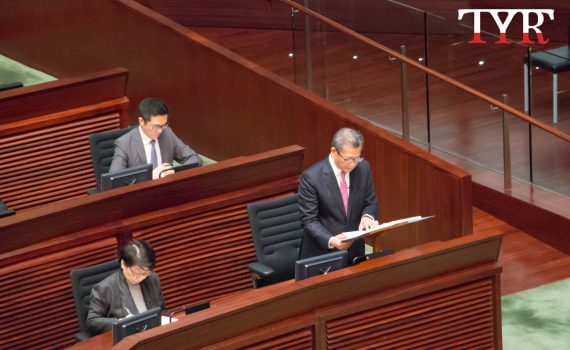
Reported by Vanessa Yung, Oasis Li Edited by Kenji Chan Infographics edited by Elly Wu Financial Secretary Paul Chan Mo-po announced to increase the public healthcare services expenditure to HK$ 71.2 billion, accounting for 17.5% of total recurrent expenditure. The government provided the Hospital Authority with nearly $6 billion to increase the number of hospital beds, operating theatre sessions, the quota for general out-patient and specialist out-patient services and the manpower required. Because of the increasing demand for healthcare services, the government has invited the Hospital Authority to start planning the second 10-year hospital development plan, which is expected to deliver 3,000 to 4,000 additional hospital beds and provide additional facilities and quota for consultation. A sum of $300 billion as an initial provision is set to support this second 10-year hospital development plan, as well as improving the clinic facilities in Department of Health, upgrading and increasing healthcare teaching facilities. To address the shortage of manpower in hospitals, the government is discussing with the University Grants Committee to increase publicly-funded training capacities for doctors, nurses, dentists, and relevant allied health professionals in the coming three years. "I will ensure that the Hospital Authority has adequate resources to employ all local medical graduates," Chan said. Yuen Wai Kit, the spokesperson for Health Policy Concern, thinks the government should not only be focusing on the shortage of doctors. "The budget allocated resources to increase the number of doctors. What about other medical manpower such as nurses and occupational therapists? The society lacks all sorts of medical manpower instead of only lacking doctors," said Yuen. Mental health care is not mentioned in the budget. Hong Kong currently has 240,900 people suffering from mental illness, of whom 32,000 are teenagers, while the Hospital Authority is not providing a stable support for mental health …
The court rejects dropping double incitement charge against Umbrella Movement defendants
- 2018-02-13
- Politics
- The Young Reporter
- By: 、Oasis LiEdited by: Ezra Cheung、Zinnia Lee
- 2018-02-13
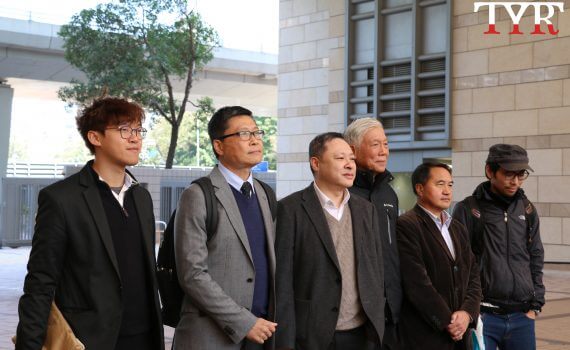
The charge of inciting people to incite others to commit public nuisance against the "Occupy Central" founding trio, Benny Tai Yiu-ting, Chan Kin-man and Chu Yiu-ming, was ruled "constitutional" by the court this morning. Judge Johnny Chan Jong-herng believed that the charge "exists in the common law", saying that there is nothing "uncertain" and "unconstitutional" of the charge. The trio, Tai, Chan and Chu, was accused of three charges altogether: (1) conspiracy to commit public nuisance, (2) incitement to commit public nuisance and (3) inciting people to incite others to commit public nuisance. Defence Senior Counsel Gerard McCoy had argued that the third charge, inciting people to incite others to commit public nuisance, was neither justiciable nor constitutional in previous trials, and thus proposing a motion to rescind this charge. The judge was not convinced though, saying that inciting people to incite others is different from inciting to commit public nuisance and "cannot be treated in one single charge". Chan Kin-man, one of the Occupy Central founders, expressed his disappointment to the court after the hearing. "We are disappointed that the court accepts the incitement to incite is a lawful charge in this case," he said. "This is unprecedented." McCoy had previously argued that the prosecutor failed to provide detailed information such as the identity of involved people. But the judge stated that the prosecutor had made it clear. "Adequate and appropriate information has been given," said the judge. There had been a discussion about whether the single trial for the nine defendants could be split. The judge eventually decided to stay as a bound trial, implying that all nine defendants are to be tried and testified together even though Raphael Wong Ho-ming and Lee Wing-tat were accused of committing the crimes in places different from the rest. The judge also compared the incitement to a …
Democracy activists Joshua Wong, Alex Chow and Nathan Law set free by Court of Final Appeal
- 2018-02-06
- Politics
- The Young Reporter
- By: Katherine LiEdited by: 、Michelle Ng
- 2018-02-06
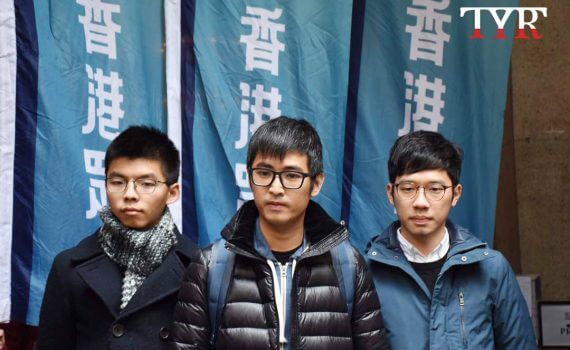
Alex Chow, Joshua Wong, and Nathan Law walk free as Court of Final Appeal accepts their appeal this afternoon. The trio was initially arrested for breaking into the Central Government Offices and for "civil disobedience" in September 2014, which triggered the Occupy Central. However, Wong said that even though they regained their freedom, this is by no means a victory for democracy. "This set the precedent of demonstrations being viewed as violent," Wong said, "which puts all future attempts of public assembly at risk. Those who attend may receive months or years of jail sentence." Furthermore, Chow said that the lines of what is considered as violent demonstration has been blurred through this case, which is unhelpful to Hong Kong's fight for democracy. He called the court's ruling "sugar coated". The trio raised concerns that with the recent disqualification of Agnes Chow, Hong Kong is going through a very tough time. Alex Chow ultimately said that it is obvious that people in the government are under pressure to behave a certain way. The trio is free for now. But Joshua Wong faces another appeal for "contempt of court" which will soon decide whether he remains free or goes back to jail.
Hundreds protest against suspension of Baptist University student duo
- 2018-01-26
- Society
- The Young Reporter
- By: 、Raphael Blet、Yoyo Chow、Katherine Li、Rob McGainEdited by: 、Ezra Cheung、Michael Shum、Michelle Ng、Wing Li
- 2018-01-26
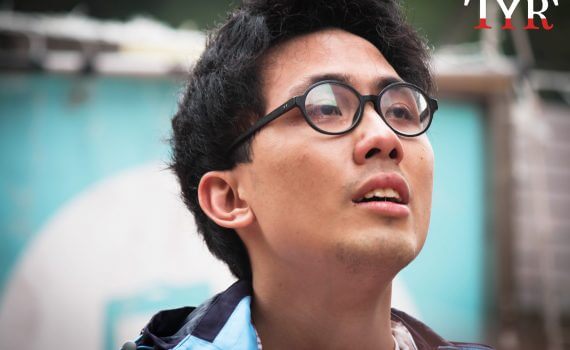
More than 200 people participated in a protest at Hong Kong Baptist University at 1.30 pm following the suspension of two students, according to the University's Students' Union. After being accused of threatening the staff and using abusive language during an eight-hour stand-off at the University's Language Centre, president of Hong Kong Baptist University Students' Union, Lau Tsz-kei, and a Chinese medicine student, Andrew Chan Lok-hang, were suspended pending disciplinary procedures. The University's decision to suspend the pair prompted mixed reactions with some praising the University's decision and others criticising the University for not awaiting the verdict of the disciplinary committee. A group of counter-protesters who were seen brandishing banners labelling the student union "a gang" and accused some professors of supporting the students. "We are proud of being Chinese citizens and right now, it's a Putonghua-speaking world," wrote a banner. Both parties could be seen hurling vulgarities at each other, but they were quickly separated by the security personnel. John Tse Wing-ling, former Legislative Councillor and Associate Professor of City University's Department of Applied Sciences, marched with the HKBU students in support for elimination to the compulsory Putonghua policy. "If Putonghua is really going to be a fixed standard, then this standard should also apply to all university staff members, including professors," he said, referring to the controversial requirement. Tse did not believe that a certain language should be a parameter of whether students could graduate. "If you judge everyone on the same standard, which is their Putonghua proficiency, then the Chief Executive of Macau won't even get his job," said Tse. The former lawmaker criticised the university for making the suspension of involved students public. "It's the first time in 30 years of teaching that I see a Vice-Chancellor announcing student suspension in front of the press," …