
By: Nick YangEdited by: Kate Zhang

Singapore: Easing policy on COVID-19 prevention takes effect from today
- 2022-03-29
- Society
- The Young Reporter
- By: Nick YangEdited by: Kate Zhang
- 2022-03-29
Relaxed COVID-19 restrictions in Singapore kicked in today. Main changes include the easing of mandatory mask-wearing outdoors that had been in place for almost two years. Wearing masks outdoors is now optional for residents in Singapore, but people still need to follow the one-metre safe-distance rule and wear a mask indoors. “I will still wear a mask outdoors because of the fear of infection,” said Shi Xiaoli, 47, a manager in a decoration company who runs in the East Coast Park every day. “But it's still good that I can take off my mask when I run.” “Our fight against COVID-19 has reached a major turning point,” Prime Minister Lee Hsien Loong said in his speech delivered last Thursday. “We will be making a decisive move towards living with COVID-19.” Singapore has seen a steady decline in daily new cases. There were 4,848 new cases on March 27, the lowest since Feb. 3, according to the statistics from MOH (Ministry of Health Singapore). The week-on-week infection ratio, which refers to the ratio of community cases in the past week, compared with the week before, has been lower than 1.0 for nearly a month in Singapore, according to MOH. “I think it’s the right time,” said Associate Professor Alex Cook, Vice Dean of research at the National University of Singapore’s Saw Swee Hock School of Public Health. “Going for ‘freedom day’ this week would have been a huge surprise, but a substantial relaxation, with room for more steps once the wave ends, is sensible and ought to be safe.” The relaxed policy also includes larger group sizes for social gatherings from five to 10 people and a returning of 75% of employees who are working from home to the workplace. “I felt so excited, can't wait to gather with my friends,” …

Virus or Starvation: Hong Kong Suffers Under Worst Pandemic Wave
- 2022-03-28
- Society
- The Young Reporter
- By: REN Ziyi DavidEdited by:
- 2022-03-28
Empty stores try to tempt customers with 20% discounts. Many more are closed, their shutters covered in thick dust. The previously bustling streets only see a handful of pedestrians, many of whom have sealed themselves off with surgical masks and even goggles. This was an early day in March in Hong Kong, in the third Covid-19. Hong Kong is suffering from the worst wave of pandemic with more than a million reported cases. Despite being one of the world's wealthiest cities, the Covid-19 fatality rate exceeds 0.5%, marking the highest death rate in the world right now. The city has shuttered bars, closed down late-night dining and schools, leaving hundreds of thousands without a job and little in terms of a safety net. According to Sze Lai-shan, deputy director of the Society for Community Organization, the situation is dire. "As most people can get vaccinated, the chances of dying from Covid are low, but starving to death is higher now," said Sze, whose group helps 40,000 people a day. Hong Kong's unemployment is surging amid the semi-lockdown, reaching 4.5% in February, the highest since September 2021. The government is trying to stem the disaster in the city, with Financial Secretary Paul Chan Mo-po recently announcing a sixth round of the Anti-pandemic Fund of HK$27 billion to subsidize affected employers and individuals. Some HK$3billion is reserved for unemployment support. Eligible applicants must be unemployed for 30 consecutive days to get one-off HK$10,000 subsidies. Lam said to expand unemployment subsidy on Friday to benefit up to 1.3 million workers, covering three-quarters of workers earning HK$30,000 per month. Ronald Kong, 50, was recently temporarily laid off from his job at a barber shop, and had to make ends meet by giving haircuts in his apartment. While he's back at work now, he's deeply …

Hong Kong running out of coffins, funeral industry says
- 2022-03-17
- Society
- The Young Reporter
- By: Lokman YuenEdited by: Phoebe Law
- 2022-03-17
Funeral Hung Hom Company has only enough coffins left for two or three days, Roy Fan, who works at the funeral home said. He said he hopes a new supply from the mainland will arrive soon. Daily cremation has almost doubled because of Covid-19 deaths, he said. “It is a big problem, “ he said. “Without coffins, other procedures will be affected,” said Fan, referring to funeral delays. The government is working with the mainland to increase the supply, Chief Executive Carrie Lam Cheng Yuet-ngor said in a press conference on Wednesday, adding that she expected 730 coffins to arrive by Friday.

Jinmao Property Services shares slump in Hong Kong trading debut
- 2022-03-10
- Business
- The Young Reporter
- By: REN Ziyi DavidEdited by: Peggy Ye Pei Shin
- 2022-03-10
Shares of Jinmao Property Services Co.(00816), a Chinese property management company, plunged as much as 36% to HK$5.21 on its first trading day, as China's real estate markets remained under pressure. The company’s shares closed at HK$5.8 today, dropping 29% from its initial public price of HK$ 8.14. Jinmao Service was offering 101 million shares at a price ranging from HK$7.52 to HK$ 8.14, with a goal to raise up to HK$ 759.6 million. The share price was down as much as 6.1% to HK$7.6 in Gray Market trading on Wednesday, data compiled by Bloomberg Terminal shows. "The property services industry follows the trend of the housing market," said Steven Wong, the Portfolio Manager of Harris Fraser, "property services could be overvalued if property sales are weak." China's property market faces a great setback under Beijing's regulation as real estate companies have difficulties in paying debt, such as the default of property tycoon China Evergrande. Jinmao’s business scale is relatively small compared to other leading companies. Its managed area exceeds 23 million square metres in mainland China, including 20 provinces and 35 cities by September 2021, while Country Garden Services (06098) provides ten times more services, covering 644 million square metres by June 2021. Jinmao Property Services’ net profit increased from RMB 23 million yuan in 2019 to RMB 77 million yuan in 2020, while the net profit ratio was 8.2%, below that of Country Garden Services (06098), which is 17.2%. Meanwhile, the company's average management fee was RMB5.4 per square metres per month, higher than the average listing peer RMB3.8 yuan, according to a research report finished in 2022. Country Garden Services slipped 4.3% to HK$38.6 per share today. China Jinmao Holdings Group(00817), the parent company of Jinmao Property Services, which relies on real estate and hotel operations, recorded …

Special needs students fall behind with online learning
- 2022-03-08
- Society
- The Young Reporter
- By: Kelly PangEdited by: Gigi Chong
- 2022-03-08
On a sunny day before Omicron hit Hong Kong, people went about their business as usual, heading outside to meet with friends and family. However, Lilian Wong Ling-yi, a 48-year-old housewife, stayed home to help her son Nolan with his homework. Wong would often repeat the homework content over and over, patiently and gently. Nolan, 13, a student with special needs, diagnosed with autism spectrum disorder, is studying in a mainstream school. Wong said she was sad when the clinical psychologist told her that Nolan had ASD but she understood that first and foremost, she must locate an organisation that could assist her. “A private sector had done training to assist him with the development of his sensory integration and coordination, and interpretation of his feelings but I think it’s not really effective as the training time is too short and it costs too much,” she said. “During the pandemic, Nolan cannot concentrate on online lessons since he, as an ASD student, can hardly focus on electronic devices for lengthy periods as he feels bored. He explores other websites instead of listening to teachers, which makes his learning hard to make progress,” she added. Children have been taking online classes on and off for the last two years during the pandemic, which has brought social and learning difficulties, especially affecting pupils with special education needs. Peer contact and social relationships have been severely restricted because of pandemic. Given the importance of peer contact for well-being and self-esteem, this can have a negative impact on children's social activity as less social contact is especially critical for SEN students, who often struggle to be accepted or integrated into society, according to a British Journal of Educational Psychology. The term "special education needs” reflects the broad and diversified group of children and teenagers …

Café de Coral shares slightly rebound from post-2008 financial crisis record low as the group stopping dine-in services due to pandemic
- 2022-03-01
- Business
- The Young Reporter
- By: YANG ZhenfeiEdited by: WANG Jingyan 王婧言
- 2022-03-01
The share price of Café de Coral(00341), a Hong Kong fast-food chain, rebounded 2.17% compared to HK$ 11.98 yesterday as the company announced to stop dine-in services in most outlets. However, its shares still decreased nearly six percent in the past five trading days. Café de Coral and its congee restaurant Super Super Congee and Noodles suspended dine-in services and focused on takeaway from March 1, announced the Café de Coral Group on Feb 27. The Group would also adjust the business hours and modes of some casual dining branches. Leung Ke-ting, CEO of Café de Coral Group (Hong Kong), has publicly stated that the suspension on dine-in can reduce crowds in the store, protect the health of customers and employees, and reduce the pressure on employees to go to work. The group’s share fell as much as to HK$ 11.86 today, the lowest since the financial crisis in 2008. Restaurants in Hong Kong struggled to survive as the fifth wave of epidemic hit the city. It is estimated that there may be 5,000 restaurants that suspend business if the regulations are further tightened, said the Hong Kong Federation of Restaurant and Related Trades, reported by local media. LH Group Limited (01978) has suspended the operation of all its restaurants including Gyu-Kaku, Gyu-Kaku Jinan-Bou, On-Yasai, Mou Mou Club, etc. since yesterday. Its shares continued to drop today to HK$0.85, 1.16% lower than the previous close, after it plunged more than 11% to HK$0.82 yesterday morning. Tao Heung Holdings Limited (00573), a chain of Chinese restaurants, announced yesterday that it will be temporarily closed from today until the epidemic eases on Facebook. Its share price decreased 1.19% to a one-year low of HK$ 0.83 today. The government has expanded tightening social distancing rules to at least April 20. It ordered hair …

Budget 2022: Hong Kong budget aims to tighten financial and economic ties with mainland China
- 2022-02-24
- Society
- The Young Reporter
- By: Ziyu Bruce Zhao、Kate ZhangEdited by: Summer Li
- 2022-02-24
Hong Kong’s Financial Secretary Paul Chan Mo-po addressed the HK$170 billion budget for the city in today's speech, with considerable mentions on integrating Hong Kong’s economy into the mainland China market and national-level development. Strengthening Hong Kong as a financial centre to integrate with mainland development Hong Kong will enhance its status as an international financial centre in line with the 14th Five‑Year Plan by strengthening its status as an offshore renminbi hub and asset management centre, the Financial Secretary said in his budget speech today. “In the future, we will explore ways to further expand the channels for the two-way flow of cross- boundary RMB funds, as well as continue to promote the development of offshore RMB products, including introducing more diversified RMB wealth management products and bonds,” Financial Secretary, Paul Chan said . The city launched the Southbound Trading of Bond Connect and the Cross‑boundary Wealth Management Connect Scheme in the Greater Bay Area (GBA) in September last year, which allows individual investors in the mainland to invest in offshore bonds through the Hong Kong bond market according to the Hong Kong Monetary Authority. Chan said the government is exploring more enhancement measures for these investment initiatives, including expanding quotas and scope of eligible investment products, inviting more companies to participate, and improving distribution. The Hong Kong Mortgage Corporation Limited will study and implement a pilot plan for infrastructure financing securitization within the year. According to the plan, the corporation is expected to issue infrastructure financing securitization products worth about HK$ 35.1 trillion (US$450 million) in the institutional market next year. “On the one hand, the local infrastructure financing market will be more vigorous and diversified, and at the same time, market capital will be introduced into high-quality infrastructure projects,” Chan said. Chan also proposed to set up …

Budget 2022: E-vouchers doubled to HK$10,000 to boost local consumption
- 2022-02-23
- Society
- The Young Reporter
- By: Karmen Li、Phoebe LawEdited by: Tiffany Ma
- 2022-02-23
Every permanent resident in Hong Kong will get $10,000 in electronic vouchers, the Financial Secretary announced in the budget today. But with tough Covid measures, some people in the restaurant industry doubt if they will benefit.

Budget 2022: Efficacy of HK$67.5 billion healthcare spending has been questioned
- 2022-02-23
- Society
- The Young Reporter
- By: Lokman Yuen、Gigi ChongEdited by: Hamish CHAN
- 2022-02-23
The budget sets aside $67.5 billion dollars to fight the pandemic. Those include funds for vaccines, new healthcare facilities and potential future spending. But some people involved in the fight against Covid question if the money will benefit those in need.
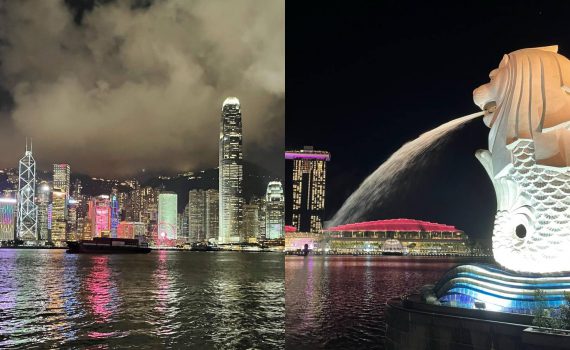
Budget 2022: How do Singapore and Hong Kong’s pandemic relief measures for the hardest hit compare?
- 2022-02-23
- Society
- The Young Reporter
- By: Nick YangEdited by: Kate Zhang
- 2022-02-23
Singapore and Hong Kong, two small and open Asian economies that are often compared, have adopted completely different COVID-19 policies. Singapore has moved to "living with COVID-19" while Hong Kong sticks to China’s "dynamic zero COVID" strategy. But the effects of the pandemic have not been equal, and both cities have implemented financial relief for the hardest hit. With the Hong Kong government announcing its 2022-23 budget today and the Singapore government delivering its 2022 Budget Plan last Friday, The Young Reporter explains five ways both Singapore and Hong Kong have attempted to alleviate COVID-19’s impact on its neediest residents. 1. Tax Relief Tax redistribution is a way to cope with inequality in many countries, according to the United Nations, as poor households are often affected more. Singapore: Consumption taxes tend to be regressive, meaning they are disproportionately difficult on low earners, economists say. The Singapore government suspended its plan to raise the goods and services tax from 7% to 9% in 2021, a broad-based consumption tax on nearly all supplies of goods and services in Singapore. It is expected to be raised in 2023. This year, a S$560 million ( HK$3.25 billion) Household Support Package, which provides support for daily essentials through utilities rebates, top-ups for children’s education and vouchers for use at heartland shops, will be provided to support households, especially poor families, in dealing with a future hike in the GST. The Singapore government also provided tax relief for the self-employed and low-income workers with pandemic-driven support schemes, including the Self-Employed Person Income Relief Scheme and Workfare Special Payment. Hong Kong: The government has waived a portion of employment taxes for three years, including salaries tax and tax under personal assessment reduction, with a ceiling of HK$10,000 this year and last year, and HK$20,000 in 2020. For …