
People
Red minibus drivers struggle as ridership plunges and fuel costs rise
- 2026-05-13
- Society
- The Young Reporter
- By: CHEUNG Ka Yi Ann、ZHENG Yuan ElaineEdited by: CHAU Wing Yau
- 2026-05-13
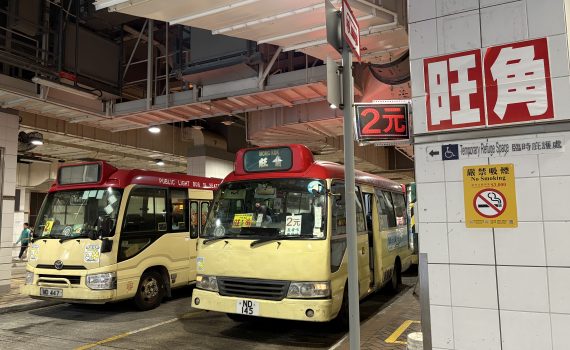
At Kwun Tong Yue Man Square Public Transport Interchange, one of the city’s busiest transport hubs, 55-year-old red minibus driver Saniel Ng would clock off from a 13-hour shift at 9pm on most days with a take-home pay of just about HK$1,000. As Ng looked around the transport interchange, he noted that even though there were some queues of passengers waiting for red minibuses, ridership was not what it used to be. “Bus companies have taken away the business,” said Ng, who has been a red minibus driver for more than 20 years. “Without enough passengers, it’s hard to survive.” For decades, Hong Kong’s red minibus has been better known for its high speed and unruly round-the-clock service. But the trade is at risk of becoming a remnant of old Hong Kong as the city’s mass transport network continues to modernise. There are two types of public light buses, differentiated by their roof colours and service flexibility. Red minibuses operate on flexible routes with fares that drivers can adjust based on demand and the time of day, whereas green minibuses run on fixed routes and schedules set by the government. Red minibuses are disappearing, with passenger numbers falling by more than half, or 50.5%, from 295,000 in 2017 to 146,000 in 2024, according to Transport and Logistics Bureau data compiled in a Legislative Council research report published in March last year. Commercial vehicles in Hong Kong must obtain operational licences from the Transport Department. The price of a minibus operating licence, for both red and green minibuses, also dropped 47% between 2022 and 2024, from HK$1.7 million to HK$900,000, far below its 2014 peak of HK$5.5 million. Despite green minibuses having recorded a recovery in passenger volume since 2022, red minibuses have continued to see a decline in their passenger …
Prolonged waiting for treatment worsens mental illness sufferings
- 2026-05-03
- Society
- The Young Reporter
- By: MA Yifan Chloe、SHI Puxuan AmyEdited by: CHEN Xiyun
- 2026-05-03
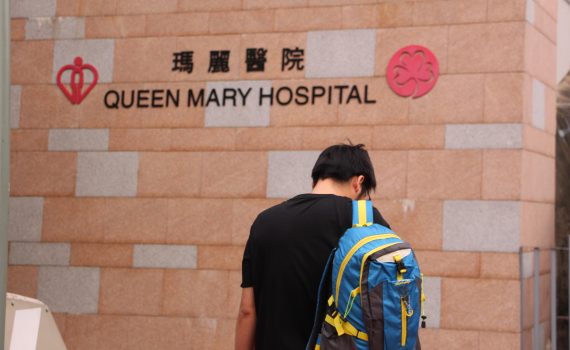
Vivian Chan, a 16-year-old Form Five student in Wong Chuk Hang, had her life trajectory changed three years ago when she was bullied and sexually harassed at just 12 years old. The incident left her isolated, led to suicide attempts, and resulted in a year-long struggle with mental health symptoms before she finally received a diagnosis and started treatment at Queen Mary Hospital. Chan was diagnosed with moderate depression in early 2024, one year after her depression began to arise, which gradually worsened due to extended outpatient waiting times and delayed community intervention, she said. Hong Kong’s public hospital psychiatric clinics have long been plagued by lengthy waiting times and a severely imbalanced doctor-patient ratio, with the longest waiting time for new outpatient cases reaching up to 101 weeks in 2025. While the government seeks to strengthen community mental health interventions in the hope of shortening clinical waiting lists, the effort is hampered by a shortage of resources for social workers’ early identification and prevention services training. The number of new psychiatric outpatient cases at public clinics has continuously increased from 47,879 in 2022 to 53,353 in 2025, according to the Hospital Authority. Around one in five urgent patients faces a median waiting time of one to three weeks for treatment, while the median waiting period for most non-urgent patients ranges from 17 to 76 weeks. After joining Queen Mary Hospital’s waiting list in 2024, Chan eagerly awaited professional medical help, only to endure a 28-week delay. Chan felt intense pain and helplessness during the waiting period. “Without a diagnosis, I kept overthinking if I was truly sick,” she added. She once locked herself in her bedroom for weeks to escape from the painful reality. “I pulled the curtains to block out sunlight, wrapped myself in blankets, and couldn’t hold …
LGBTQ couples in Hong Kong face difficulties securing legal protection
- 2026-04-08
- Society
- The Young Reporter
- By: Lan Xinbei、ZHOU ShiqingEdited by: Ye Enyi
- 2026-04-08
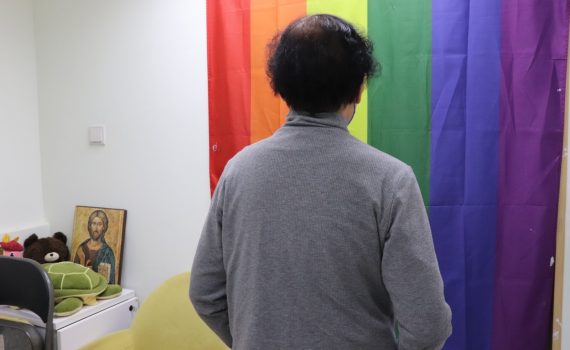
Ah Moon, 55, who does not want to reveal her real name, initially had no intention of making decisions about legal safeguards for herself and her same-sex partner related to end-of-life matters. She began to consider these issues more consciously during a hospital stay in 2002, while she was in a relationship with her ex-girlfriend. “I was afraid of what would happen if I never woke up again, so I drafted a few pages of plans on blank paper myself after discharge,” she said. Hong Kong does not legally recognise same-sex marriages. Ah Moon said because her family does not care about her relationship, she worries that her wishes after death will not be honoured. In September, the Legislative Council rejected a bill to legally recognise same-sex partnerships by a large majority, leaving same-sex couples to rely on fragmented legal documents and personal requests to protect end-of-life decisions such as inheritance, medical choices and funeral arrangements. Rufina Ng, a senior associate at Hastings & Co, a law firm that offers free legal consultation for the LGBTQ community, said same-sex partners are highly recommended to plan in advance for end-of-life, though they still face limitations. Ng said the most common end-of-life legal challenges faced by same-sex couples in Hong Kong are claiming the body and inheritance, particularly if there is no will or there is conflict between the surviving partner and the deceased’s family. “Same-sex couples lack the legal status of spouses or family members under Hong Kong’s legal framework. When one partner dies without a will, the surviving one currently has no inheritance rights and other relatives may also oppose their handling of funeral arrangements,” she said. Hong Kong’s current inheritance laws only recognise spouses and a few other relatives. Unmarried partners, whether same-sex or not, receive no legal protection. …

Hong Kong queer Christians: The struggle between faith and sexual identity among Hong Kong queer Christians
- 2026-03-17
- People
- The Young Reporter
- By: Lou Zhengzheng、FENG Zhenpeng、XIE Xinni CindyEdited by: Li Yinheng
- 2026-03-17
LGBTQ Christians are one of Hong Kong’s marginalised groups with no official record of their numbers. There are about 1 million Christians in Hong Kong. A survey shows that among 1,433 LGBTQ respondents, 441 showed symptoms of depression. TYR spoke to three LGBTQ Christians and an expert in Christian studies to uncover the internal identity pressure and verbal insults they experienced in Hong Kong. Reported by Laura LOU Zhengzheng, Stephen Feng Zhenpeng, Cindy Xie Xinni Edited by Henry Li Yinheng

Long queues for special child care centres: what does over a year’s wait mean for families?
- 2026-03-11
- Society
- The Young Reporter
- By: SHI Puxuan Amy、MA Yifan ChloeEdited by: QIN Ziyang
- 2026-03-11
In a sunlit activity room of the Cheung Sha Wan Special Child Care Centre, young children are drawing with a therapist’s help. Nearby, another repeats words prompted by a speech therapist. These simple moments are government-subsidised intensive rehabilitation training for children with disabilities. Cherry Lee, 41, waited nearly two years for her daughter with moderate autism to access such a facility and receive intensive training. “It would have been better if my daughter could have entered the centre sooner,” she said. “At the very least, she could have had an earlier opportunity to develop essential self-care skills.” Hong Kong’s 52 government-funded Special Child Care Centres provide full-day centre-based care and cognitive training, speech, occupational and physiotherapy programmes for children with moderate to severe disabilities aged 2 to 6 before they enter primary school. Lee’s two-year wait is far from an isolated case. According to the Social Welfare Department, the average waiting time for the centres is 19.1 months in 2024. Experts and NGOs say that this wait means a delay in development for special needs children, while families are burdened with extra costs and stress in taking care of children. The government added 64 centre quotas for a total of 2,580 places in 2025, with 513 children on the waiting list, according to the Social Welfare Department. “The supply of places cannot keep up with the speed of increasing demand; it is not enough for those special needs children,” a representative from Hong Chi Association, an NGO operating three Special Child Care Centres, confirmed. “This is the core reason for the long wait.” Lee’s daughter, Sakina Muk, was placed in a centre run by NGO Heep Hong Society when she was 5 in August 2025, meaning she only has about a year she can use the service. “Even with early …
Inside Myanmar’s tightened passport system
- 2026-03-08
- Society
- The Young Reporter
- By: LI Yuzhou Asher、Pann Hnin Nay ChiEdited by: ZHENG Xinyi
- 2026-03-08
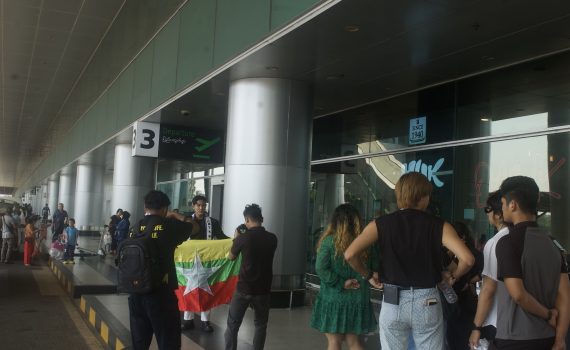
In early 2023, 28-year-old Scarlett, not her real name, queued up to enter Thailand at the Thai-Myanmar border, clutching her passport as she waited for her turn at the checkpoint. This was not for studying abroad, but an escape for survival. She feared that staying longer would permanently strip her of the possibility of leaving legally. “If my passport were scanned at the airport, I am afraid that it would be flagged,” said Scarlett. “That’s why I chose to leave from the Thai-Myanmar border,” she said, referring to its less stringent procedures. When she stepped up to the counter, the officer flipped through her red passport and looked at her briefly. “Okay, next,” said the immigration officer. He waved her through without running the passport through a scanner. Scarlett exited the gate and dared not slow down until she reached Thailand. Since the 2021 military coup, Myanmar’s passport system has increasingly functioned as a tool of exit control rather than merely a document for international travel. According to a 2025 report by the Danish Immigration Service, Myanmar authorities have circulated files of blacklisted people to airports and border checkpoints, allowing immigration officers to identify individuals and bar them from leaving the country with a passport scan. Those barred from leaving include participants in the Civil Disobedience Movement — a nationwide non-violent protest campaign that started in February 2021, in which civil servants went on strike in protest of military rule following the coup. More than 417,000 civil servants had joined the movement, according to an official brief from the National Unity Government of Myanmar. The movement was even nominated for the Nobel Peace Prize in 2022. Scarlett was one of them. Before the 2021 movement, she worked as a doctor at a public hospital. After the military seized power, she joined …

Budget 2026: HK$50 million for Hongkongers to receive AI training
- 2026-02-25
- Society
- The Young Reporter
- By: LI Yuzhou AsherEdited by: FENG Zhenpeng
- 2026-02-25
Hong Kong government will provide HK$50 million to invite public organizations to hold AI training courses for residents. The government will also provide HK$2 billion to improve AI education in primary, secondary schools, and universities, said Financial Secretary Paul Chan Mo-po in the budget plan on Wednesday. “While AI is advancing at a rapid pace, both students and teachers lack a basic understanding of it and the ability to apply it in practice; fewer than one in ten people have a grasp of it,” said Simon Wang, 48, a lecturer at Hong Kong Baptist University computer assisted language learning department. According to data research by Google, of the 4,446 US employees surveyed, only 40% of them have adopted AI in their work, and 5% are AI fluent. In the budget, Chan said public universities will launch 27 undergraduate courses that relate to AI. “HKBU has launched AI and Data Science as a new second major, and the computer science major includes Applied AI as a core course. Computer Science Department holds a supportive attitude to the application of AI in university education,” said Byron Choi Koon Kau, a professor from the Hong Kong Baptist University Computer Science Department. “Most professors still have a low acceptance of AI. Some assignments that could have been completed better with AI are not allowed to be used. It is necessary to fully implement AI training and education,” Wang said. In response to the budget plan for AI training, the Hong Kong Federation of Education Workers said, "We suggest that the government provide more systematic teachers’ AI training programs and add special subsidies to support all teachers in Hong Kong to take AI courses." According to Wen Hui Net, at the beginning of this month, the Education Bureau provided over 70,000 systematic AI training opportunities …
Budget 2026: MTR expansion to Shenzhen fully operational by 2035 to enhance cross-border transportation
- 2026-02-25
- Society
- The Young Reporter
- By: Li Yinheng、XIE Xinni CindyEdited by: Lou Zhengzheng
- 2026-02-25
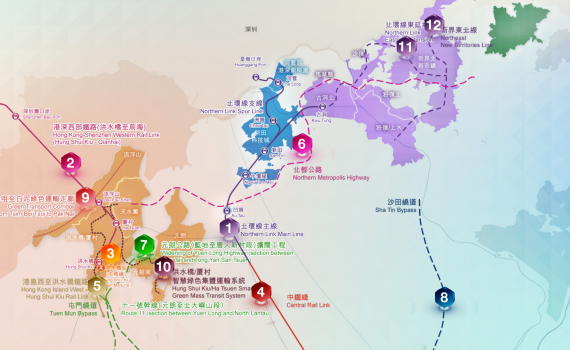
The MTR expansion with the Northern Link will open before 2034 and the Hong Kong-Shenzhen Western Rail Link the following year, Hong Kong Financial Secretary Paul Chan Mo-po said in the budget plan today. The Northern Link will be used to connect the Tun Ma Line and the East Rail Line and extends to the Huanggang Port in Shenzhen, while the Hong Kong-Shenzhen Western Rail Link will run to Shenzhen Bay Port. Both will connect to Shenzhen’s railways. “The strategies will focus on public transportation, and promote the flow of people and goods within the Greater Bay Area,” Chan said. MTR’s official website reports that the total passenger flow on the MTR border crossings is projected to be 106.673 million in 2025, which is the highest number in the past three years. Chen Nga-Yau, 20, a local university student living on Hong Kong Island, travels between Shenzhen and Hong Kong once every two weeks. Chen said Lo Wu and Lok Ma Chau MTR stations are especially crowded on weekends and holidays and sometimes she has to wait for 30 minutes to return. “If I want to go to Bao’an District in Shenzhen, I need to change two modes of transportation to get to Shenzhen Bay Port,” Chen added. “It’s really too troublesome.” According to the MTR Corporation 2025 Results Report, HK$140 billion will be invested in developing new railway projects. Zou Zhang, 37, Business Manager of China Railway Rolling Stock Qingdao Sifang Company (the major supplier of MTR train cars), said the company has already begun technical preparations and signaling system research for the construction of the Western Railway and Northern Link. Peng Huiwen, 31, Hong Kong University urban planning lecturer, said that the connection between the Hong Kong and Shenzhen MTRs is of great help in promoting the integration …
From ‘brain rot’ to balance: Gen Z’s pursuit of meaningful content in fragmented media
- 2026-01-26
- Society
- The Young Reporter
- By: Yu Yan Pui、Edited by: CAO Jiawen、ALISHIBA MATLOOB
- 2026-01-26
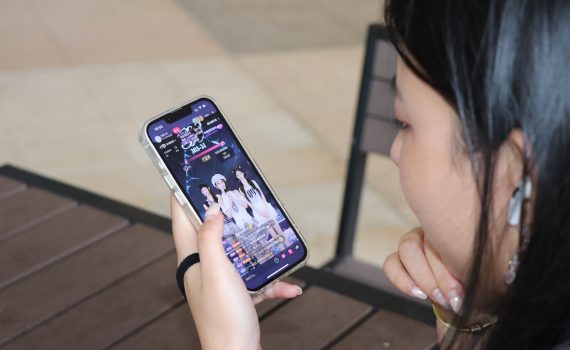
Every day, Zhang Danying, 22, an undergraduate student from mainland China at Hong Kong Baptist University, turns her phone on to enjoy scrolling through clips and image-driven posts on social media from the moment she wakes up. She spends almost 12 hours a day watching netizens dancing to pop music, or trying out various challenges. Zhang aspires to seek learning advice and reach for lighthearted social snippets to feel relaxed. Instead, she grew anxious from social comparison with people, and came down to media addiction that disrupted her daily routines out of the cyberworld, with constant inner struggles. “It is hard not to watch social media for a day,” Zhang Danying said. “But after watching it, I feel uncomfortable all day.” Zhang is not alone. In mainland China as well as globally, it has become common for Gen Z to jokingly claim they are suffering from “brain rot”—a slang phrase that means poor cognitive skills and fading memory after hours of social media scrolling. As noted by the Oxford University Press in 2024, usage of the term “brain rot” surged by 230% from 2023 to 2024. According to a 2024 survey by Bazaarvoice in Statista, 34% of interviewees' responses that short-form videos, such as TikTok and Instagram reels, are more effective at spreading online than text-based posts. Based on Metricool Viral Trends Analysis, popular social media posts include catchy music, timely hashtags, evolving cultural conversations and collective online experiences, shaping as a market strategy. As noted by the China Trends 2024 by Groove Dynasty, it highlights Douyin phenomena of emerging social experiment-type challenges, one case is that participants stage humiliating acts in crowded elevators to capture bystander reactions. Other examples include the ‘APT. Dance’ that features hand gestures with upbeat music. Zhang Danying is caught up in the wave of …

No more clubs and wine: the rise of morning rave in Australia
- 2025-12-16
- Society
- The Young Reporter
- By: CHAU Wing YauEdited by: KURNIAWAN Trista Vania、LAI Uen Ling
- 2025-12-16
Young Australians are leading a new trend all over social media, focusing on alcohol-free socialising and personal wellness. The trend is on the news everywhere in Australia. Data shows 76% of 1000 young Australians, aged 18-24, prefer to socialise without alcohol. Meanwhile, one in four Australians has reduced their alcohol consumption over the past year. Instead of bars and clubs, people in Brisbane, Sydney, and Melbourne are flocking to cafes and bakeries hosting 8 am morning raves to kick off the day feeling fresh and energised.