
People
First-person shooter game leaves young Chinese players with heavy losses after the collapse of virtual trading market
- 2025-11-10
- Society
- The Young Reporter
- By: Lou Zhengzheng、Lan XinbeiEdited by: WANG Ludan
- 2025-11-10
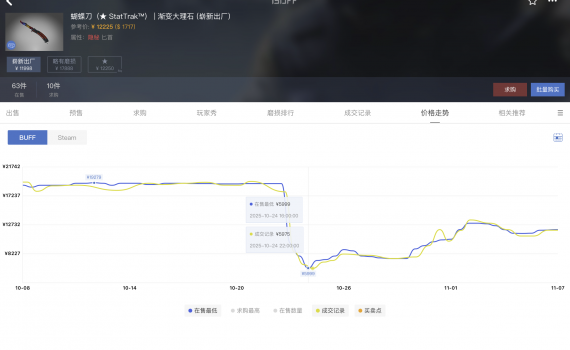
A developer update to the first-person shooter video game Counter-Strike 2 triggered a collapse in its virtual trading market on Oct 22, wiping out almost US$2 billion in real money. Valve, the American video game developer of Counter-Strike 2, released an update that allowed players to more easily craft rare weapon skins in the game, causing a plunge in the value of skins that are purchased and traded with real-world money. Although the value rebounded in November, it remains below most buyers’ original purchase price. Skins are virtual cosmetic items that change the appearance of weapons without affecting the gameplay. They are categorized by color, ranging from basic white to the rarest gold. The price of gold skins dropped by approximately 30% to 40% on the international third-party game trading platform Buff Market, hitting players who had collected them as virtual investment commodities for future resale and rental. Previously, the gold skins could only be obtained either by unlocking in-game loot boxes containing randomized virtual items such as skins, gloves, and other weapons, or by trading with other players through third-party online marketplaces, including NetEase Buff and Youyou Youpin, which are both platforms that primarily serve Chinese players. John Liu, 20, a mainland Chinese student at Lingnan University in Hong Kong, said he purchased a rare “marble fade” butterfly knife skin for approximately 13,000 yuan (HK$14,201.54) on NetEase Buff because he anticipated later reselling it at a higher price for a profit. After the update, the “marble fade” Butterfly knife’s skin value fell to 5,999 yuan (HK$6,553). “I just gave up on selling after seeing the price hit its lowest point a couple of days ago,” he said. According to data from Buff Market, several virtual items in the game, such as gloves and knives, experienced a price recovery in …
Local green institutions call for environmental conservation after super typhoon hit in Yuen Long
- 2025-11-10
- Society
- The Young Reporter
- By: CHENG Tsz Sen Sean、AO Wei Ying VinciEdited by: AO Wei Ying Vinci
- 2025-11-10
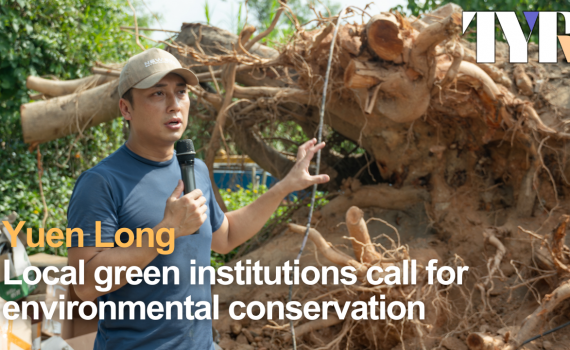
https://youtu.be/plzvnNi2Pms Video description: Super typhoon Ragasa has toppled trees and caused flooding in many areas. Local green institutions, Hong Kong Timberbank and sunflower farm Shun Sam Yuen are calling for more environmental awareness as they deal with the aftermath. Reporters: Sean Cheng Tsz-sen, Vinci Ao Wei-ying Editor: Vinci Ao Wei-ying
Australia sees a 20-year dip in Hong Kong students' enrolment as preferences shift
- 2025-11-09
- Society
- The Young Reporter
- By: CHAU Wing Yau、SIU Tsz HangEdited by: KURNIAWAN Trista Vania
- 2025-11-09
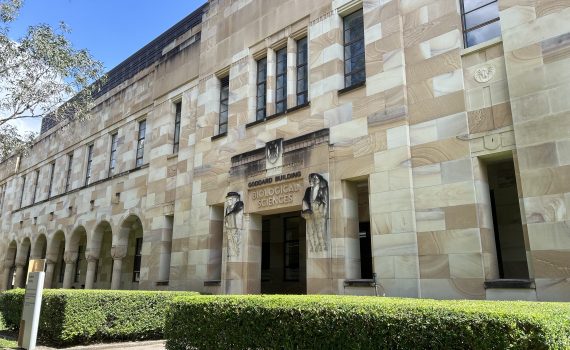
The number of Hong Kong students studying in Australia has dropped to a 20-year low, according to government data, signalling a shift in study abroad preferences among Hong Kong students. Data from Australia’s Department of Home Affairs reveals a stark decline: only 1,766 student visas were issued to Hongkongers in the 2024-2025 period – less than a quarter of the total from two decades ago. The trend is part of a broader downturn in new enrolments from key markets. Mainland Chinese students newly enrolled at Australian universities in the same period also fell by 2.4% to 41,442, contributing to a 17% year-on-year national drop in new international students reported in August 2025, according to Australia’s Department of Education. Despite this, the total number of international students studying in Australia remained unchanged. This could be a result of an influx of students arriving from countries like Bangladesh, Nepal, and Sri Lanka, and the continued presence of returning students. Hongkongers have long favoured Australia for its high-ranking universities, friendly immigration policies, and minimal time difference from home. However, observers have noted a combination of factors that are diverting Hong Kong students elsewhere. Willy Kwong, a Hong Kong-based migration agent, said the drop is partly due to the expansion of tertiary education opportunities in Hong Kong, which has reduced the need for students to study abroad. Australia has been known among Hong Kong students as a popular backdoor into competitive fields. Health-science majors such as physiotherapy, veterinary studies and environmental studies have been particularly popular as admission is often more accessible than Hong Kong. Kristy Lau, a Melbourne-based education consultant, said many secondary students were drawn to Australian universities as a more accessible alternative to highly competitive local programmes in Hong Kong. “The acceptance rates of these [health-science related] majors at Australian universities …

Sham Tseng: A place defined by its geese
- 2025-11-04
- Society
- The Young Reporter
- By: Wing Chi HOEdited by: Chun Hei LUK
- 2025-11-04
In the heart of Tsuen Wan, along the coastline with streets lined with banyan trees and village houses, lies a name that has become known for a particular dish: roasted goose. The neighbourhood of Sham Tseng is synonymous with the traditional dish and is often seen in its television advertisement. Yue Kee Roasted Goose Restaurant, founded by Ng Chun-yam in 1958, caters to factory workers with its charcoal-roasted Guangdong geese, made from recipes passed down through two generations. Ng’s eldest daughter, Ng Juan-hua, who is now the owner of the family business, started working in the restaurant at age 12. She said she gave up further education to help her parents run the shop, allowing her younger siblings to continue their studies. On June 4, 1992, a level 3 fire broke out at Yu Kee Restaurant. The owners, Ng and his wife, died in the fire. Since then, Ng Juan-hua took on the role of second-generation leader and worked with her siblings to revitalise Yu Kee. Now, Ng Juan-hua’s son, Ng Guo-han, runs the operations. In the kitchen, a fortress of heat and focused energy, head chef Lee Ming-kwok is a man of few words but action. His canvas is a goose, his tools are time and fire. He cooks and chops 50 to 100 geese daily. The process includes marinating the geese for several hours, air-drying them, and roasting them for about 45 minutes to an hour. The dish stands out due to the blend of spices and the chef’s technique. Lee has worked at Yu Kee for over a decade. The large oven contains burning charcoal at the bottom, and the goose hangs suspended above it, slowly roasting as the heat rises and envelops the meat, ensuring an even cooking process. “Many places use gas or electric ovens …

Nepalese Community Seeks to Call Hong Kong Home
- 2025-10-31
- Society
- The Young Reporter
- By: Ye EnyiEdited by: CAO Jiawen
- 2025-10-31
Every afternoon, a diverse crowd sits in the dimly lit bar at The Nest, a Nepalese restaurant in Jordan, savouring its happy hour buy-one-get-one-free drink special and listening to jazz music. “My guests are saying that this place is very cozy and relaxing,” said Pradeep Kandangwa, 55, the owner of The Nest. “They keep coming here once they come.” Jordan, referred to as “Little Nepal,” is dotted with restaurants like the Nest and specialty shops selling Nepalese food and daily necessities. It’s part of the Yau Tsim Mong District, which has the highest concentration of ethnic minority residents among Hong Kong’s 18 districts, approximately 8.6% of the city’s total ethnic minority population, according to the 2021 census. The largest portion of these are Nepalese. Many, like Kandangwa, work in the catering and hospitality industry, which employs the largest proportion of ethnic minorities in Hong Kong, according to a 2023 study from Lingnan University and Hong Kong Baptist University. But experts say that ethnic minorities in the city are pushed into service industry or construction jobs because of a lack of Chinese language skills. For some, especially those who were born in Hong Kong, this can lead to an identity crisis. Kandangwa said he first worked in construction when he arrived in Hong Kong from Nepal 25 years ago before opening his restaurant in 2016. “Nepalese who don’t speak Chinese and even English still make a living in places like restaurants, salons and hotels,” said Kandangwa. “Finding work in Hong Kong’s local community isn’t easy for non-Chinese individuals. We may meet the qualifications, but the issue is language, our Chinese isn’t fluent enough.” “While I can manage basic communication, read and write some words, it’s insufficient to secure a job at a local company, so I decided to start my own …
Local artsy businesses transform old district into trendy check-in spots
- 2025-10-30
- Society
- The Young Reporter
- By: ZHOU ShiqingEdited by: MAO Anqi、CHEN Yik Nam
- 2025-10-30
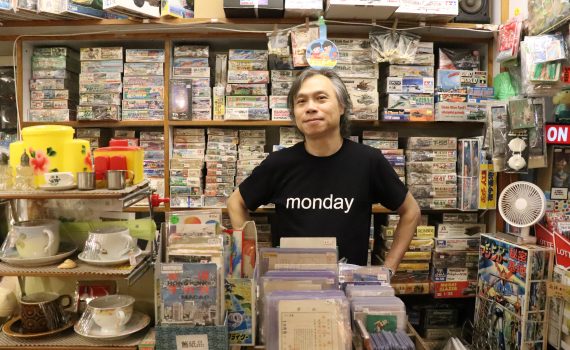
In the century-old neighbourhood of Sham Shui Po, a poster shop stands on the corner of Ki Lung Street. Its classic Hong Kong film posters tell the stories of the past. Wong Tak-hei, 32, has spent five years transforming his obsession with local films into a small shop called Moviemarks that sells what he calls collective memories. “Unlike those fancy shopping malls you wouldn’t visit every day, Sham Shui Po is the kind of place you can visit on two different days and have a completely different experience,” Wong said. Moviemarks is one of the small creative businesses located in Sham Shui Po, a district that was developed as early as the 1910s. A report by the Urban Renewal Authority in September 2023 highlighted the age of the area, as reflected in the old buildings, high population density and social problems related to subdivided residential houses. But recently, the community has nurtured creative local businesses and has become a haven for artistic shops. The area is bustling with trendy cafes and craft shops, and its themed streets have their own specialised categories of goods. Fuk Wing Street is the place for toy wholesale and retail, and Nam Cheong Street features ribbon selling. In October 2020, urban culture magazine TimeOut selected Sham Shui Po as the third coolest neighbourhood in the world, in recognition of its creativity. “The atmosphere here is unique, and I like it very much. These modern stores blend well with the old community, creating an interesting and fresh experience,” Wong added. Xie Yongqi, 18, who has been living in Sham Shui Po since she was born, said she visits boutiques and toy stores every two weeks. “I usually come here with my brother to pick out toys or buy gifts for friends. Sham Shui Po is undoubtedly …

“Little Bangkok” in Kowloon City finds ways to keep its Thai flavors amid redevelopment
- 2025-10-28
- Society
- The Young Reporter
- By: Lou Zhengzheng、Li ZhongyiEdited by: WANG Ludan、AO Wei Ying Vinci
- 2025-10-28
In the bustling food court on the roof of the Kowloon City Municipal Services Building, the air is filled with the enticing aroma of food from 10 restaurant stalls. Sukulporn Paipha, 59, owner of Chiangrai Thai Food, a 27-year-old eatery, welcomed diners as they entered the cooked food centre. Her daughter served the Thai dishes while her grandson played with toys at a nearby table. This scene is set to disappear with the demolition of the building, which includes a wet market and the cooked food centre, sometime in the next few years under the government’s redevelopment plan for the neighborhood. Around 120 buildings will be demolished, including current public facilities such as the Kowloon City Municipal Services Building and the Kowloon City Lions Clubs Health Centre. According to the Urban Renewal Authority, the redevelopment scheme in the Lung Shing area is divided into three areas, including the replanning of Nga Tsin Wai and Carpenter roads. In July this year, the government reclaimed the land along the two roads, forcing the closure of dozens of businesses. Outside the municipal building, the streets are nearly desolate. Only a few shops remained open, with others busy packing up to relocate. Metal shutters were pulled down for most shops, displaying signs that read “Urban Renewal Authority Property: No Trespass or Unauthorized Entry.” Some simply note “Clearance Sale” or “Relocation Notice” in Chinese nearby. Approximately 140 floor shops across the three sites are affected. During a visit, TYR found that while most are looking for new premises, other businesses that have operated for decades are preparing for permanent closure. “I arrived in Hong Kong when I was just 20, and now at 59, my family has grown deep roots here, three generations in all,” Sukulporn said. “I started with one shop, then opened a …

Thousands march in Brisbane against mass immigration
- 2025-10-27
- Society
- The Young Reporter
- By: CHAU Wing YauEdited by: KURNIAWAN Trista Vania
- 2025-10-27
Around 2,000 protesters gathered in Brisbane’s central business district on Oct.19 to call for an end to mass immigration, which they believe is worsening Australia’s housing and cost-of-living crisis. Nearly 300 counterprotesters joined nearby, with banners calling the protest a racist and fascist movement. This is the second round of anti-immigration protests, also known as “March for Australia”, across the country. The first was held on Aug. 31 with thousands protesting in major cities, such as Sydney, Melbourne and Perth. In Brisbane, 6,000 protesters, out of a city of 2.5 million, joined the demonstrations. “Racism may intensify, and I feel concerned about my safety,” said Alice Wong, 28, a Hong Kong student in Melbourne planning to obtain permanent residency, who didn’t go to the protest for physical safety concerns. Wong said the protest promotes the idea of white superiority. “When they protest against immigration, it feels like they think immigrants are taking away their resources, like housing or job opportunities,” she said. Australia’s housing market is surging at its fastest pace in almost four years, with Brisbane becoming Australia’s second-most expensive housing market, according to the House Price Report in 2025. Kev, 72, an Australian who participated in the protest and preferred to keep his last name anonymous, said he has never seen a country in such a bad economic position. “We’ve never had so many people coming to the country so quickly, and the government has been no help,” he said. In September 2023, Australia’s net overseas migration peaked at 558,000 after lifting COVID-19 restrictions, according to the Australian Bureau of Statistics. Australia recorded a net overseas migration of 446,000 people in 2024, down from the previous year but still far from pre-pandemic numbers of 239,000 in 2020. Kev said he isn’t against immigrants, but he wants to see …
Super Typhoon Ragasa lands in China from the southeast, bringing new experiences to cities’ new arrivals
- 2025-09-25
- Society
- The Young Reporter
- By: Fu RongEdited by: WANG Ludan
- 2025-09-25
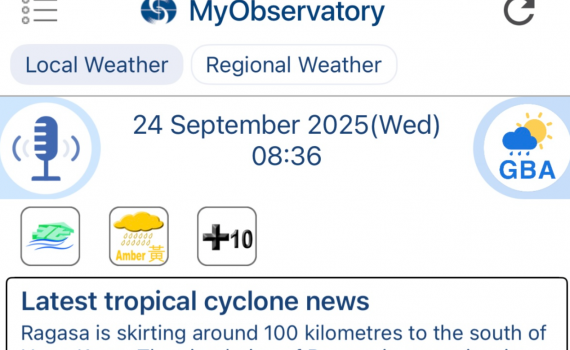
The Greater Bay area takes the heat of super Typhoon Ragasa, the most intense storm in 2025, as it sweeps across all the regions on Wednesday, prompting a No. 10 hurricane signal in Hong Kong. The ferocious wind and sudden rainfall bring an unprecedented experience for cities’ newcomers. After Typhoon Mangkhut in 2018, Ragasa is expected to be the strongest typhoon in Hong Kong’s history, according to the former observatory director Shun Chi-ming on Tuesday. According to the Hong Kong Observatory, Typhoon Ragasa sustained a maximum wind speed of 195 kilometres per hour, which makes it more intense than Super Typhoon Mangkhut in 2018, which recorded a maximum wind speed of 185 kilometres per hour. Chen Guowei, a 24-year-old physiotherapist born and raised in Yunnan Dehong, came to Shenzhen Dapeng New Area after graduating last year. “I have never seen a real typhoon before. It’s really crazy,” said Chen, living in the hotel next to the beach provided by his company. Prompted by the weather forecast and messages from families and corporations, he decided to move into the hotel inside Taikang Home Penguyaun, the elderly community he works in. “I don’t really have to work during the typhoon and can live in this expensive hotel, which costs about 500 yuan a night,” Chen said in the video interview. Dubsy Eli, a Nigerian international student at City University of Hong Kong, is also experiencing his first T10 typhoon. “It’s not my first typhoon, but it’s the biggest one. I bought so many fruits to survive,” Dubsy said in a video interview, waking up several times at night to check the weather outside his apartment in Prince Edward. “Back in my hometown, we only experienced heavy winds. But raining with big winds is so exciting for me,” said Dubsy. He is …

Policy Address 2025: Government provides sufficient focus on the needs of subdivided communities amid continued poverty concerns
- 2025-09-19
- Society
- The Young Reporter
- By: Chun Hei LUK、Wing Chi HOEdited by: CHAN Wing Yiu
- 2025-09-19
As the Chief Executive prepares to unveil the 2025 Policy Address, poverty reduction is in the spotlight, especially regarding Hong Kong’s subdivided flats. Concern for Grassroots' Livelihood Alliance emphasizes that the government has given little attention to the specific needs and wants of subdivided flat users. Our reporter Gigi Ho explores how proposed initiatives aim to support vulnerable communities. This address could be crucial in the fight against poverty, emphasizing the urgent need for effective policies to uplift marginalized citizens and improve their quality of life. (Sept 17, 2025) Reported By: Gigi Ho Wing-chi, Anson Luk Chun-hei Edited By: Yoyo Chan Wing-yiu