
Every afternoon, a diverse crowd sits in the dimly lit bar at The Nest, a Nepalese restaurant in Jordan, savouring its happy hour buy-one-get-one-free drink special and listening to jazz music.
“My guests are saying that this place is very cozy and relaxing,” said Pradeep Kandangwa, 55, the owner of The Nest. “They keep coming here once they come.”
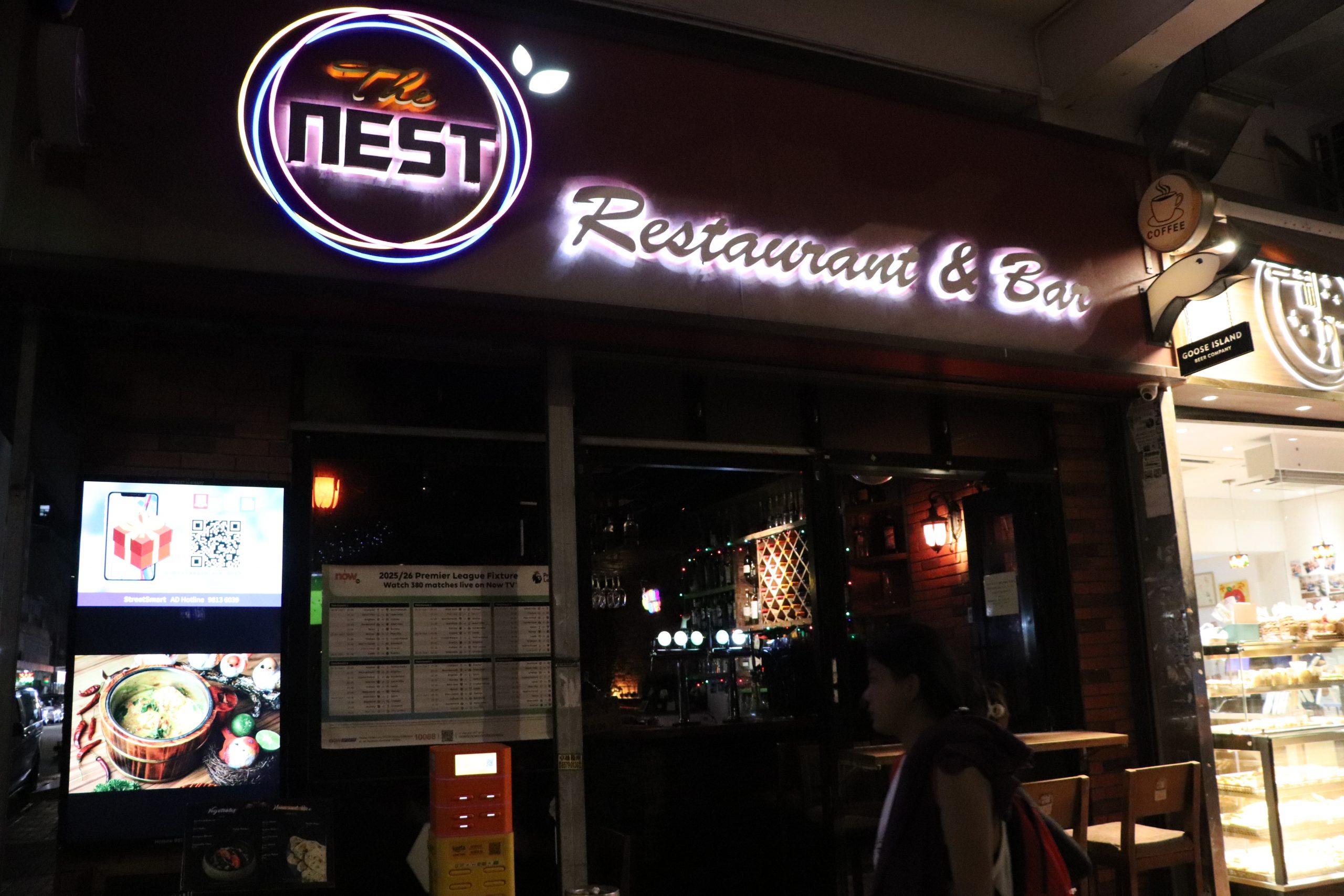
Jordan, referred to as “Little Nepal,” is dotted with restaurants like the Nest and specialty shops selling Nepalese food and daily necessities. It’s part of the Yau Tsim Mong District, which has the highest concentration of ethnic minority residents among Hong Kong’s 18 districts, approximately 8.6% of the city’s total ethnic minority population, according to the 2021 census. The largest portion of these are Nepalese.
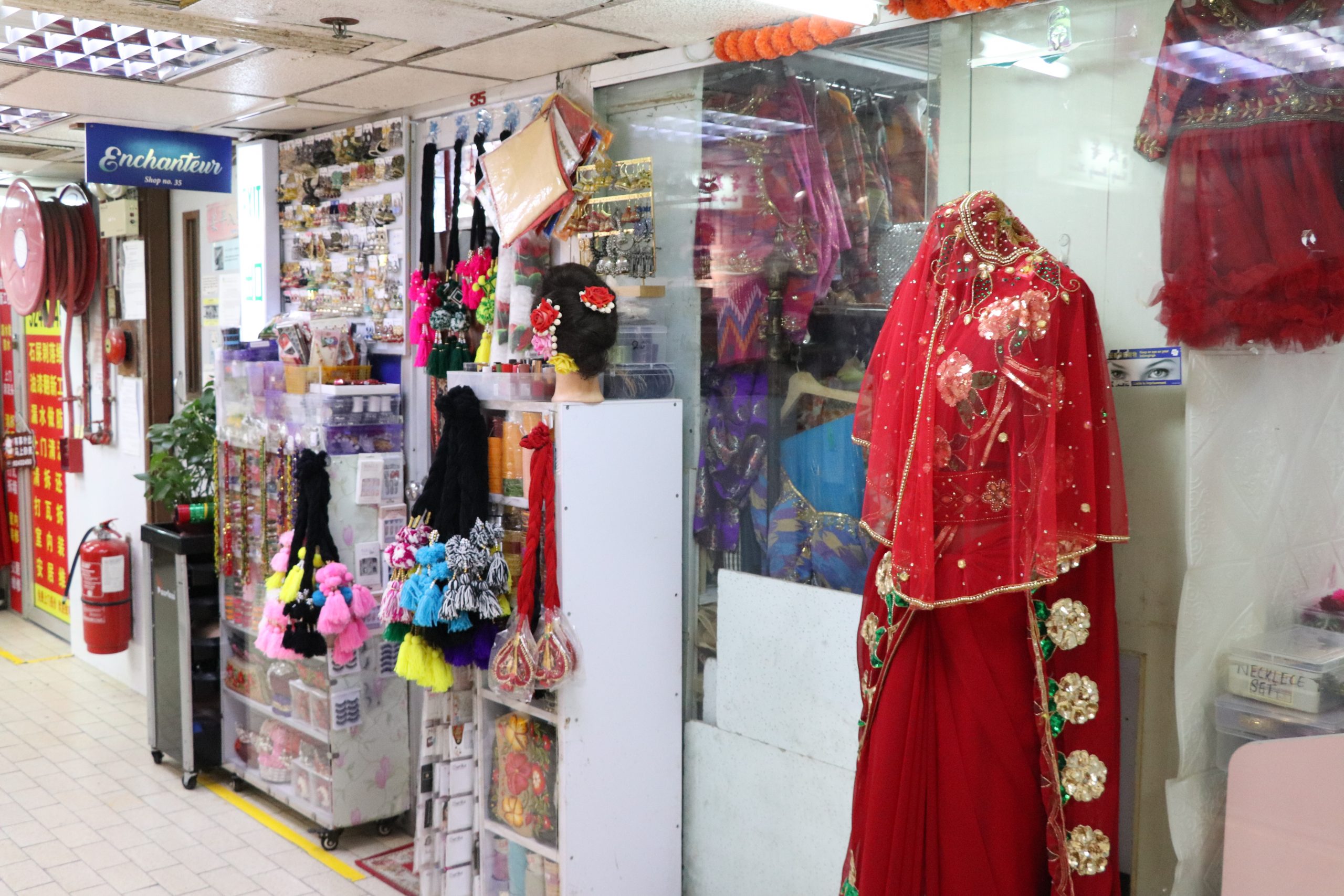
Many, like Kandangwa, work in the catering and hospitality industry, which employs the largest proportion of ethnic minorities in Hong Kong, according to a 2023 study from Lingnan University and Hong Kong Baptist University.
But experts say that ethnic minorities in the city are pushed into service industry or construction jobs because of a lack of Chinese language skills. For some, especially those who were born in Hong Kong, this can lead to an identity crisis.
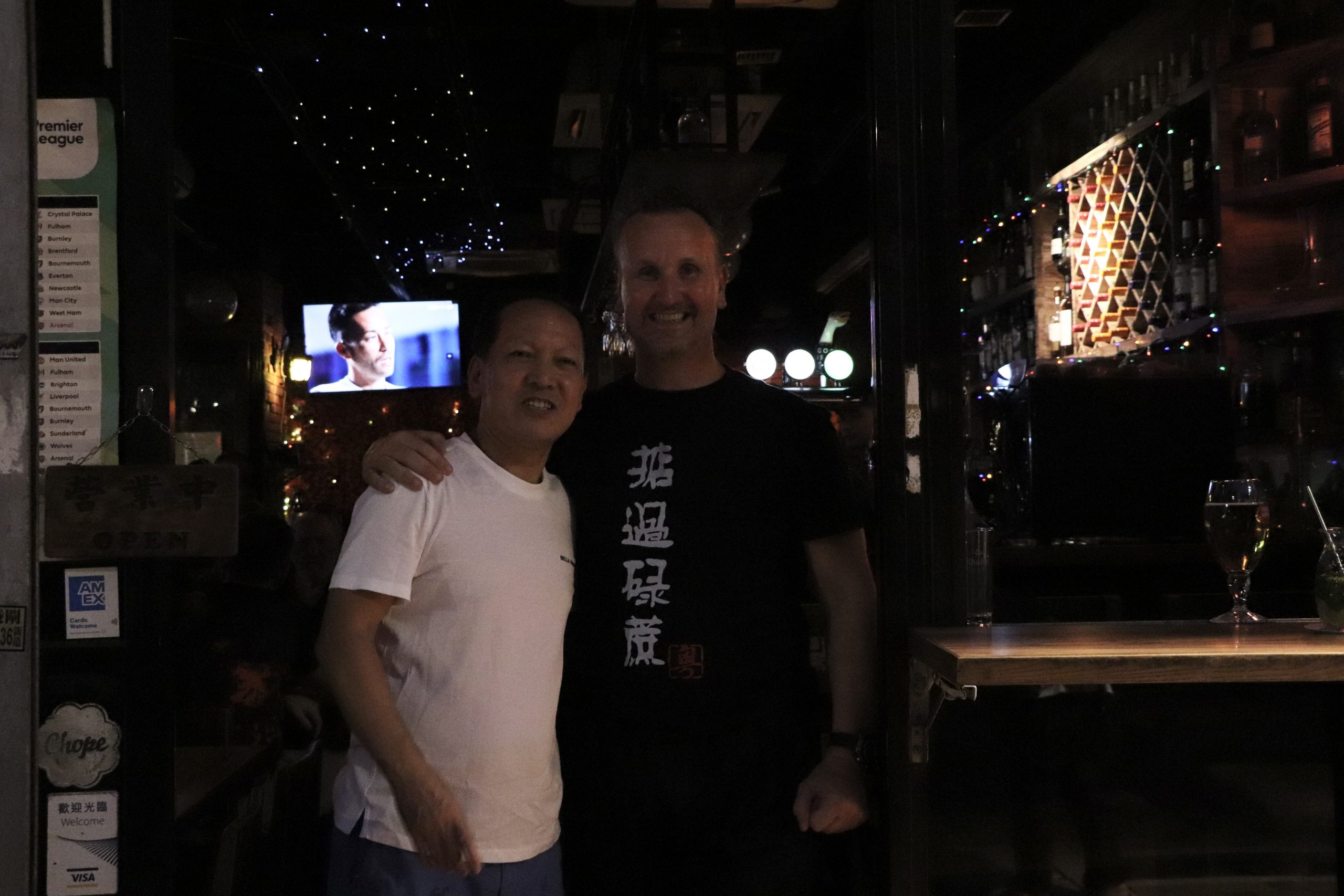
Pradeep Kandangwa (Right), the owner of The Nest Restaurant and Bar with his friend from Australia (Left).
Kandangwa said he first worked in construction when he arrived in Hong Kong from Nepal 25 years ago before opening his restaurant in 2016.
“Nepalese who don’t speak Chinese and even English still make a living in places like restaurants, salons and hotels,” said Kandangwa. “Finding work in Hong Kong’s local community isn’t easy for non-Chinese individuals. We may meet the qualifications, but the issue is language, our Chinese isn’t fluent enough.”
“While I can manage basic communication, read and write some words, it’s insufficient to secure a job at a local company, so I decided to start my own business,” he added.

“The Nepalese community faces language barriers because of a lack of Chinese language education for ethnic minorities in Hong Kong,” said Jeffrey Andrews, 40, Hong Kong’s first ethnic minority registered social worker based at NGO Christian Action’s Centre for Refugees in Chungking Mansions.
To address this, learning materials for the Chinese Proficiency Test, tailored for non-Chinese speaking students, will be extended to the junior secondary level in the next school year, according to the 2025 Policy Address,
“The government must first change the framework of Chinese as a Second Language to become more comprehensive, meaning that minority language learning should be taught by qualified teachers starting from kindergarten,” he said.
“The best approach is to start when they’re young, otherwise they’ll always be playing catch-up later on,” he added.
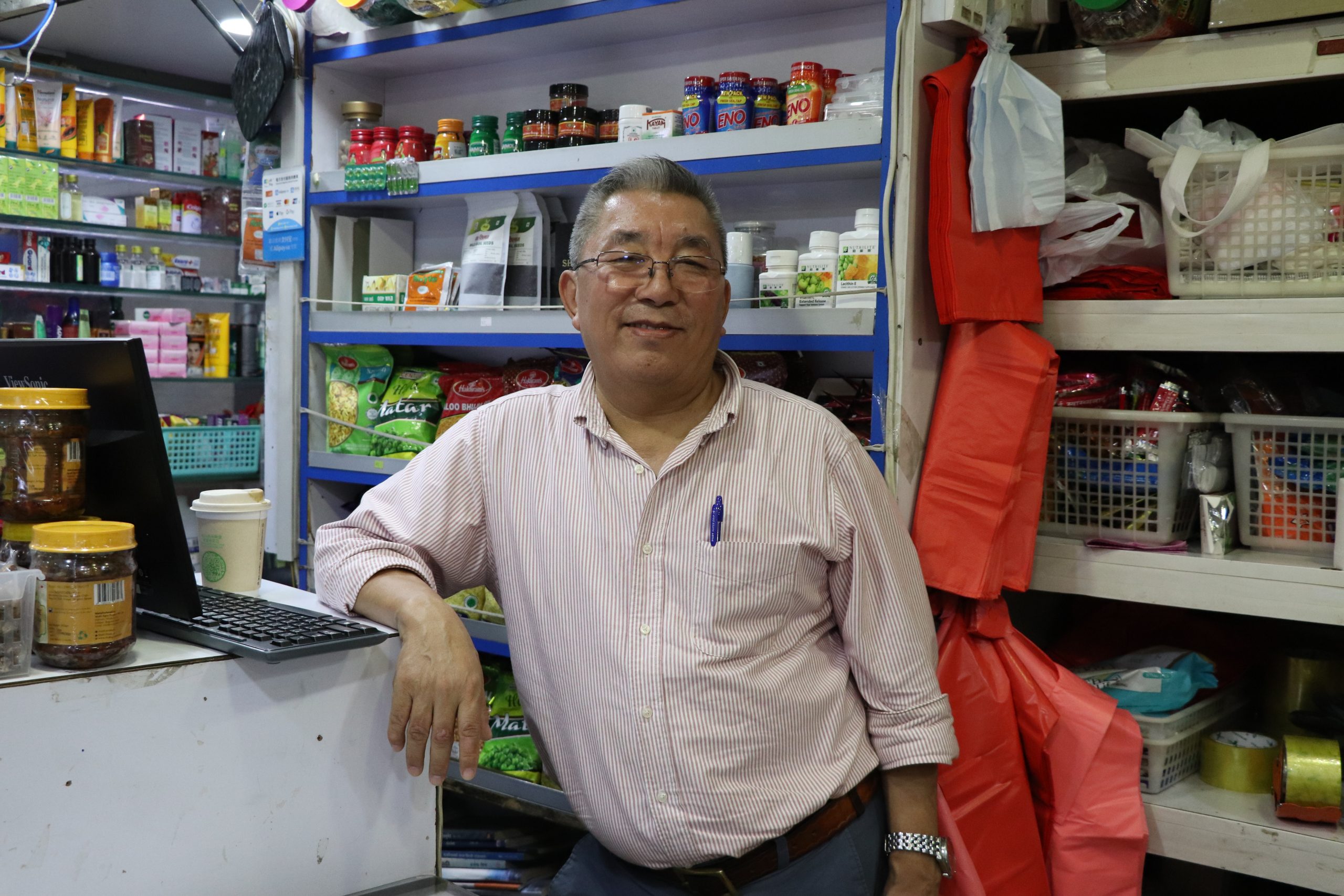
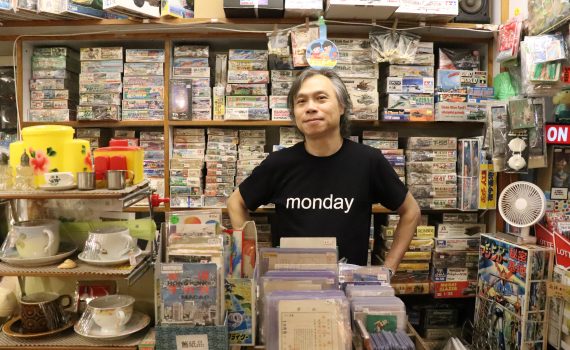
Ram Lee Rai, 65, the owner of the Gurkha Store in Jordan who came to Hong Kong from Nepal in 1996, said he put his daughter into a local school so that she would learn Cantonese.
“Although my daughter was very reluctant at first, she now feels quite comfortable and at ease speaking Cantonese,” Rai said.
He came to Hong Kong to run the small family store passed down from his father, who was already living in Hong Kong. Rai conducts business and chats with his customers in Nepalese.
Rai, who doesn’t speak Cantonese, said only by understanding the local language can one integrate more easily into the community and access more opportunities.
His daughter Ninam Rai, 26, who was born in Hong Kong, works as a teaching assistant and said people are surprised by her Cantonese skills.
“I don’t know whether to introduce myself as Nepalese or Hong Konger, but I hope one day I can naturally tell others I’m a Hong Konger,” she said.
“Nepal is my homeland, but I feel depressed by the recent protests there,” she said, referring to the waves of recent street protests in Nepal sparked by rising unemployment and frustrations over government corruption and economic hardship. “I am also grateful to be in Hong Kong, because this is my home.”
Chandni Puri, 33, a community leader at Christian Action, said many young Nepalese people she works with in Hong Kong experience an identity crisis.
“They want to call themselves Hongkongers but can’t speak Cantonese, still conversing in Nepali because it’s their first language,” Puri said. “After graduating from secondary school, they generally face a harsh reality check about where exactly they belong, why they’re stuck in Hong Kong, and should they return to Nepal?”
“This is the peak of the identity crisis,” she added.
Eliza Rai, 21, who received help from Christian Action and resides in Yau Tsim Mong, said many Nepalese youth in Hong Kong find greater opportunities for personal and professional growth here than in Nepal, leading them to prefer staying in Hong Kong.
An increasing number of Nepalese residents are choosing to remain in Hong Kong, its population rose from 3.7% to 4.8% over the past decade, according to the 2021 census.

Andrews said that Christian Action now provides professional employment training and development programs for Nepalese and other ethnic minority youth to help prevent limited career prospects.
Andrews also called for a societal shift. He said that despite the government investing substantial funds annually, with policies and budgets in place, many non-ethnic Chinese still cannot speak Cantonese today.
“We’ve been here for a century but the language issue still exists,” Andrews said. “If the right resources are allocated to the right places, the government, society and private sector all have much to do. As an NGO, we also bear the responsibility to drive this forward,”
“Through these efforts, hope for the Nepalese community in Yau Tsim Mong can gradually emerge, encouraging more ethnic minorities to choose to stay in Hong Kong,” he added.
《The Young Reporter》
The Young Reporter (TYR) started as a newspaper in 1969. Today, it is published across multiple media platforms and updated constantly to bring the latest news and analyses to its readers.
Local artsy businesses transform old district into trendy check-in spots

Running together: how a running club in Tai Po is bringing the community closer



Comments