
The Young Reporter

Hong Kong district councillors required to pledge allegiance to government or face a 5-year election ban
- 2021-02-27
- Society
- The Young Reporter
- By: Shameel IbrahimEdited by: Simran Vaswani
- 2021-02-27
Secretary for Constitutional and Mainland Affairs Erick Tsang announced that District Councillors may be required to pledge allegiance to the government, under a proposed amendment to the Public Offices (Candidacy and Taking Up Offices) (Miscellaneous) Ordinance. Violators will be barred from running for office for five years. Mr Tsang introduced a list of rules that disallow district councillors from running for office. The behaviours that are not allowed include committing acts which endanger national security such as refusing to recognise China’s sovereignty over Hong Kong, involving foreign government interference in the city and advocating for “Hong Kong independence” among others. “I believe that, if according to the list, the individuals are sincere in upholding the Basic Law and swearing allegiance to the SAR government, they won’t have to be worried,” Mr Tsang said. Under Article 6 of the national security law, residents “who stand for election or assume public office shall confirm in writing or take an oath to uphold the Basic Law.” The ordinance also contains a clause that will remove any councillor who is “declared or decided” to have failed to fulfill the requirements of bearing allegiance to the city. The first reading of the bill will commence on March 17. The second and third reading will be decided in the second quarter of 2021, according to the LegCo document. “If they disqualify a councillor, who came from the election, actually they are not only disqualifying us, but also disqualifying the citizens,” said Wong Tin-yan, a district councillor for the Lai King constituency. The district councillors are also required to sing the national anthem of China as part of the proposed oath-taking requirement. Mr. Tsang said that four incumbent pro-democracy district council members -- Lester Shum, Tiffany Yuen, Tat Cheng and Fergus Leung -- would be expelled from …

HKBU cancels World Press Photo exhibition prematurely
- 2021-02-26
- Society
- The Young Reporter
- By: Jasmine TseEdited by: Janice Lo
- 2021-02-26
The World Press Photo exhibition, scheduled to open on Mar. 1, was cancelled prematurely by its host Hong Kong Baptist University. On Thursday, four days before the opening, HKBU released a statement saying that now was “not an appropriate time” to hold the exhibition due to “consideration to campus safety and security” and “the need to maintain pandemic control.” Senior Lecturer and Director of International Journalism concentration at HKBU, Robin Ewing, said, “The university management made the decision not to hold the exhibition for safety reasons. We are disappointed that our students and the people of Hong Kong will not be able to see the exhibition in person. It’s a real shame that the current political climate doesn’t allow for such a compelling global work of visual journalism to be shown. ” Ms Ewing is a faculty advisor to The Young Reporter. Organizers of the exhibition had planned to implement pandemic-control measures, including the mandation of mask-wearing, completion of a health declaration, temperature screening and limited entrants for social distancing. The Netherlands Consulate General in Hong Kong that funded the exhibition was “disappointed” about its cancellation. “The exhibition bears testament to the important work photojournalists do all over the world in bringing us the stories that matter,” the Consulate General said on Facebook. “In these uncertain times, it reminds us that a free and independent press is vital for maintaining stable and resilient societies.” Users on Twitter speculated the cancellation was due to exhibition photos of the Hong Kong pro-democracy protests in 2019. Dot Dot News, a pro-Beijing online propaganda site based in Hong Kong, published an article on Feb. 22, saying that the exhibition would “display photos taken during the period of ‘black violence’ a year ago that aimed to beautify rioters and provoke anti-police sentiment.” The article specifically …
Standard Chartered restores dividend while yearly profit more than halved
- 2021-02-26
- Business
- The Young Reporter
- By: Zhou Yichen Gloria 周奕辰Edited by: Zhu Zijin Cora 朱子槿
- 2021-02-26
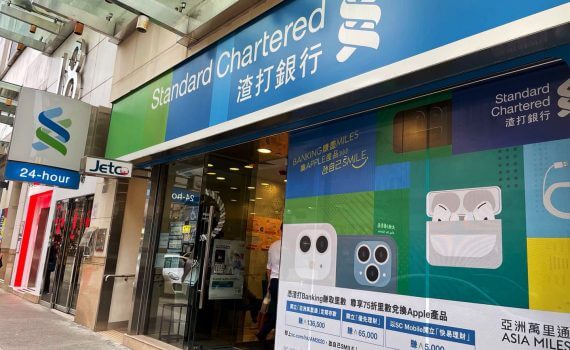
Standard Chartered PLC (2888) reported on Thursday a 68% decrease in net profit in 2020, due to lower interest rates and higher credit impairments under the COVID-19 pandemic. The net profit of the London-based bank fell to $751 million (HK$ 5.8 billion) in 2020. But the company would pay a $0.09 (HK$ 0.7) per share dividend and restarted a $254 million (HK$ 1.97 billion) share buyback scheme. Standard Chartered's Hong Kong shares fell more than 5% after trading opened on Friday, and closed at HK$51.05. "The resumption of dividends was announced in December last year, which was good news at the time and made the company's stock rise," said Jacky Luo, partner and director of several companies. "After the release of the 2020 results, the decline in the bank income and the similar forecast of this year's income to last year, will make some investors feel not so positive, adjust their expectations, and make corresponding judgments on changes." The bank, which does most business in Asia, reported a 57% pre-tax profit drop to $1.61 billion (HK$ 12.5 billion) in 2020 from $3.71 billion (HK$ 28.8 billion) in the previous year, due to a total charge of $895 million (HK$ 6.9 billion) related to restructuring, goodwill impairment, and other items. The operating income slipped by 4% to $14.75 billion (HK$ 114 billion), with net interest income declining 11% to $6.88 billion (HK$ 53.4 billion). The credit impairments of the bank in 2020 surged more than double to $2.29 billion (HK$ 53.4 billion), with the majority booked in the first half of the year. Despite profit decline, Chief Executive Officer Bill Winters was confident that the company would recover from the epidemic. "We are weathering the health crisis and geopolitical tensions very well," he said in a company statement. “Our strategic transformation …

Budget Address 2021: tax concession reduced by half
- 2021-02-25
- Business
- The Young Reporter
- By: CHAN Sze ChingEdited by: LAI Tsz Ching
- 2021-02-25
Hong Kong’s Financial Secretary Paul Chan Mo-po on Wednesday announced salaries tax breaks of up to HK$10,000 while raising stamp duties on stock transfers from 0.1% to 0.13%. With 1.87 million Hongkongers benefiting from the tax break, government revenue will be reduced by HK$11.4 billion due to the waivers, said Mr Chan. Last year’s tax waiver was capped at HK$20,000. Meanwhile, the stamp duty increase will be applied to both buyers and sellers. This is the first increase since 1993, provoking complaints from the securities industry. After the announcement, Hong Kong Exchanges and Clearing’s share price recorded a 9% drop The Hang Seng Index faced its biggest drop of nearly 3% since May last year. Cheung Tsz Wai, a 33 year old Uber driver, said he is disappointed in the budget. “It is no help to citizens like me,” Mr Cheung said. “During the pandemic, everyone faced a financial crisis,” Mr Cheung said. “Not only the government did not distribute welfare this year, but they even reduced all kinds of allowance and subsidies.” Agnes Cheung, director and head of Tax of BDO Limited, said the budget was “as expected” and “shortsighted”. Ms Cheung said BDO had wanted a tax deduction for rental expenses, but the budget did not address the item this year. “There are only “sweeteners” for the property owner from Home Loan Interest Deduction, but nothing for the rental paying group,” said Ms Cheung. “It just focuses on the current year measures, saving expenses, but didn’t take a broader approach to target Hong Kong long term economy growth.” Webster Ng, president of the Taxation Institute of Hong Kong, said the measures were normal. “Additional revenue from stamp duty will make room for tax relief,” he said. “In this year, everybody including the government is suffering, we are all …

Budget Address 2021: Both private and public healthcare sectors call for more support
- 2021-02-24
- Health & Environment
- The Young Reporter
- By: WANG Yichun、SHI RuoshuiEdited by: Jasmine Tse
- 2021-02-24
Financial Secretary Paul Chan Mo-po announced more funding support for the Hospital Authority in his budget address today, raising dissatisfaction among the private and public healthcare sectors. Mr Chan’s policies included providing more than $5 billion to the Hospital Authority to support the anti-pandemic work, increase manpower and services in the public healthcare system, promote the development of Chinese medicine and enhance mental-health services. “Under the current epidemic, the HA will utilise the resources to further enhance public hospitals’ capability in managing infectious diseases,” HA chairman Henry Fan Hung-ling said at the Legislative Council today. However, government support for the private sector was nonexistent. “The private sector and its doctors are suffering under the pandemic,” said Philip Lai, a pharmacy owner in Kowloon City. The majority of Mr Lai’s clients are local residents, and his pharmacy suffered a 30% drop in revenue since the pandemic began last year. “I deal with clients who want better drugs and medicines that are not available in public hospitals,” Mr Lai said. “But if the public sector gets more funding, they can offer higher quality medicine. Then why would anyone buy medicine from pharmacies?” Private clinics also suffered a drop in patients due to the pandemic. Tracy Hui, a nurse, said her private clinic had a 40% drop in patients. “I didn’t expect the government to support us. But if they could provide any support, it would be best if they could help us in terms of rent,” said Ms Hui. The public sector also showed dissatisfaction with this year’s budget address. “The policies were not about health, they were about security and IT.” said Dr Arisina Ma, president of Hong Kong Public Doctors association. Dr Ma pointed out that the budget address only covered paint-by-number policies, including increased isolation beds and mental health …

Budget Address 2021: Hong Kong government rolls out plans to rescue the tourism industry
- 2021-02-24
- Society
- The Young Reporter
- By: Shameel Ibrahim、AMALVY Esten Carr Claude Ole EriksenEdited by: Simran Vaswani
- 2021-02-24
Financial Secretary Paul Chan Mo-po announced HK$934 million for the pandemic-stricken tourism sector in the budget address on Wednesday morning. He said, HK$169 million of the allocated budget will be used for local cultural, heritage and creative tourism projects, such as the Yim Tin Tsai Arts Festival and the City in Time. More than HK$2 billion has already been injected into the tourism industry. An additional HK$765 million will be reserved for the Hong Kong Tourism Board. He added that the relaxation of social distancing measures will allow local tour groups to resume as long as public health can be protected. “Sectors such as airlines, travel agents, tour operators and some retail, it [the pandemic] has been disastrous,” said Professor Brian King, Associate Dean at The Hong Kong Polytechnic University School of Hotel and Tourism Management. In Hong Kong, the tourism industry is one of the city's major economic sectors. According to HKTB, Hong Kong received over 59 million visitors in 2019 and only over 3 million in 2020. Hong Kong’s airport has been closed, only allowing the city's residents from overseas to land following strict quarantine and immigration measures. The two other borders -- the Shenzhen Bay Port and the Hong Kong-Macau-Zhuhai Bridge -- have been shut. Mass-layoffs have been made in airline industries such as Cathay Pacific, the city’s flagship airline. It’s sister company, Cathay Dragon, permanently shut down. The unemployment rate, which is at 7%, is the highest Hong Kong has seen in 17 years. A low-interest loan scheme for unemployed Hong Kong residents was also announced in the budget address. The loan is capped at HK$80,000 per person targeting some 250,000 unemployed residents. Prof King said that the loan scheme will aid tourism sector workers, who can now find other sources of income as the …

Budget Address 2021: Effects of unemployment loan in doubt
- 2021-02-24
- Business
- The Young Reporter
- By: Zhu Zijin Cora 朱子槿、Yoyo Kwok Chiu TungEdited by: Zhou Yichen Gloria 周奕辰
- 2021-02-24
Hong Kong's Financial Secretary Paul Chan Mo-po said on Wednesday unemployed citizens can apply for government-backed low interest personal loans of up to HK$80,000 but citizens cast doubt on its effectiveness because some fear that they cannot repay the loan. The one-off loan at an interest rate of 1% per annum is part of the government’s relief measures announced by the Financial Secretary in his budget speech amid the city’s unemployment rate hitting a 17-year high of 7% in January, with more than 250,000 people unemployed. “The labour market deteriorated sharply,” said Mr Chan in the speech. “This prolonged economic downturn has plunged some people into financial difficulties.” As an extra financing option for the unemployed, eligible individuals can pay interest only in the first year, and then repay the principal plus interest within the next five years. People who repay on time will get the interest back at the end. “I think the budget is reasonable and fair, especially in giving low interest rate loans to the unemployed,” said Teresa Tong, 65, former Partner at Ernst & Young Hong Kong. “ It’s a new idea for this year and it’s pretty innovative. It’s the right way to support the poor and unemployed rather than just offer them money.” “But some people are reluctant to borrow from the government”, said Kwok Man-ho, district councillor Tin Shui Wai. He has received comments from about a dozen of residents and none of them planned to apply for the loan as they were not sure if they were able to repay later. Besides, Mr Kwok also said the amount of the loan was too small, especially for people who were not living in public housing. “Since the unemployed have no idea when they can find jobs, most of them prefer direct unemployment grants …

Budget Address 2021: Deficit hits record high Forecasts economy return to growth this year
- 2021-02-24
- Business
- The Young Reporter
- By: Zhou Yichen Gloria 周奕辰、Vikki Cai ChuchuEdited by: Zhu Zijin Cora 朱子槿
- 2021-02-24
Hong Kong government's fiscal deficit would hit a record of HK$257.6 billion this financial year, Financial Secretary Paul Chan Mo-po said in his budget speech on Wednesday. The deficit was expected to narrow a bit to HK$101.6 billion in 2021/22, accounting for 3.6% of GDP as a series of supporting measures and the continued increase in recurrent expenditure. Mr Chan also forecasted the city's economy would return to growth of between 3.5% to 5.5% this year, due to an expected recovery in the global economy and the effect of local stimulus measures. The Financial Secretary delivered his budget speech at a Legislative Council meeting today with a focus on “stabilising the economy and relieving people's burden”. He said the economy would still face significant challenges in the first half of the year, but "economic recovery will likely gain a stronger momentum in the second half of the year in tandem with an expected rebound in the global economy." However, he also said, “With the epidemic still lingering, our economy is yet to come out of recession.” “As the social distancing restrictions are relaxed and more people are vaccinated, confidence among investors and citizens will increase, and there will be corresponding economic activities to help the economy recover,” said Billy Mak, associate professor from the Department of Finance and Decision Sciences of Hong Kong Baptist University. “But the recovery process may take three or four years, and the economy this year will still be difficult.” Mr Chan also alerted that Hong Kong would record a deficit for a number of years after achieving a surplus for 15 years. Despite this, the government still decided not to cut spending that affects people's livelihood, especially resources for education, social welfare and healthcare, in order to protect people's livelihood and maintain public confidence. By …

Budget Address 2021: Initiative to achieve carbon neutrality and funding for recycling welcomed by NGO
- 2021-02-24
- Health & Environment
- The Young Reporter
- By: CHEN Bingyi、LAMA Sumnima RaniEdited by: GOH Kylan
- 2021-02-24
The Hong Kong government will allocate additional funding for green projects in the new budget proposal announced this morning to help the city meet its carbon neutrality target by 2050. A billion dollars has been injected into funding more than 80 projects that aim to install small-scale renewable energy systems, like solar panels and solar water heaters at government buildings. The Recycling Fund will also receive $1 billion for individual local recycling enterprises aimed to enhance and expand their recycling operations in Hong Kong and non-profit-distributing organisations to undertake non-profit making projects. The city has been widely criticized for its lack of effort in recycling and waste management. “The fund is very important to help local traditional recycling companies to transform into a more workable and sustainable model,” said Lo Kiu-fung, the Project Manager of Designing Hong Kong, a local environmental NGO. NGOs can also benefit from $150 million, a separate fund set aside so the government can help install energy-saving appliances and conduct energy audits for free. The scheme is expected to benefit more than a thousand businesses, said Mr Chan. “The application period for recycling funds will be extended to 2027 so as to render continuous support to the trade, particularly the SMEs, in enhancing its operational capabilities and efficiency as well as coping with the latest needs of both the local and non-local markets,” said Financial Secretary, Paul Chan Mo-po. Mr. Lo describes the city's waste disposal situation as very urgent. “We are behind a lot of Asian cities, and people are producing more and more waste,” he said. Hong Kong's major environmental concern is air pollution and waste management, according to the Environmental Protection Department. The city is facing a landfill shortage. The total amount of solid waste disposed of in Hong Kong's landfills in 2019 was …

Budget Address 2021: No cash handout amid recession; $5,000 e-vouchers for eligible residents
- 2021-02-24
- Society
- The Young Reporter
- By: TUNG Yi Wun、Bowie TseEdited by: Sara Cheng
- 2021-02-24
Financial Secretary Paul Chan Mo-po announced in his budget speech Wednesday there will be no cash handout for this financial year. But electronic vouchers of HK$5,000 will be issued in instalments to each Hong Kong permanent resident and new arrival aged 18 or above to encourage local consumption. The measure, which involves about HK$36 billion, is expected to benefit more than 7.2 million people, Mr Chan said. The government has not said yet where the vouchers can be spent or how they will be given out. “The HK$5,000 e-voucher cannot tackle the current situation and provides limited support to citizens who have been struggling throughout the pandemic,” said Owan Li, Tai Kok Tsui North district councilor. The numbers have been grim. Under the global sweep of the coronavirus, Hong Kong’s economy has shrunk by 6.1% for two consecutive years, hitting the highest annual decline on record. The unemployment rate surged to 7% in the fourth quarter of 2020, reaching a 17-year high. Tourism-related sectors are hard hit as they reached the highest jobless rate since SARS in 2003. Retail, accommodation and food services sectors have suffered a surge in the unemployment rate to 11.3%. Tourism sectors have frozen with extensive global travel restrictions, and the export travel service plummeted by 90.5% “I actually agree with the government decision to not launch another cash handout since it has not been effective,” said Angus Chan, an employee dismissed from the InterContinental Hotel during the pandemic and now works in the Rosewood Hotel. He has one to two no-pay leave days per week at the new job, and some of his shifts are cut, he said. As the world continues to restrict travel, the hospitality industry is uncertain about when it will recuperate from the pandemic. Small and medium enterprises are hoping the …