
The Young Reporter

Hong Kong pubs see slow start as football fans head to pubs to watch World Cup
- 2022-11-24
- Society
- The Young Reporter
- By: Tsz In Warren LEUNGEdited by: Gigi Chong
- 2022-11-24
Football lovers across Hong Kong returned to bars and restaurants to watch the game as the 2022 FIFA World Cup kicked off last Sunday, but some pubs didn’t see much boost in business, despite authorities relaxing opening hours earlier this month. Many venues screening the matches expected crowds, particularly for the more popular matches, including Brazil, Germany, France and England. However, Lan Kwai Fong, the city’s entertainment district, was almost quiet when the match between England and Iran was aired on Monday at 9 pm, with only a handful of patrons watching the games. Chu Ka-chun, 30, manager of The Derby Pub & Restaurants in Wan Chai, said the rapid test requirement has reduced customers' willingness to watch the game at bars and called the potential boost to business from the event “questionable”. However, Eddie Chan Ka-kin, 44, founder of Lockeroom Dining in Mong Kok, is optimistic and expects the tournament to bring up to 50% growth to his business. “Around 60% to 70% of the tables have been reserved for matches between the “traditional powerhouses,” Chan said. “It’s dull to watch the football match alone at home. Watching football matches in pubs has a completely different atmosphere,” said Jimmy Wong, a 60-year-old football enthusiast and a first-time visitor to Lan Kwai Fong to watch the tournament. Daniel Wosner, another football lover who came to Lan Kwai Fong for the tournament, said he would continue to enjoy the remaining matches there because of the excitement brought by the extended bar opening hours. This year’s FIFA World Cup tournament will run for 28 days until Dec. 18.

See the world in patterns: Yayoi Kusama’s exhibition at M+
- 2022-11-23
- Culture & Leisure
- The Young Reporter
- By: Wisha LIMBU、Rajnandini PANDEYEdited by: Leona Liu
- 2022-11-23
M+ celebrates its first anniversary with Japanese artist Yayoi Kusama’s exhibition, Yayoi Kusama: 1945 to Now. The exhibition follows a number of themes such as Infinity, Accumulation, Radical Connectivity, Biocosmic, Death, and Force of Life.

Hong Kong’s “Round-the-Island Trail” - what you need to know
- 2022-11-21
- The Young Reporter
- By: Nola YipEdited by: Kiki Lo
- 2022-11-21
Hong Kong will develop a coastal walkway on Hong Kong Island, Chief Executive John Lee Ka-chiu announced in his first policy address. The “Round-the-Island Trail” project will connect the North Shore Promenade and the Southern District Countryside Walkway to improve the city’s livability, Lee said. Here’s what you need to know about the trail. 1. What is the total length of the “Round-the-Island Trail”? The “Round-the-Island Trail” will be about 60 kilometres long and will go around the whole Hong Kong Island. Currently, it is possible to detour around the Hong Kong Island’s coastline but the existing “Hong Kong Island coastal trail” is not fully connected and contains missing links. It is 65 kilometres long and connects a series of well-known routes, small paths and lost trails. 2. When will the “Round-the-Island Trail” be completed? John Lee said the study and design of the trail will start in two months and that 90% of the trail will be connected by 2028. As early as 2020, four District Councils jointly proposed a similar “Hong Kong Island Coastal Trail” to be created by a non-profit organization, Designing Hong Kong. But the plan was shelved back then. 3. What scenic attractions will the “Round-the-Island Trail” include? The 60-kilometre trail will include modern tourist attractions and historical sites, such as Wanchai Harbour, Kennedy Town's "Instagram Pier", Dragon's Ridge, and Tai Tam Tuk Reservoir Dam. 4. Are there any harm to the environment? Some critics say that building trails can have a negative impact on the natural environment, especially with regard to the construction materials used. According to a recent survey conducted by CoastalTrail.hk, some respondents suggested minimizing the use of concrete during the construction of the trail as it is an artificial material that may cause environmental harm. 5. What does the government hope …

Creativity inside the red lines: Hong Kong artists adapt to National Security Law
- 2022-11-21
- Politics
- The Young Reporter
- By: Tsz Yin HO、Le Ha NGUYENEdited by: Malick Gai
- 2022-11-21
Ng Kap-chuen, a cartoonist who goes by his artist name Ah To, left his native Hong Kong for the United Kingdom in April this year for fear of being jailed for his art. Ng, 39, is known for being critical of Beijing and the Hong Kong government. He has produced a number of artworks since 2014 expressing discontent over controversial issues, such as the National Security Law, social unrest, and COVID-19 measures. Some artists, including illustrators and cartoonists such as Ng, whose works tend to challenge and criticise the government in a satirical and controversial manner said they fear being accused of violating the NSL, implemented in 2020 after anti-government protests broke out across the city in 2019. The NSL aims to prevent, stop and punish subversion, secession, collusion with foreign forces and terrorist acts, with critics warning it could silence dissent and erode freedom in the city. “The immense pressure, terror, and uncertainty of not knowing when I would be arrested really tortured me mentally and made it hard for me to be in a good mood for creation,” said Ng, a pro-democracy artist who still draws cartoons about Hong Kong’s social issues and politics from the UK. “I don’t feel comfortable if I can only make artwork that doesn’t express all my feelings. Self-censorship is not my way,” said Ng. “I am working on some sensitive topics that other artists in Hong Kong avoid talking about. They draw about local policies while I focus on sensitive political issues.” While no artists in Hong Kong have been arrested under the NSL, in September, five speech therapists were sentenced to 19 months in prison for conspiring to write and distribute books with seditious intent. The case involves a series of illustrated cartoon books about wolves and sheep, symbolising Chinese authority …

Foodpanda riders strike over wage cuts
- 2022-11-21
- Society
- The Young Reporter
- By: Zimo ZHONG、Chengqi MOEdited by: Karmen Li
- 2022-11-21
Saam Bilal, a Pakistani Foodpanda rider, woke up at 6:30 am. He finished a quick breakfast before starting his 12 to 14-hour shift delivering food orders. It took Bilal two hours to get to work from his home in Tuen Mun to Central. “I used to earn around HK$50 per order, which is double compared to the wage now,” he said, showing his order record. “Now I only get HK$20 to HK$30 for each order.” Bilal joined a strike by a group of Foodpanda delivery workers on Nov. 3 and Nov. 4. Most of the strikers are Pakistani. On 29 September, the food delivery platform introduced a new system to calculate the riders’ earnings. Instead of using the linear delivery distance, Foodpanda switched to using Google Maps. Although Foodpanda claimed that the minimum order service fees had remained unchanged, couriers complained that the new system led to the salaries cuts again. Another local Foodpanda rider, Tim Law, 39, has worked for Foodpanda for about three years. He said that he earned at least HK$200 less every day since the implementation of the new mapping system. “(In order to get the same salary,) I have to work longer hours and sometimes I can’t even finish my work until 2 am,” Law said. The wage cut has sparked several strikes in October and November. Another rider who gave his name as M Lee joined Foodpanda in 2020. He was resentful about the company's batch system, an order distribution system which ranks delivery workers into batches based on certain criteria. The batch number determines the shift booking and service fees category they’ve been placed into. “Foodpanda uses this way to control us. If you follow the rules, you’ll become Batch 1, and the system will send you better orders, which means higher service …

Hong Kong eases curbs on vaccine pass checks except cinemas and ice rinks
- 2022-11-17
- Society
- The Young Reporter
- By: Kin Hou POON、Ka Ki FUNGEdited by: Kelly Pang
- 2022-11-17
A number of premises like public wet markets, religious venues and game centres will no longer have active vaccine checks for visitors starting from today, but scanning the LeaveHomeSafe QR code is still required. Active inspections of vaccine passes will be scrapped for premises, as the government announced last Thursday. No actively check is patron’s vaccination records or exemption certificates upon their entry. That means amber code holders are permitted to visit those venues. People under the category of amber code means they are inbound visitors from overseas places or Taiwan, who are not allowed to enter premises subject to "active checking" of the vaccine pass. Wong Muk-ching, dean of Lai Yiu Alliance Church welcomes the policy, he said using vaccine pass to decide whether the congregation can go back to the church was unacceptable. “Amber code holders can go back to the church after the policy implemented, which they are not allowed to do so before,” Wong said. “There are people who have obtained amber codes due to not having the valid vaccine pass which has restricted them from going back to church during the COVID-19 outbreak. Those having an amber code can return the church in a legal way,” he added. Wong said the government has enacted effective policy in coping with COVID-19, ensuring those who are infected will not be able to enter the church. “This policy now even makes those with amber codes entering the church more conveniently,” he said. “Ice rinks which require facemasks and cinemas that prohibit food or drink could drop “active checking”,” Libby Lee Ha-yun, Under Secretary for Health announced today in the press conference. But one day before the launch of the updated policies, the government announced that social distancing measures for these two venues remain the same as before, meaning …
Housing differences between Singapore and Hong Kong, here’s what you need to know
- 2022-11-15
- Society
- The Young Reporter
- By: Ming Min AW YONG、Yuhe WANGEdited by: Nick Yang
- 2022-11-15
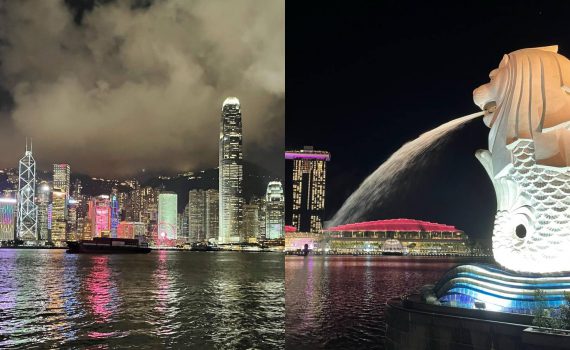
Hong Kong and Singapore, two small and open Asian economies, have different degrees of housing ownership. Hong Kong has ranked first place in the least affordable housing markets among 92 cities since 2010, according to Demographia International Housing Affordability, yet Singapore ranked 40th on the latest list. More than 113,000 residents left Hong Kong in 2021, marking a 1.6% population decline, the biggest population drop since the record. Ample living space, brighter economic prospects and affordable housing prices were the top three reasons why people left the city, according to the research by the Hong Kong Institute of Asia-Pacific Studies in 2021. However, the population of Singapore, which has one of the highest homeownership rates in a market economy, grew by 3.4% last year. Here are four aspects you need to know about differences in housing issues between Hong Kong and Singapore. What percentage of the population owns a house in each economy? Hong Kong In Hong Kong, 49.8% of the population owned a house in 2021, meaning only about 3.6 million people owned a house in 2021. Currently, there are 2,657,800 domestic households in Hong Kong. The average household size in the territory is two members per household. Singapore As a country with more than 5.6 million people, Singapore has a higher population density than Hong Kong. Yet, nearly 90% of the population owned property in 2021 in the state, according to the Department of Statistics of Singapore, with three members living in one house on average. How many public and private housing units are there in each country? Hong Kong Hong Kong had a total of 2,960,000 living quarters last year. About 60% of properties are private permanent quarters, which are housing estates developed by private developers. Around 40% of the quarters are public rental housing units …

Hong Kong Pride Parade Rainbow Market
- 2022-11-14
- Society
- The Young Reporter
- By: Yu Yin WONG、Tsz Ying CHEUNGEdited by: Phoebe Law、Jenny Lam
- 2022-11-14
Hong Kong Pride Parade Rainbow Market brings together the city’s LGBT+ community this weekend. The theme of this year is asexuality.

M+ museum marks 1st anniversary with debut of Yayoi Kusama exhibition, starts charging for admission
- 2022-11-13
- Culture & Leisure
- The Young Reporter
- By: Le Ha NGUYENEdited by: Malick Gai
- 2022-11-13
One year after opening, Hong Kong’s visual culture museum, M+, started charging admission this Saturday as it launched its first Special Exhibition, “Yayoi Kusama: 1945 to Now.” The museum charges HK$120 a ticket for general admission. However, visitors wishing to see the well-known contemporary Japanese artist’s exhibition and the largest retrospective in Asia outside Japan, have to pay an extra HK$120. “This is the first time in Greater China the full trajectory of Kusama’s art is presented in a comprehensive retrospective exhibition. It provides a holistic and unique perspective on the accomplishments of this visionary artist,” said Doryun Chong, deputy director and chief curator of M+ museum in a statement. The retrospective features more than 200 artworks, including paintings, sculptures, and installations, from the earliest drawings to the most recent ones of Kusama’s career spanning over seven decades. The 93-year-old “Queen of polka dots” specifically made three brand new works for her first showcase in Hong Kong: large-scale installation Death of Nerve (2022), immersive art environment Dots Obsession—Aspiring to Heaven's Love (2022), and two sculptures titled Pumpkin (2022). “I think it's very impressive to see an extensive collection which is nicely curated to show Kusama’s different stages of work,” said exhibition attendee Emily Liu, 35. However, Liu is among the visitors who disagree with the museum’s new ticketing policy. “Hong Kong is trying to promote its art and culture to the world and become a cultural center of Asia, but charging people relatively pricey tickets to enter a city’s landmark is contradictory to the concept,” said Liu. Concession tickets, for HK$150, are available for full-time students, children between the ages of seven and 11, senior citizens aged 60 or above, persons with disabilities and a companion, and Comprehensive Social Security Assistance recipients. Free admission is granted for children below the …

Remembrance Day ceremony in Central honors fallen war heroes
- 2022-11-13
- Politics
- The Young Reporter
- By: Tsz Yin HOEdited by: Malick Gai
- 2022-11-13
Hundreds of people gathered at the Remembrance Day ceremony at the Cenotaph in Central on Sunday, with government officials, representatives of the Commonwealth countries and embassies, veterans, and their families in attendance. It was November 11 of 1918 when the German Empire surrendered to the Allies, therefore ending World War Ⅰ. Remembrance Day is observed on this day each year to commemorate those who died in both World Wars. The estimated casualties of military and civilians in World War Ⅰ and Ⅱ are at least 16.5 million and 60 million, respectively. This year, a complete format of the ceremony was restored, after having been changed to a simplified rundown because of the pandemic, with the presence of the Police Marching Band. The band played the traditional British piece “Colonel Bogey March,” at the start of the ceremony. A two-minute silence was observed at 11 am. Government officials and representatives then laid their poppy wreaths beneath the Cenotaph. Ex-serviceman put down donated wreaths on behalf of members of the public. The wreaths will remain in place for three days. Representatives of different religions, including the Catholic church, Taoist and Muslim community led the prayers along with veteran representatives. "This is an annual occasion for me and it is remembering those that went to war and did not come back to their homes," said John T. Siewert, a 98 year-old veteran, who served on the USS Satterlee Destroyer in 1944. Siewart is believed to be the only one at the ceremony who participated in the war. He steered the Destroyer during the landing of Normandy to break the German defenses. Siewert said that he is fortunate to be able to attend the ceremony, as some of his comrades were sacrificed, and he was able to retire safely from the battlefield. “I have …