
By: Jayde CheungEdited by: Nick Yang

John Lee Ka-chiu confirmed to be the new leader in Hong Kong
- 2022-05-08
- Society
- The Young Reporter
- By: Jayde CheungEdited by: Nick Yang
- 2022-05-08
John Lee Ka-chiu, 64, the sole candidate, secured his seat as the sixth chief executive in Hong Kong today with only eight votes against him. Lee won 1,416 votes out of 1,428, including four blank votes, gaining trust from over 99% from the election committee, a record high of support. Thirty-three members did not vote. “With loyalty and perseverance, I shall undertake this historic mission and shoulder this responsibility to unite and lead the 7.4 million Hong Kong people to start a new chapter together,” Lee said at the press conference after being elected. This is the first chief executive election since Beijing’s election reform ensuring governance by “patriots only”. It is also the first uncontested chief executive election in Hong Kong since its handover. “I extend my sincere congratulations to Mr John Lee on his successful election and later today,” said Carrie Lam Cheng Yuet-ngor, the current chief executive, in a statement today. “We will render all the support needed for the assumption of office by the new term of government.” Lee will take over as chief executive on July 1. The chief executive is chosen by the election committee, a body that has been expanded from 1,200 to 1,500 members after the electoral system reform and includes representatives from different sectors. “The election committee members are very responsive and completed their responsibility,” said Tam Yiu-chung, member of the Standing Committee of the National People's Congress, also the Lee’s campaign manager. “This is an important event in Hong Kong. The sixth chief executive will be elected under the new election system. We wish Hong Kong to begin a new chapter and a good development.” Lee, a former police officer, handled the anti-extradition bill protests in 2019 as Secretary for Security. Lee’s latest ratings plunged to a new low of 34.8 between March 7 …

Desperate for drugs during the lockdown in China
- 2022-05-03
- Society
- The Young Reporter
- By: Kate ZhangEdited by: Tracy Leung
- 2022-05-03
Liu Tian, 27, in Changchun, Jilin province, suffers from a major depressive disorder. She has been off her medication for ten days since the city went into lockdown due to COVID-19 in March. Her medicine is only available at three pharmacies in the city far away from her home, and she cannot get it delivered. She tried to contact epidemic prevention staff in the community and the hospital for help. The community staff issued her an emergency medication certificate, but she could not go to the hospital because of local traffic control. As a result, she had headaches, was irritated and emotionally unstable. She tried calling the hospital’s emergency number but was told that they were only responsible for emergency care and not prescriptions. “I don't want to keep looking for medicine anymore because I'm afraid of being rejected again,” Liu said. “When I was at my worst, I even thought about committing suicide.” Beijing has been sticking to the "dynamic zero tolerance" strategy for Covid. That means even a few positive cases would trigger a lockdown followed by large-scale testing. During the lockdown, no one can travel and delivery services are limited. Chronically ill patients like Liu Tian face difficulties purchasing medications. They turn to local community staff, volunteers, and netizens for help. Cheng Yulong, 51, has diabetes. “My blood sugar level kept rising, and I was really desperate. I cannot solely rely on the blood sugar-lowering medications because they are not as effective as insulin,” he said. When the lockdown started in Changchun in early March, he had to stay at the construction site where he had been working for almost 30 days, but he only carried a limited amount of insulin. The insulin Cheng needed was sold out in the nearby pharmacies. He sought help from community …

BRISBANE | Labour Day events in Queensland, Australia
- 2022-05-02
- Society
- The Young Reporter
- By: Hamish CHANEdited by: Clarice Wu、Kelly Pang
- 2022-05-02
Thousands of union members have flooded Brisbane’s CBD for the Labour Day parade in the capital of the State of Queensland in Australia today. The Labour Day events are organised by the Queensland Council of Unions, affiliated with the Australian Labor Party. The Queensland Council of Unions said that the event acknowledges the improvements made to the lives of working people and to society by the labour movement. Political figures from the Labor Party have participated in the parade. Annastacia Palaszczuk, the Premier of Queensland, marched along with Anthony Albanese, the Leader of the Opposition of Australia. Michelle Rae, the Queensland director of Media and Entertainment and Arts Alliance, said their goal in this parade is to raise awareness for press freedom and remind the rights of freelancers in the media industry. She explained that the Labour Day parade in general brings collective power to fight for a better working environment and holidays that labourers deserve. “The parade can bring a new generation along, and at the same time, it can give Union members a chance to talk about their reality,” said Rae. The march ended with live music shows and booths that provided refreshments for participants at Brisbane Showgrounds after an hour's walk.

Hong Kong reopens border to non-resident
- 2022-05-01
- Society
- The Young Reporter
- By: Leona LiuEdited by: Nicholas Shu
- 2022-05-01
Hong Kong reopens its borders today to non-local residents, ending a two-year entry ban because of Covid-19. The Food and Health Bureau announced the lifting of the ban after a government steering committee reviewed the latest epidemic situation. "Considering public health factors … and balancing the expectation from members of the public as well as the various sectors of the community … the committee considers that there is room to suitably adjust relevant measures," a spokesman of the bureau said. Inbound foreign passengers must be fully-vaccinated and are required to check into designated quarantine hotels for seven days after taking a rapid antigen test at the airport upon landing. The seventh cycle of quarantine hotels includes 44 hotels for both visitors and Hong Kong residents returning from places other than the Mainland and Macao. But as of 5 p.m. today, more than three quarters of the hotels are short of rooms for May. Phailin Xie, a Thai-Chinese, was considering coming to Hong Kong to see her brother and newborn nephew, but decided not to visit because of the quarantine measures. “While it is good news that Hong Kong is reopening to tourists, the week of quarantine still makes my trip difficult, not to mention the need to book a much sought after hotel room in advance,” she said. The government is also relaxing the threshold for suspending incoming infected passengers flights. The current three-person threshold is raised to five passengers, or five per cent of the passengers on board the same flight. Flights over this limit are suspended for five days instead of seven. Hong Kong International Airport figures show that in 2018, the number of passengers hit 74.4 million and the airport handled over 400,000 aircraft movements. But by 2021, that had plummeted to 1.3 million passengers and 145,000 …

Second phase of vaccine pass kicks in today
- 2022-04-30
- Society
- The Young Reporter
- By: Tiffany MaEdited by: Tracy Leung
- 2022-04-30
Second phase of the vaccine pass starts today. Visitors aged 18 or above should have received at least two doses of Covid-19 vaccinations to enter specific premises such as restaurants and supermarkets. The new arrangement has tightened the vaccination requirement compared to the first phase, people receiving only the first dose are no longer allowed to visit the listed premises. Special groups such as children aged under 12 and holders of medical exemption certificates are exempted. Tammy Lam, 21, said that most of the visitors tend to neglect the “LeaveHomeSafe” QR code before entering shopping malls, according to his observation. “As there are no regular checks on whether people have scanned the ‘LeaveHomeSafe’ QR code, I doubt the effectiveness of the vaccine pass,” Lam said. Cherry Chan, 60, was infected with Covid-19 on March 7, but did not receive any vaccination beforehand. She failed to report her positive result on government websites. “I cannot download the Recovery Record QR Code as there is no recovery record in the Department of Health’s system,” Chan said. The QR code serves as a vaccine pass for Covid patients for the following 180 days after recovery. Though Chan is recommended to take the first dose earliest on the 30th day after recovery, according to the guideline offered by the Department of Health, she will not receive the vaccination, and opt for takeaway instead. “Operators of catering businesses are required to use the ‘QR Code Verification Scanner’ mobile app developed by the Government to scan the QR code of a customer's vaccination record or Medical Exemption Certificate or recovery record to ensure compliance with the active checking requirements,” said the government spokesman on April 28. A maximum fine of HK$50,000 and imprisonment for six months will be charged for violating the rules, according to …

No more vaping: HK’s ban on vapes and e-cigarette sales, import starts tomorrow
- 2022-04-29
- Society
- The Young Reporter
- By: Kelly PangEdited by: Hamish CHAN
- 2022-04-29
Starting Saturday, Hongkongers can no longer buy vaping products or e-cigarettes in the city. The anti-smoking ordinance, which was passed by lawmakers in October and goes into effect on April 30, bans the import, promotion, manufacture, sale and possession for commercial purposes of alternative smoking products, including electronic smoking products, heated tobacco products, herbal cigarettes and smoking accessories. Offenders are subject to a maximum fine of $50,000 and imprisonment for six months. Personal vaping is still allowed, but lawmakers hope the new regulation will discourage young people from starting smoking. The policy is to protect public health by encouraging people not to smoke, reducing the prevalence of tobacco use and reducing the public's exposure to secondhand smoke, Secretary for Food and Health, Sophia Chan Siu-chee, said in the Legislative Council on October 21, 2021. The Heated Tobacco Concern Group said the legislation is more likely to encourage cigarette smuggling as the new ban does not prohibit the consumption of e-cigarettes. “I believe that some of the e-cigarettes users will insist on using heated cigarettes and will buy pods illegally, such as on the black market,” Joe Lo Kai-lut, the convener of the Heated Tobacco Concern Group, said in a press conference in September. In the group’s survey of nearly 1,000 e-cigarette smokers, almost 90% said they would go back to traditional cigarettes, while the rest said they would buy cigarettes on the black market if the government has a total ban on e-cigarettes. “Since most people have the habit of smoking traditional cigarettes, a large number of e-cigarette users are expected to return to traditional cigarettes if they don't want to break the law,” Lo said in the press conference. Wong Tung An, 30, an e-cigarette smoker for two years, said that the new ban will be ineffective in helping …

TYR was to win Human Rights Press Awards; FCC cancels awards
- 2022-04-28
- Society
- The Young Reporter
- By: Nick YangEdited by:
- 2022-04-28
The Young Reporter is proud to announce that it was scheduled to win two Human Rights Press Awards this year before the Foreign Correspondents’ Club cancelled the awards on Monday, just days before the winners were to be announced. Former TYR reporters and editors Sara Cheng, Simran Vaswani and Kylan Goh were to win both first and second place in the university student category, according to the award list leaked to Hong Kong Free Press. The TYR story Running District Councils in absence of colleagues arrested under NSL: work and a doubtful fate, reported by Cheng and edited by Goh, was to be the winner in the student category. The TYR article reported the difficulties faced by district councillors after colleagues were arrested under the National Security Law. “The reporter’s rigour and resolve in tackling a sensitive topic in a city with diminishing press freedoms, where so few people are actually willing to speak on these issues in the wake of the National Security Law (NSL),” said the judges’ comments. The other winner in this category was scheduled to be a report by U-Beat Magazine, published by journalism students at The Chinese University of Hong Kong. Another TYR story, ‘It’s either them or us’: desperate protestors take to Myanmar streets as junta uses arrests, violence to keep power, reported by Cheng and edited by Vaswani, was scheduled to win a merit prize. The judges’ comments said the report “stood out for quality and comprehensive reporting”. The documentary Pledging Allegiance reported by San Po Yan Magazine, TYR’s sister publication, the Chinese-language newspaper run by journalism students at Hong Kong Baptist University, was also scheduled to win a merit in the same category, along with reports by U-Beat Magazine and Varsity, also published by journalism students at The Chinese University of Hong Kong. …
Tournament needed for future development of Hong Kong's esports industry
- 2018-12-10
- Business
- The Young Reporter
- By: Erica Chin、Kobie Li、Edited by:
- 2018-12-10
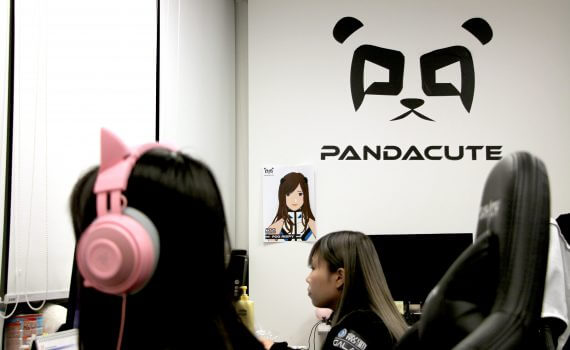
Hong Kong esports athlete, Lo Tsz-kin won a gold medal at the Asian Games 2018. However, since esports is not recognised as an official sport in Hong Kong, he is not eligible to receive the $400,000 cash award as other gold medalists under the Athlete Incentive Award Scheme. Hong Kong's esports industry has been developing slowly compared to other countries, experts say hosting mature tournaments is the key to the industry's future development. The city has a large amount of highly skilled players, yet the industry had started late and the development of the local esports industry is slow when compared to other regional countries which started around the same time as us like Japan and Vietnam, said Marbles So, manager of Kowloon Estadium, a company which provides practice venue and management for professional esports players. According to a report by Cyberport published in 2017, Hong Kong has more than 300,000 esports players. Professional esports teams have been set up by esports management companies such as Kowloon Estadium and Hong Kong Esports Limited. Many professional esports players, however, opted for developing their career outside of Hong Kong, mainly in mainland China and Taiwan. In 2012, Hong Kong League of Legends player Lau Wai-kin, who goes by Toyz, had won the Season 2 World Championship with his Taiwan-based team, Taipei Assassins. The Hong Kong government has been supportive of esports in recent years. In 2017, the government funded $35 million in the Hong Kong Esports Festival, the first esports and music festival organised by the Tourism Board. Acknowledging "tremendous potential" in the industry, Financial Secretary Paul Chan announced in the 2018 budget that the Hong Kong government will allocate $100 million to Cyberport for its development of an arcade for esports competitions and digital entertainment. Still, compared to the global esports …

Legco By-election: pro-democracy camp's second defeat in Kowloon West
- 2018-11-26
- Politics
- The Young Reporter
- By: Katherine Li、Edited by:
- 2018-11-26
Hong Kong's pro-democracy camp has failed to regain veto power in the Legislative Council as the pro-establishment camp gets the upper hand in yesterday's Kowloon West by-election. Rebecca Chan Hoi-yan, who ran as an independent backed by pro-establishment forces, emerged victorious with 106,457 votes, leading by 13,410 votes. This is the first time the pro-establishment camp wins democrats by such a large margin. "I'm very excited to see this result. I'm grateful to every volunteer in my team and people who support me," said Ms. Chan, former TVB and Cable News journalist and political assistant to Secretary for Food and Health. Ms. Chan said she would focus on current work about people's livelihoods and keep her promises to the voters, instead of thinking about the next election. "We are going to make real and practical contributions," Ms. Chan said. "People's livelihoods are the first priority, and we should solve the problems concerning people's lives first." Despite facing controversies over election campaign expenses and her comments on Victor Mallet's visa denial that it was irrelevant to press freedom, she has a relatively high support rate of 25% according to the University of Hong Kong Public Opinion Programme's pre-election polls. Lee Cheuk-yan, who announced his decision to join the election after previously ousted lawmaker Lau Siu-lai's nomination was invalidated, have not succeeded in gaining the Kowloon West seat. He is the "Plan B" of pro-democracy camp, meaning that he would only join the election upon Ms. Lau's invalidation as an "alternative choice." Mr. Lee said he had “learned a lot from this election," and appealed to care for the future. He pointed out that there were still plenty of "battles" to fight, such as the legislation of Article 23, implementation of Lantau Tomorrow Vision. "As a Hongkonger, we can be disappointed, but …

FCC president claims foreign journalists fear visa rejection
- 2018-11-22
- Politics
- The Young Reporter
- By: Ezra Cheung、Jo NgEdited by:
- 2018-11-22
Several foreign correspondents in Hong Kong have told TYR they feel a general sense of anxiety about their visa renewals after senior Financial Times editor Victor Mallet was denied permission to continue working in Hong Kong. The president of the Foreign Correspondents' Club, Florence de Changy, told TYR that she could sense the anxiety among younger reporters and those who want to be posted in Beijing in the future. "They will not show themselves too much on the stage and they will not host some speakers if the situation prevails," said Ms. de Changy, who works for Le Monde, a French newspaper, and Radio France International. The Immigration Department rejected Mr. Mallet's work visa renewal months after he moderated a forum by Andy Chan Ho-tin, convenor of the banned pro-independence Hong Kong National Party, in August at the FCC. Mr. Mallet was then offered a seven-day visitor permit to stay in Hong Kong when he arrived back from Bangkok on October 8. His attempted re-entry on November 8 was denied by the Immigration Department, with no reason given. Ms. de Changy said Mr. Mallet had never been warned his visa would be at risk if he hosted that forum. "Sometimes the [Hong Kong] government don't like what we do but they did not stop us from doing it," the FCC president added. The FCC currently has 500 members who are journalists or correspondents. Some 80 foreign media organisations have set up offices in the city, according to government statistics. Several foreign correspondents pointed out the grey area the government left behind following Mr. Mallet's incident when they spoke to TYR, including those who have interviewed Andy Chan or covered stories about Hong Kong independence. They declined to go into the specifics of their issues because their news organisations' codes of conduct prohibit them from …