
Health & Environment

COVID-19: China to reserve vaccines for Hongkongers, Carrie Lam says
- 2020-11-25
- Health & Environment
- The Young Reporter
- By: Simran Vaswani、Jasmine Tse、Janice LoEdited by: Cara Li
- 2020-11-25
China will reserve a portion of its vaccines specifically for Hong Kongers, Chief Executive Carrie Lam Cheng Yuet-ngor said in the policy address on Wednesday. "We have enough money to procure vaccines to safeguard the health of Hong Kong people," said Mrs Lam. Benjamin Cowling, division head of Epidemiology and Biostatistics at the University of Hong Kong, said he was pleased to hear about vaccinations coming in from the mainland and hoped the city would be vaccinated by the end of next year. However, the government needs a more comprehensive vaccination plan soon. "It is not only about the vision but the details: how we will get millions of doses, who will get vaccinated first," said Prof. Cowling. He said countries like the UK and US are expected to roll out vaccinations as soon as the next three to four weeks. Hong Kong joined COVAX, a global vaccine initiative, along with 184 countries. The COVID-19 global vaccine alliance aims to work directly with vaccine manufacturers to provide low and middle-income countries with equitable global access to vaccines. China is also part of the coalition and aims to provide the COVAX network with a domestically-made vaccine. With two pharmaceutical companies in the mainland undergoing clinical trials, China aims to procure a vaccine for the market by the end of this year. A one-off $5000 subsidy was announced on Monday to those who test positive for the virus. The fund is for patients that may face financial difficulties when hospitalised. The government also implemented Cap. 599J — The Prevention & Control of Disease Regulation on Nov. 14, allowing private doctors to do testing with patients with COVID-19 symptoms. Patients have to conduct the virus testing as advised by medical practitioners within 14 days. More facilities would be available for COVID-19 patients as …

COVID-19: Hong Kong might see more mass testing
- 2020-11-25
- Health & Environment
- The Young Reporter
- By: Simran Vaswani、Jasmine Tse、Janice LoEdited by: Cara Li
- 2020-11-25
Hong Kong might see wide-spread COVID-19 community testing again, Chief Executive Carrie Lam Cheng Yuet-ngor said in the policy address on Wednesday, as the city sees the highest number of infections since this summer, sparking a fourth wave. Testing would be voluntary, she said, and targeting high-risk groups and asymptotic carriers. "It is essential for us to take all necessary measures to strengthen epidemic control by guarding against the importation of cases and the resurgence of domestic infections," said Mrs. Lam. The first large-scale universal community testing was conducted in September with 1.78 million people tested, around 20% of the city's total population. The mass testing found 42 COVID-19 infections. Vinci Chan Hei-man, a registered nurse, agreed with the government's decision. "If implemented, such a step needs to properly target high-risk groups," said Ms. Chan. "[Testing] has to be accompanied by stringent contact tracing and a population that understands the importance of strict adherence to social distancing rules," she added. A cluster was linked to elderly care homes in July, which caused a surge in the coronavirus death toll in the city, which is now 108. Hon Pierre Chan, legislative council member from the medical sector, said in a press conference that testing for high-risk groups is a "pragmatic and ideal" measure. "Even for the seasonal influenza, not all citizens are willing to get vaccinated. It is important not to force citizens to do testing," said Dr. Chan. Dr. Chan said Hong Kongers are hoping for stricter border control. He urged the government to block loopholes in border control policies. Travellers from high-risk places such as the US, UK and India, need to provide proof of a negative virus test before boarding planes and a hotel confirmation for their 14-day quarantine. A quarantine-free travel bubble between Hong Kong and Singapore …

Hong Kong celebrates 'Once In a Blue Moon' Halloween amid COVID-19
- 2020-11-01
- Society
- The Young Reporter
- By: LI Chak Ho SamuelEdited by: Jay Ganglani
- 2020-11-01
Traditionally, Halloween has been a festival for people to dress up as different characters and go trick-or-treating. But, the Halloween of 2020 has been a different one: Hong Kong is celebrating the festival under COVID-19, along with a 'blue moon'. The blue moon phenomenon, which refers to the second full moon in the same calendar month, is also the origin of the English phrase 'once in a blue moon'. The first blue moon appeared during the Mid-Autumn festival in early October. "We are excited to see what everybody is talking about, and also looking forward to seeing it [the blue moon]," said Alex Nathan, 45, who came to the West Kowloon Cultural District to take part in Halloween activities such as face painting. Mr. Nathan also brought four other children to the District, with all of them dressed up as different characters, including a vampire and ballerina. "The blue moon is making the day more special," said Will Mok To-Wing, 31, and Rebecca Cho Miu-Kwan, 24. Mr. Mok and Ms. Cho decorated their gathering venue with outdoor chairs and pumpkin lanterns, while also sharing food with their friends. Under the blue moon were a group of adults and children dressed as the hit Japanese game character Mario, which were bought from an online shopping platform for less than HK$500. "We wanted to dress up at a low cost and with clothes that can have different recognizable colours, so we chose Mario," said Cuby Lau Pui-Yu, 32, who put on a green Mario costume, along with her former classmates and their children. Apart from the costumes, Mr. Nathan, Mr. Mok, Ms. Cho, and Ms. Lau also carried face masks and hand sanitizers in their bags, with the pandemic still looming large in the city. Due to COVID-19 and unstable weather in …

Halloween brings large crowds to Lan Kwai Fong amid COVID-19
- 2020-11-01
- Society
- The Young Reporter
- By: Simran VaswaniEdited by: Jay Ganglani
- 2020-11-01
Hundreds dressed in costumes gathered at Lan Kwai Fong for a night of partying on Halloween, with packed streets and long queues accumulating for bars and nightclubs, amid the city's on-again, off-again social distancing measures. "We can't take off our masks at all, take proper photos or completely enjoy ourselves," said Sparsh Goyal, 20, a university student in Hong Kong who came to celebrate Halloween with her friends, while having to sanitize her hands frequently to enforce self-hygiene and remain safe. Up until Friday, bars, restaurants, and clubs were only allowed to operate at a half-full capacity, with a maximum of four people per table allowed at restaurants, two at bars, and a required midnight closing time. On Friday, the government announced it would ease measures with the limit of people at restaurants raised from four to six and from two to four at bars. Clubs and bars were also allowed to operate at a 75% capacity till 2am, a two-hour increase for party-goers. Police took extensive measures to ensure crowd control. Signs were hung at every corner to guide people through designated entrances and exits, as well as to make sure they were following social distancing measures. Some were not so worried about the risk of contracting the disease even while being present amongst such a large crowd. "There is not a big chance of catching COVID while just walking around [Lan Kwai Fong]," said Chan Yu-Hon, 34, who said it was his first time celebrating Halloween at the city's prime party street. Most bars and clubs followed anti-epidemic measures such as temperature checks upon entry and providing hand sanitizing gel. "It's kind of surprising and unusual to see this many people together now," said Aidan Cheung, 23, referring to the large crowds. Since the start of the pandemic, …

Calls for improvement in online learning
- 2020-07-23
- Health & Environment
- The Young Reporter
- By: ShukmanSoEdited by: Clara Ip
- 2020-07-23
Ignoring the piles of unfinished assignments on his desk, Michael Shum, a form two secondary school student, sits in front of his computer to play video games all day. Since the government announced the suspension of classes, spending hours in front of the computer has become his new normal. Amid the coronavirus outbreak, schools in many countries, including Italy, India and the United Kingdom, have closed down in order to slow down the pandemic transmission. Ahead of the other countries, two months before it turned into a pandemic, schools in Hong Kong already stopped face-to-face classes and shut down the schools indefinitely. Most teachers have since transferred to remote teaching. Students can turn their homes into classrooms with one click on their computers and get on to their schools' e-platform. Zoom is a popular web-based video conferencing tool for many universities worldwide, whereas eClass is often used in secondary schools to provide digital learning resources. Since the SARS epidemic in Hong Kong in 2003, the government here has been using the slogan "Suspending classes without suspending learning". The aim is to encourage schools to adopt eLearning in classrooms and offer digital content for students' self-learning outside the classroom. Apart from enabling eLearning during emergencies, the government also wants to build up an interactive way for students to participate in class actively. "E-Learning is a leading trend today and beyond, therefore the Hong Kong government has been promoting eLearning for almost 10 years," says Dr. Li Ka Kui, the chairman of the Hong Kong Publishing Federation. But Michael Shum has his reservations on eLearning. He thinks the only benefit of eLearning is that he can stay at home all day, without rushing to school. "I simply don't like eLearning especially when we are forced to suspend all our classes,"Michael says with …

Hong Kong's underprivileged face unequal access to healthcare
- 2020-05-05
- Health & Environment
- The Young Reporter
- By: Mereen SantiradEdited by: Jay Ganglani
- 2020-05-05
Fong Cheng-Mui, 75, relies on the government's old age subsidy of approximately $3,000 per month. She prefers to treat herself at home rather than go to a public clinic when she falls ill. "I once went to Queen Elizabeth Hospital with severe abdominal pain and waited for over five hours, but never got treated. I went home and took care of myself," said Ms Fong. Ms Cheng is one of thousands of people in Hong Kong, who have not been getting adequate healthcare. A study by the Chinese University of Hong Kong in late 2018 found that 8.4% of respondents did not seek medical care due to financial problems. Others avoid public clinics because of overcrowding, according to a local non-governmental human-rights advocacy group. While many in Hong Kong can afford private healthcare with minimal fuss, the city's lower and middle income residents face long queues and hours of waiting at public hospitals. Consultation for primary outpatient care costs $50 per visit with speciality services at $135 for the first visit and $80 for a follow-up, according to the Hospital Authority's website. "When I found out that I had a lump in my stomach, I rushed to a private hospital because I could not wait at a public hospital because I was afraid that it might be cancer. But the charge was so high that I had no choice but to come back to a public hospital," said Fung Ho-Chu, 71. Last year, for non-urgent cases, waiting times to see a doctor at a public hospital ranged from a minimum of six months to nearly three years, according to the Hospital Authority's website. For semi-urgent cases, it could take up four to seven weeks. Last year, Ms Fung had to wait five months to see a specialist in a public …

Fight or flight: How do Students Abroad Cope with the Global Pandemic
- 2020-04-08
- Health & Environment
- The Young Reporter
- By: Yanni ChowEdited by: Moon Lam
- 2020-04-08
As schools around the world shut to stop the spread of the novel coronavirus, university foreign exchange students struggle over the decision to return home or stay put. In Europe, non-essential incoming travel was banned on March 17, stirring worries among the student community as air ticket prices shot up. Rachel Khun, a German exchange student in the Netherlands, decided to go home, despite Germany having one of the highest numbers of confirmed cases in Europe. "I left the country when face-to-face classes at the university were suspended. Staying at home reassures me," said the 21-year-old, adding that her home in the German countryside has fresh air and open space and she can follow the news in her mother language. "I will not return to the Netherlands unless classes or exams are resumed on campus," said Ms Khun, who was sharing a home with three other students there. Also studying in the Netherlands, Chiara Pierucci, 21, from Italy, decided to stay as the number of confirmed cases there are fewer than in her hometown. "My parents asked me repeatedly to go back home before all flight connections would be interrupted, but I thought that staying in the Netherlands was safer," said Ms Pierucci, who lives alone in a studio apartment with a private toilet. Italy is the most hard hit country other than China, with case numbers reaching 64,000 and a death toll over 6,000 as of March 24. Meanwhile in the Netherlands, the number of confirmed cases is just under 4,000. Ms Pierucci said her main concern is the spread of the virus. "The possible development of the virus is scarier than catching the actual virus," she said, though she also worries about the Dutch private healthcare system, which requires insurance. Alitalia, Italy's main carrier, requires passengers to wear …

Chinese health care system facing extreme shortage of medical supplies during coronavirus outbreak
- 2020-03-25
- Health & Environment
- The Young Reporter
- By: Sunny SunEdited by: Leone Xue
- 2020-03-25
In a Wuhan gymnasium that has been transformed into a makeshift cabin hospital, nurse Ms. Shen, who does not want to give her full name, said her team of 10 nurses treats more than 100 coronavirus patients every day. Patients scramble for free supplies, sometimes tearing off health workers masks, she said. "It's impossible to manage the distribution by myself," said Ms. Shen. "The only thing I can do is stand by." She said she often cries, and at the end of the day, her protective suit is soaked with sweat. For the last day of the Chinese New Year, she did not return to her dormitory until 11pm. "It was almost 12 after I disinfected my clothes and I hadn't had my dinner," said Ms. Shen. "It feels bad being away from my family and seeing others celebrating the Lantern Festival on social media." Ms. Shen is one of thousands of overworked health workers in the heart of China's coronavirus outbreak that has seen more than 68,000 infected and 1,665 dead as of mid-February. Medical workers from 16 provinces, including Ms Shen's group from Kunming, have travelled to Hubei to help sick patients. But as a shortage of supplies as well as staff continues, hospitals are forced to appeal to the public for help. In Xiaogan, 60 kilometers away from Wuhan, Cinderella Yang said her aunt, who works as a nurse at Yingcheng People's Hospital, had no break during the Chinese New Year. "We didn't learn the lessons from SARS 17 years ago," said Ms. Yang. "Emergency measures aren't efficient at all." Zed Guo, whose father is a doctor in Zhongshan, where 65 cases have been diagnosed, is not allowed to leave the city. His father told him that hospitals are in short supply, especially masks and antiviral drugs. …

Free period products in the UK. How about Hong Kong?
- 2020-03-02
- Health & Environment
- The Young Reporter
- By: BellaHuangEdited by: CarineChow
- 2020-03-02
LONDON - A woman's period happens every 28 days, each time lasting about five days. According to the National Health Service in the UK, most girls would have their first period at around age 12 and most women reach menopause at 51. Throughout her life, a woman has her period for around 2535 days, that is, roughly seven years. Starting from 20 January, free sanitary products will be made available to all schools and colleges in England to combat period poverty. The Department of Education in England launched an £11.4 million ($114 million) scheme to support campaigns to break the stigma around periods and raise awareness of menstruation. It enables more than 20,000 schools and colleges to order a range of period products for their pupils. Period poverty, the social issue concerning limited access to safe sanitary products and comprehensive menstrual hygiene education, affects more than 800 million girls and women around the world, according to a United Nations study. "It is a step in the right direction," said Priscilla Oshuremi, founder of ConveHERsation, a women empowerment platform, "if that means one girl can come to school (to) participate instead of having to make an excuse, that's great." Plan International, a development and humanitarian organisation, released its research in 2017, saying that one in ten girls across the UK has been unable to afford sanitary wear and that 49% of girls have missed an entire day of school because of their period. Unlike the UK, where the tax on tampons was once as high as 17%, Hong Kong as a free port has no customs tariffs on imported menstruation products. Therefore, sanitary towels and tampons tend to be affordable and accessible to most. A box of 12 sanitary pads costs around $23 (£2.3) in London, while in Hong Kong it …
Quest for masks in Europe: not a common practice
- 2020-02-20
- Health & Environment
- The Young Reporter
- By: Yanni ChowEdited by: Carol Yuan
- 2020-02-20
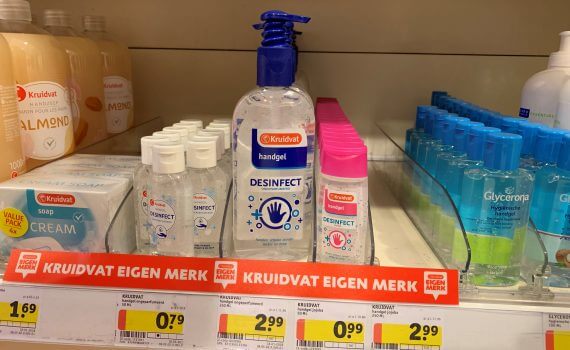
Wearing masks is essential these days as Coronavirus 2019 (COVID-19) has been raging for months. While searching for masks is a common practice in Hong Kong, the same behavior may be considered bizarre in Europe. According to the World Health Organization (WHO) as of 13 February, the number of confirmed cases of the disease outside of China is 447, with 46 recorded cases in the European Region. As the price of masks in Hong Kong went up due to high demands and the supply is insufficient, some continued the quest for masks abroad. The Netherlands, which has not recorded any confirmed cases, has been a target for some. Jason Yu, a Hong Kong man who is currently traveling in Europe, said he did not expect masks and disinfection supplies are that expensive and hard to find. "I found masks in Germany that cost 50 euros per box (50 pieces of masks). I have bought some alcohol hand sanitizers in Switzerland. But I am surprised that no masks are sold in the Netherlands," said the 24-year-old traveler. Chu Ho-yan, a student who is currently on exchange at Tilburg, Netherlands, also failed to find masks in the city. "My family in Hong Kong is running out of masks for daily use and the supply is scarce. They thought I could buy some here and have them delivered to Hong Kong," said the 20-year-old girl. She finally found two boxes of masks in Brussels, Belgium, which is an hour's journey away from the Netherlands. Even though she found masks, she said she would not wear them on the streets, so to avoid misunderstandings. "While it is common to wear masks to prevent getting infected in Hong Kong, I observed that Europeans do not do that. I understand that it is a cultural difference," she …