
Vivian Chan, a 16-year-old Form Five student in Wong Chuk Hang, had her life trajectory changed three years ago when she was bullied and sexually harassed at just 12 years old. The incident left her isolated, led to suicide attempts, and resulted in a year-long struggle with mental health symptoms before she finally received a diagnosis and started treatment at Queen Mary Hospital.
Chan was diagnosed with moderate depression in early 2024, one year after her depression began to arise, which gradually worsened due to extended outpatient waiting times and delayed community intervention, she said.
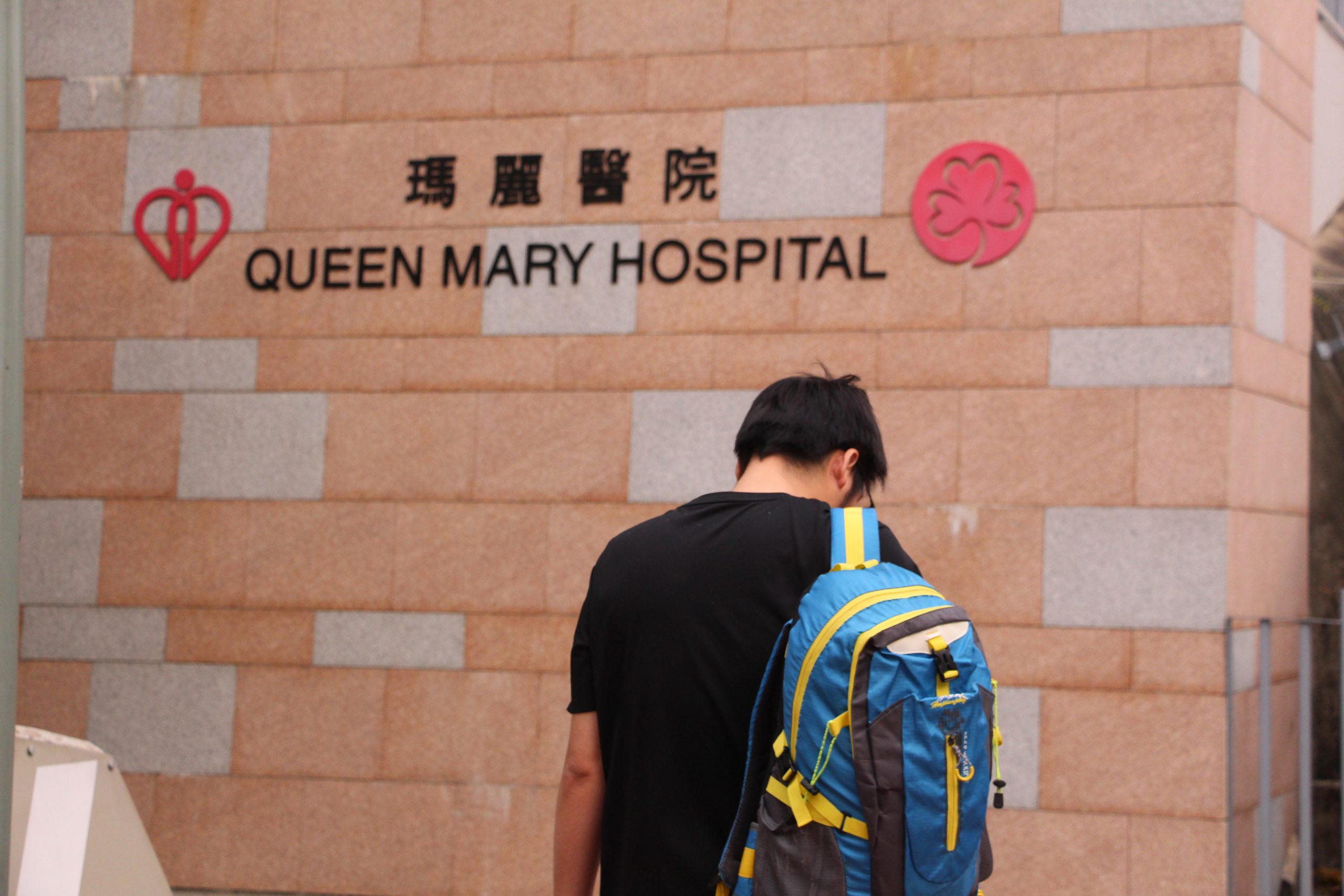
Hong Kong’s public hospital psychiatric clinics have long been plagued by lengthy waiting times and a severely imbalanced doctor-patient ratio, with the longest waiting time for new outpatient cases reaching up to 101 weeks in 2025.
While the government seeks to strengthen community mental health interventions in the hope of shortening clinical waiting lists, the effort is hampered by a shortage of resources for social workers’ early identification and prevention services training.
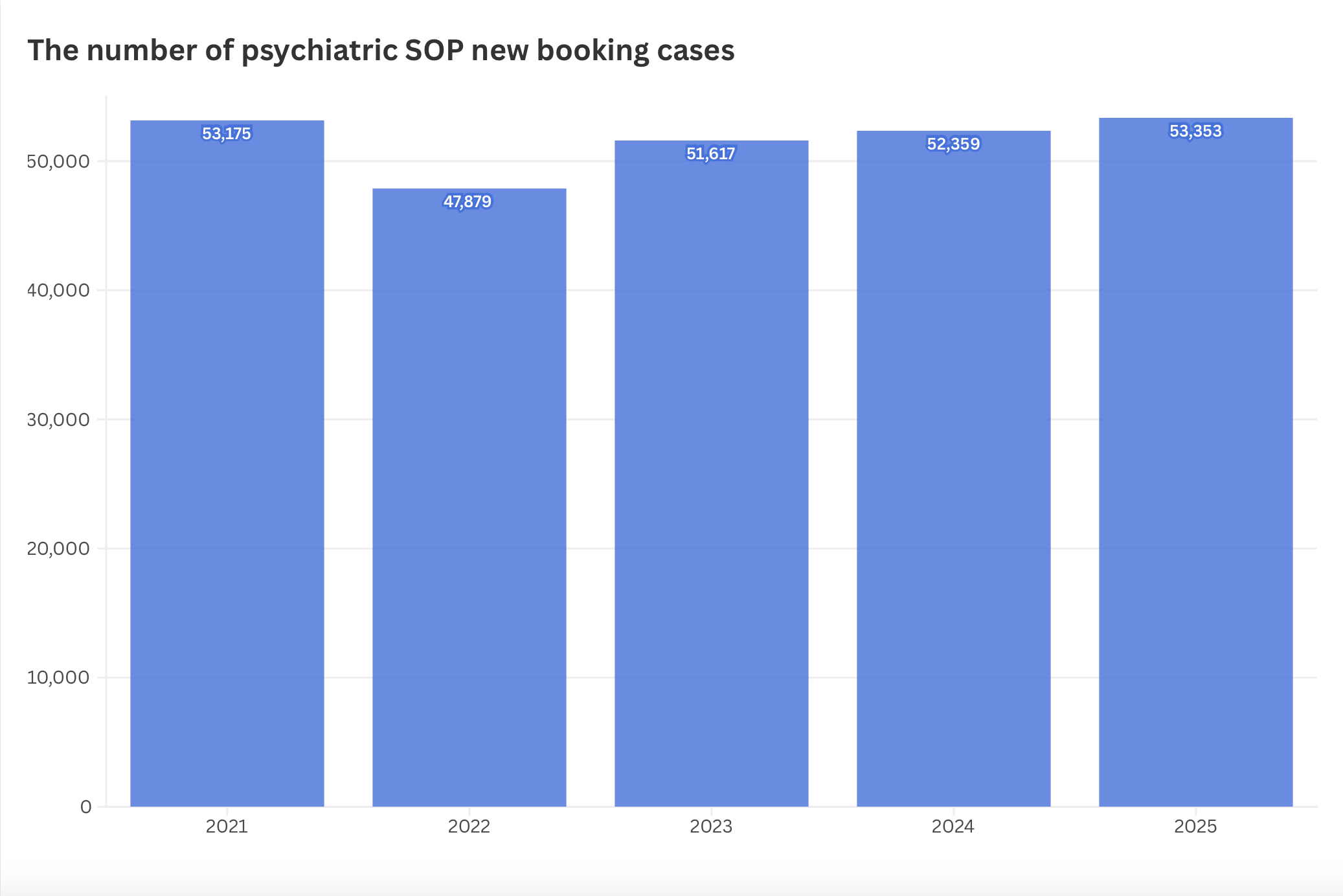
The number of new psychiatric outpatient cases at public clinics has continuously increased from 47,879 in 2022 to 53,353 in 2025, according to the Hospital Authority.
Around one in five urgent patients faces a median waiting time of one to three weeks for treatment, while the median waiting period for most non-urgent patients ranges from 17 to 76 weeks.
After joining Queen Mary Hospital’s waiting list in 2024, Chan eagerly awaited professional medical help, only to endure a 28-week delay.
Chan felt intense pain and helplessness during the waiting period. “Without a diagnosis, I kept overthinking if I was truly sick,” she added.
She once locked herself in her bedroom for weeks to escape from the painful reality.
“I pulled the curtains to block out sunlight, wrapped myself in blankets, and couldn’t hold back tears,” she said.
Chan said her mental state deteriorated sharply during this period of self-imposed isolation.
At one point, Chan even attempted suicide by overdosing at home, but her parents discovered her and rushed her to the hospital.
She later shared her experience on Threads and Instagram, seeking online support.
However, not all replies were positive. Chan had received several messages telling her that no one would care about her life or death.
“Those malicious comments still haunt me,” she said. “I felt that everyone hated me.”
Dr. Chan Kai-tai, a clinical psychologist, said that prolonged waiting for treatment heightens risks for patients with emotional problems.
Patients may suffer from self-distress, which may lead to diminishing coping ability to tackle adverse emotions, Dr. Chan added.
Kwok Ling-lai, a former Legco member who helped review the amendment of the city's Mental Health Policy, stated that the shortage of psychiatrists in Hong Kong makes it difficult to meet the patients’ demand, which is one of the core reasons for the long waiting times.
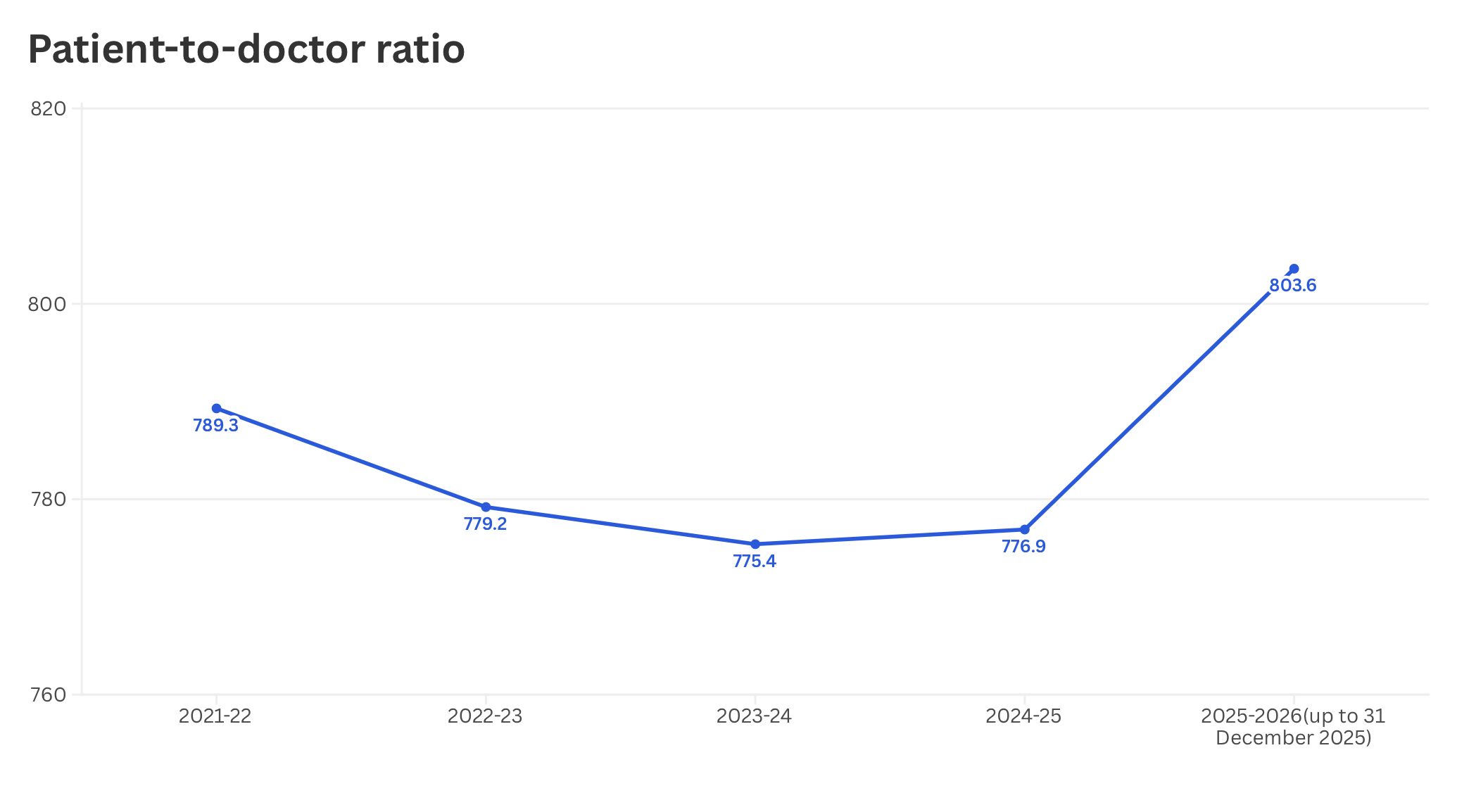
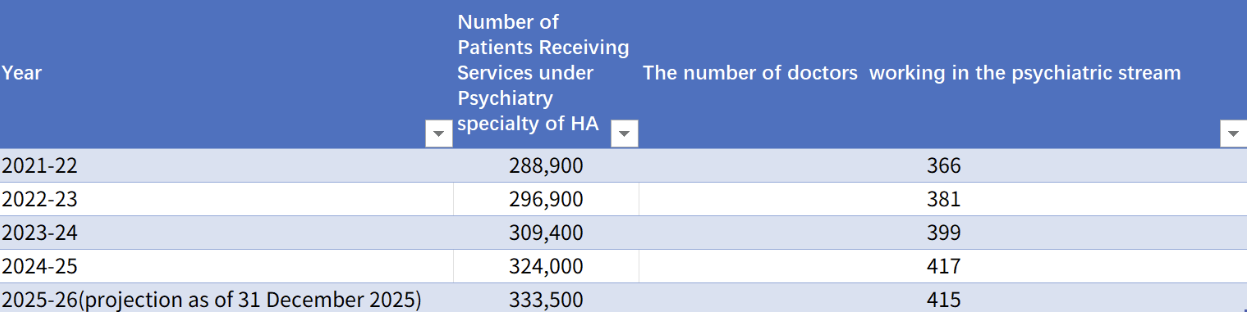
As of the end of December 2025, the total number of doctors in the psychiatric stream stood at 415, and the latest doctor-to-patient ratio has reached 1: 803.6, according to the Hospital Authority’s reply.
“The number of patients is constantly increasing every year, but doctors' growth lags or even declines,” Kwok said. “We have to know that the number of doctors is already very limited.”
Among the eight University Grants Committee-funded universities, only the University of Hong Kong and the Chinese University of Hong Kong offer undergraduate programmes in psychiatry.
The government should invest in training more psychiatrists and expand the speciality’s intake quotas, Kwok said.
Kitty Chow, a 25-year-old university student diagnosed with moderate anxiety two years ago, turned to private care after an eight-week public wait, as physical pain and insomnia worsened.
Chow visited a private clinic nearly once a week in the first year, which saw her symptoms ease up after one month of treatment.
Private consultation could cost between HK$800 and HK$1,500, which is about six times more expensive than public hospitals.
“It’s pricier than public hospitals, but it indeed offers timely relief,” said Chow, who no longer required any treatment.
As the expensive private fees are out of reach for many, free access to community-based psychological counselling and treatment services should be fully utilised, said Kwok.
The government completed the formulation of the stepped care model on mental health by the end of 2025, which divides the mental health intervention system into three tiers: early detection, early intervention and assessment, and specialist treatment.
The insufficient services in the first two community-based tiers are overloading public systems, Kwok said.
Before going to the hospital, the 16-year-old Chan had sought help from school social workers for one-on-one mental health counselling services for one year while she was studying Form Two, but her condition worsened from daydreaming to self-harm.
There was no realistic intervention, including assessment or coping advice, other than learning about her story and blaming her classmates for the bullying, Chan said.
“They only called my parents after seeing the scar on my wrist,” she said.
Social workers are the first-tier gatekeepers to prevent cases with suspected mental health problems from escalating, so the quality of social workers’ training is also important, Kwok said.
“Teachers and the social workers in school are the ones who can first identify students’ symptoms early and provide timely solutions,” Kwok added.
The government has been continuously strengthening social workers’ training by increasing investment by an additional HK$36.5 million in community-based service providers to scale up the training of social workers in 2024, and plans to raise the funding to HK$60.2 million in 2025, according to the 2024 Budget Release.
Dr. Chan, the psychiatrist, called on more public health first aid skills to foster a more inclusive environment that values mental health.
The government would step up efforts to promote public education on mental health by improving basic mental health programmes in more tertiary institutions, aiming to push students and school staff to learn more about mental health knowledge and provide timely assistance to those around them who are suffering from mental health issues, according to the 2025 Policy Address.
“Sometimes, schools would arrange mental health lectures for students and teachers, but that’s far from enough. We hope every school could provide one-on-one counseling,” Vivian Chan said.
《The Young Reporter》
The Young Reporter (TYR) started as a newspaper in 1969. Today, it is published across multiple media platforms and updated constantly to bring the latest news and analyses to its readers.
Mona Lisa comes to life through immersive displays at the Heritage Museum’s exhibition

Music and alcohol event Sip&Groove drew thousands to West Kowloon


Comments