
AI summary:
- Fintech leaders said AI adoption must deliver business value, with growth, revenue and margins remaining key priorities.
- Speakers highlighted AI’s potential to personalise marketing while acknowledging its limitations and the need to manage risks.
- Hong Kong’s First Five-Year Plan supports AI development and adoption by SMEs, while industry leaders see mainland connections as a potential advantage.
The APAC Fin.Tech Marketing Conference 2026, held in Central on Tuesday, covered the growing use of AI in marketing, including how fintech marketing executives translate its use into measurable return on investment (ROI).
Benjamin Quinlan, chief executive officer (CEO) and managing partner of Quinlan & Associates, said investors and buyers still focus on business fundamentals when assessing companies, despite the growing importance of AI. Growth, recurring revenue, and margins remain key factors, he said.
Quinlan added that organic reach has collapsed amid the rapid increase in AI-generated content, as everyone is competing for the same limited amount of human attention and screen time.

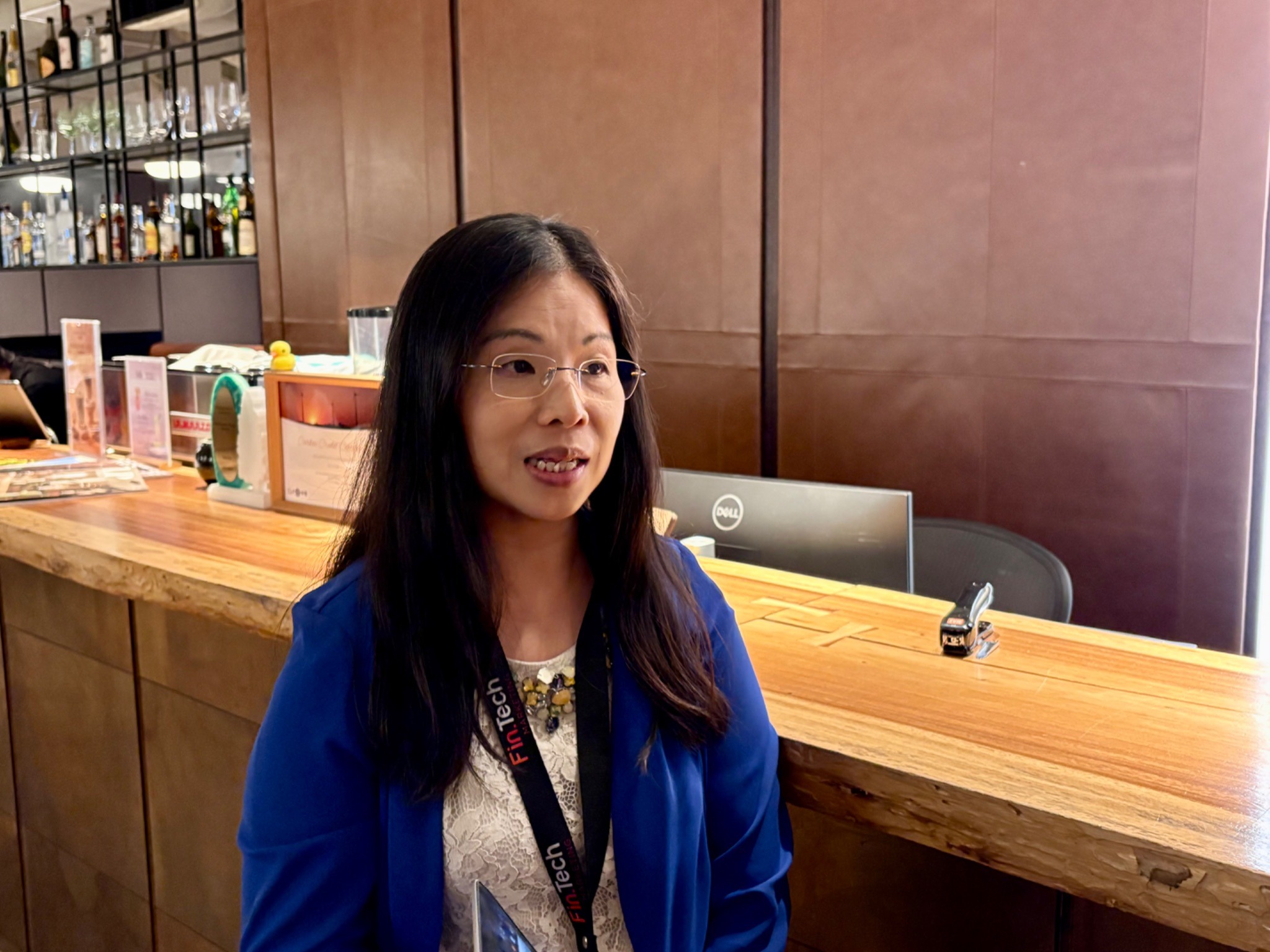
Addressing the operational side, Carrie Law, CEO and director of WOW Impact Group, said ROI includes both tangible and intangible benefits.
Law said companies that send large volumes of generic or poorly targeted emails risk low returns on investment, open rates and engagement. She said AI could help marketers use customer behaviour data to tailor messages to individual customers rather than sending the same content to everyone.
Stephen Wong, head of regional business solutions for Hong Kong, Macao and Taiwan at Xiaohongshu, said that authentic data can help brands identify the customer segments they need to reach.
He added that AI could help users complete roughly the first 70% of a task. While AI can efficiently assist in those initial stages, moving from 70% to 90% remains exceptionally challenging because of the frameworks and logic within which AI models operate, Wong said.
Hong Kong is home to more than 1,200 fintech companies. According to the Global Financial Centres Index 40, released in September by Z/Yen and the China Development Institute, Hong Kong ranked third globally as a financial centre and first globally in fintech offerings.
A 2025 Hong Kong Institute for Monetary and Financial Research (HKIMR) survey found that 75% of surveyed financial institutions had implemented at least one generative AI use case, or were piloting, designing or exploring potential applications, with the proportion expected to rise to 87% within the next three to five years.
Hong Kong’s First Five‑Year Plan for Economic and Social Development (2026‑2030) identifies AI as a core industry for the city’s future development and includes measures to support AI development and help SMEs adopt AI solutions.
When comparing Hong Kong with Singapore, Law cautioned that it was difficult to say Hong Kong would immediately have an advantage. However, she said its connections with the mainland could be beneficial, citing Shenzhen’s supply chain as an example of the wider ecosystem available to technology companies.
“Ultimately, you do not win on a single track, but through an ecosystem,” she said.
Note: This report was written by students from The Young Financial Post editorial team. Generative AI was used for polishing sentences/grammar checking/correcting errors/generating images/research.
Models used: Gemini, Doubao.
The final version was manually reviewed, edited, and verified by The Young Financial Post team.
《The Young Reporter》
The Young Reporter (TYR) started as a newspaper in 1969. Today, it is published across multiple media platforms and updated constantly to bring the latest news and analyses to its readers.

HK Sign Language Day draws 2,400, as organisers push for public understanding

Global visitors flock to Victoria Park for festive lanterns


Comments