
The Young Reporter


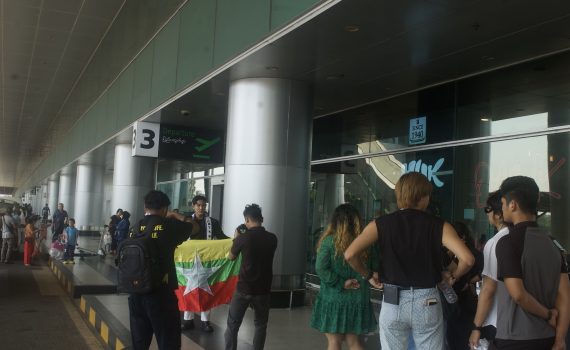
Inside Myanmar’s tightened passport system
In early 2023, 28-year-old Scarlett, not her real name, queued up to enter Thailand at the Thai-Myanmar border, clutching her passport as she waited for her turn at the checkpoint. This was not for studying abroad, but an escape for survival. She feared that staying longer would permanently strip her of the possibility of leaving legally. “If my passport were scanned at the airport, I am afraid that it would be flagged,” said Scarlett. “That’s why I chose to leave from the Thai-Myanmar border,” she said, referring to its less stringent procedures. When she stepped up to the counter, the officer flipped through her red passport and looked at her briefly. “Okay, next,” said the immigration officer. He waved her through without running the passport through a scanner. Scarlett exited the gate and dared not slow down until she reached Thailand. Since the 2021 military coup, Myanmar’s passport system has increasingly functioned as a tool of exit control rather than merely a document for international travel. According to a 2025 report by the Danish Immigration Service, Myanmar authorities have circulated files of blacklisted people to airports and border checkpoints, allowing immigration officers to identify individuals and bar them from leaving the country with a passport scan. Those barred from leaving include participants in the Civil Disobedience Movement — a nationwide non-violent protest campaign that started in February 2021, in which civil servants went on strike in protest of military rule following the coup. More than 417,000 civil servants had joined the movement, according to an official brief from the National Unity Government of Myanmar. The movement was even nominated for the Nobel Peace Prize in 2022. Scarlett was one of them. Before the 2021 movement, she worked as a doctor at a public hospital. After the military seized power, she joined …
- The Young Reporter
- 2026-03-08
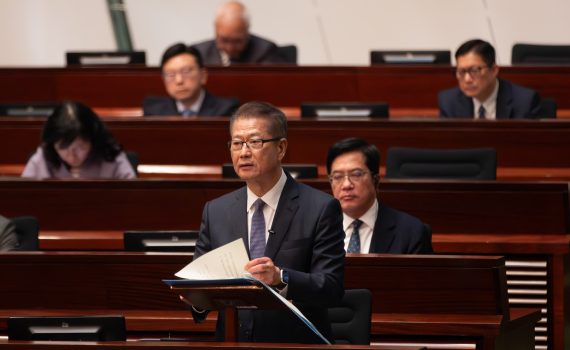
Budget 2026: Hong Kong plans to attract more family offices for the ultra rich
Hong Kong Financial Secretary Paul Chan Mo-po proposed a tax regime augmentation, aiming to attract more family offices, which manage money for ultra wealthy individuals. “Tax regime coverage will expand the scope of funds to specific ‘funds-of-one’, as well as classifying digital assets, precious metals, and specific commodities as investments with tax concession eligibility,” said Chan. Chan added the changes will take effect from the year of assessment 2025/26. A family office is a private wealth management company established by ultra-high-net-worth individuals, responsible for the day-to-day management of family assets. According to Chan Ho-lim, Under Secretary for the Treasury Bureau, single family offices generally refer to institutions established by a single family for wealth, family affairs, and long-term equity investment management. Multi-family offices, on the other hand, are licensed companies that “serve more than one high-net-worth family” by providing outsourced services and are “typically established and run as commercial ventures”. There are 3,384 single family offices in Hong Kong, according to research from Deloitte. According to Financial Services and the Treasury Bureau, this is a 25% increase from 2023. Half of the current offices are serving families with more than US$51 million of accumulated wealth. Since 2023, the Hong Kong government has issued a policy statement supporting the development of a global ecosystem for family offices and asset owners, promoting the growth of the industry. The bureau also said a single office contributes approximately HK$12.6 billion annually to the local economy through operating expenses alone, directly creating over 10,000 full-time professional positions, covering high-value-added fields such as financial advisors, legal and accounting. Yu Ann, 36, Co-Founder of Jadewell Family, a multi-family office, said, compared with banks and securities firms that have a single perspective, family offices can provide a comprehensive view and risk analysis across banks and even platforms, …
- The Young Reporter
- 2026-02-25
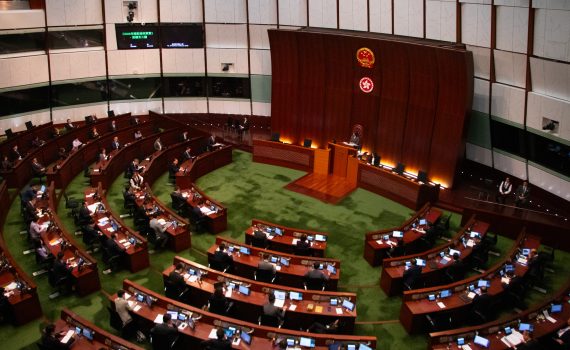
Budget 2026: Hong Kong continues harbourfront construction, drawing in visitors
Hong Kong will continue to develop the harbourfront to attract tourists, Financial Secretary Paul Chan Mo-po announced in the budget speech on Wednesday, while also giving the Tourism Board HK$1.6 billion. With the opening of a waterfront site in Hung Hom by next month, the Kowloon promenade will be extended to 15 kilometers, Chan said. The government will also consider a new pedestrian harbourfront walkway in Kennedy Town. According to data from the Hong Kong Tourism Board, the number of visitors to Hong Kong in January reached 7.23 million, an increase of 9.6%, with overseas visitors increasing by 16.4%. The West Kowloon Cultural District on the harbour attracts many tourists. Eddie Massonique, a 25-year-old tourist from France, said he came to M+ recommended by friends, but what attracted him the most to West Kowloon was the seaside scenery. Anastashiia Armoldova, 32, a tourist from Ukraine, said she found the West Kowloon area by accident. “I think the Hong Kong government should strengthen publicity, such as advertising at the airport, to let more tourists and citizens know about this place,” she added. “My friends and I came here specifically to watch the sunset. The environment is very comfortable, and the scenery is good,” a local 14-year-old student, Ebbie Wong said. “But the transportation is not very convenient, and there are too few dining options; we have to walk far to buy food.” The Artpark in the district hosts many restaurants, but most are more expensive than local neighborhood cafes. Two 21-year-old students from Guangzhou, Wesly Peng and Gu Chuqi, said that this area is crowded. “We're looking for a restaurant, but the restaurants here are clearly very busy, with long queues,” said Peng. Gu said the government could add some minibus routes between Austin Station and the West Kowloon Cultural District …
- The Young Reporter
- 2026-02-25
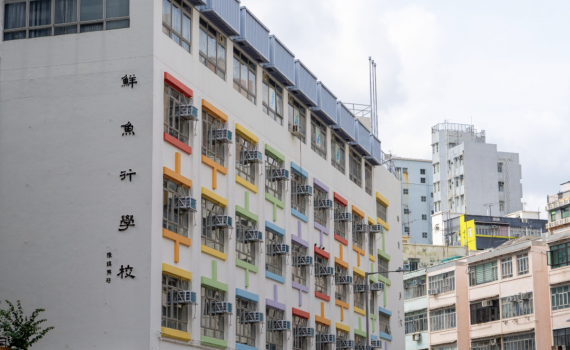

Prolonged waiting for treatment worsens mental illness sufferings
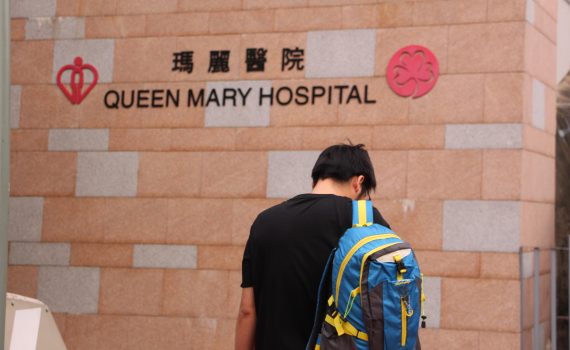
Vivian Chan, a 16-year-old Form Five student in Wong Chuk Hang, had her life trajectory changed three years ago when she was bullied and sexually harassed at just 12 years old. The incident left her isolated, led to suicide attempts, and resulted in a year-long struggle with mental health symptoms before she finally received a diagnosis and started treatment at Queen Mary Hospital. Chan was diagnosed with moderate depression in early 2024, one year after her depression began to arise, which gradually worsened due to extended outpatient waiting times and delayed community intervention, she said. Hong Kong’s public hospital psychiatric clinics have long been plagued by lengthy waiting times and a severely imbalanced doctor-patient ratio, with the longest waiting time for new outpatient cases reaching up to 101 weeks in 2025. While the government seeks to strengthen community mental health interventions in the hope of shortening clinical waiting lists, the effort is hampered by a shortage of resources for social workers’ early identification and prevention services training. The number of new psychiatric outpatient cases at public clinics has continuously increased from 47,879 in 2022 to 53,353 in 2025, according to the Hospital Authority. Around one in five urgent patients faces a median waiting time of one to three weeks for treatment, while the median waiting period for most non-urgent patients ranges from 17 to 76 weeks. After joining Queen Mary Hospital’s waiting list in 2024, Chan eagerly awaited professional medical help, only to endure a 28-week delay. Chan felt intense pain and helplessness during the waiting period. “Without a diagnosis, I kept overthinking if I was truly sick,” she added. She once locked herself in her bedroom for weeks to escape from the painful reality. “I pulled the curtains to block out sunlight, wrapped myself in blankets, and couldn’t hold …
- The Young Reporter
- 2026-05-03

Primal Race held during the Hong Kong Sevens weekend
Primal Race debuts in Hong Kong from April 17 to 19, colliding with the Hong Kong Sevens tournament in Kai Tak Sports Park. It offers people in Hong Kong a chance to qualify for the Primal Race World Championship. Follow the link below to watch the full reel: https://www.instagram.com/reel/DXoCoSVE7nb/?igsh=MXVyNGJwdzUxbGkxeQ== Reported by: Stephen Feng Zhenpeng Edited by: Audrey FU Rong
- The Young Reporter
- 2026-04-29
What does Lamma Winds’ closure mean for Hong Kong’s renewables strategy?
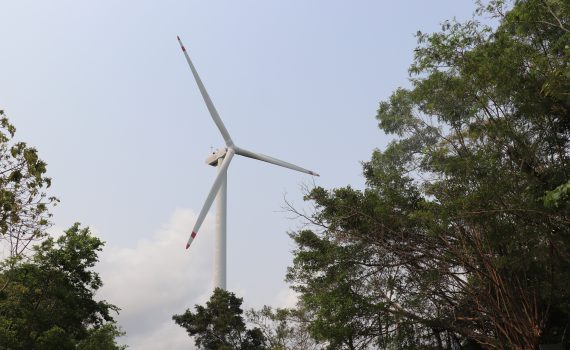
Joe Chen, 40, and Bibi Chung, 35, climbed up a 15-minute slope to reach the Lamma Winds – Hong Kong’s first wind power station – in Lamma Island, on a quiet Tuesday. They took pictures in front of the turbine, trying different angles to fit the entire 71-metre-tall wind farm into a single frame. This is probably the last time they can do so. In a press release issued in late March, the wind farm’s operator, HK Electric, said the turbine had reached its lifespan of 20 years in February. The company added most key components are no longer in production, paired with market availability and site limitations, meaning a new commercial scale turbine cannot be installed in the same location. It will therefore be decommissioned for public safety later this year, according to its website. “Last time we came here, the wind blades were still moving,” Chen said. “It is no longer moving now.” Lamma Winds was built in 2006, the first of its kind in the history of Hong Kong. It is also the first commercial-scale renewable facility built by a power company in Hong Kong. According to HK Electric, Lamma Winds was designed with a capacity of 800 kW. The construction cost was HK$15 million, and it took five years to complete. The power giant said the wind turbine has generated 16 million kilowatt hours of electricity over its 20 years. Wong Kam-sing, former Secretary for the Environment, said the decommissioning would not change the scale or direction of the city’s renewable energy development. “Based on the government’s 2050 strategy plan, onshore wind farms are actually not part of our future development strategy,” Wong said. “Lamma Winds is mostly a demonstration of the technology we had 20 years ago, therefore it has no special relationship with Hong …
- The Young Reporter
- 2026-04-28



Red minibus drivers struggle as ridership plunges and fuel costs rise
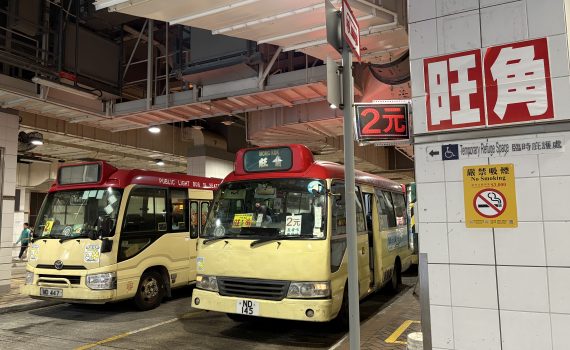
At Kwun Tong Yue Man Square Public Transport Interchange, one of the city’s busiest transport hubs, 55-year-old red minibus driver Saniel Ng would clock off from a 13-hour shift at 9pm on most days with a take-home pay of just about HK$1,000. As Ng looked around the transport interchange, he noted that even though there were some queues of passengers waiting for red minibuses, ridership was not what it used to be. “Bus companies have taken away the business,” said Ng, who has been a red minibus driver for more than 20 years. “Without enough passengers, it’s hard to survive.” For decades, Hong Kong’s red minibus has been better known for its high speed and unruly round-the-clock service. But the trade is at risk of becoming a remnant of old Hong Kong as the city’s mass transport network continues to modernise. There are two types of public light buses, differentiated by their roof colours and service flexibility. Red minibuses operate on flexible routes with fares that drivers can adjust based on demand and the time of day, whereas green minibuses run on fixed routes and schedules set by the government. Red minibuses are disappearing, with passenger numbers falling by more than half, or 50.5%, from 295,000 in 2017 to 146,000 in 2024, according to Transport and Logistics Bureau data compiled in a Legislative Council research report published in March last year. Commercial vehicles in Hong Kong must obtain operational licences from the Transport Department. The price of a minibus operating licence, for both red and green minibuses, also dropped 47% between 2022 and 2024, from HK$1.7 million to HK$900,000, far below its 2014 peak of HK$5.5 million. Despite green minibuses having recorded a recovery in passenger volume since 2022, red minibuses have continued to see a decline in their passenger …
- The Young Reporter
- 2026-05-13
Prolonged waiting for treatment worsens mental illness sufferings
Vivian Chan, a 16-year-old Form Five student in Wong Chuk Hang, had her life trajectory changed three years ago when she was bullied and sexually harassed at just 12 years old. The incident left her isolated, led to suicide attempts, and resulted in a year-long struggle with mental health symptoms before she finally received a diagnosis and started treatment at Queen Mary Hospital. Chan was diagnosed with moderate depression in early 2024, one year after her depression began to arise, which gradually worsened due to extended outpatient waiting times and delayed community intervention, she said. Hong Kong’s public hospital psychiatric clinics have long been plagued by lengthy waiting times and a severely imbalanced doctor-patient ratio, with the longest waiting time for new outpatient cases reaching up to 101 weeks in 2025. While the government seeks to strengthen community mental health interventions in the hope of shortening clinical waiting lists, the effort is hampered by a shortage of resources for social workers’ early identification and prevention services training. The number of new psychiatric outpatient cases at public clinics has continuously increased from 47,879 in 2022 to 53,353 in 2025, according to the Hospital Authority. Around one in five urgent patients faces a median waiting time of one to three weeks for treatment, while the median waiting period for most non-urgent patients ranges from 17 to 76 weeks. After joining Queen Mary Hospital’s waiting list in 2024, Chan eagerly awaited professional medical help, only to endure a 28-week delay. Chan felt intense pain and helplessness during the waiting period. “Without a diagnosis, I kept overthinking if I was truly sick,” she added. She once locked herself in her bedroom for weeks to escape from the painful reality. “I pulled the curtains to block out sunlight, wrapped myself in blankets, and couldn’t hold …
- The Young Reporter
- 2026-05-03
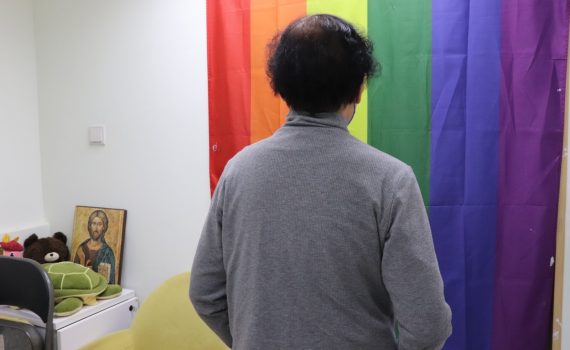
LGBTQ couples in Hong Kong face difficulties securing legal protection
Ah Moon, 55, who does not want to reveal her real name, initially had no intention of making decisions about legal safeguards for herself and her same-sex partner related to end-of-life matters. She began to consider these issues more consciously during a hospital stay in 2002, while she was in a relationship with her ex-girlfriend. “I was afraid of what would happen if I never woke up again, so I drafted a few pages of plans on blank paper myself after discharge,” she said. Hong Kong does not legally recognise same-sex marriages. Ah Moon said because her family does not care about her relationship, she worries that her wishes after death will not be honoured. In September, the Legislative Council rejected a bill to legally recognise same-sex partnerships by a large majority, leaving same-sex couples to rely on fragmented legal documents and personal requests to protect end-of-life decisions such as inheritance, medical choices and funeral arrangements. Rufina Ng, a senior associate at Hastings & Co, a law firm that offers free legal consultation for the LGBTQ community, said same-sex partners are highly recommended to plan in advance for end-of-life, though they still face limitations. Ng said the most common end-of-life legal challenges faced by same-sex couples in Hong Kong are claiming the body and inheritance, particularly if there is no will or there is conflict between the surviving partner and the deceased’s family. “Same-sex couples lack the legal status of spouses or family members under Hong Kong’s legal framework. When one partner dies without a will, the surviving one currently has no inheritance rights and other relatives may also oppose their handling of funeral arrangements,” she said. Hong Kong’s current inheritance laws only recognise spouses and a few other relatives. Unmarried partners, whether same-sex or not, receive no legal protection. …
- The Young Reporter
- 2026-04-08



Advertisement


Advertisement