
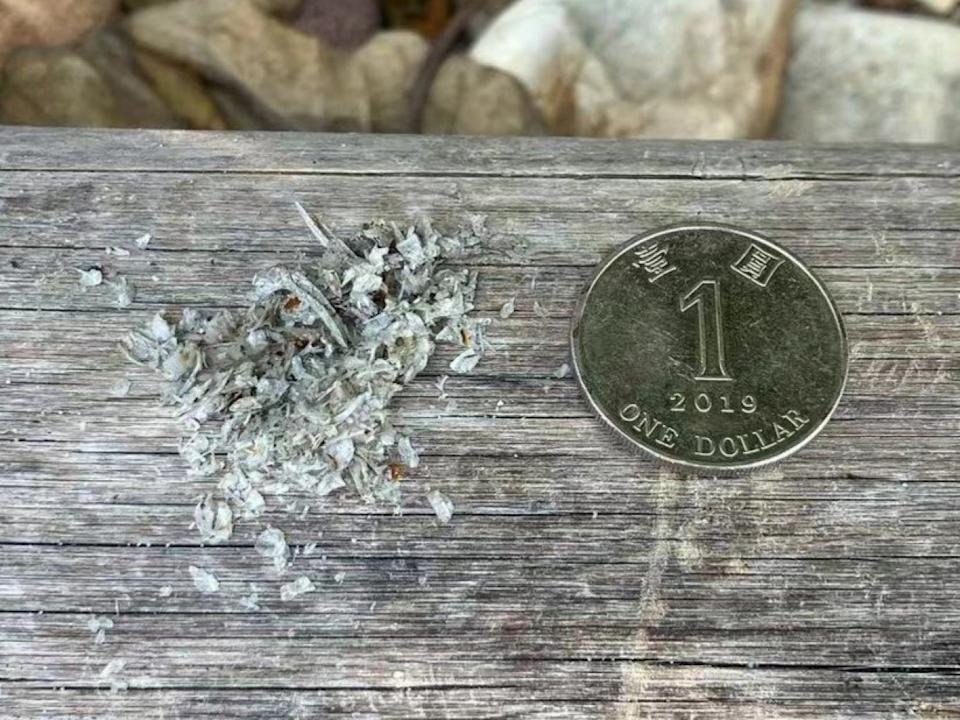
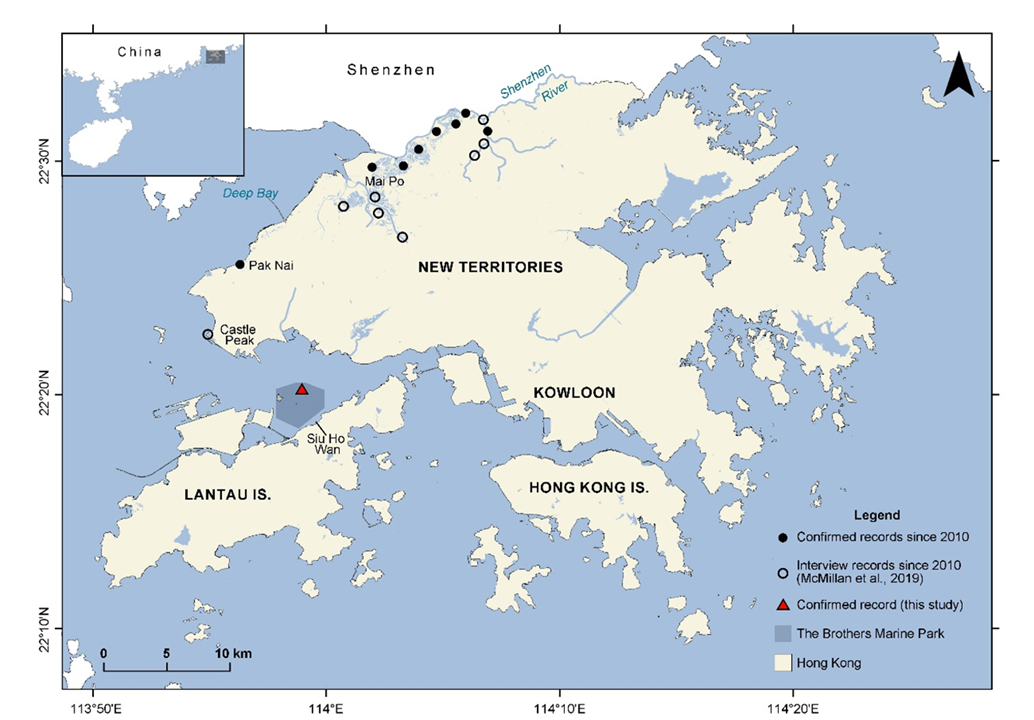
North of Lantau Island, waves crashed against coastal rocks. In February 2024, a team from Kadoorie Farm and Botanic Garden discovered a white, crumbly solid — the first Eurasian otter feces recorded there in half a century.
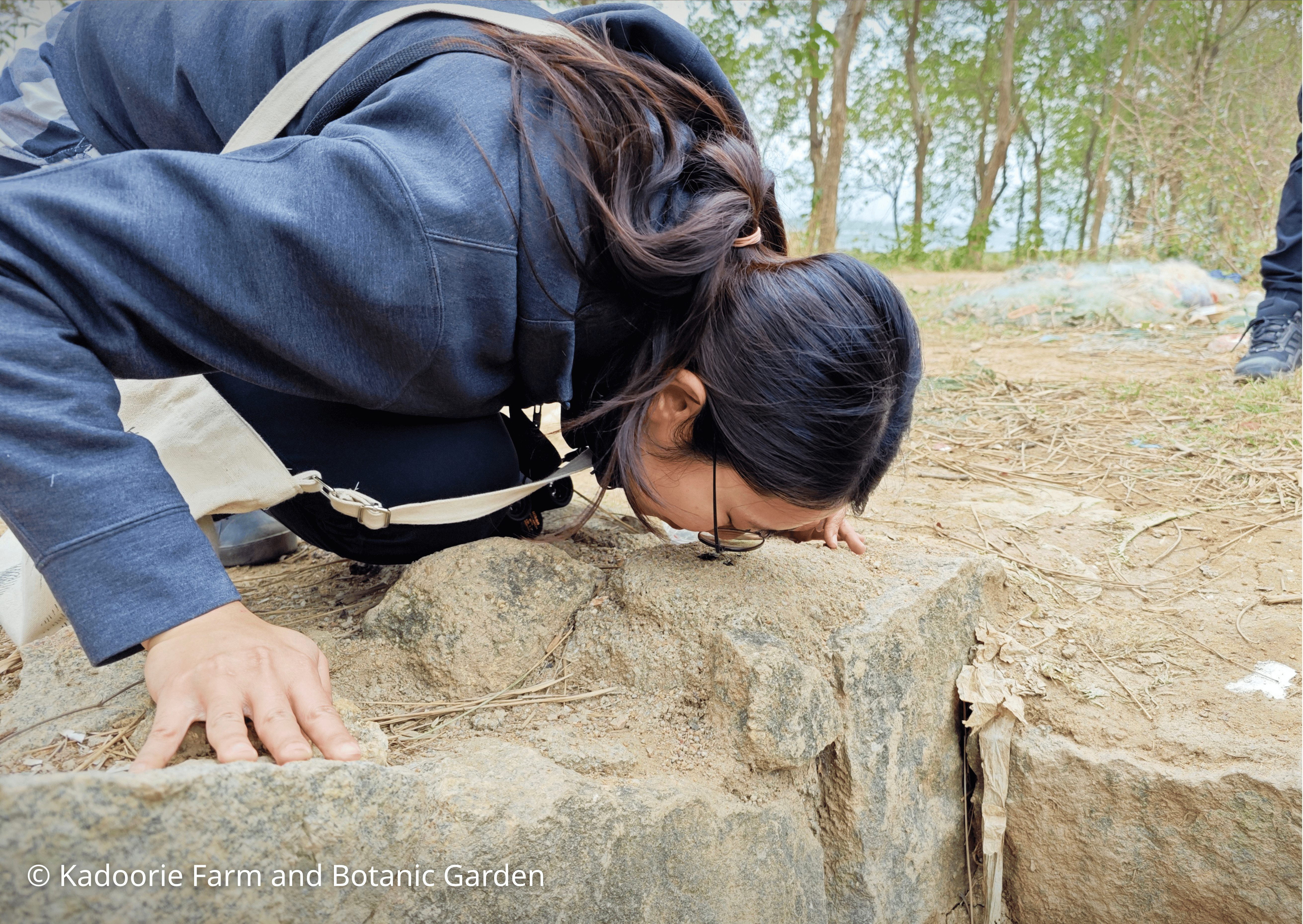
Back at the lab, Aiko Leong Kwok-yi, a 30-year-old conservation staff at the Fauna Conservation Department under the KFBG, handled the sample for DNA testing, leaning in to sniff its scent.
“Otter faeces do not smell foul, they smell salty like dried salted fish. When fresh, it smells like tea, jasmine tea, not stinky at all,” Leong said.
The discovery on Lantau Island has ignited a fragile hope for Eurasian otters clinging to survival in the city. With only seven individuals remaining, primarily in the Mai Po and Inner Deep Bay Wetlands, the otters are at extremely high risk of extinction.
In response, KFBG, the only local team dedicated to otter conservation, launched a two-and-a-half-year Eurasian otters research project on Dec. 1 this year. The project received HK$2.2 million funding from the Civil Engineering and Development Department. The study will deepen understanding of the distribution and status of otters, identify habitats and threats of it within Lantau Island, beginning with the collection of feces samples.

Leong, who joined the team in 2020 and now leads the project, set her sights on animal research after reading about legendary conservationist Jane Goodall at the age of 11.
“Jane Goodall’s story just hit me that there are people who can work with animals every day. I found my life’s purpose at that moment,” Leong said.
“From that day on, I've been heading straight in this way, never turning any corners,” Leong added.

The path has been physically demanding. During early fieldwork, she navigated slippery coastal rocks, once nearly falling into the sea.
“I asked myself, why risk my life just to find an otter?” she said.
The challenge motivated her to build her strength through exercise and climbing, better preparing herself for the next time.
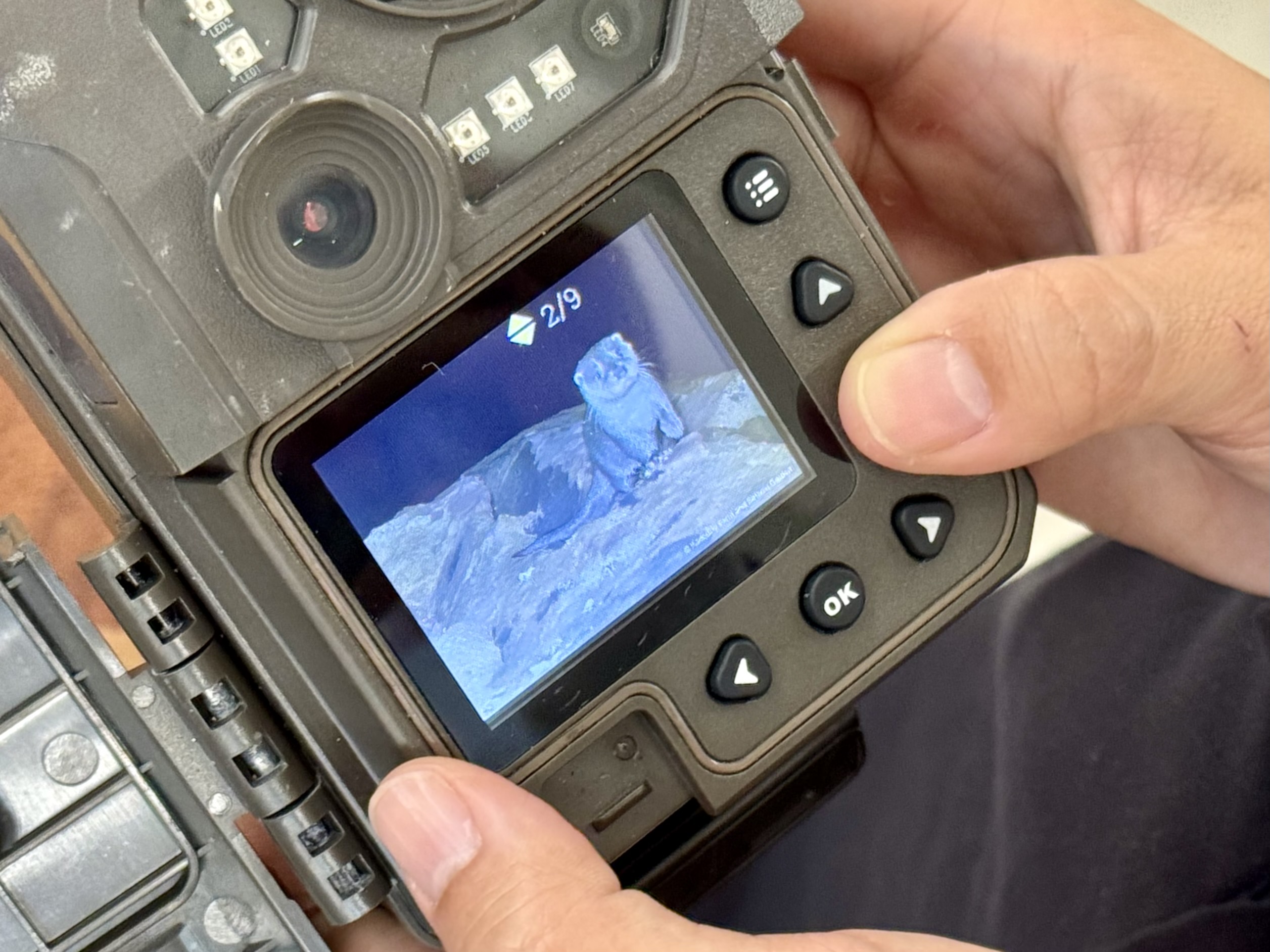
She also deployed more than 70 infrared cameras across coasts and wetlands, checking them every two to three months.
“The search can feel like finding a needle in a haystack, with months passing without a single piece,” Leong said.
“But whenever I make a little gain, it brings me such delight and a huge sense of achievement,” Leong said.
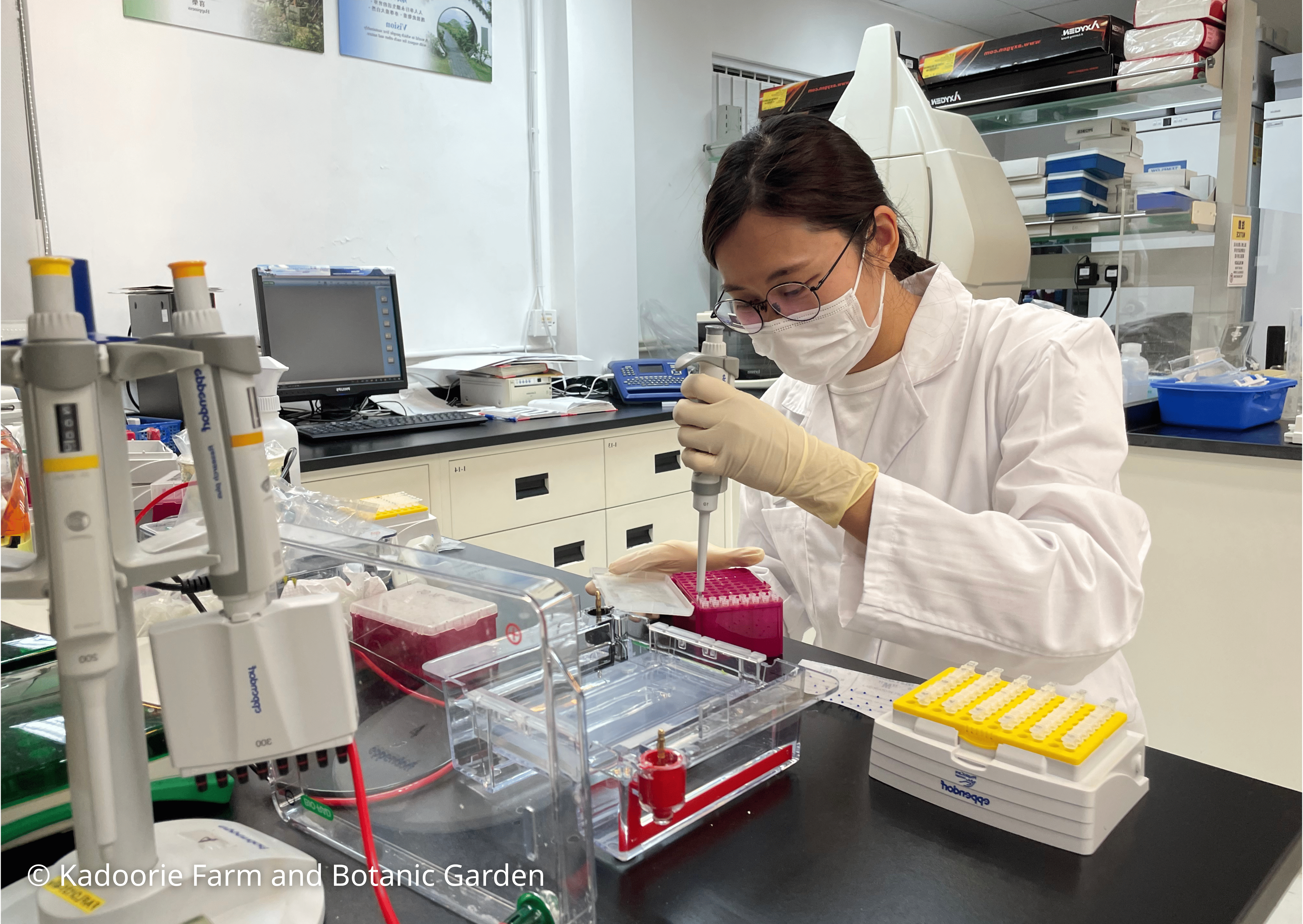
Samples preliminarily identified as otter feces undergo DNA analysis to identify individual sources.
“I often find the same otter's faeces in the same area, and I feel like it is my friend,” Leong said.
However, the threats are relentless. Hong Kong has over 200 rivers and streams, which should be havens for otters, but pollution and urbanisation have broken them up.
Leong recalled finding an otter corpse a decade ago, veterinary autopsy suggested it was highly likely killed by stray dogs.
“I've seen infrared footage of 14 stray dogs chasing a wild boar, but otters are much smaller and less fierce than them, making otters far more vulnerable,” she added.
Yang Jianhuan, the conservation manager of the Fauna Conservation Department under the KFBG, said Hong Kong's stray dog problem is severe and worsening, impacting wildlife.
“After the Northern Metropolis development, many residents find it troublesome to take their dogs along during moving and resettlement, and abandon them in the suburbs, ” Yang said.
“During development, we must consider pet abandonment and the spread of feral dog packs,” Yang added.
Yang also said urbanisation developments such as fish pond filling and river channel hardening also greatly affect habitats.
To address this challenge, Leong and Yang both said the city can learn from the wetland park in Hengqin, Zhuhai, where Eurasian otters are observed again after development.
“If there are plans to establish several wetland parks and link them together, it could become a protected area for otters,” Leong said.
Hong Kong has completed improvement works on rivers, such as Kwun Tong and Yuen Long by replacing concrete riverbeds with upstream river stones, to mimic the original natural stream environment.
A year ago, Yang discovered otter tracks at Ng Tung River in the northeast of New Territories, though their path was blocked by upstream concrete structures.
Yang said this means otters have now reached areas very close to the city.
“As long as we can bring these concrete waterways back to life, otters could well enter the city, expand their range, and survive in Hong Kong,” Yang added.
Supporters such as Olive Zeng, who has donated to the otter conservation project under the World Wide Fund for Nature Hong Kong for 10 months, said she thinks wildlife conservation is meaningful work.
“If humans were only able to live in monotonous concrete jungles and learn about the species that once existed but only in words and pictures, that would be a terrible pity,” Zeng said.
“Many Hong Kong people have no idea that otters exist locally. But otters are super cute, more local than giant pandas, and should be heavily promoted as stars,” Yang said.
As the Eurasian otters project is about to start this December, Leong said she hopes for more discoveries in Lantau.
“If otters go extinct here, it signals our ecosystem's collapse,” she said. “We're working hard today to prevent that future.”
《The Young Reporter》
The Young Reporter (TYR) started as a newspaper in 1969. Today, it is published across multiple media platforms and updated constantly to bring the latest news and analyses to its readers.

The story of Peter: How socially vulnerable people in Denmark reintegrate back into the society

Saudi-Chinese cultural festival: Chinese cuisine draws crowds in Riyadh



Comments