
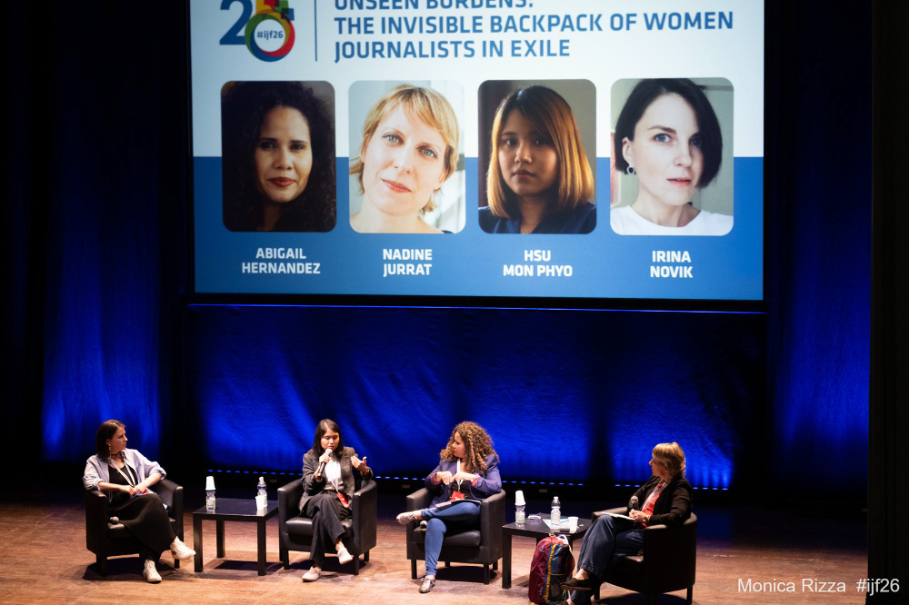
“I have to leave.”
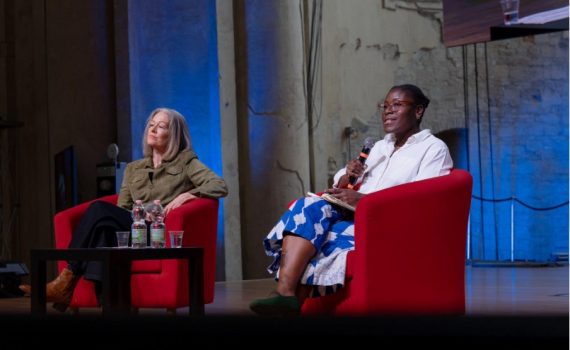
The phrase echoed through a panel on women journalists in exile at the International Journalism Festival in Perugia.
For three women journalists from Nicaragua, Myanmar and Russia, departure was not a professional repositioning. It was the result of political violence, escalating threats and the erosion of space for independent reporting.
Gender often determines how repression is experienced and survived, the journalists on the all-women panel said on April 16.
The conversation unfolded against a global media environment that has grown increasingly hostile. UNESCO’s World Trends in Freedom of Expression and Media Development Report 2022–2025 documents a 10% global decline in freedom of expression since 2012. It also reported that self‑censorship among journalists increased by 63 percent.
In 2025, a record number of 130 journalists and media workers were killed on the job, according to the Committee to Protect Journalists. For many others, violence ended in exile.
Abigail Hernandez, a Nicaraguan journalist and founder and director of La Sala – mujeres en la redacción in Costa Rica, which brings together women-led Central American media outlets in a shared workspace, said exile for her began before she crossed the border.
Hernandez spent six months in constant internal displacement, moving between safe houses while being followed and intimidated by men in civilian clothes.
“It’s not the police, it’s not the— but we know it’s the police and they are military,” she said.
Hernandez described how repression was gendered. Threats targeted her body and appearance, turning political intimidation into something deeply personal.
“The message is that in prison your face, your body, your supposed beauty will be destroyed,” she said.
She left Nicaragua after receiving a warning that made clear her arrest, or worse, was imminent.
Harassment, abuse and online attacks are routine risks for women journalists. Last year, 75 percent of women journalists and media workers experienced online violence while performing their jobs, up from 73 percent in 2020, according to research from UN Women and UNESCO.
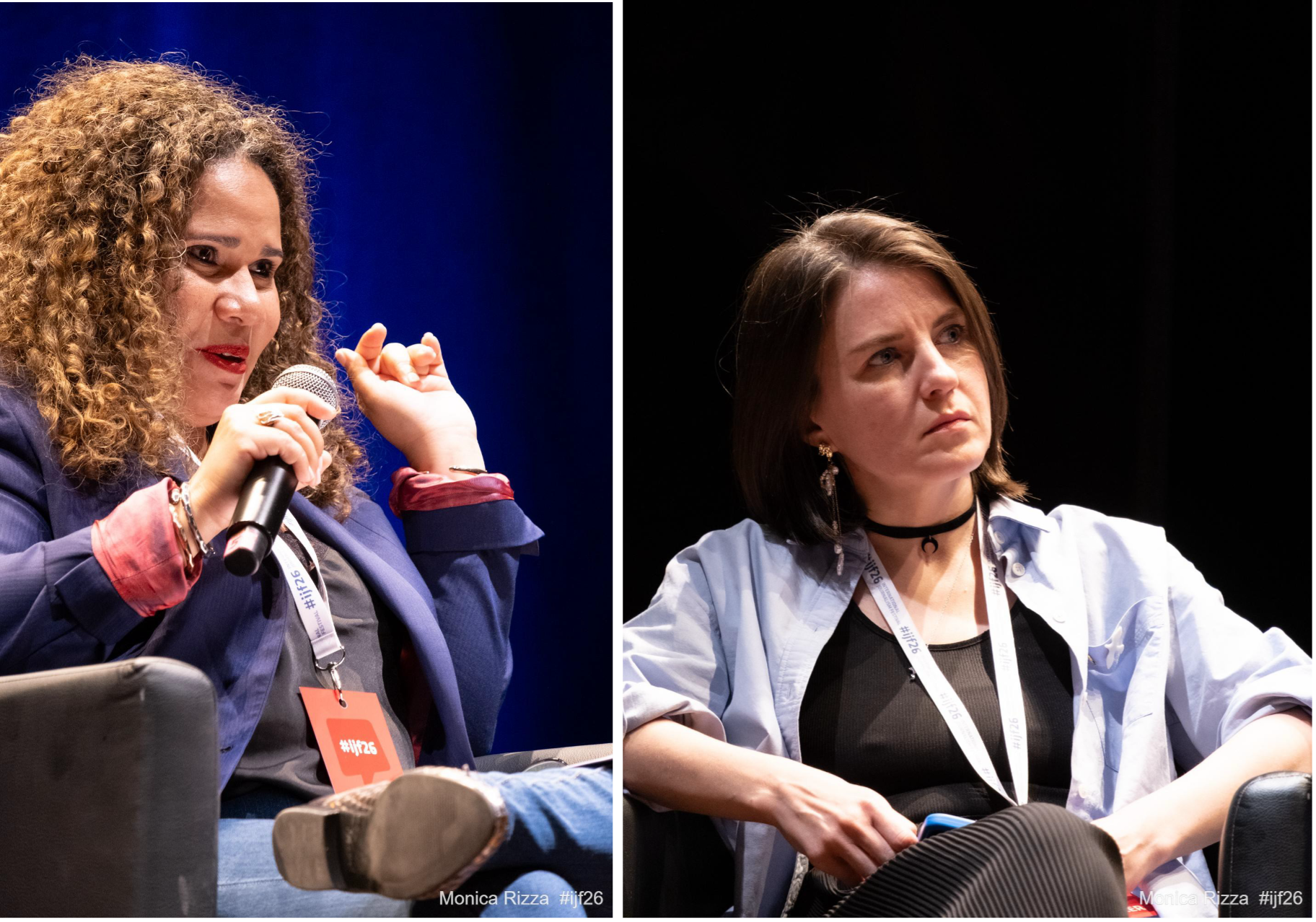
For Russian investigative journalist Irina Novik, exile followed Russia’s invasion of Ukraine in 2022. Soon after resettling in Lithuania, she was officially declared a foreign agent by Russian authorities, she said.
Family members who remain in Russia continue to face police raids and surveillance, Novik said.
“I’m not only a journalist, because I’m mom also,” Novik said, adding that professional responsibility and family vulnerability cannot be separated.
Hsu Mon Phyo, co‑founder and program director of Delta News Agency, which reports on Myanmar’s Irrawaddy Delta , said she knew that after the country’s February 2021 military coup, journalists would be targeted.
“So firstly, I had to think about it. Should I keep doing or stop? But I decided I want to keep doing this job,” she said.
Delta News Agency’s publication license was revoked soon after the coup. Phyo relocated to a liberated area near the Thai border, controlled by an ethnic armed group, where internet access still allowed her and her colleagues to publish.
But dangers there were not limited to the military.
“That area is more conservative. Women were not allowed to go upstairs if men were downstairs,” she said, recounting a story where she was threatened. “He was drunk and carrying a gun. He didn’t shoot, but he threatened me. At that moment, I feared for my safety.”
“Each area, each ethnic group, is different. But across Asia, women face similar dilemmas,” she added.
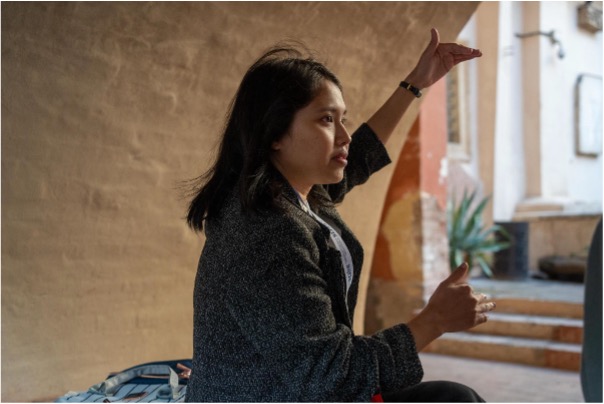
“I had to flee again,” she said. Like many Myanmar refugees, she crossed the border into Thailand.
“Actually, exile was not choice for me because I wanted to stay inside the country and keep doing my job, but I had no choice,” she said. “After the coup, many colleagues changed careers. Some had families and couldn’t go into exile. The journalist generation has been reduced.”
“But my country is in a very dark time. Information is crucial,” she said. “If there is no independent media in Myanmar, everything will become darker.”
Asked what advice she would give to women journalists entering exile, Hsu emphasized survival first.
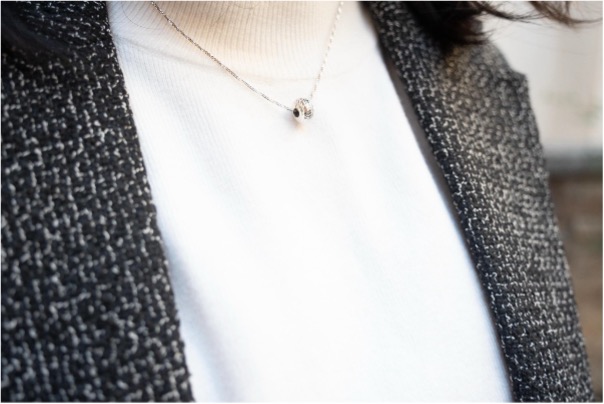
Panelists were asked to show an object representing the “invisible backpack” they carry in exile. All three revealed necklaces worn close to the body.
Novik held up a Star of David necklace from her hometown of St. Petersburg that reminds her who she is and where she comes from.
Hernandez showed a necklace shaped like the map of her home Nicaragua, a country she can no longer return to safely and from which she no longer holds formal documents.
Phyo showed a necklace given to her by her mother, one of the few personal belongings she carried into exile.
“There are very few people still doing this work. That’s why I keep doing it. I can do it, so I do it,” Phyo said.
.
《The Young Reporter》
The Young Reporter (TYR) started as a newspaper in 1969. Today, it is published across multiple media platforms and updated constantly to bring the latest news and analyses to its readers.
Building trust with Epstein survivors needs empathy and self-awareness, journalists say
AI transforms the news ecosystem as traditional media face new pressure


Comments