
Marcus Kan, 29, sits restlessly in his car on the Hong Kong-Zhuhai-Macao Bridge, stuck in heavy traffic as he waits to cross into Zhuhai. Once there, he hopes to fill up at lower fuel prices than Hong Kong, where he lives.
“I go to the mainland for fuel once a week. Since the outbreak of the Iran war, the petrol price difference between the mainland and Hong Kong has widened steadily. Even factoring in the fuel cost of commuting back and forth, it’s still more economical to refuel in the mainland,” Kan said.
Petrol prices in Hong Kong have risen steadily since the Islamic Revolutionary Guard Corps closed the Strait of Hormuz following US-Israel airstrikes on Feb 28. Prices have surged by 11.3% over the past two months, climbing from HK$29.24 in early March to a record high of HK$32.54 per litre as of May 1.
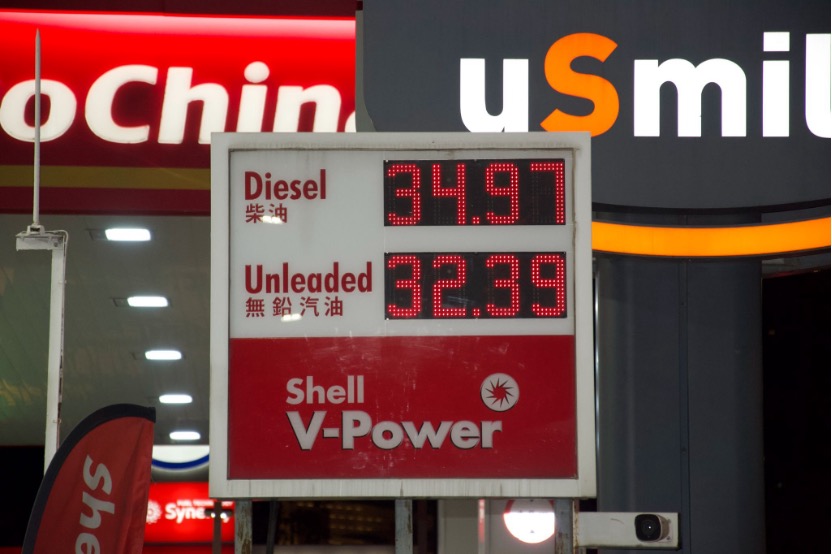
“It’s a popular trend among my social circles. It only takes 50 minutes for a single trip from Hong Kong to Zhuhai, so I quite enjoy the trip,” he added.
Kan said nearly all his friends who own vehicles have tried refuelling in mainland China at least once. “The control points are sometimes congested nowadays, which likely means more cars are crossing the border,” said Kan.
Global crude oil prices have surged over 53% since the war began, topping US$120.55 per barrel. Fluctuations in crude oil prices directly impact its derivatives, such as petrol, diesel and liquefied petroleum gas.
To ease the pressure of rising fuel prices, the Hong Kong government made a 50% tunnel toll reduction for commercial vehicles following a special meeting in April, though it still has not announced any price controls or subsidies for private car owners.
“The closure of the Strait of Hormuz transportation route will affect 20% to 30% of global oil supply, which would cause a significant short-term impact on Hong Kong," said Billy Mak Sui-choi, an associate professor at Hong Kong Baptist University’s department of accountancy, economics and finance.
“Lacking local natural resources, Hong Kong is highly sensitive to fluctuations in international crude prices, which can be directly reflected in local transportation costs, including airfares, ferry tickets and retail fuel prices,” Mak added.
Hong Kong-based airlines, including Cathay Pacific, Hong Kong Airlines, HK Express and Greater Bay Airlines, have each announced adjustments on fuel surcharges to hedge rising costs on fuel.
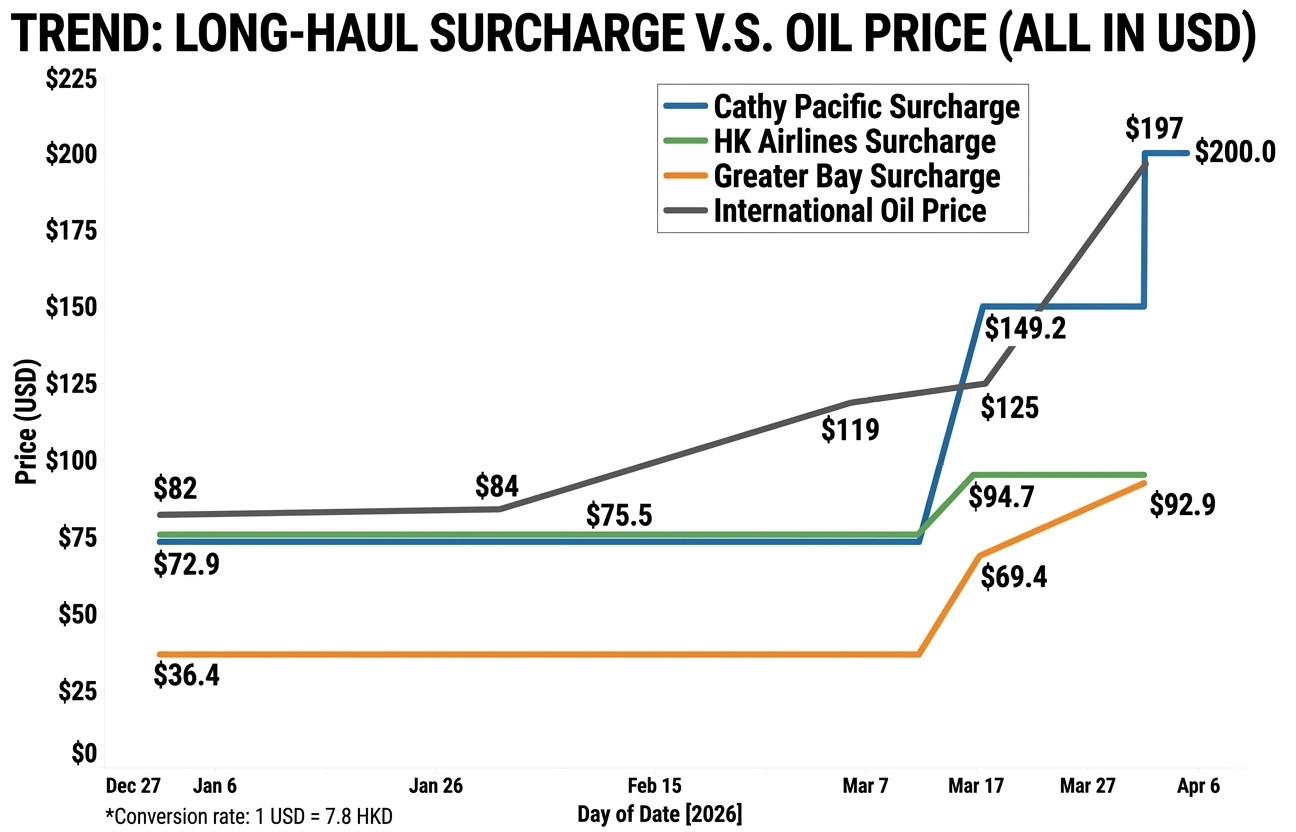
Cathay Pacific hiked fuel surcharges by 174% across its network: short-haul flights jumped from HK$142 to HK$389; medium-haul routes rose from HK$264 to HK$725; and long-haul surged from HK$569 to HK$1,560.
The sharp increases have disrupted local travellers’ plans.
“Rising energy costs on flights have definitely impacted my travel plans,” Liu Hiu-tung, 20, a student from Hong Kong Baptist University, said. She changed her mind on booking a direct flight to Tokyo, turning to a connecting flight instead, which saved her HK$300.
Government-overseen transport departments have also increased fares. The Transport Department announced adjustments for six major outlying island ferry routes; single tickets for the routes from Central to Cheung Chau, Yung Shue Wan and Sok Kwu Wan have increased by 12.5%.
Hong Kong’s commercial laundry industry has proposed a fuel surcharge to cope with soaring diesel prices, which power boilers for steam.
“Our industry only has a slim profit margin of around 10%. The sharp increase of costs pushed our industry to the brink of collapse," said Chow Hon-keung, 65, the president of the Hong Kong Laundry Merchants Association.
Energy costs in the laundry sector previously accounted for 10-20% of expenses but now exceed 26% due to rising oil prices, Chow said.“The government currently provides a subsidy of HK$3 per litre for diesel oil. Although it can’t fix all the problems, it does benefit some companies, which demonstrates that the government is indeed doing its part,” Chow said.
The laundry industry has considered emergency plans, including compressing production time, higher service fees, implementing staff rotations and downsizing to mitigate the threat of rising fuel costs.
Chow said he hopes the government will strengthen oversight on the prices.
“To ensure businesses operate normally, I think the government should oversee whether the price hikes are driven by genuine needs instead of trying to make windfall profits," Chow added.
《The Young Reporter》
The Young Reporter (TYR) started as a newspaper in 1969. Today, it is published across multiple media platforms and updated constantly to bring the latest news and analyses to its readers.

Music and alcohol event Sip&Groove drew thousands to West Kowloon

More non-local couples choose to say “I Do” in Hong Kong


Comments