
More non-local couples choose to say “I Do” in Hong Kong
- By: YANG Shuyi、Lou ZhengzhengEdited by: QIN Ziyang
- 2026-05-08
On Halloween in 2025, Li Shiman, 28, married her boyfriend of five months at the Cotton Tree Drive Marriage Registry. The decision to get married in Hong Kong was to expedite their U.S. visa applications so they could catch NBA star Stephen Curry’s game before his retirement.
Before getting married, Li lived in Guangzhou and only held a Hong Kong tourist visa, while her boyfriend had been working as a project manager for two years in Hong Kong after completing his master's degree for a year.
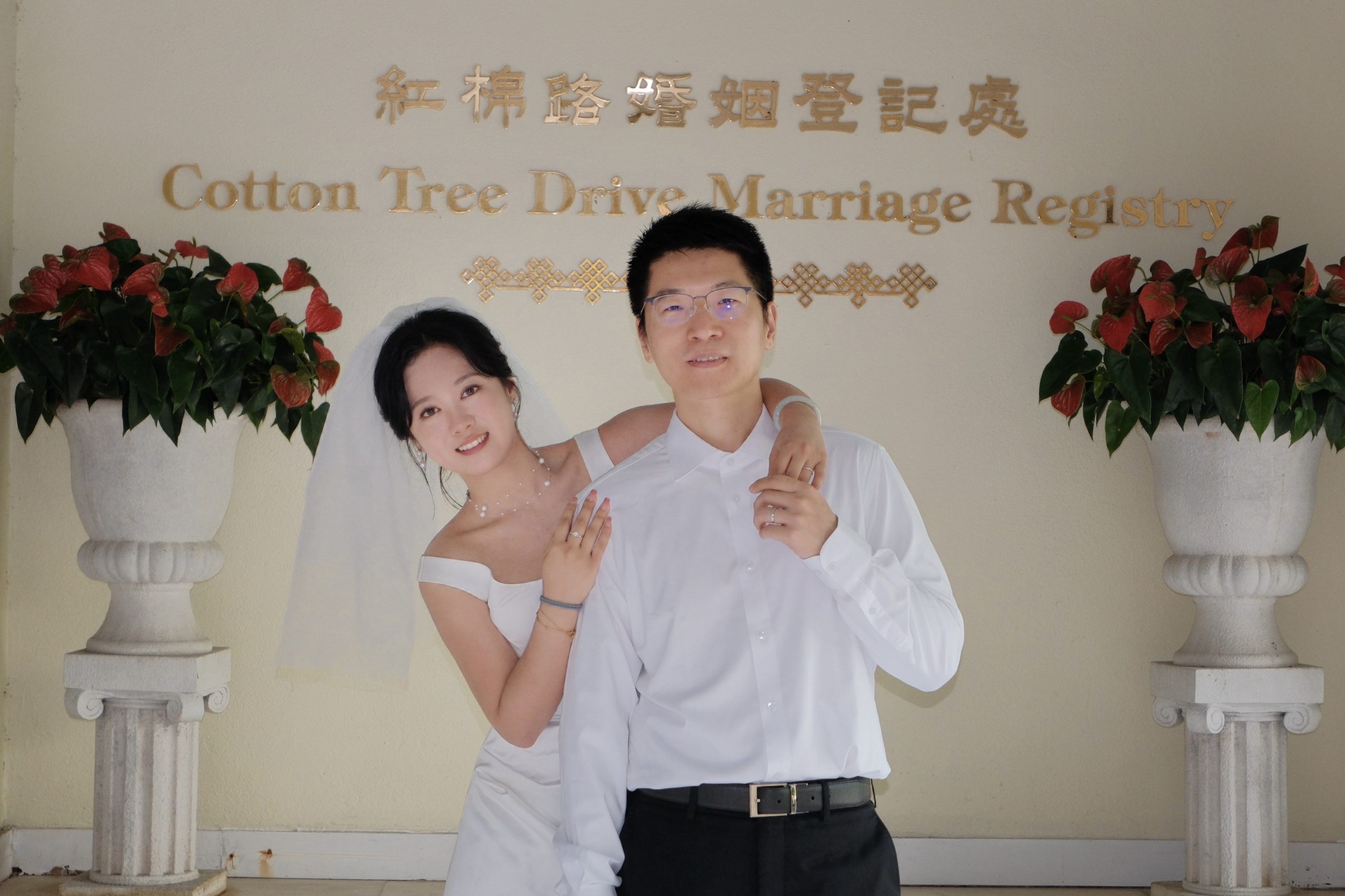
“U.S. visa applications are more likely to be approved in Hong Kong than in the mainland," she said. “We’re both Curry’s fans and want to see him play in person before his retirement.”
Hong Kong has become an increasingly popular destination for overseas couples tying the knot for its superior legal protection and relatively easy administrative procedures.
Latest data from the Hong Kong Census and Statistics Department shows that marriages between two non-locals or among Hongkongers who paired up with foreigners increased from 2,889 to 5,071 from 2021 to 2024, representing an astonishing growth of 75.5% in just four years.
While the data did not indicate a detailed home country breakdown among the couples, there has been a growing number of social media accounts and posts on mainland platforms, like RedNote, sharing related service information and experience for couples to be wedded in the city.
Many mainland couples like Li and her husband chose Hong Kong for its ease of overseas visa applications.
According to the U.S. Department of State, only applicants who have a Hong Kong or Macau residency are eligible to apply for a visa submission at the U.S. Consulate in Hong Kong. And statistics show that the refusal rate for B-visas, which includes business and tourist visas, for mainland China is 20.21%, while for Hong Kong it is only 7.72%.
After getting married in Hong Kong, Li, though she hadn’t worked or lived in Hong Kong before, could immediately apply for dependent status and get a non-permanent Hong Kong ID card, which helps her job searches and future visa applications.
After living in the city for seven consecutive years, one would be eligible to apply for permanent residency in Hong Kong.
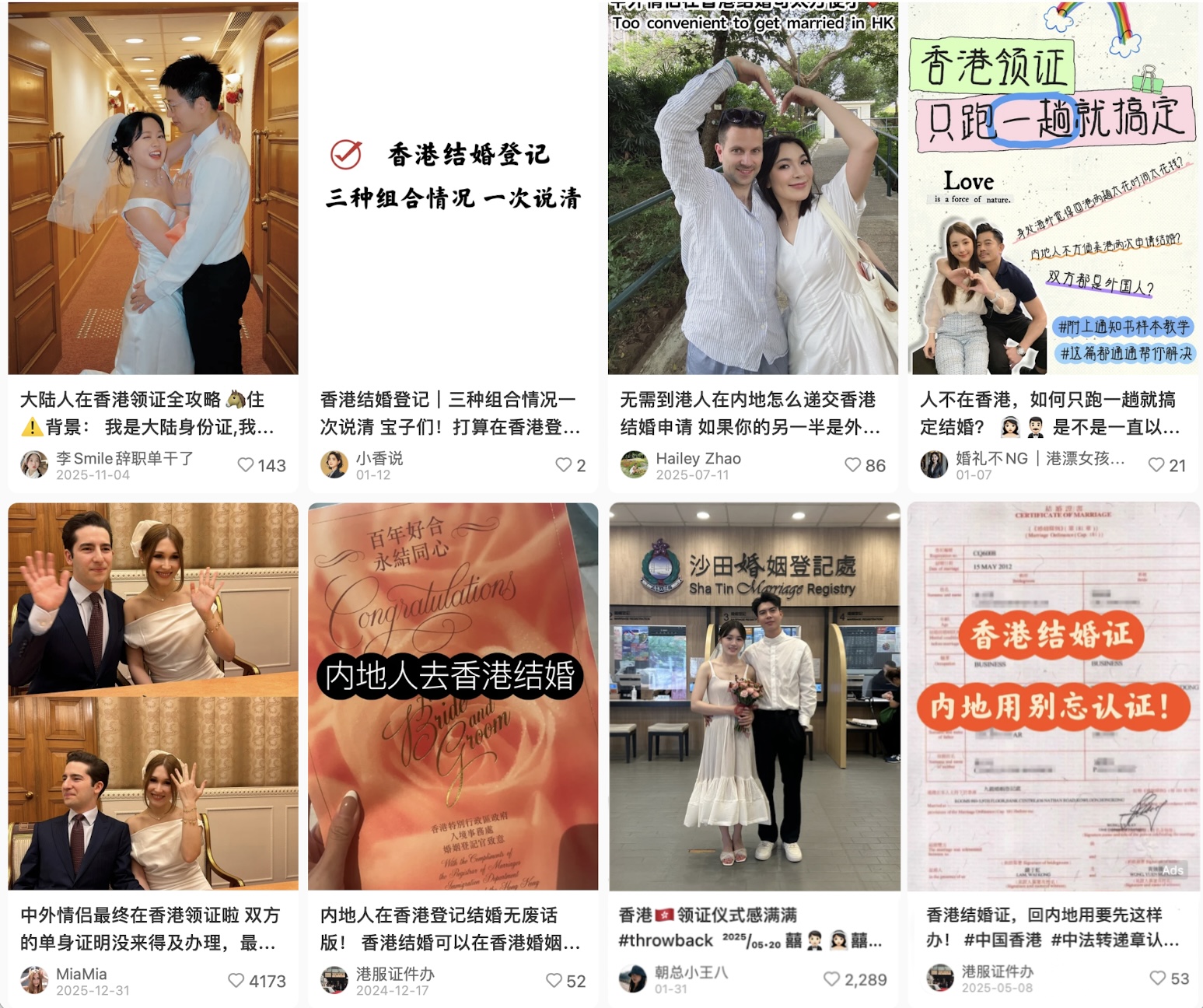
"If you marry someone with Hong Kong residency, you can apply for a Hong Kong ID card right after getting married. Having a legal right to stay in Hong Kong makes it relatively easier to find a job," Li said.
Among all non-local couples, many have a personal connection to Hong Kong, whether through their previous or current studies and jobs.
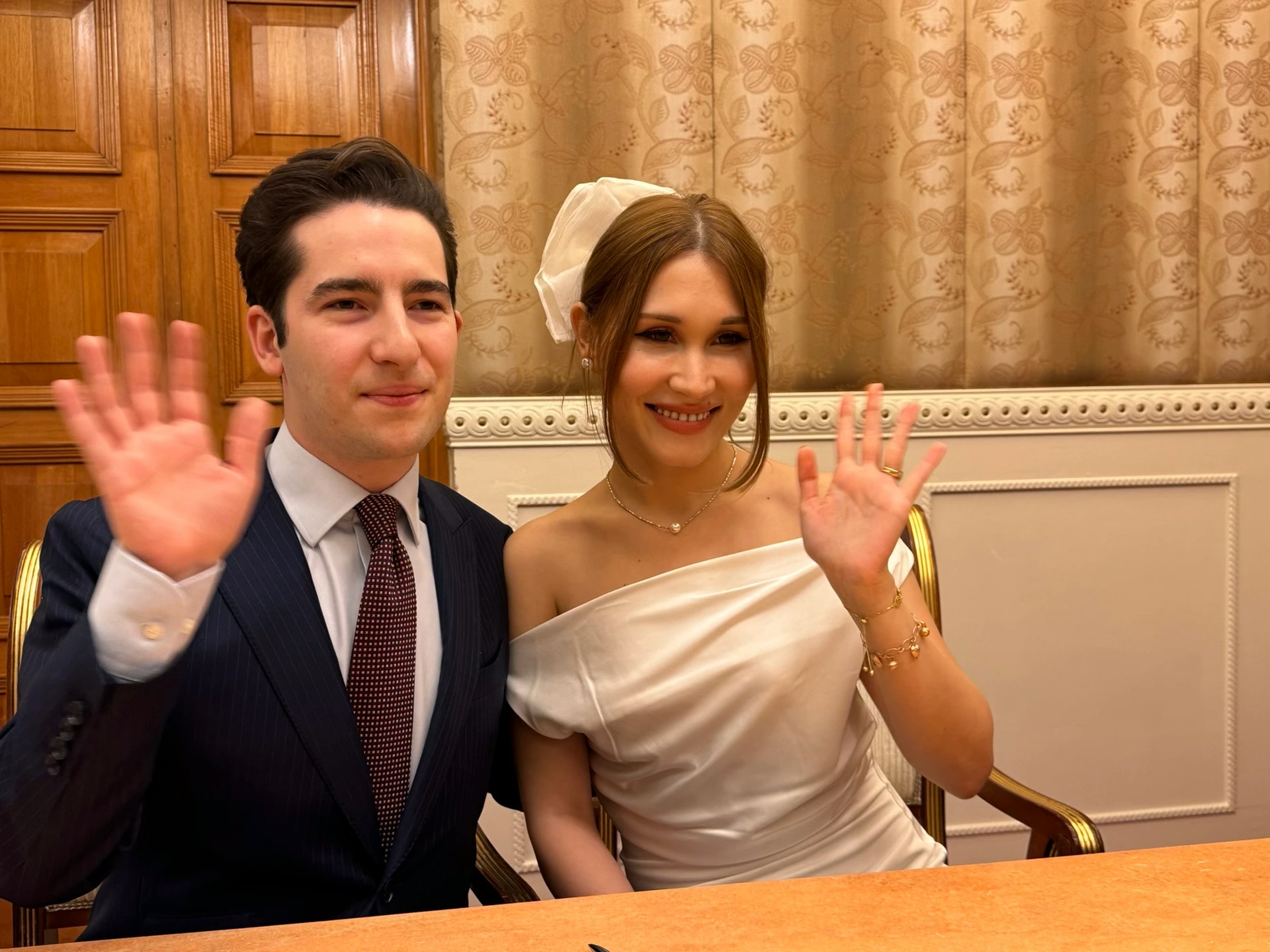
Mia Nurmamat, 27, from Xinjiang, now works in Hong Kong as a reporter. She married her husband in Hong Kong last year, who is a business consultant holding dual citizenship of Spain and France. Both of them hold the Hong Kong work visa.
“The registration process in Hong Kong is very simple. We both went to the register directly with our non-permanent Hong Kong ID cards – it was quick and convenient,” she said.
“In contrast, it would be much more complicated on the mainland. We had to present his certificate of single status and his birth certificate,” Nurmamat added.
While the Hong Kong marriage authority accepts local single-status oaths, mainland authorities require an apostilled foreign Certificate of Absence of Marriage Record.
Beijing-based lawyer Wei Gang noted the differences in marriage laws in Hong Kong and China might make a difference for young couples when deciding their marriage’s destination.
"In the mainland, men can register for marriage at age 22 and women at age 20, whereas in Hong Kong, a person can already marry at 16 with parental consent," said Wei.
Nurmamat and her husband, who are planning to move to Shanghai, also planned to notarise their marriage for her husband’s residency and job prospects in China.
“Once he has legal mainland residency, his chances of finding a job on the mainland will be better,” Nurmamat said.
On the mainland, the community property system treats marriage-acquired property as jointly owned. Courts would distribute property upon divorce under Article 1087 of the Civil Code, which prioritises children, the wife, and the non-breaching party.
Hong Kong follows a separate property system, under which each spouse owns the property registered in his or her name. Upon divorce, courts may redistribute it based on financial needs, earning capacity, and contributions to the family, according to Section 7(1) of the Matrimonial Proceedings and Property Ordinance.
Mainlander Olivia Qiao, 32, said her husband wanted to register their marriage in Hong Kong as he believed Hong Kong’s marriage laws would give her more protection.
“I had a failed marriage in mainland China because my ex-husband had an affair, so I lost my desire for marriage,” said Qiao.
“More legal protection can also give me a greater sense of security in this relationship and make me feel more comfortable about re-entering marriage,” she added.
She moved to Hong Kong after marrying her second husband and obtained a temporary identity card through the Hong Kong Quality Migrant Admission Scheme last year. Qiao now works as a freelance designer.
“In mainland China, the law tends to protect the party with better assets, whereas in Hong Kong, it tends to protect the relatively disadvantaged party,” she said.
Qiao said that under mainland law, the system for spousal support can only be claimed when one party is facing financial hardship.
Wei, the Beijing lawyer, noted that divorces in the mainland allow mutual consent or litigation, but Hong Kong courts require litigation and reject divorce petitions filed within the first year of marriage.
Qiao, who often felt tempted to divorce her second husband, said Hong Kong’s marriage law forced the couple to work out their differences.
“Hong Kong law constantly reminds us that we cannot get a divorce within the first year. Since we have chosen each other, no matter what the problems are, we must work together to find solutions rather than end it,” she said.
“It gave us time to face the challenges of our relationship and grow together,” she added.

Other couples said they chose to marry in Hong Kong as they also valued its ceremonial registration process.
Nurmamat said her husband places great importance on the ceremony, and Hong Kong’s registration ceremony in traditional British style was another reason they chose to register there.
For Qiao, she was most impressed by the solemnity and dignity of marriage registration in Hong Kong.
“The oath-taking process and signing the marriage certificate made me feel the weight of the occasion,” Qiao said.
“Although you receive a stamped certificate when registering on the mainland, the flimsy piece of paper issued in Hong Kong actually feels more solemn to me and makes me respect this marriage even more,” she said.
《The Young Reporter》
The Young Reporter (TYR) started as a newspaper in 1969. Today, it is published across multiple media platforms and updated constantly to bring the latest news and analyses to its readers.

Rising fuel costs sting Hong Kong on everything from cars to laundry
Вулкан зеркало: как найти, зарегистрироваться и получить бонусы в России


Comments