
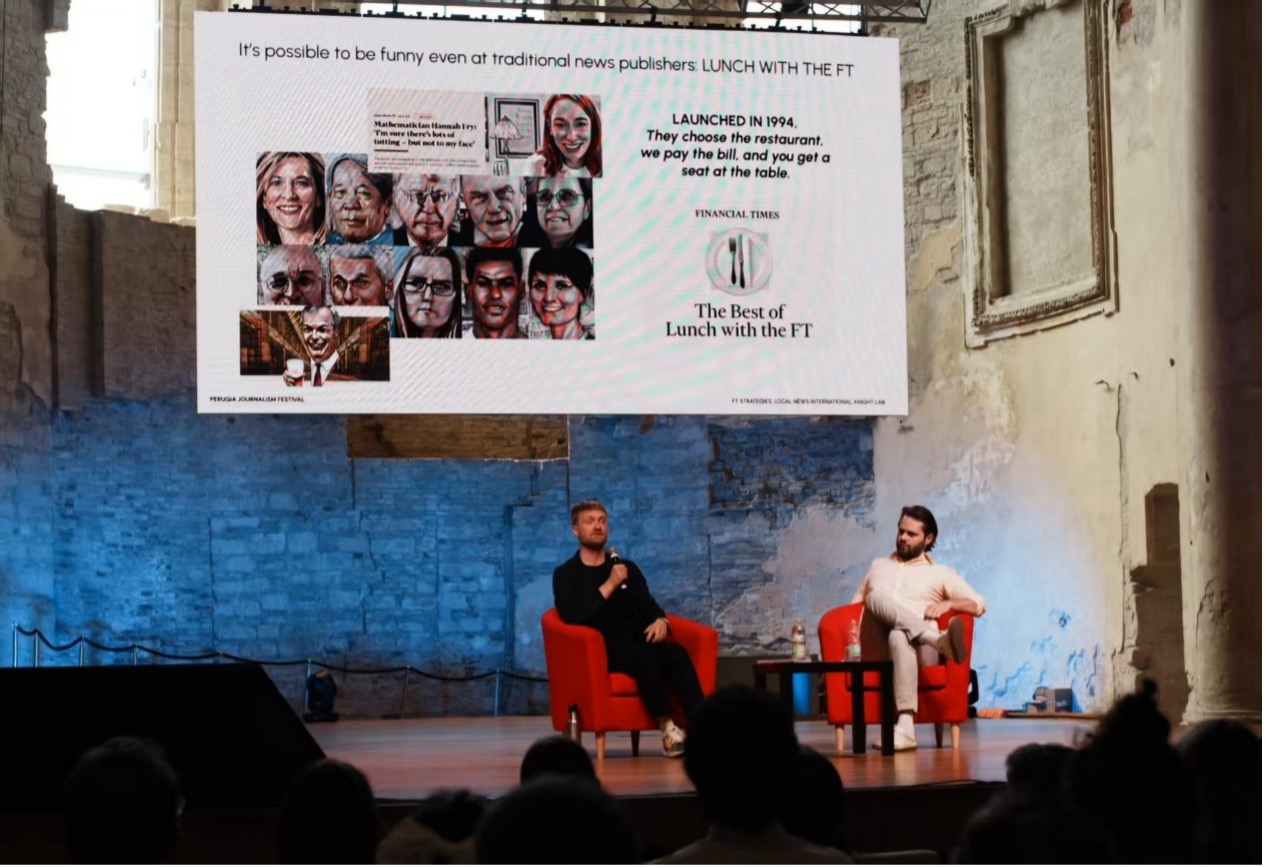
Former Washington Post journalist Dave Jorgenson told a workshop that serious journalism can attract young audiences through humour and personality in short social media videos, as the journalism industry searches for new ways to build trust.
Speaking on April 17 at the 20th International Journalism Festival, Jorgenson, who started the paper’s Tik Tok channel, shared several videos he made to demonstrate how he transformed dry topics into engaging content using sketches, visual gags and automatic video looping.
“I try to put myself in the shoes of the audience,” he said. “Not do it in a way that feels condescending.”
One video, a 30-second sketch depicting a fictional phone call between Egypt, Ukraine and Russia, summarised a lengthy Washington Post article and attracted 47 million views. Another was a two-minute fact check of a Donald Trump speech, which involved rapid corrections and visual gags, including holding up a gingerbread house to illustrate the housing crisis.
“Pulling back the curtain on your own understanding of a story is a way to make the process of journalism more relatable,” he added.
At the beginning of the speech, Aled John, group strategy director at the Financial Times, outlined challenges facing traditional newsrooms, including a deepening sense of disconnection among audiences and what he called the “dogma” that serious stories must always be delivered in a serious tone and language, leading to a significant decline in readership.
According to the Reuters Institute Digital News Report 2025, traditional news media are “struggling to connect with much of the public, with declining engagement, low trust and stagnating digital subscriptions”. Overall trust in news remains at 40%. Globally, social video consumption for news has risen from 52% in 2020 to 65% in 2025.
Held in Perugia, Italy, the festival is the largest annual media gathering, drawing journalists, media leaders and innovators from around the world for more than 100 panels, workshops and discussions over three days.
“I feel like we have to react a bit faster to make changes and be open to try things out and fail sometimes. But at least take the risk,” said Leonie Kuehn, a multimedia reporter for the German local outlet SWR Heilbronn who attended the talk.
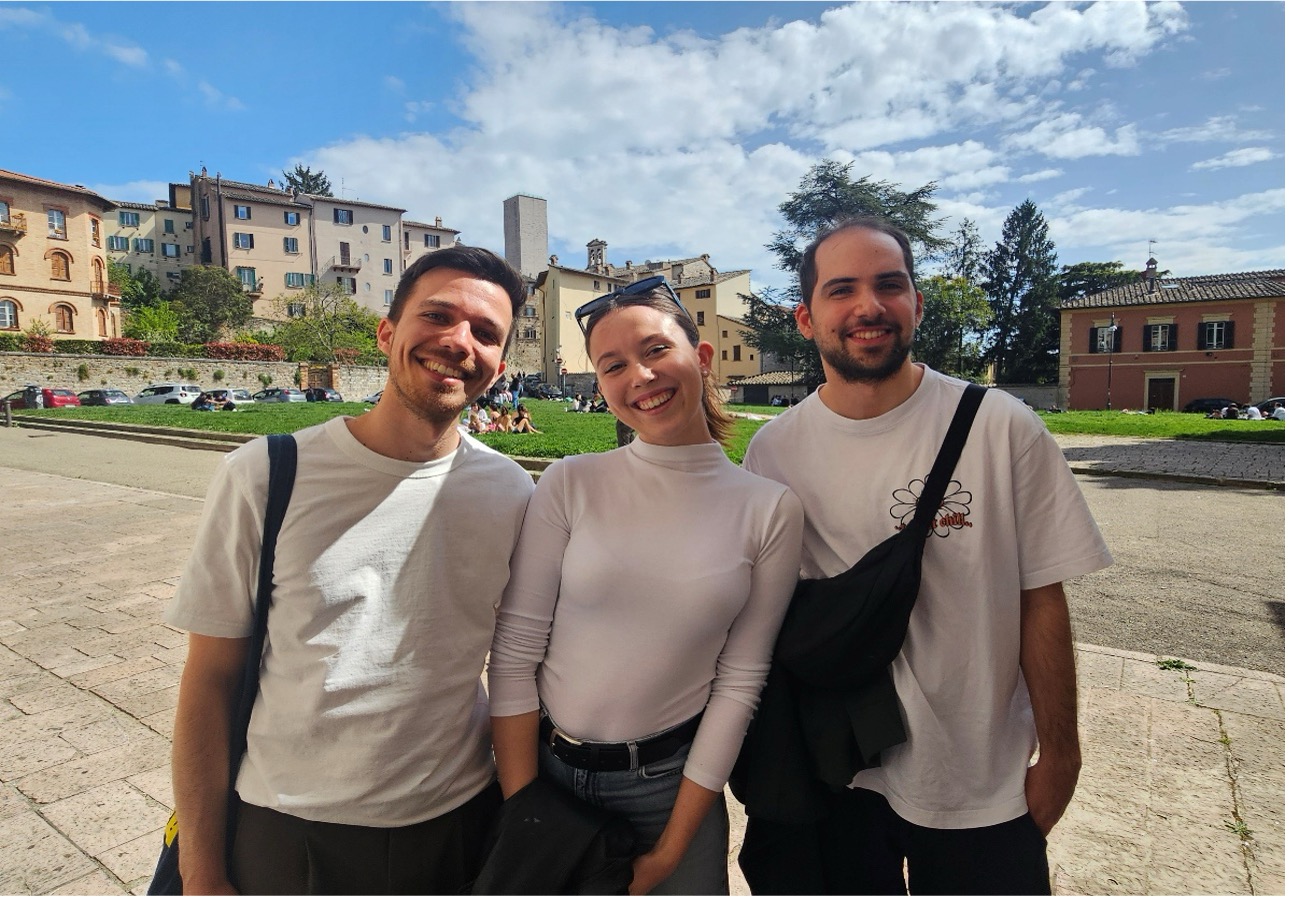
Luis Bracht, an editor at SWR Landesschau online in Germany who also attended the talk, said, “When you think about traditional TV news, where there’s this person who reads the news off a teleprompter, it feels a little bit stiff,” he said.
“You don’t have the feeling that you could approach this person when you see them on the street. Maybe you can, of course, but it’s like an image.”
He said successful social creators are approachable. “You can talk to them; you can ask them questions. And I think that’s really important, that you don't have this big distance,” he added.
But adding humor in journalism also raises questions about accuracy. Eddie Schatz, a multimedia reporter and host at SWR Aktuell and SWR Heimat in Germany, said this was a concern he took away from the workshop.
“To make it engaging enough but not undermining the credibility of it, I feel like it’s learning by doing in a way. You put out some videos and then you react to the comments and then maybe adjust,” he said.
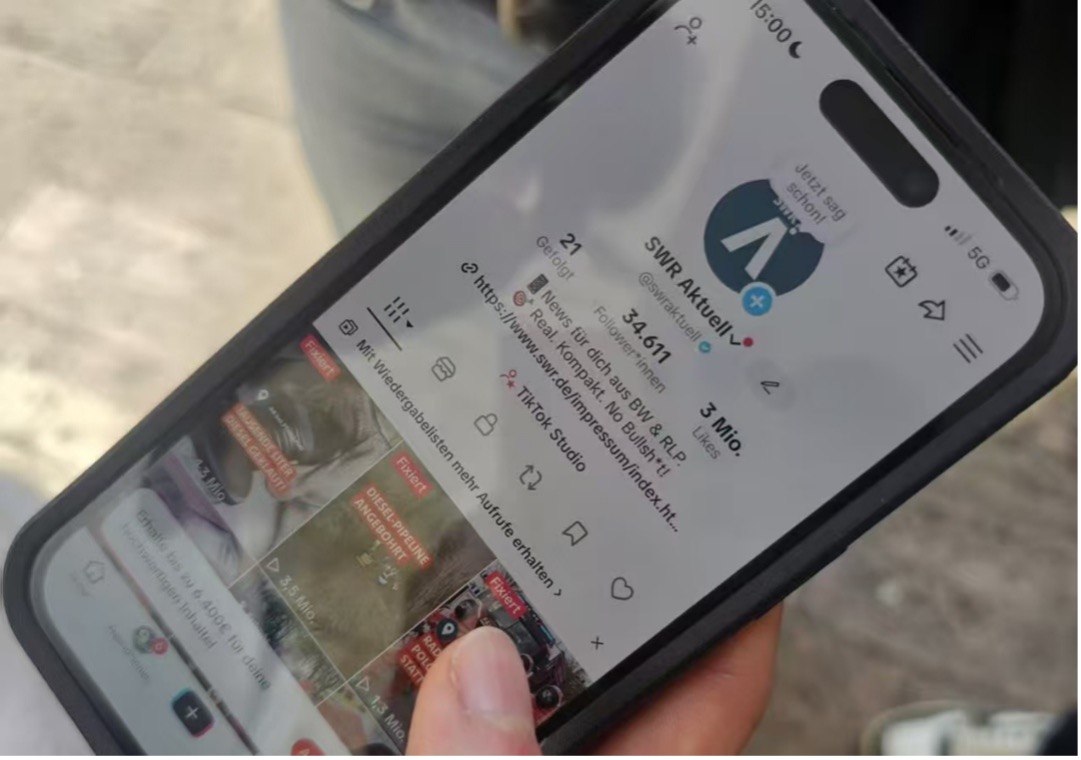
“To be more credible, I feel like being open with your sources, like saying or displaying where you get your information from. That's the key point where journalists are differentiating themselves from creators,” he said. “Everybody can talk about a subject, but not everybody can do the research and also display the research.”
《The Young Reporter》
The Young Reporter (TYR) started as a newspaper in 1969. Today, it is published across multiple media platforms and updated constantly to bring the latest news and analyses to its readers.

Maria Ressa says global 'funnel' destroying democracy

Kai Tak Calling: Hong Kong Sevens Marks 50th Anniversary


Comments