
In 2025, the US Federal Reserve cut rates twice in the second half of the year. Under Hong Kong's dollar peg system, local rates followed the downward trajectory.
For nearly four decades, Hong Kong has operated under a dollar peg system that ties the city's currency to the US dollar. This mechanism means local interest rates track Federal Reserve decisions, transmitting US monetary policy to the local economy.
| AI Analogy: The Dollar Peg in Simple TermsImagine asking a fortune teller at Wong Tai Sin Temple about whether property prices will drop next year, only to receive the answer: “Everything depends on the mood of the US Federal Reserve.” In Hong Kong, even the gods of fortune sometimes have to check Powell’s latest speech before blessing your investments. |
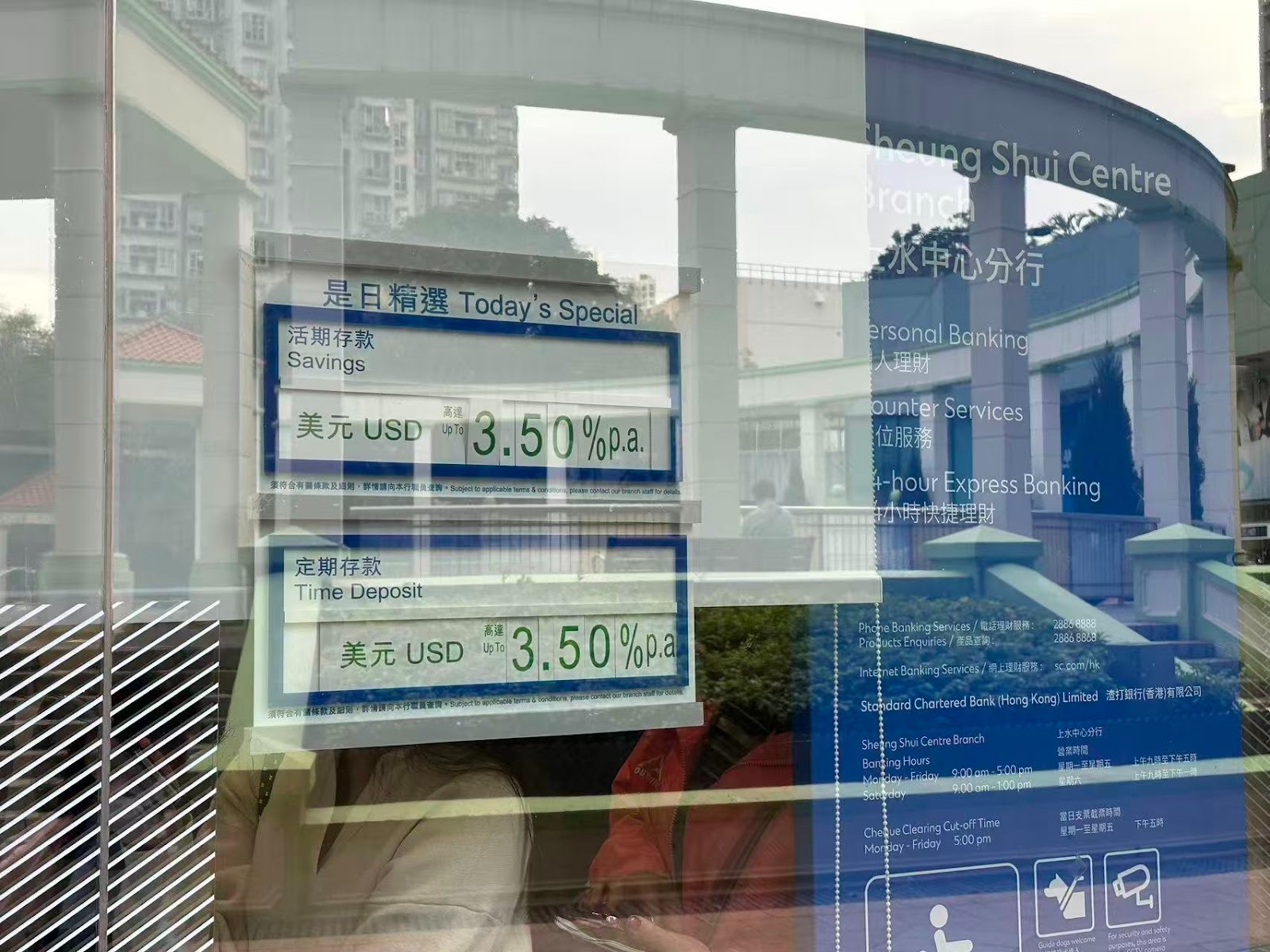
On Oct. 30, 2025, Federal Reserve Chairman Jerome Powell announced a 25 basis point cut to the federal funds rate to 3.75%-4.00%, marking the second rate cut of the year amid a sluggish job market.
The same day after the rate cut, the Hong Kong Monetary Authority (HKMA) announced a reduction in its base rate to 4.25%. Under the linked exchange rate system, Hong Kong dollar interbank rates generally converge with US dollar interest rates, said Eddie Yue, Chief Executive at HKMA.
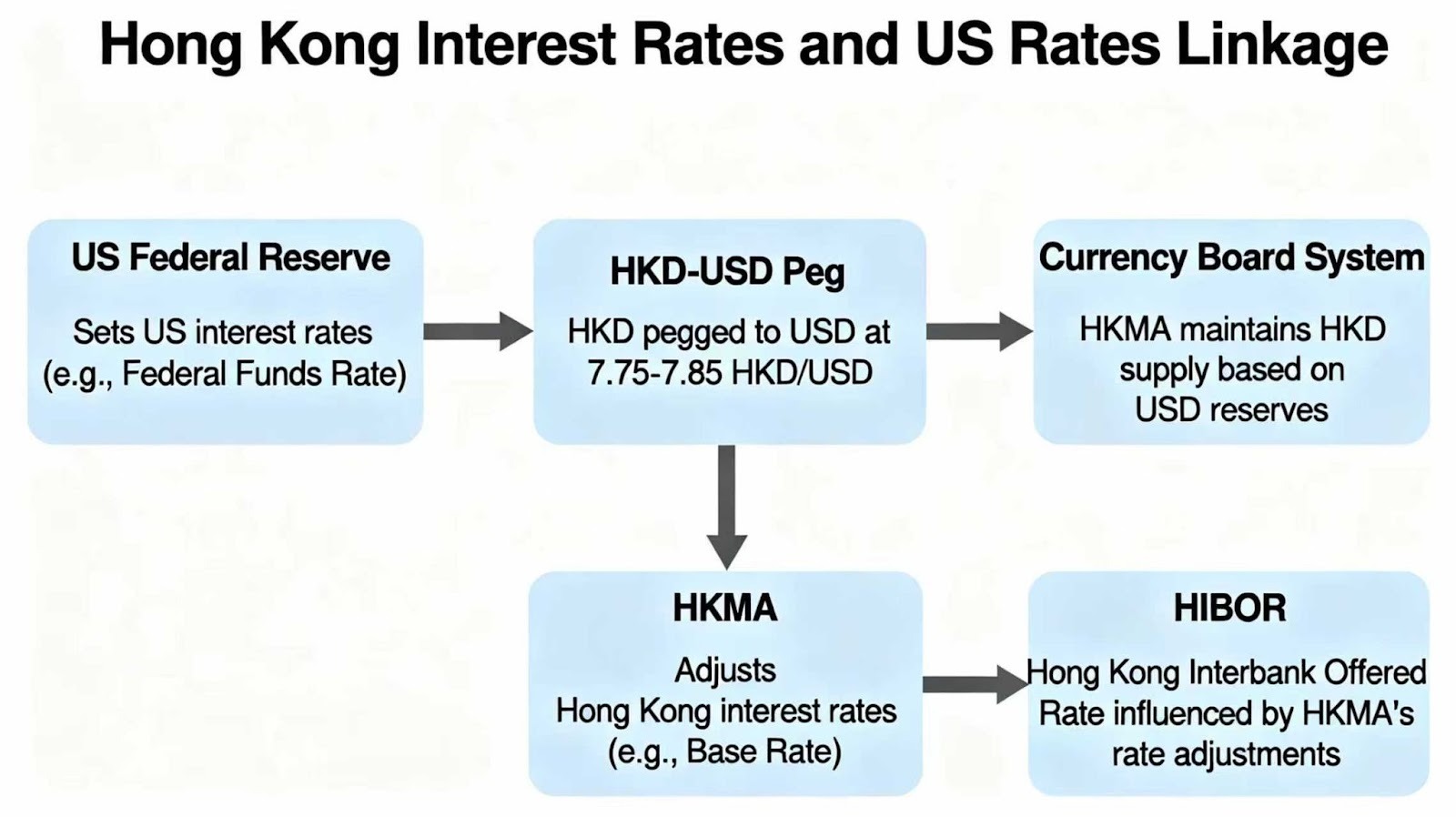
As the year 2025 unfolded, US President Donald John Trump challenged Powell’s January message of caution, pushing instead for faster rate cuts. The federal funds rate was cut twice, 25 basis pointsat a time, in September and October to the range of 3.75% to 4.00%.
Following HKMA’s adjustment, several major commercial banks such as HSBC, Hang Seng Bank, and Bank of China (Hong Kong) also lowered their prime lending rates accordingly. However, the banks' reductions were smaller than the Federal Reserve's cuts. Most major banks reduced their prime rates by 12.5 basis points each time, half the Fed's 25 basis point cuts. Prime rates also varied slightly among banks, with HSBC, Hang Seng Bank, and Bank of China (Hong Kong) setting their rates at 5.000% after the October adjustment, while Standard Chartered and Bank of East Asia maintained slightly higher rates at 5.250%.
| Bank Name | Prime Rate (September 18 or later) | Prime Rate (October 30 or later) |
| HSBC | 5.125% | 5.000% |
| Hang Seng Bank | 5.125% | 5.000% |
| Bank of China (Hong Kong) | 5.125% | 5.000% |
| Standard Chartered | 5.375% | 5.250% |
| Bank of East Asia | 5.375% | 5.250% |
The Hong Kong Interbank Offered Rate (HIBOR) serves as another key interest rate benchmark in Hong Kong, influenced by banking system liquidity and global capital flows. Data from the Hong Kong Association of Banks for October shows the 1-month HIBOR oscillating roughly in the 3.4%-3.6% range.
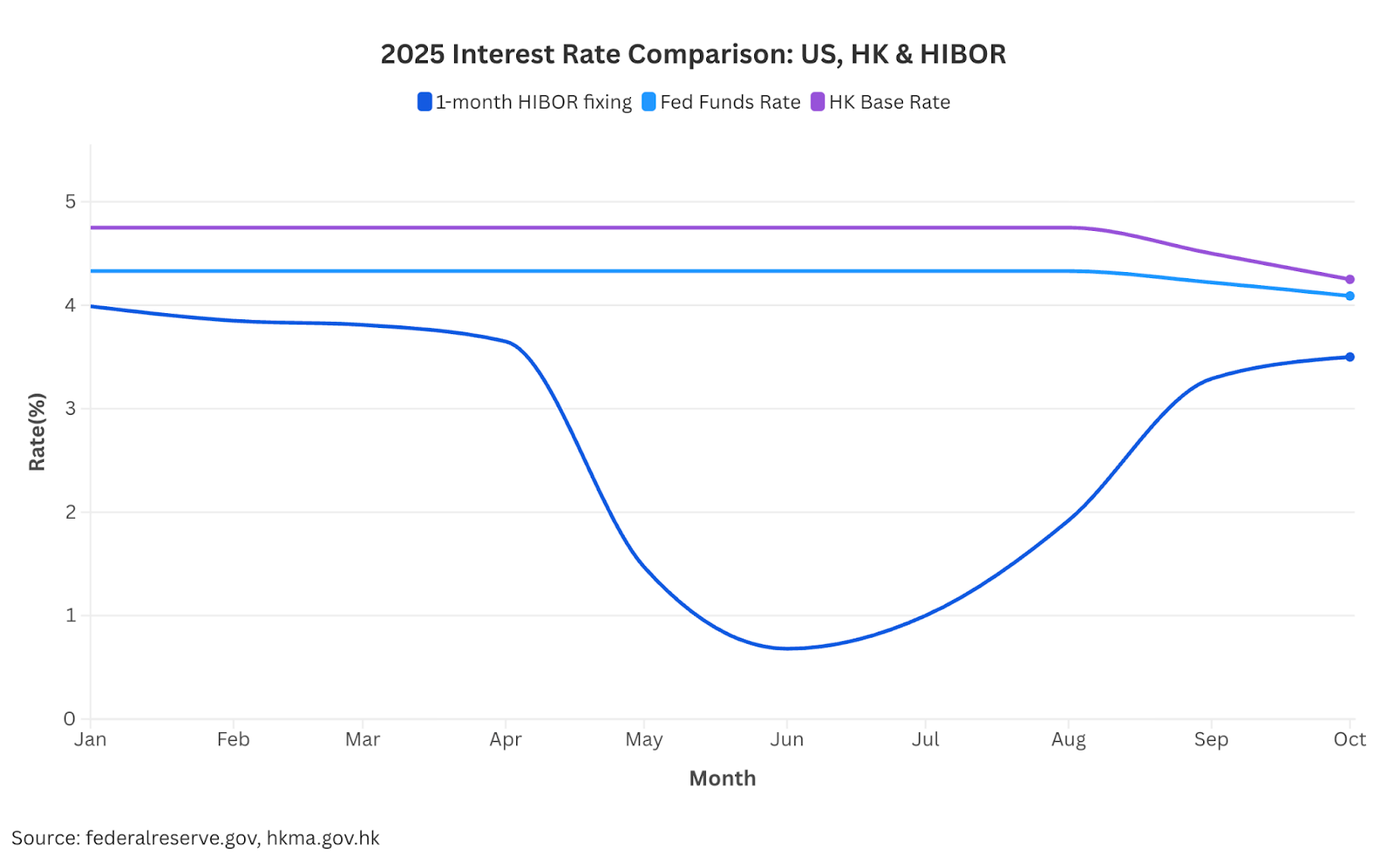
In June 2025, the HKMA intervened in the forex market to defend the linked exchange rate when the Hong Kong dollar hit the weak-side convertibility undertaking, repeatedly buying HKD and withdrawing liquidity from the banking system, which drove the aggregate balance to a lower level and elevated short-term HIBOR levels.
Billy Mak, Associate Director of the Centre for Corporate Governance and Financial Policy at Hong Kong Baptist University, explained the direct transmission under Hong Kong's linked exchange rate system. He said federal funds rate cuts lead HIBOR lower, easing mortgage payments for homeowners and reducing borrowing costs for businesses, which supports their operations.
“Citizens should carefully consider and manage interest rate risks when making decisions regarding property purchases, investments, or borrowing,” said Yue on Oct.30, the day of the base rate adjustment.
Heading to 2026, Goldman Sachs forecasts that the Federal Reserve will cut rates by another 25 basis points each in March and June 2026, potentially bringing the terminal rate to the 3%-3.25% range, with this easing cycle extending into mid-2026.
However, Mark Dowding, CIO of fixed income at RBC BlueBay, discussing the US economy, Federal Reserve interest rates, and his forecast for Treasury yields, stated on Bloomberg TV on Nov 12, “I actually believe there will be fewer rate cuts next year than many people anticipate.”
Yue suggested the uncertainty surrounding the magnitude and pace of future interest rate cuts in the United States will keep impacting Hong Kong's interest rate environment, but HKMA will continue to closely monitor market changes and maintain monetary and financial stability.
AI Experiment in the Newsroom: How We Wrote This “Interest Rate Trend” Story with AI
As AI is reshaping the news industry – from idea generation to copy editing—we used various AI models in our reporting to explore their potential benefits, their limitations, and how journalists must adapt to this emerging technology.
Gen AI assists in generating ideas and clarifying the structure of the article
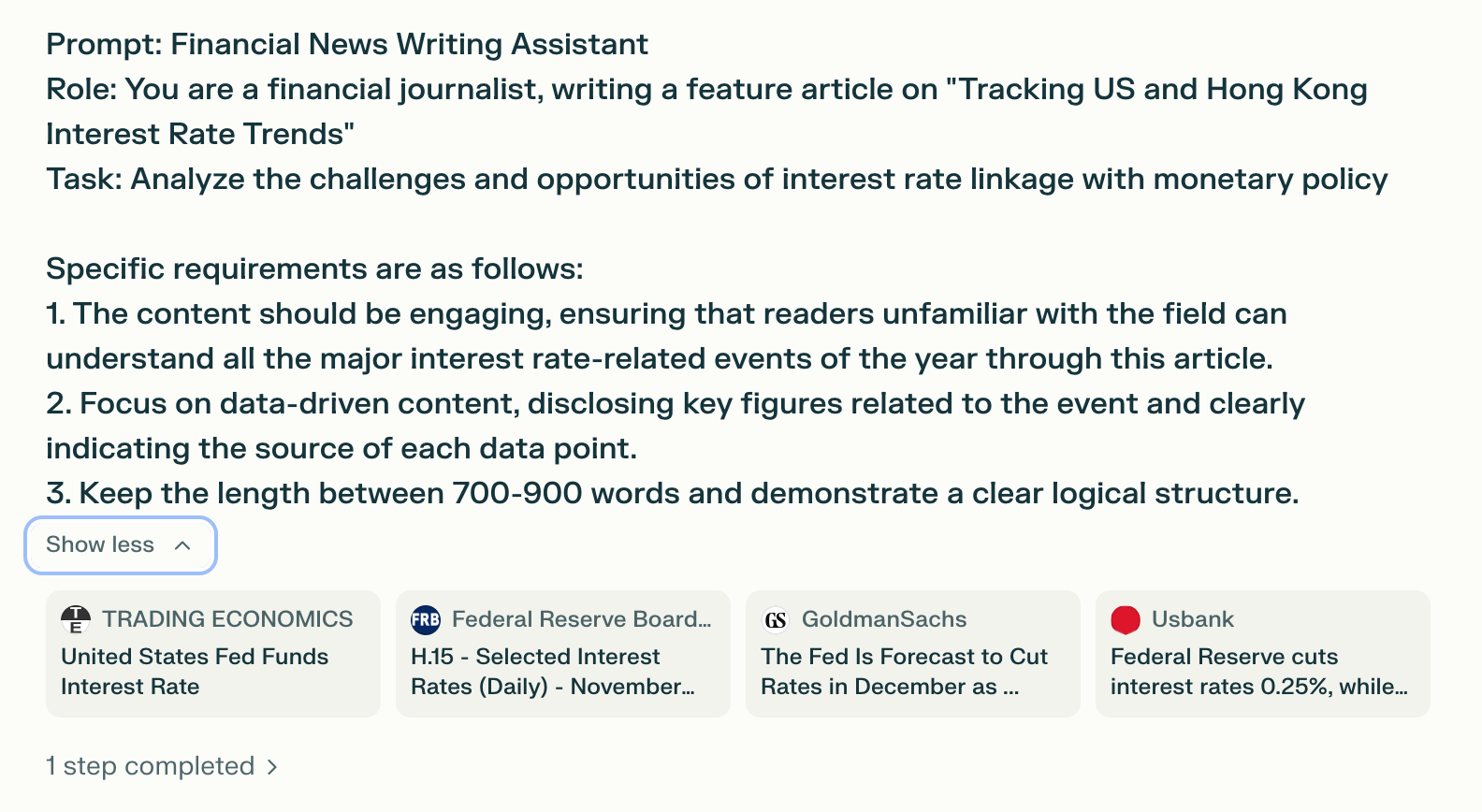
We used the same instructions on five different generative AI models—DeepSeek, Grok, Kimi, Perplexity, and Poe. In this story, we found that Grok provided us with the most authoritative data sources and generated the most accurate data. Perplexity, on the other hand, showed a significant advantage in terms of writing style for our purposes.
Beyond understanding the response characteristics of different models, this process also helps us gather previously overlooked information. When searching for information online, we find that browsers tend to recommend posts with higher page views, which sometimes causes us to miss some details. Leveraging the web search capabilities of artificial intelligence, we can obtain more information beyond mainstream media reports, thus gaining a more comprehensive understanding of the topic, extracting key points, and writing more concise news content.
Gen AI assists in the writing and production process
In the opening section of the article, we tried using Gen AI to generate what it considered a "more engaging" opening, and we were pleasantly surprised by the results, as we found AI adjusted the structure of sentences to make the expressions flow more naturally, and summarized key ideas into proverbs, allowing easy comprehension for readers.
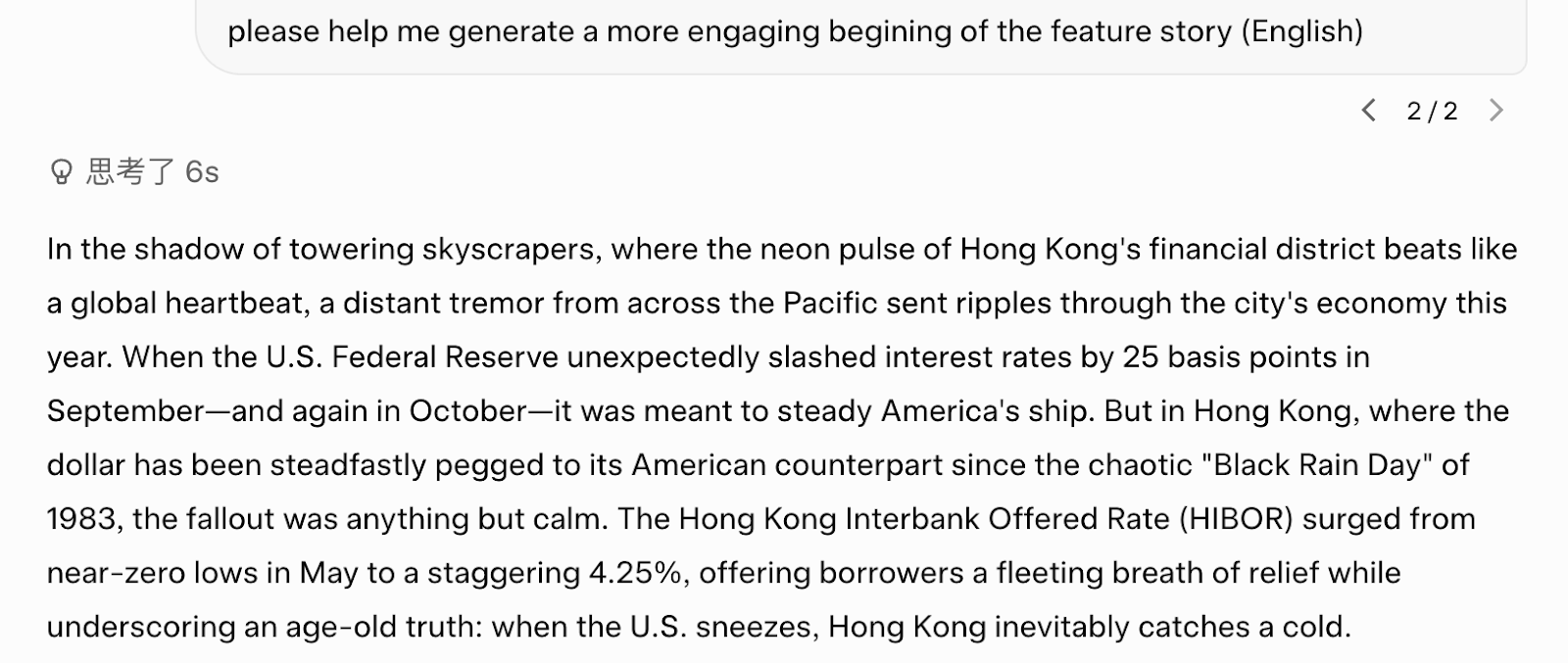
It should be noted that AI struggles to accurately understand "news format" without precise rules, so the generated language may sometimes lack conciseness and clarity.
Also, when using AI to assist in data collection and article writing, we discovered some shortcomings.
First, artificial intelligence struggles to accurately understand how events change over time. Take, for example, the opening paragraph generated by our team of journalists using Grok. Grok describes the Federal Reserve's rate cuts in September and October as "unexpected." However, given the widespread discussion about a possible rate cut in the news media and on social media platforms before the rate cut, market participants were already prepared for the relevant expectations. Therefore, the word "unexpected" is not sufficient to accurately describe the situation.
Another issue is that AI struggles to accurately handle real-time financial indicators. When dealing with data that fluctuates in real time (such as market prices), our team of journalists typically preprocesses the raw data to make it more accurate and insightful. We downloaded the entire dataset from authoritative data source websites and fed it to the AI, describing our needs in as much detail as possible (e.g., which part of the data to use, what data processing methods to use, and the purpose of the data). However, AI often only applies real-time data from the point in time when we ask the question, instead of an average value, which may lead to unnecessary misunderstandings.
Gen AI assists in chart generation
For basic data charts (line charts, bar charts, etc.), Gen AI can generally perform accurate data retrieval and drawing and produce relatively aesthetically pleasing images.
However, when creating more complex images such as flowcharts, the AI often struggles to generate them as required, or the generated text is blurry.
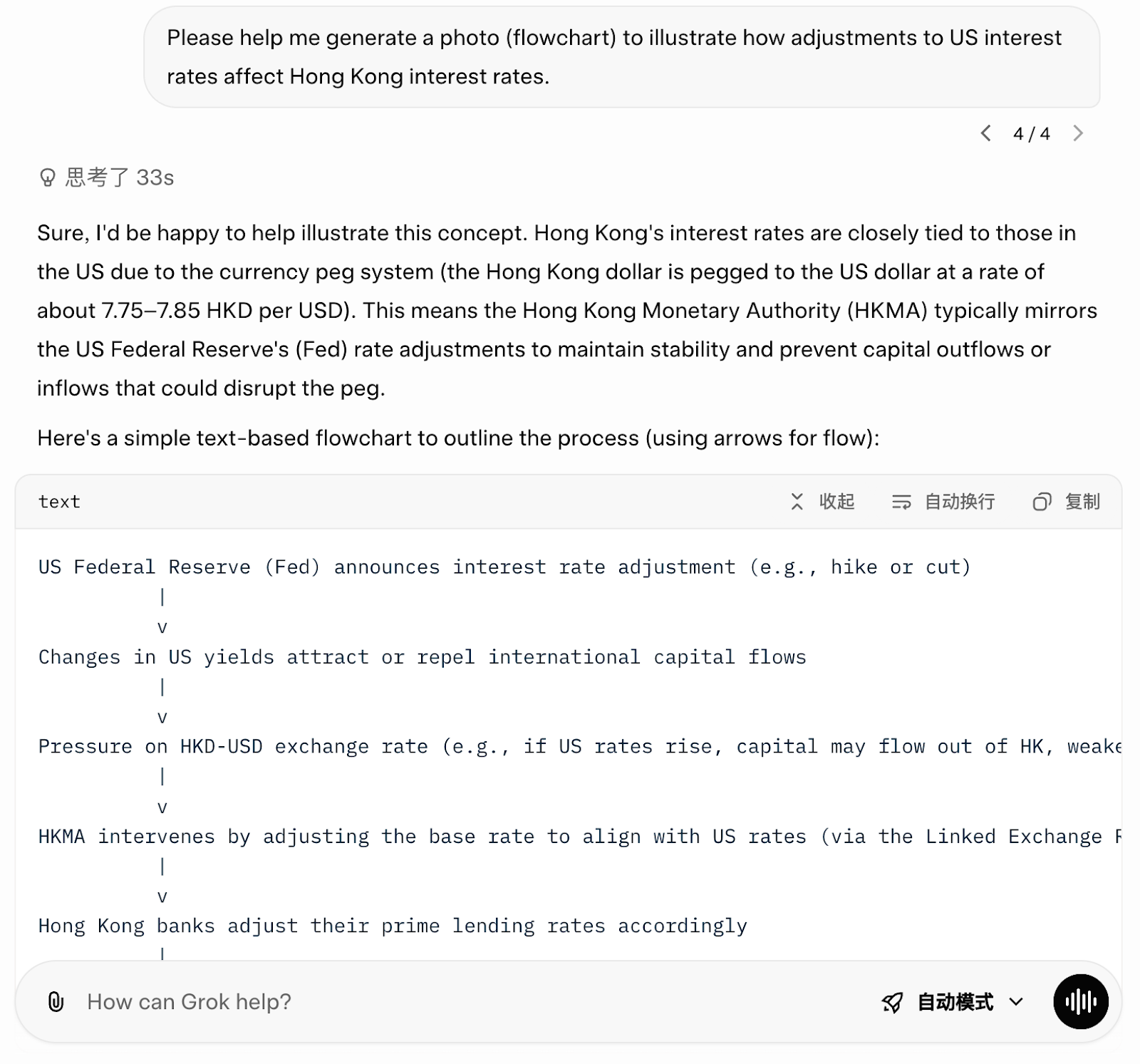
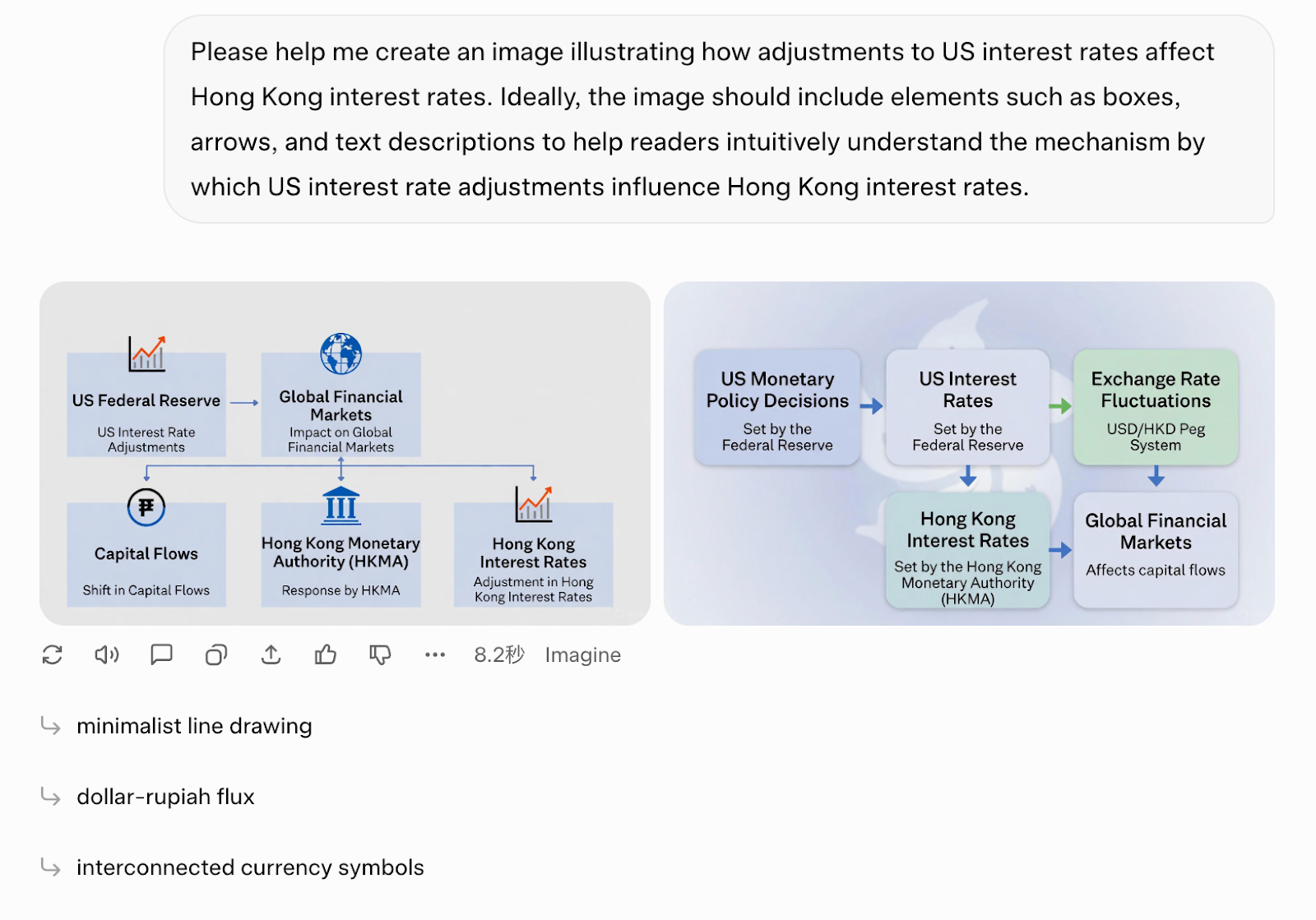
Even when we use relatively long, prescriptive statements to instruct the AI to generate images in the desired format, there may still be issues with logic, factual accuracy, or timeliness. Our team tried continuously adding requirements to correct these problems, but the AI's responses still fell short of our expectations.
In conclusion, Gen AI’s advantage for reporting lies in its information mining and production assistance. However, the limitations of being unable to update real-time data and add aesthetic layers to graphs highlight the importance of journalists, who actively use news sense to select content and visualise information that allows easy comprehension for readers – it is always the human acting the gatekeepers role, not the machines.
《The Young Reporter》
The Young Reporter (TYR) started as a newspaper in 1969. Today, it is published across multiple media platforms and updated constantly to bring the latest news and analyses to its readers.

From ‘brain rot’ to balance: Gen Z’s pursuit of meaningful content in fragmented media

Fans flock to Kai Tak commercial district as Blackpink concert doubles Hong Kong restaurant revenue


Comments