
The scene at Tsuen Wan Riviera Park on Feb. 18 was not what morning joggers expected.
13 shared bikes from Locobike, the city’s largest bike-sharing operator, were found soaking in sea water, lodged against the breakwaters.
This is not an isolated incident. On Jan. 15, video footage went viral on Threads showing a cyclist deliberately throwing a Locobike into a river.
“These are basically rubbish,” said Wong Wai‑tung, a Tai Po district councillor. "The way you leave bikes like this; I no longer see them as something valuable.”
Vandalism of shared bikes has been a recurring problem in Hong Kong since 2017, when the first shared-bike service, Gobee.bike, launched in the New Territories – the city’s largest region with the most extensive network of cycling tracks.
Within four days of launch, four bikes were found dumped in the Shing Mun River. The operator shut down a year later, citing lack of profit.
Shared bikes offer a greener transport mode for residents, but regulating shared bikes remains an uphill battle.

Wong helps handle complaints regarding dumped and illegally parked shared bikes in Tai Po.
“We sometimes receive reports from residents, especially at weekends, saying they’ve seen shared bikes in the river or left blocking pavements,” Wong said. “There are about two to three such complaints every month.”
The problem is more severe in districts with larger cycling networks in the New Territories, such as Tuen Mun, Tseung Kwan O and Shatin, he added.
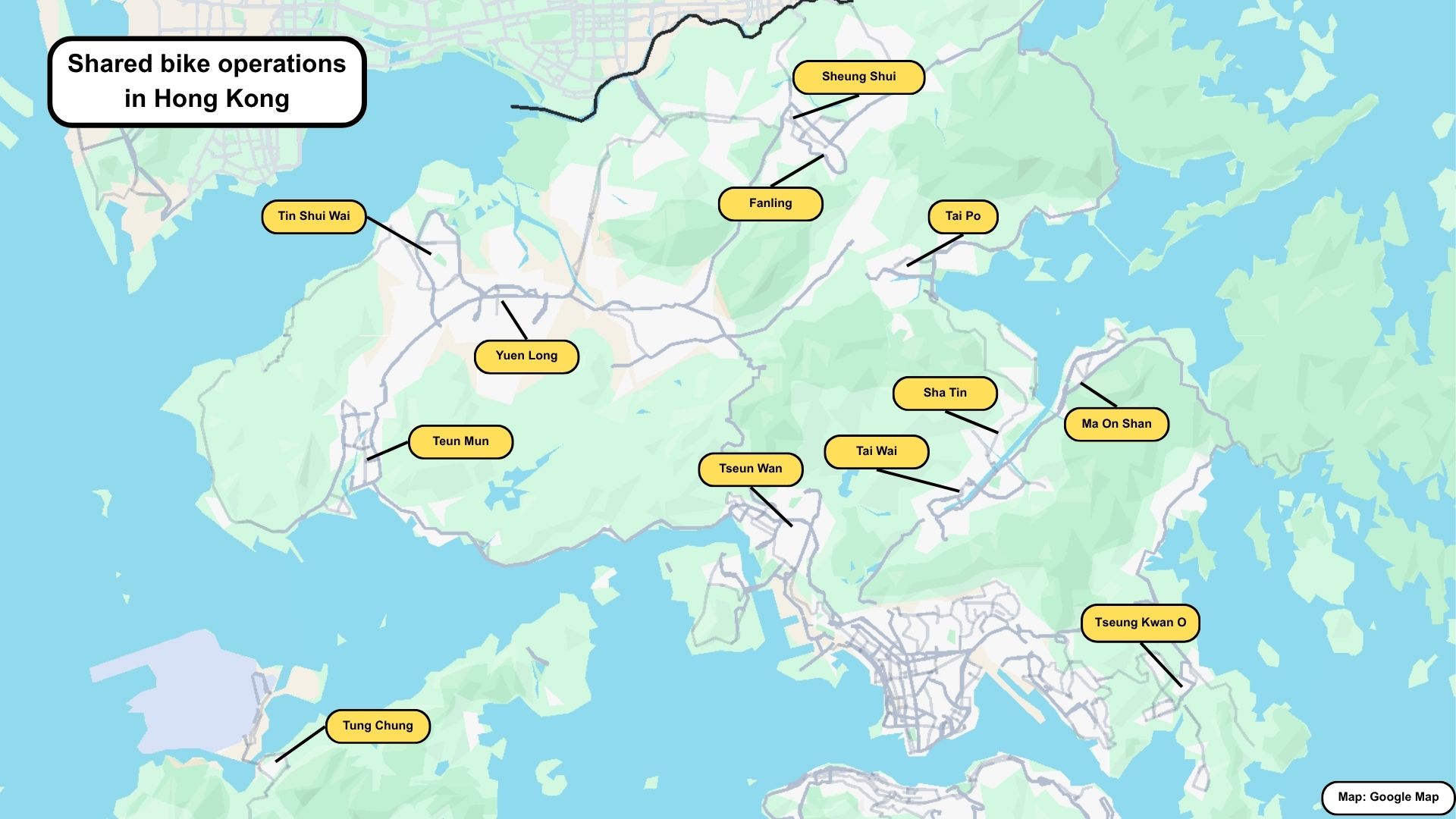
There are now two active shared bike operators in Hong Kong — LocoBike, which has operated since 2017, and HelloRide, launched in 2025.
According to Echo Lu, a HelloRide spokesperson, more than 300 HelloRide bikes have been damaged in the past year, about 10% of its fleet.
“The challenges in Hong Kong are more complex than in other markets like Singapore and Malaysia, due to its unique urban density and road conditions,” Lu said.
When HelloRide receives a report of a damaged bike, patrol teams assess whether it can be repaired. Bikes beyond repair, such as those dumped in rivers, are sometimes left or reported to the police. Bikes with issues are collected and sent to HelloRide’s warehouse for maintenance.
Lu said it is difficult to punish offenders because doing so would require significant operational costs and police resources. "We've increased patrols in various districts, but some people deliberately avoid these times to damage bikes.”
The cost of government clean-up operations is ultimately paid out from public funds, meaning taxpayers bear the burden, Wong said.
Amid growing concern over the problem, Yuen Hui-ying, 22, along with four of her social work classmates from Hong Kong Shue Yan University, initiated a six-week community project “Hello_Loco” on Instagram to promote the proper use of shared bikes.

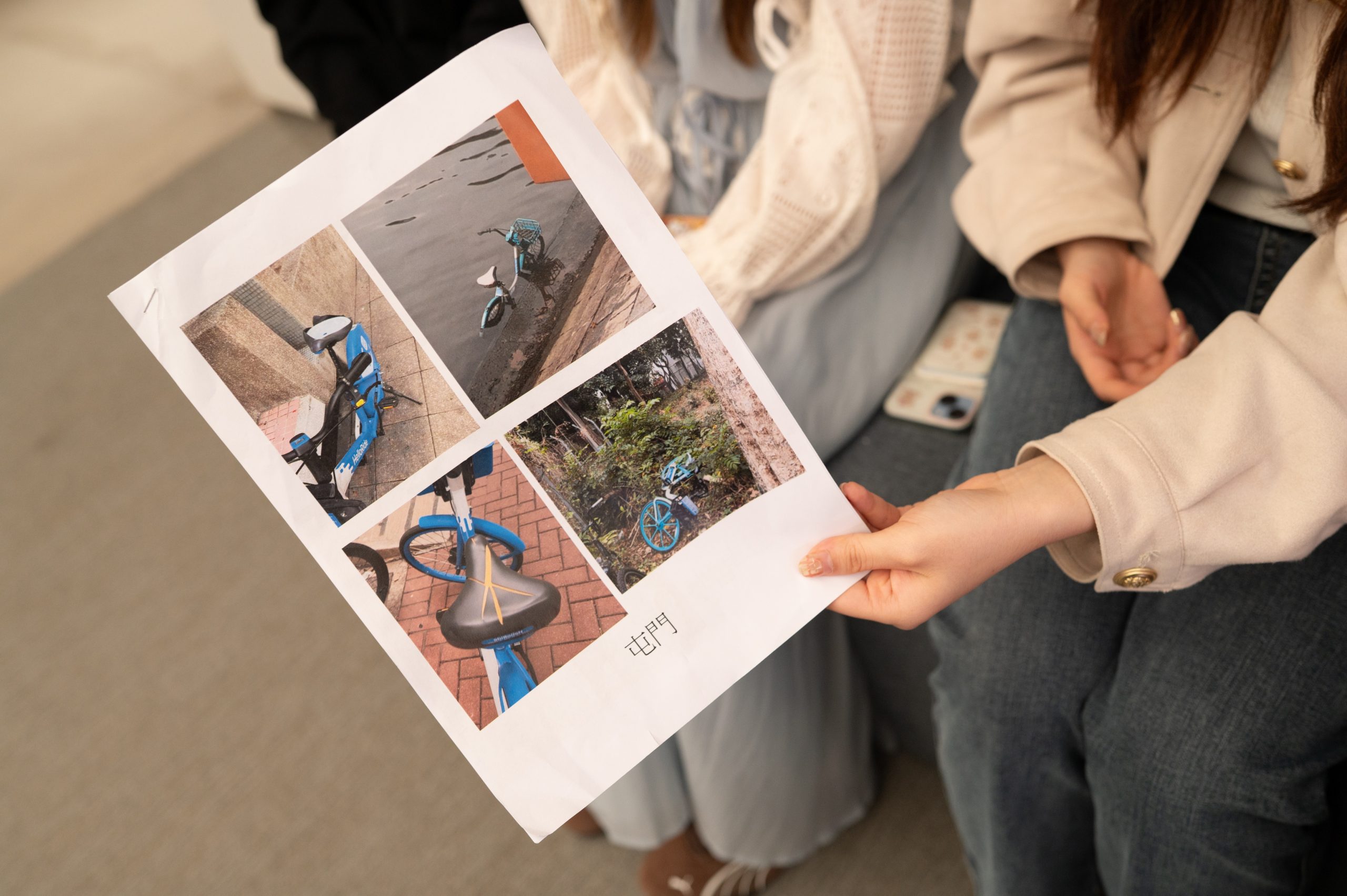
The group recorded 103 responses from surveys and vox pops in Tuen Mun, which they consider to have more illegal parking issues.
“Some people said the cause of damaged bikes is a lack of individuals’ civic-mindedness, but we also believe there is a causal link between illegal parking and the damage to shared bikes,” Yuen said.
“The reason might be: I hate shared bikes. Why don’t I like them? Because I feel they are in my way,” she added.
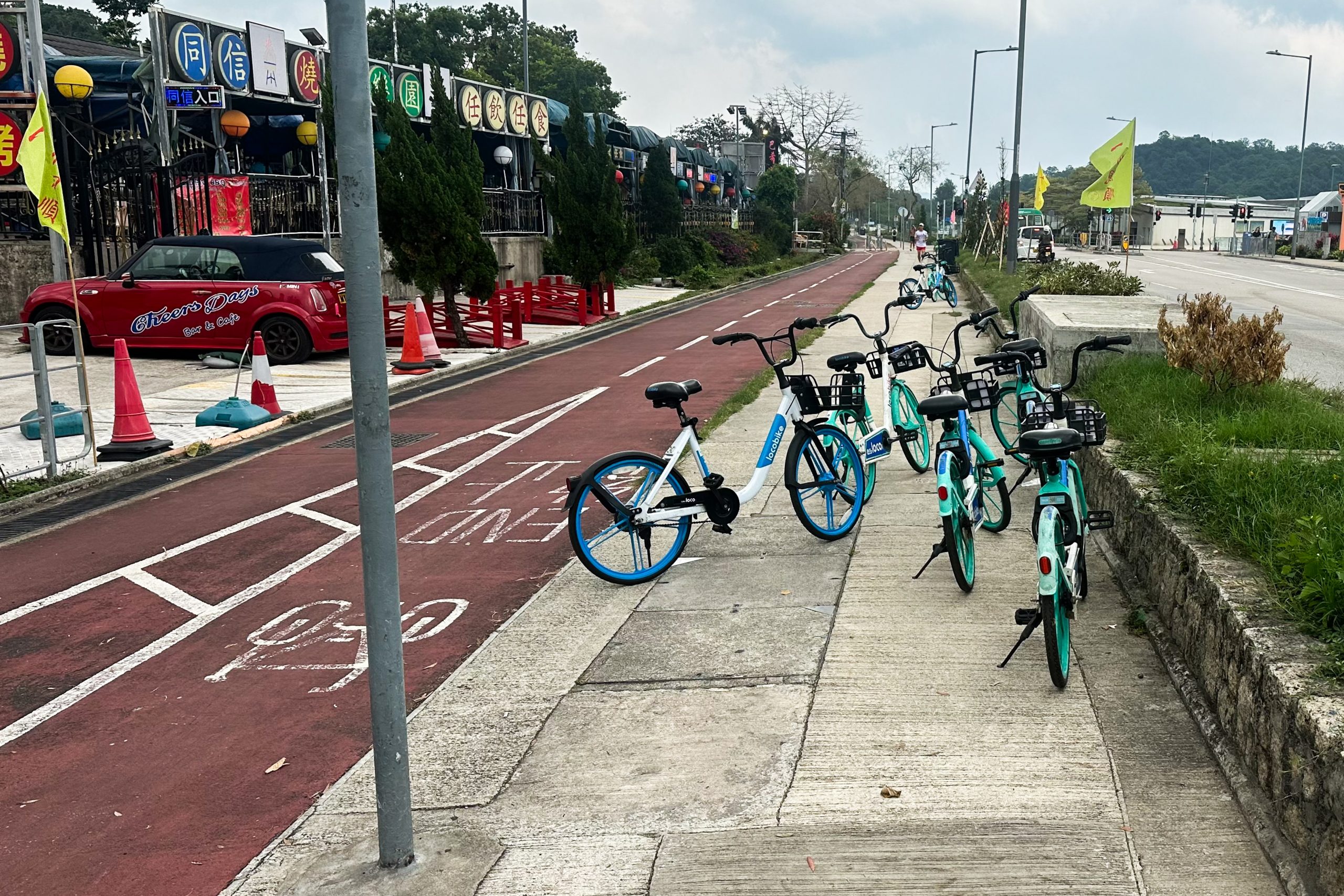
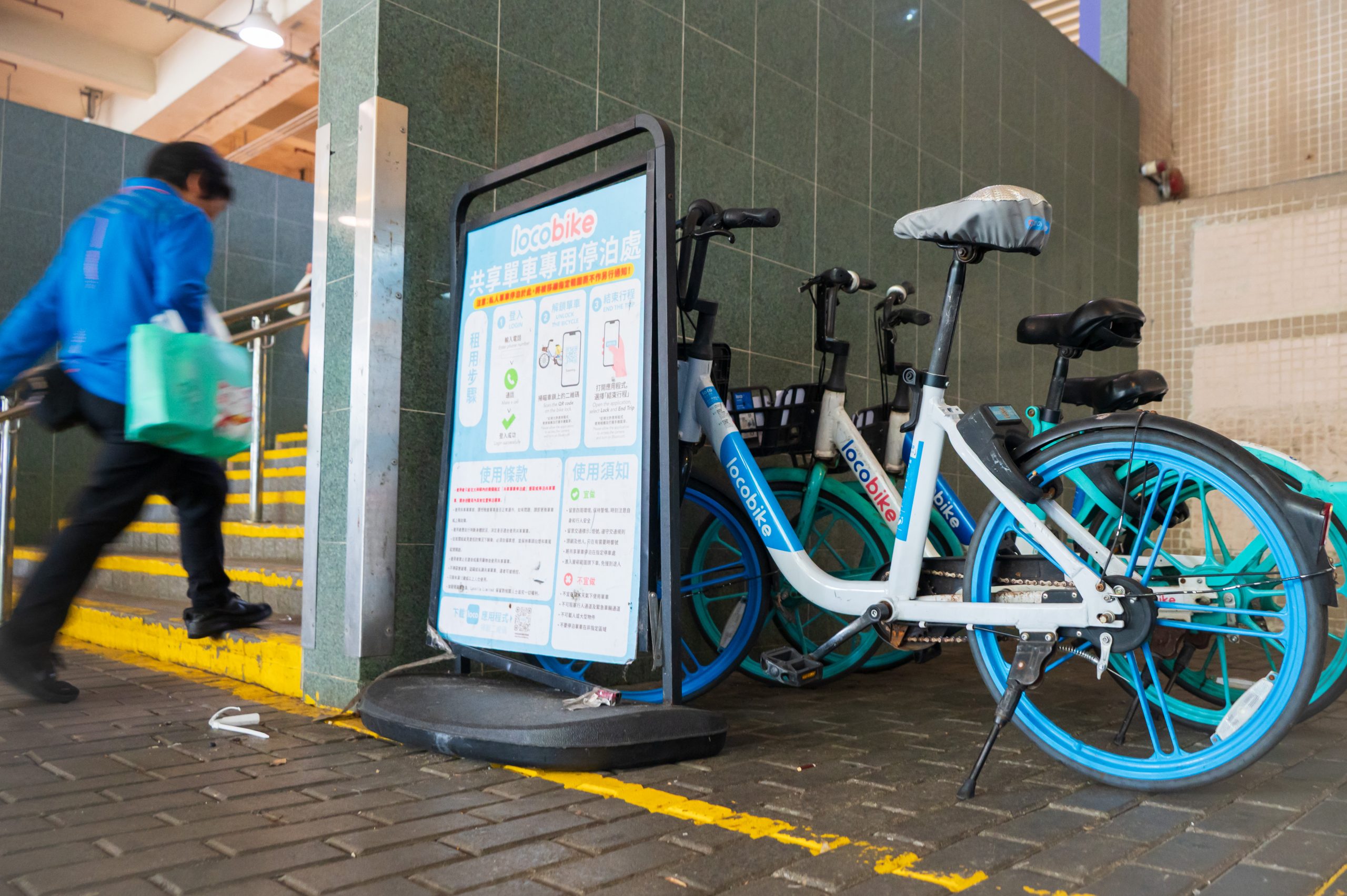
Anyone who leaves a bike in a public place which obstructs, inconveniences or endangers any person or vehicle is liable to a fine of HK$25,000 or imprisonment for three months, according to the Summary Offences Ordinance.
The law is difficult to enforce because police cannot be on the streets to catch every case of illegal parking, Wong said.
Lu said many places have no CCTV. “So it’s often more difficult for the police to catch offenders afterwards,” she said.
Yuen and her team suggest creating more designated parking spaces for shared bikes, similar to Singapore.
In Singapore, the government licenses more than 20,000 parking spaces for shared bikes and requires users to scan a QR code at the station to prevent illegal parking.
But Lu said it would be difficult to adopt such measures in Hong Kong, as it involves land rights issues.
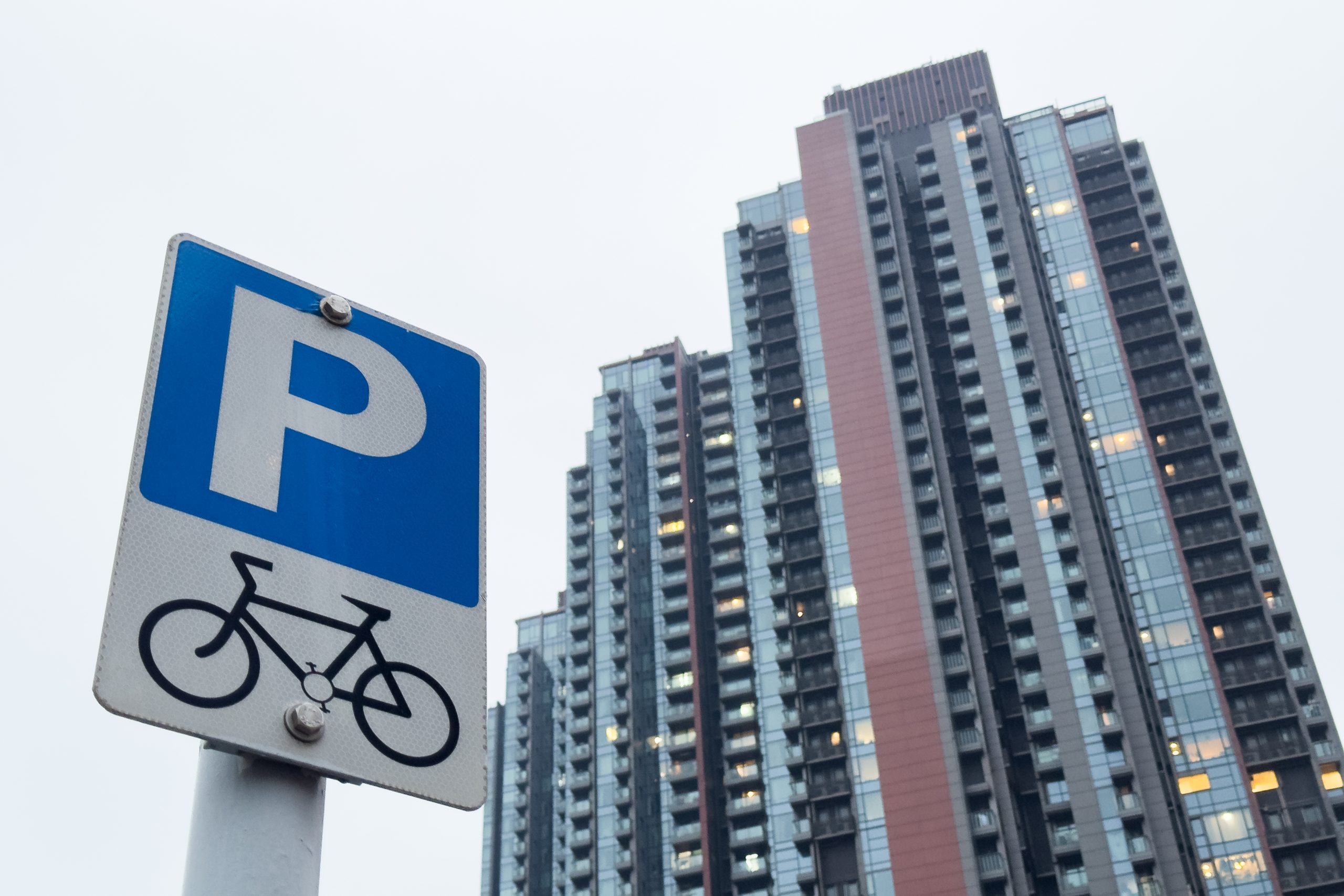
Among 60,000 public parking spaces, around two-thirds of public bicycle parking sites are under the Transport Department’s management, while the rest are managed by three other departments, according to the government.
These parking areas are open to both private and shared bikes.
“Not all public parking places are designated for shared bikes. And it is also difficult to introduce QR codes at the parking sites, as it is not decided by a single department,” Lu said.
Instead, HelloRide and Locobike are working with housing estates to create designated shared-bike parking areas, with more than 20 sites for Locobike and four for HelloRide. But these designated spaces remain limited.
Hello_Loco also suggests requiring users to take a picture before returning a bike to ensure it is parked correctly.
“This may be possible but it would require significant manpower to check all the images when there are thousands of rides every day,” Lu said.
No-parking zones are indicated by red boxes in HelloRide’s app. For each user, the first two parking violations in these areas are exempted, but a third violation results in a HK$50 penalty. Parking outside the operating zone incurs a HK$100 charge.
LocoBike, meanwhile, imposes a HK$50 fine for the first violation and HK$100 for subsequent ones. It also uses a credit score system, with every user starting at 100 points; mistakes lead to point deductions with loss of access once the score drops to zero.
“Despite this, there are always people who break the rules,” Lu said. “We even found two of our bikes in Shenzhen. We have reported such cross-border incidents to the police."
To this day, Wong still finds shared bikes from companies that have already left Hong Kong, abandoned within housing estates.
“In the end, it’s up to the owners’ corporation and residents to bear the removal costs,” he said.
“The government needs to further enhance public education,” said Wong, “as well as potentially review the licences for shared bike operators to make sure they take responsibility."
With limited parking space, fragmented land issues and inadequate public education, it remains questionable whether bike companies are equipped with the means to battle the regulation challenge.
“Besides stepping up patrols and working with the police, we continue to educate users about correct parking practices through social media and our apps, while also exploring technology-based solutions to encourage proper parking," said Lu.
《The Young Reporter》
The Young Reporter (TYR) started as a newspaper in 1969. Today, it is published across multiple media platforms and updated constantly to bring the latest news and analyses to its readers.
What does Lamma Winds’ closure mean for Hong Kong’s renewables strategy?

More than a public holiday, Brisbane honours mateship and sacrifice on Anzac Day



Comments