
AI Summary:
- The 21st Eco Expo Asia showcased AI-powered recycling solutions aimed at improving commercial viability for local operators.
- Green AI Technology launched its REV unmanned station, while showcasing how its smart recycling system uses computer vision to enhance sorting accuracy and reduce manual checks.
- Despite technological gains, experts said AI faces limits in addressing low recyclable prices, land constraints, and the need to control its own energy use.
The 21st Eco Expo Asia 2026, held at Hong Kong’s AsiaWorld-Expo from Monday to Thursday (Oct 26-29), saw tech exhibitors highlighting artificial intelligence (AI) as a crucial solution for local recyclers to cut processing costs and achieve commercial viability.
Under the theme “Connecting the World for a Sustainable Future”, this year’s edition featured four tracks: Green Energy in Motion, Frontier Green Tech, Building for a Greener City, and From Waste to Worth, showcasing the latest innovative green technologies, products, and solutions.
In an interview at the expo, Freeman Cheung, President of the Hong Kong Institute of Qualified Environmental Professionals, stressed the importance of lifecycle assessment when evaluating green technologies and circular economy solutions.
A full “cradle‑to‑grave” assessment is needed, he said, calculating the energy required and benefits generated from the beginning of a product’s life to its end.
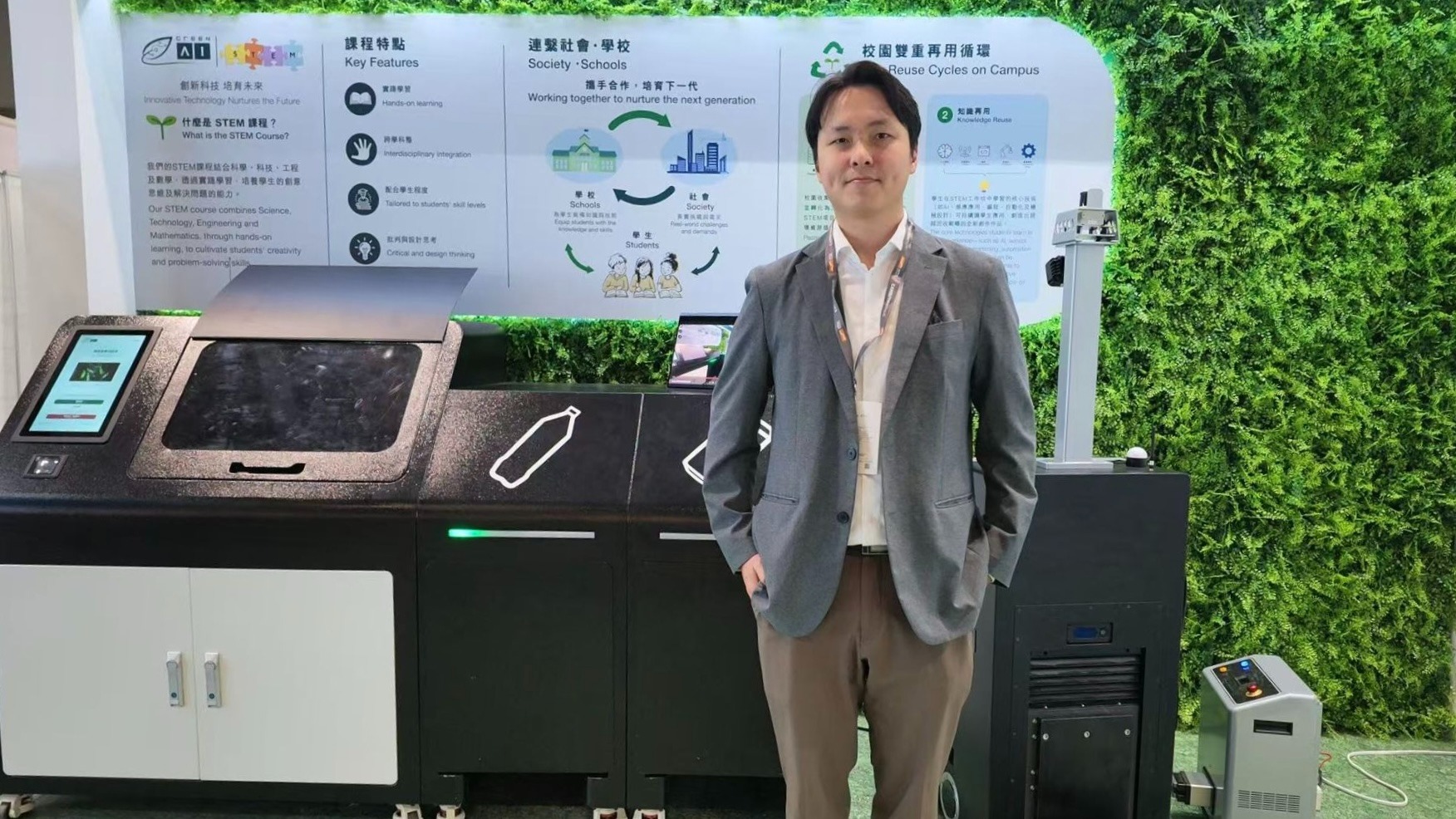
Hong Kong-based Green AI Technology Limited, a local green-tech start-up incubated by the Hong Kong Polytechnic University, launched REV, its new generation, 24-hour unmanned recycling station, at the Expo, demonstrating how AI and automation can transform recycling operations.
Dennis Mak, Chief Executive Officer of Green AI Technology Limited, said its smart recycling system pairs barcode scanning with AI computer vision to automatically identify recyclables, removing reliance on pre-updated barcode database entries.
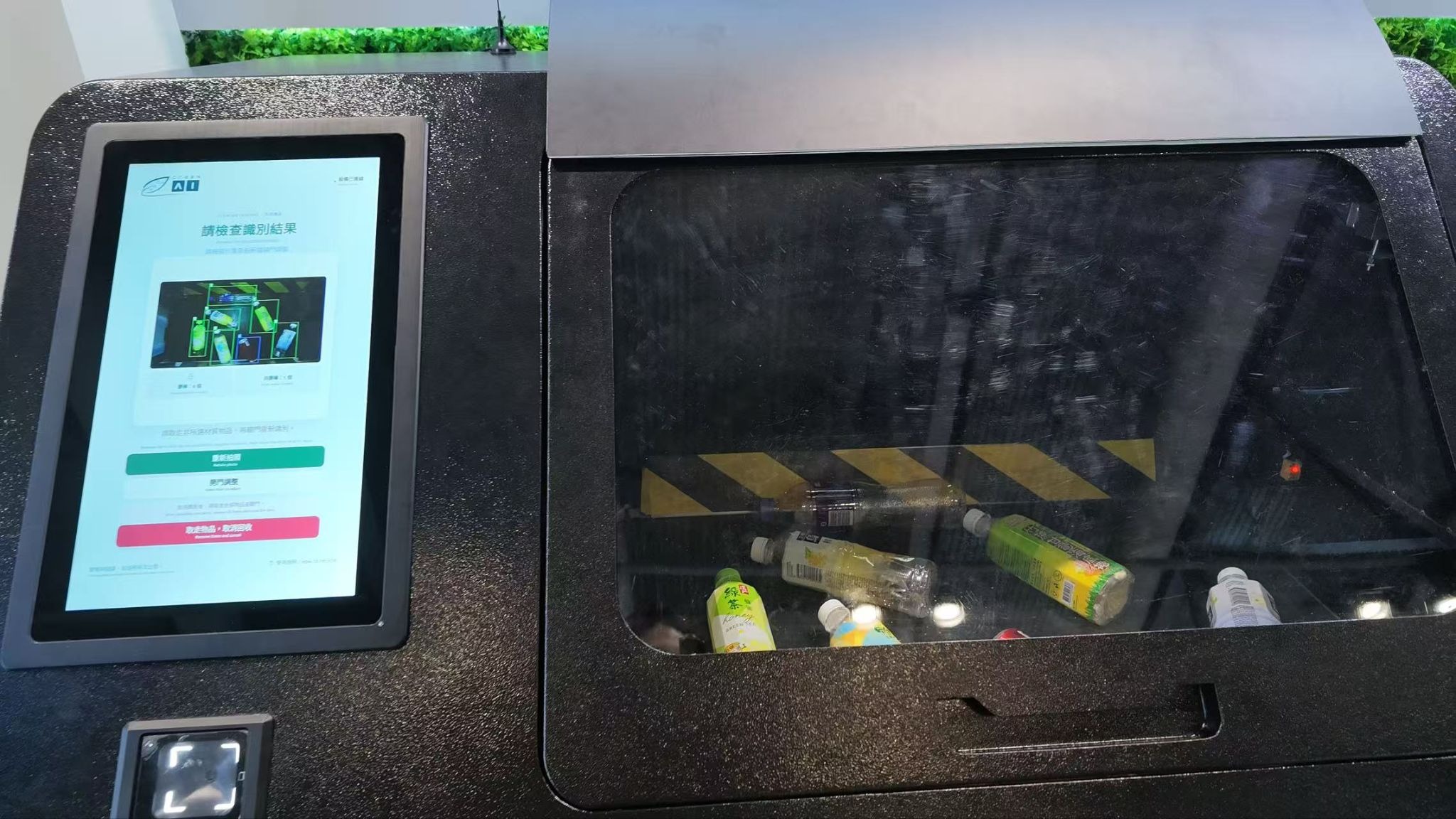
Mak said that while an on-board edge computer pushes up hardware costs, pairing AI with IoT sensors triggers alerts when bins are full, so staff no longer need regular site checks, saving labour and time.
He added that by incorporating AI recognition technology, sorting accuracy can be improved from the previous level of approximately 80% to over 90%.
While AI systems promise higher efficiency, Hong Kong’s recycling industry still faces structural challenges.
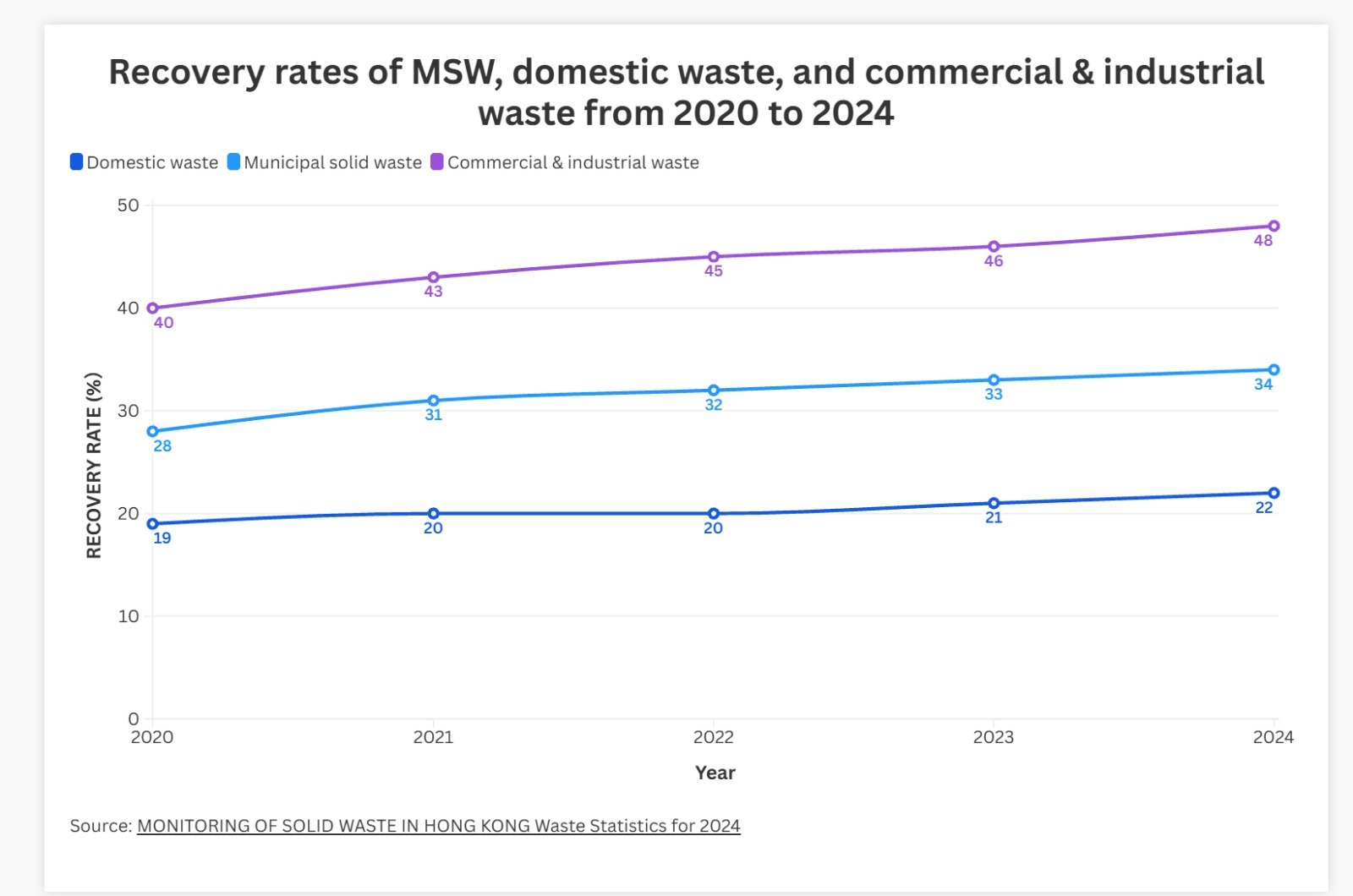
According to the Environmental Protection Department’s Monitoring of Solid Waste in Hong Kong, the municipal solid waste (MSW) recovery rate rose from 33% in 2023 to 34% in 2024. Even so, roughly 80% of collected recyclables are exported for treatment, with only 20% processed locally.
Zhao Jun, an Associate Professor in the Department of Biology at Hong Kong Baptist University, pointed out the limits of AI-powered recycling.
“AI automation mainly lifts sorting accuracy, reduces contamination, and cuts manual labour,” Zhao said in a written reply. “It is viable for certain high-value, large-volume streams, but not universally viable yet.”
He explained that AI sorting systems, sensors and maintenance require heavy capital spending, which puts the technology out of reach for many small local recyclers.
On the commercial viability of recycling, Zhao noted that AI alone cannot turn recycling into a fully self-sustaining, profitable business.
“It cannot fix fundamental challenges including low commodity prices of recyclables, limited land for processing, and fragmented waste collection,” he added.
Separately, Chen Xi, Assistant Professor in the School of Energy and Environment at City University of Hong Kong, said AI sorting should reduce its electricity and water use to preserve recycling’s carbon benefit. Though unlikely to cut costs quickly, it could boost battery recycling sustainability in the medium term by cutting material losses, he added.
Hong Kong’s Climate Action Plan 2050 targets carbon neutrality before 2050, prioritising energy saving, waste reduction and better resource recovery.
Cheung said more concrete measures are required to turn its broad climate targets into action, with regularly revised energy efficiency rules serving as a practical tool.
Note: This report was written by students from The Young Financial Post editorial team. Generative AI was used for polishing sentences/grammar checking/correcting errors/generating images/research.
Models used: Gemini, ChatGPT, Grok
The final version was manually reviewed, edited, and verified by The Young Financial Post team.
《The Young Reporter》
The Young Reporter (TYR) started as a newspaper in 1969. Today, it is published across multiple media platforms and updated constantly to bring the latest news and analyses to its readers.

Holocaust remembrance and education in Hong Kong



Comments