
Around 60 people rose for a minute of silence at this year´s Holocaust commemoration at the Jewish Community Centre in the Hong Kong Midlevels on April 13.
Also called Yom HaShoah, the global annual event commemorates the murder of six million jews by Nazi Germany. The word “shoah” means “catastrophe“ in Hebrew.
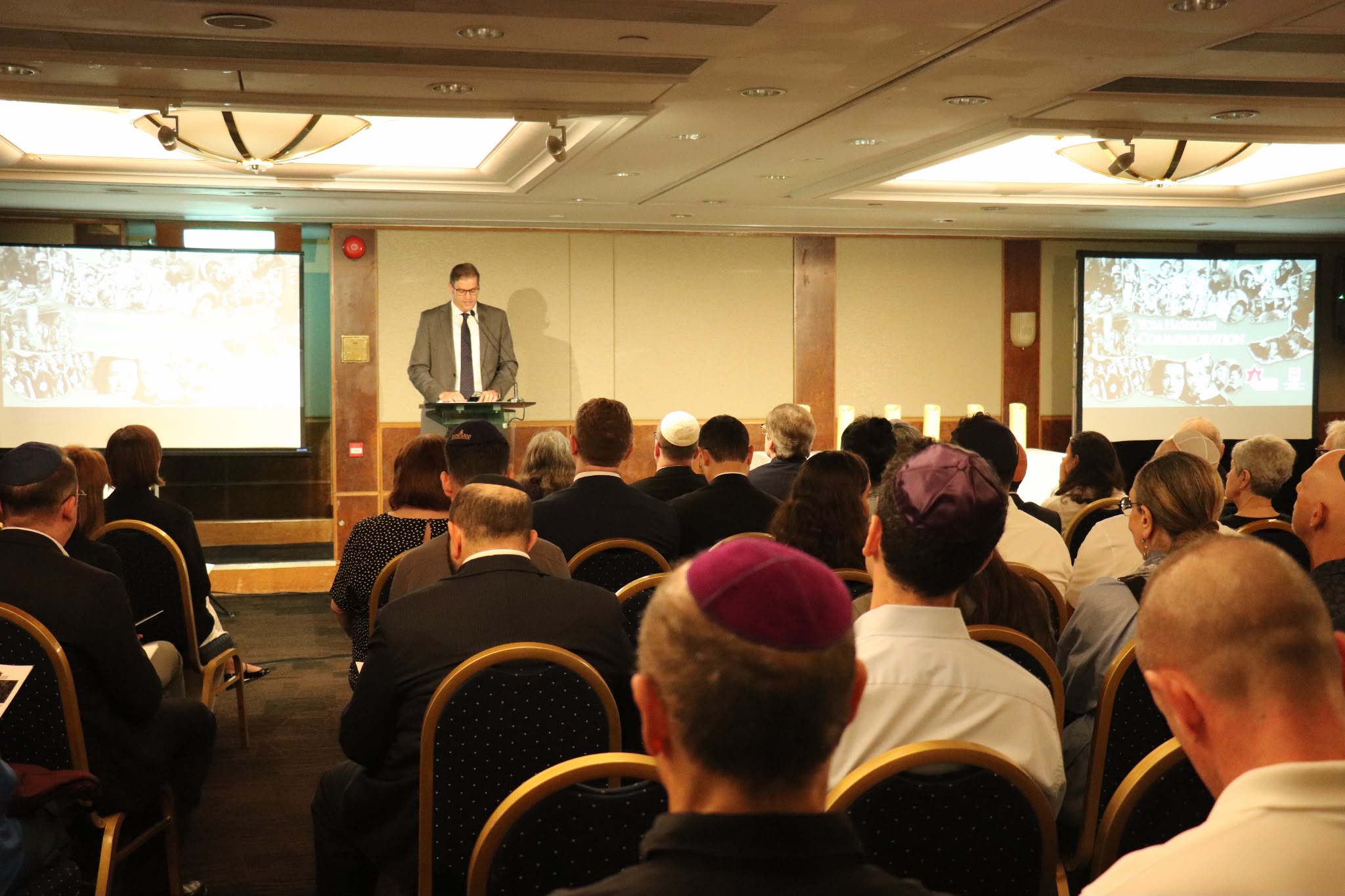
The Hong Kong Holocaust and Tolerance Centre and the Israel Consulate General organised the event which features songs, speeches and personal stories of family separations, endurance and survival. The event has been commemorated in Hong Kong for 15 years.
Australian journalist Jill Margo, who wrote the biography of holocaust survivor Frank Lowy, spoke on the “enduring duty of remembrance.”
Roland Vogt, chairman of the centre, said April is genocide awareness month and represents the shared commitment to stand against hate and prejudice in all its forms today.
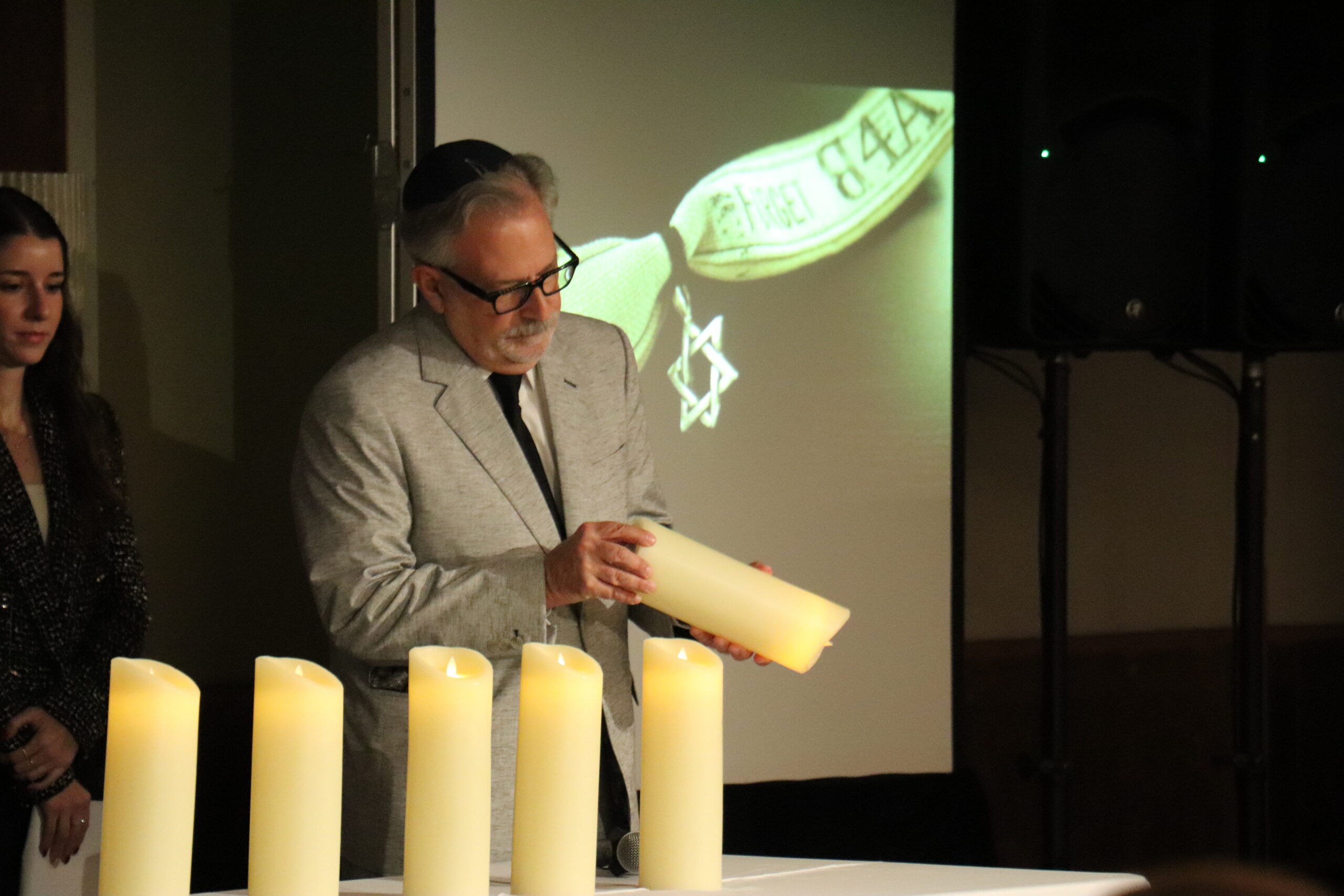
At the event, six candles represent the six million lives lost. As members of the community light each candle, they dedicate it to one individual family member.
David Kudan, Rabbi of the Liberal Jewish Community in Hong Kong, said his candle stood as a symbol against hatred.
“As we light candles and reflect on their absence, we affirm our responsibility to preserve their memory. Their stories remain a guiding presence, calling us to confront hatred, to defend human dignity, and to uphold the values they were denied the chance to pass on. May their memory be a blessing, and may our remembrance on this day strengthen our commitment to justice,” Kudan said.
“The organisers of this event did well not to focus too much on sadness. There were also nice messages of hope and calls for social justice,” said Jonathan Feuer, 34, a postdoctoral fellow at the University of Hong Kong.
He said Holocaust remembrance in Hong Kong is a unique experience, as there were Jewish participants with family stories and people from different communities and cultural backgrounds.
“This event mirrored much of the unique experience I’ve been having at events with the Hong Kong Jewish community. I have not experienced these kinds of inter-denominational communal experiences at home in the US. I enjoy seeing this camaraderie,” Feuer added.
The Hong Kong event was one of many Jewish communities held worldwide this year since the event was established as a national holiday in Israel in 1959. While there is no official count, the Jewish population in Hong Kong is estimated to be around 5,000, according to the Times of Israel in 2019.
The community is working to make Holocaust memory relevant to a predominantly non-Jewish audience by connecting it to broader questions of genocide, intolerance and moral responsibility.
For educators, remembering the Holocaust is therefore a way to open conversations about human behavior and the lessons that can be drawn from different histories of mass violence.
“This is the main occasion for us jews to remember the Holocaust, even if it is on our consciousness anytime,” Kudan said.
He said that awareness of the Holocaust in Hong Kong is rather low, due to the lack of exposure, and acknowledges the difficulty talking to young people about the Holocaust.
“The key of holocaust education should not only be to learn historical facts but also to learn lessons about humanity. Parents and teachers could therefore be quite challenged trying to teach the Holocaust in a meaningful way,” he said.
“We hope that our experiences sensitise us to the suffering of other people today and make us able to prevent it,” he added.
The Hong Kong Holocaust and Tolerance Centre opened in 2011, with the mission of promoting Holocaust education and awareness. They offer training to teachers, secondary and university students, including hosting talks by Holocaust survivors and film screenings.
Simon Li, executive director of HKHTC, said memory is not about the past alone, it’s about the choices in the present.
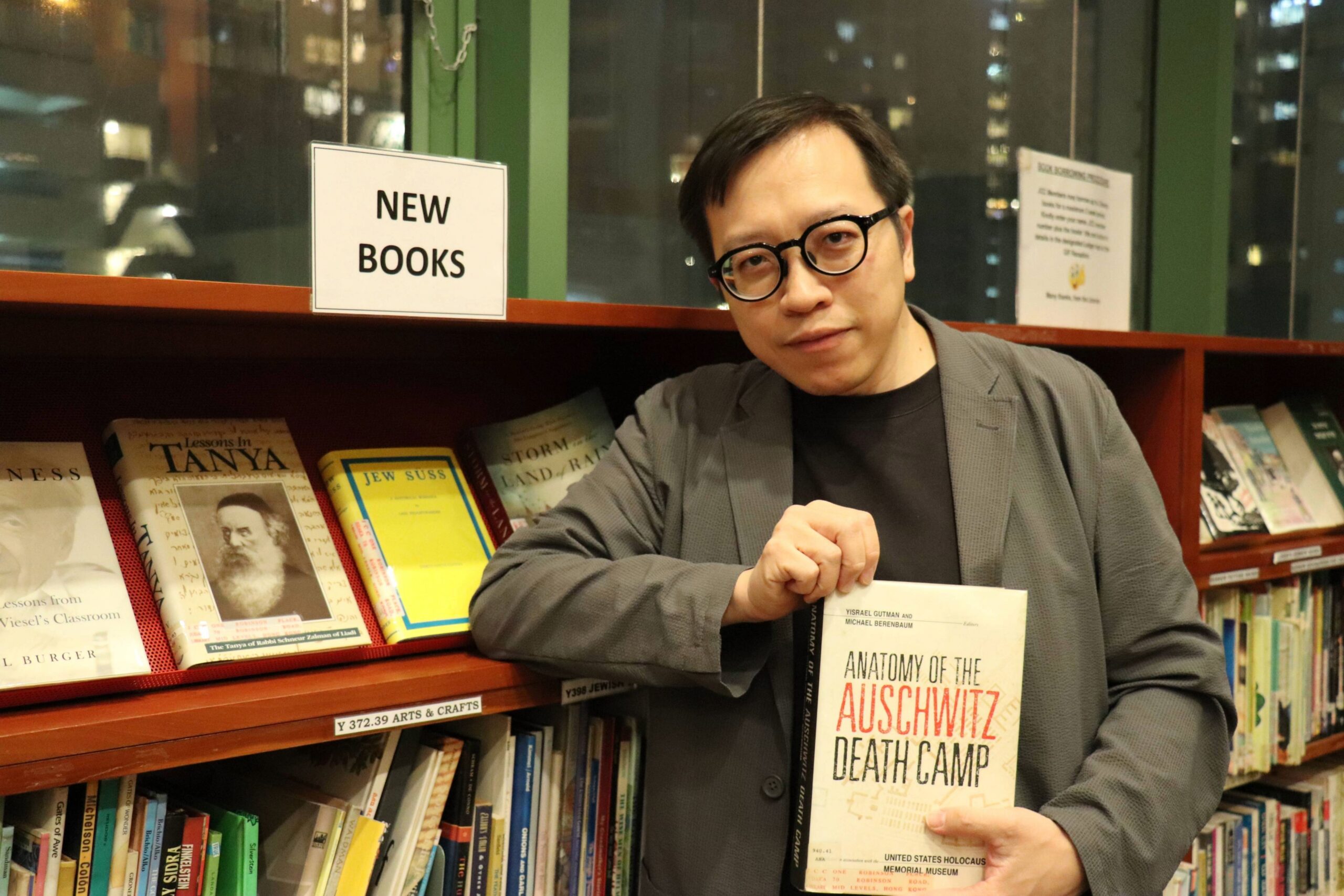
“My goal is to bring students safely into and out of the topic,” Li said.
The centre also raises awareness of other atrocities, including the Nanjing massacre and the Cambodian genocide, using history as a gateway to broader discussions about intolerance and moral courage.
“It was always my mission to tell students that the holocaust was not a European history but a universal one,” Li said. “The number one question is: how are such things humanly possible? It is a story about human nature, about upstanders and bystanders.”
Li said comparisons have to be approached through dialogue.
“Ethical red lines are crucial. Every atrocity has its own historical context. We therefore don’t want to equate, but to illuminate. We want to help students see common moral mechanisms. The goal is empathy, and not competition of suffering,” he said.
“In my experience, the students always appreciate the deep dialogue about the topic,” Li said.
In one secondary school workshop in April, Li said he focused on individual stories, to illustrate the reality during the Holocaust. He then asked students to role play historical scenarios.
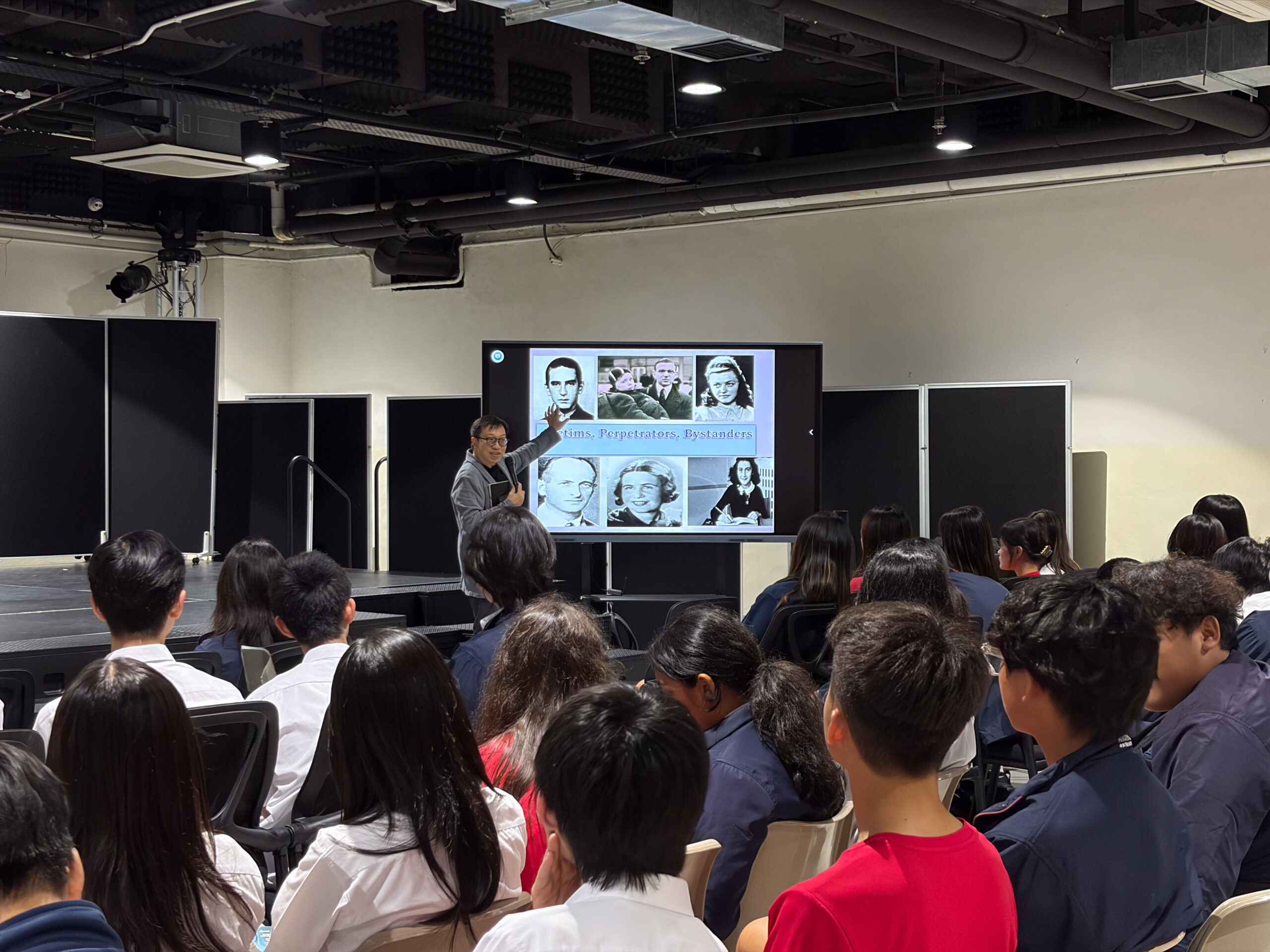
“If you were a doctor and you didn't have sufficient medicine for all of your patients in need, what would you do? How would you decide on the distribution?” he said, adding that these questions highlight moral complexity and the impossibility of one answer.
“I wanted to put the students in the situation to think for themselves,” Li said. “This way it's easier to understand the scope of the situation and realize that even as the circumstances are not the same, such difficult decisions could still be part of their lives.”
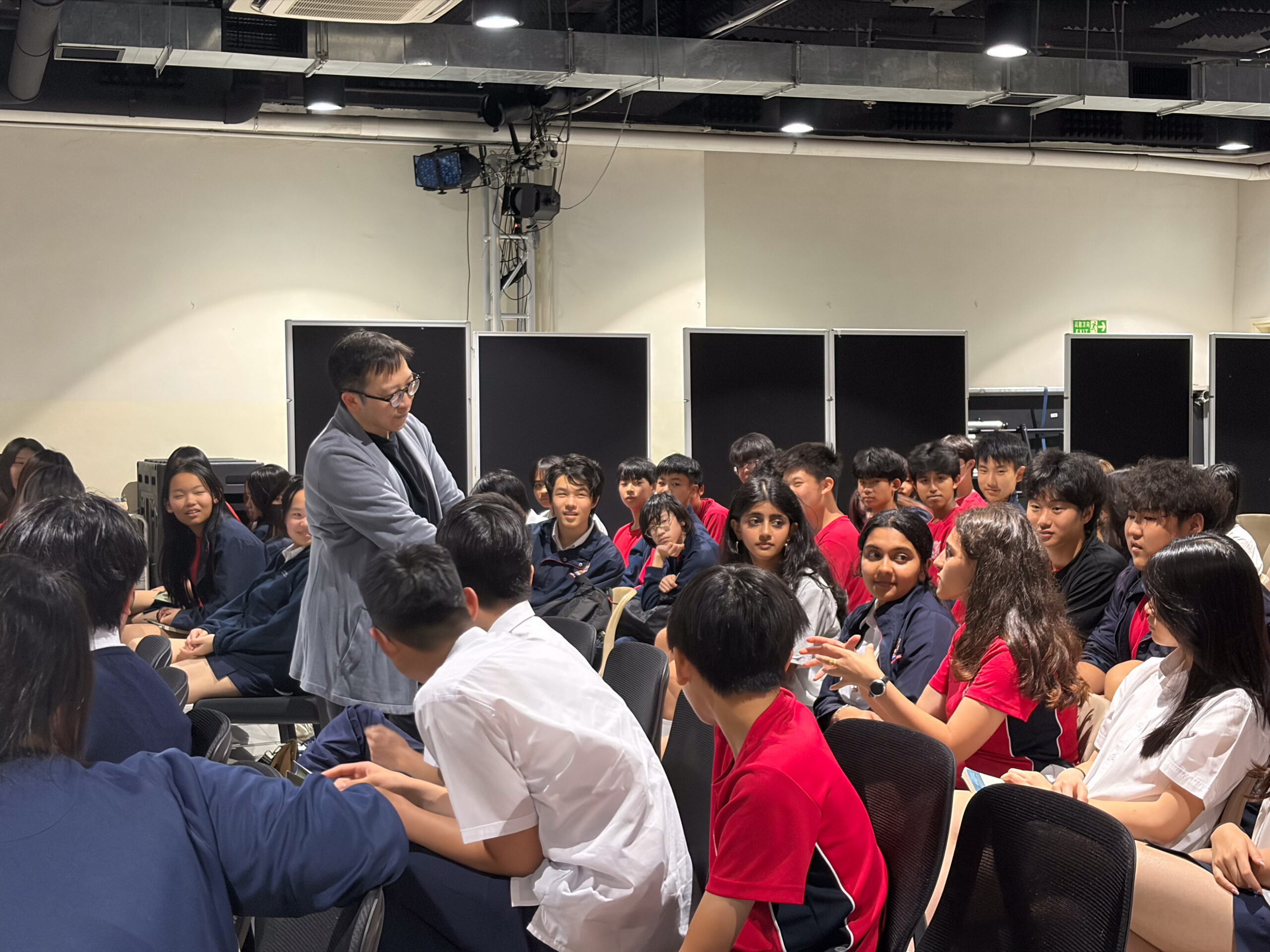
Lenin Ramirez Hernandez, an English teacher at the American International School, requested the workshop to complement his teaching of Elie Wiesel’s Holocaust memoir “Night”.
“Even if they are already familiarised with the word ‘Holocaust’, they often don’t know what it actually means,” Hernandez said.
Hernandez said the book is a good introduction to the topic as the students can relate to the teenage main character.
“You have to be tactful in how to address the topic, without being too graphical about the brutality. But I don’t want to address the topic of the Holocaust like a taboo,” he said. “I want to emphasise that it is about choices we all make and not because they were alien to us. We are all humans and we all can make wrong choices.”
“I hope this unit leads to more humanisation,” Hernandez said. “And that it emphasises the importance of caring for others.”
Li said he is working on a book about the potential of video games for digital holocaust remembrance. By simulating historical situations and putting the players in the shoes of bystanders, the games would engage their moral muscle.
“It may sound absurd or even trivialising in the beginning to use video games for holocaust memory, but I think it is filling a real gap by helping to engage students with the topic,” Li said.
“Holocaust education today is more important than ever. As we experience a narrowing of opinions on social media, it is crucial to still learn how to listen, understand, and speak with each other,” he said. “My goal is to make ‘never again’ not a slogan.”
Reported by Talja Blumenthal
《The Young Reporter》
The Young Reporter (TYR) started as a newspaper in 1969. Today, it is published across multiple media platforms and updated constantly to bring the latest news and analyses to its readers.
Amazon still hiring junior developers, CTO says during Hong Kong visit
AI recycling takes spotlight at Hong Kong Eco Expo Asia amid local processing challenges


Comments